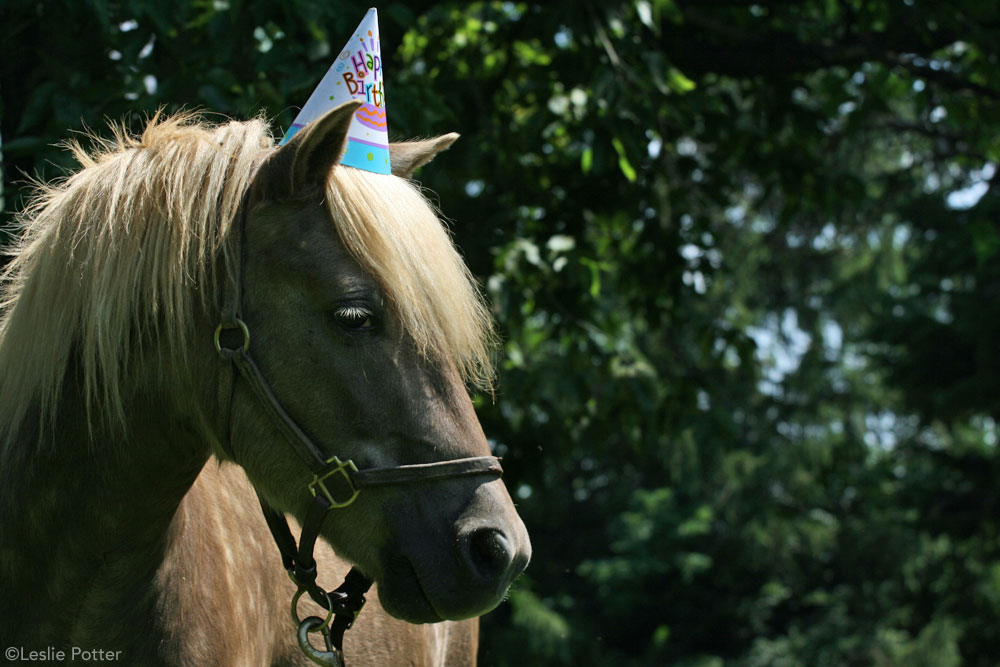
Get ready to celebrate, horse lovers! It’s Chinese New Year’s Eve today. Tomorrow, Tuesday, February 17, 2026, an ethereal red horse trailing fire will usher in the Chinese New Year. It is not just any New Year; it’s a very rare Year of the Fire Horse which reigns in the Chinese Zodiac cycle only every 60 years.
It’s fitting that this Year of the Fire Horse corresponds with Horse Illustrated magazine’s golden anniversary. The publication’s first issue was on newsstands in 1976, just ten years after the last Fire Horse in 1966. In Chinese culture, the color gold symbolizes prosperity, so may Horse Illustrated readers enjoy many more information-packed issues in the years to come!
Also significant in equestrian circles this year are the 2026 FEI World Championships in August in Aachen, Germany, which will begin the journey toward the next Olympic Games in 2028 in Los Angeles. Performances at these World Championships, and the 2027 Pan American Games in Lima, Peru, will be part of determining which countries will qualify to compete and who will ride for the USA in the LA28 Games.
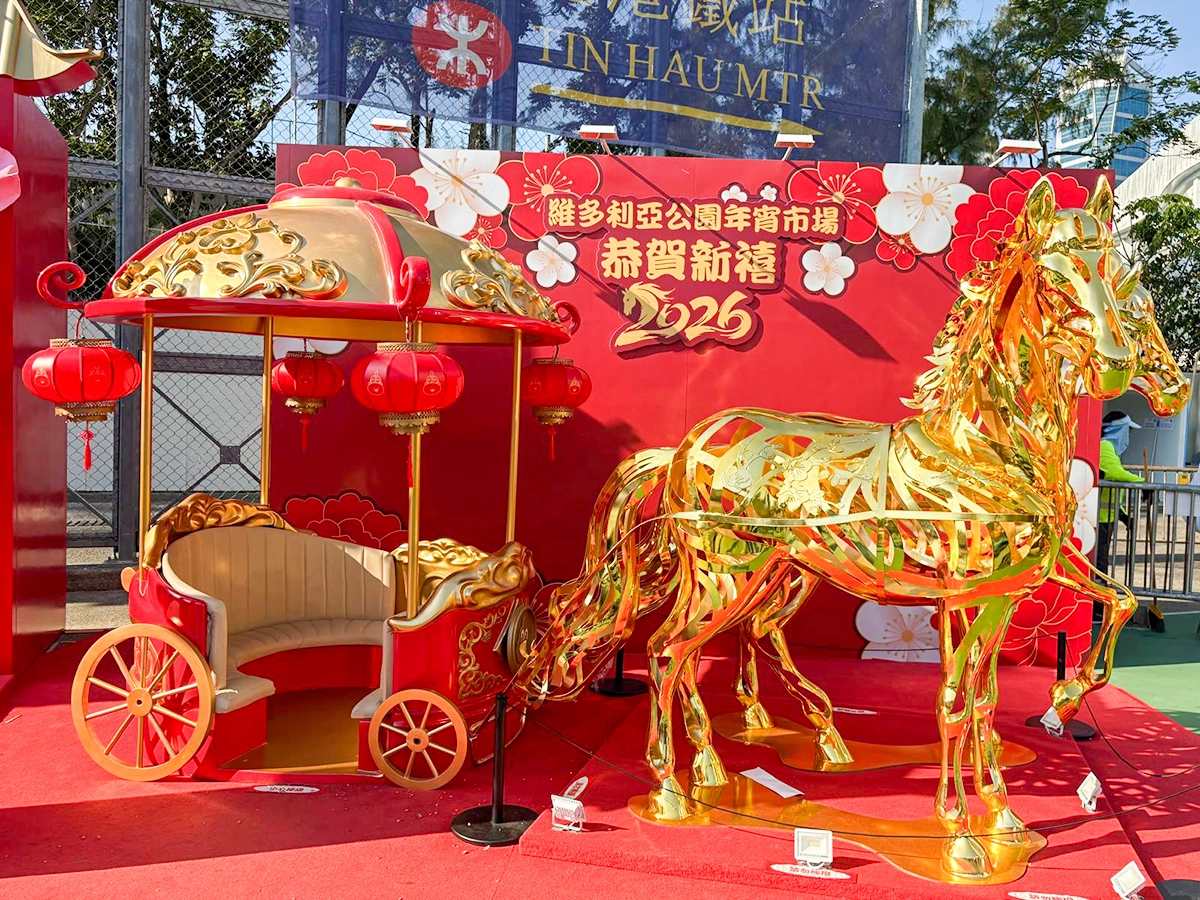
A pair of beautiful gilded horses and carriage in Hong Kong’s Victoria Park usher in the 2026 Year of the Horse. Photo by Queenie MW Lam
What is a Fire Horse?
This Year of the Fire Horse runs February 17, 2026, through February 5, 2027. There’s a common Mandarin Chinese idiom, “Mǎ dào chéng gōng,” which basically means “Success upon the horse’s arrival.”
Chinese tradition combines the qualities associated with the animals in their 12-year Zodiac cycle with those of their five philosophical elements (Wood, Fire, Earth, Metal, Water) to produce this 60-year cycle. The Horse is the seventh animal in their calendar, with the others being the Rat (first), Ox (second), Tiger (third), Rabbit (fourth), Dragon (fifth), Snake (sixth), Sheep (eighth, sometimes listed as a ram or goat), Monkey (ninth), Rooster (tenth), dog (eleventh), and pig (twelfth). Learn more about why the Chinese Zodiac animals are listed in this order here.
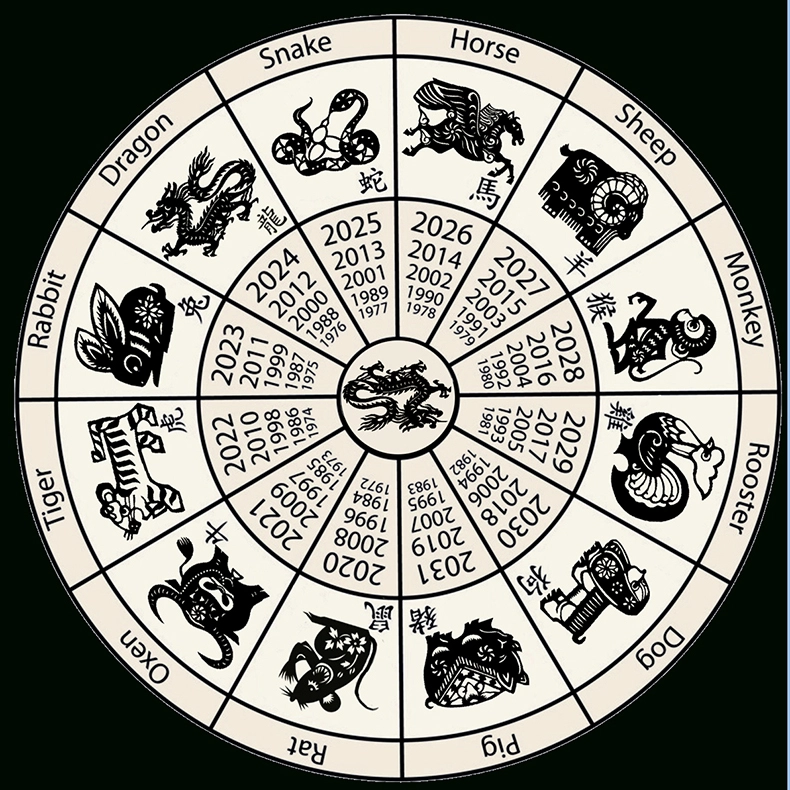
Chinese Zodiac calendar wheel featuring the 12 animals of their Zodiac.
In Chinese culture, the Horse is said to have an independent, dynamic, confident and adventurous spirit and to symbolize vitality, speed, perseverance and success. The Fire element adds intensity and high energy to the mix. According to Chinese horoscope forecasters, this makes 2026 a year for bold decisions and rapid transformations supported by a surge of creativity and ambition. However, Chinese philosophy cautions that while the Horse is brave and enthusiastic, it can also be impulsive. Overall, the forecast for this Year of the Fire Horse is potentially one of moving forward, renewal, vibrant transformation, economic growth and technological advancements.
This year is also a Yang Fire year, one which favors those who are willing to take risks and make quick decisions. In Chinese philosophy, Yin and Yang are the dual, yet interdependent, forces present in all aspects of life. Years ending in even numbers are Yang while Yin years are odd-numbered. Yang is associated with activity, dynamism, brightness, warmth and masculinity, while Yin is thought of as having passivity, receptivity, darkness, coolness and femininity.
Babies born in a Year of the Fire Horse are thought of as energetic, charismatic and desiring the freedom for self-expression. Find out which animal corresponds to your birth year and check out the 2026 horoscopes for all of the 12 Chinese Zodiac symbols here.
Numerology also plays a huge role in shaping Chinese culture and beliefs. Last year was the ending of the last Universal Year cycle—it was Year 9. In 2026, we enter a new Universal Year 1. (When added together, the numbers in 2026 add up to 10, which leads back to number 1.) Additionally, the five elements are associated with numbers; numbers that end in “6” or “7” are always associated with Fire. Hence, in 2026 we have the Fire Horse and next year, 2027, will be the Year of the Fire Goat/Sheep.
It is also interesting to note that the start of this year’s Chinese New Year corresponds with the Ring of Fire solar eclipse that will appear over Antarctica on February 17. This adds even more intensity and fireworks on that day!
More About Chinese New Year
One of the most important holidays of the year, this lunisolar (combines the solar year with the moon’s cycle) event is celebrated in China, Hong Kong, Taiwan, Macau, and in Chinatown neighborhoods in other countries around the world, among others. The day on which the Chinese Lunar New Year lands varies from year to year based on when the first new moon falls (this can be any day from January 21 to February 20).
The first day of the Chinese Lunar New Year marks the start of a 15-day Spring Festival which celebrates the end of winter and the start of new agricultural cycle. This spring celebration ends with a Lantern Festival on the final day (this year’s Spring Festival runs February 17-March 3). The day before the Chinese New Year is called New Year’s Eve, which comes with a set of practiced traditions as well.
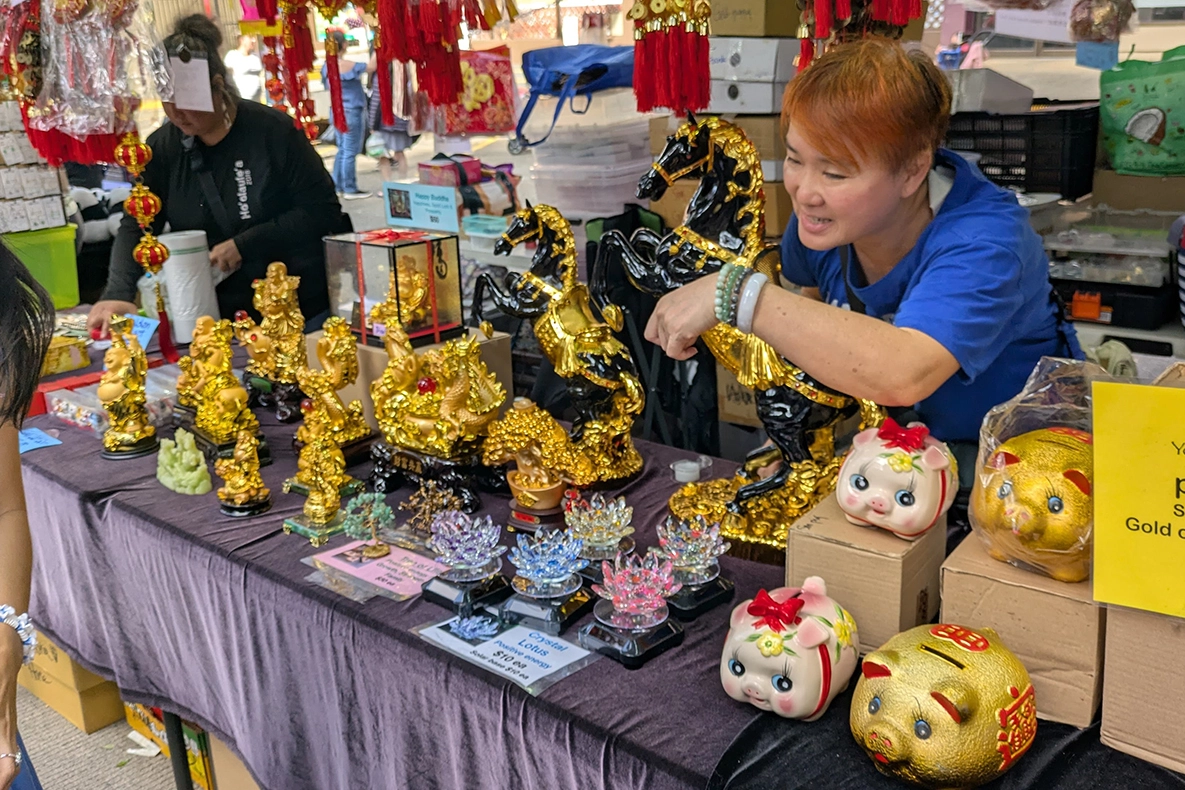
A merchant selling Chinese New Year gifts at the 2026 Honolulu Chinatown New Year Spring Festival. Photo by Dorrel Whinery
Same as the January 1 New Year in the Gregorian calendar used by the Western world, the Chinese New Year is a time to shrug off the old and bring in the new, and to follow traditions that invite luck, good health and wealth. Across China, people traditionally have holiday time off from work with many traveling back to their hometowns; it’s said to be the biggest mammalian migration in the world. Other Asian cultures celebrate in similar fashion, but with a few different traditions.
As with all holidays, there are many traditions associated with Chinese New Year. Starting with today, New Year’s Eve, it’s a time to clean house to “sweep out the old year’s dust.” And, to prepare a good-luck meal to enjoy with family; the meal should include long noodles to encourage longevity and rice for abundance, but there are many other lucky foods on the list to try as well. Also important on New Year’s Eve, leave the lights on until midnight to drive away evil spirits so the New Year can begin with good luck.
Wearing red for the New Year celebrations is very important as well; it is the ultimate lucky color. Bonus points if your underwear and socks are red, too! Red is thought to bring good luck, prosperity and ward off evil spirits. Continuing with the red theme, on New Year’s Day people gift red envelopes containing money to children and unmarried young people in their family as part of New Year’s celebrations to pass on good fortune, joy and blessings.
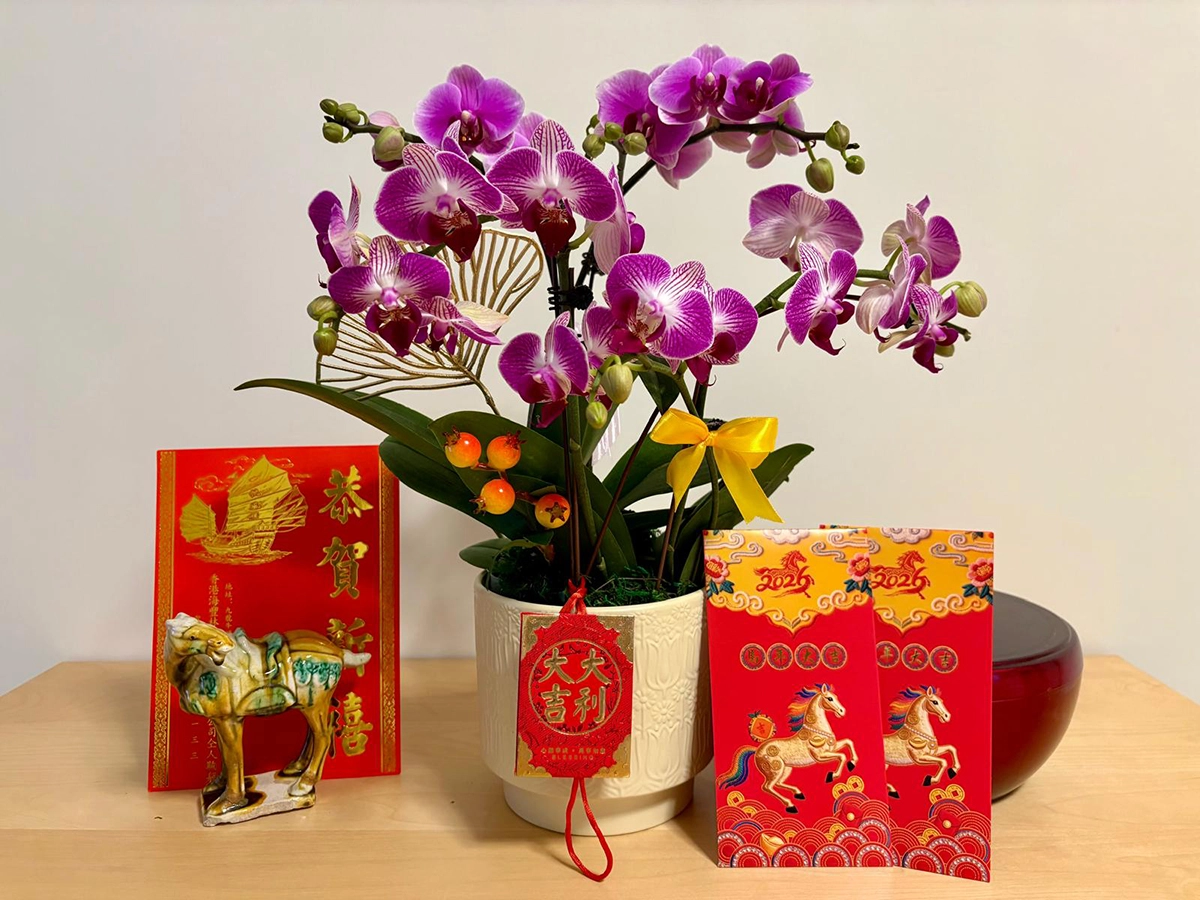
Flowers, red envelopes with money inside and a Chinese ceramic horse are examples of gifts that will be given during the Year of the Horse. Photo by Queenie MW Lam
Buying flowers and plants is also something that can bring growing luck for the coming year. Honoring one’s ancestors is another New Year’s tradition. And, fireworks are a visual delight to usher in the New Year. Only kind and lucky words should be spoken on New Year’s Day to start the year on a positive note.
There is also a list of things to avoid on Chinese New Year’s Day because they might invite bad luck. These include no washing of clothes or dishes and no house cleaning (these should be done on New Year’s Eve instead) and not wearing torn clothes. And, don’t wear white or black since these are colors associated with death in China. Find other New Year’s dos and don’ts here.
There is much more to learn about this important holiday than space allows. Here are some links to more information:
◆ The Chinese New Year from Britannica
◆ 15 Chinese Lunar New Year Fun Facts
New Year’s Fun & Games
Beyond wearing red, watching fireworks and consuming lucky food, there are so many fun ways to celebrate the incoming Chinese New Year of the Fire Horse. Here are a few ideas.
1. Take a Virtual Tour of Smithsonian Museum Equestrian Art
Enjoy some equestrian art from the Smithsonian Museum’s 2026 Year of the Horse collection. Find some beautiful pieces here.
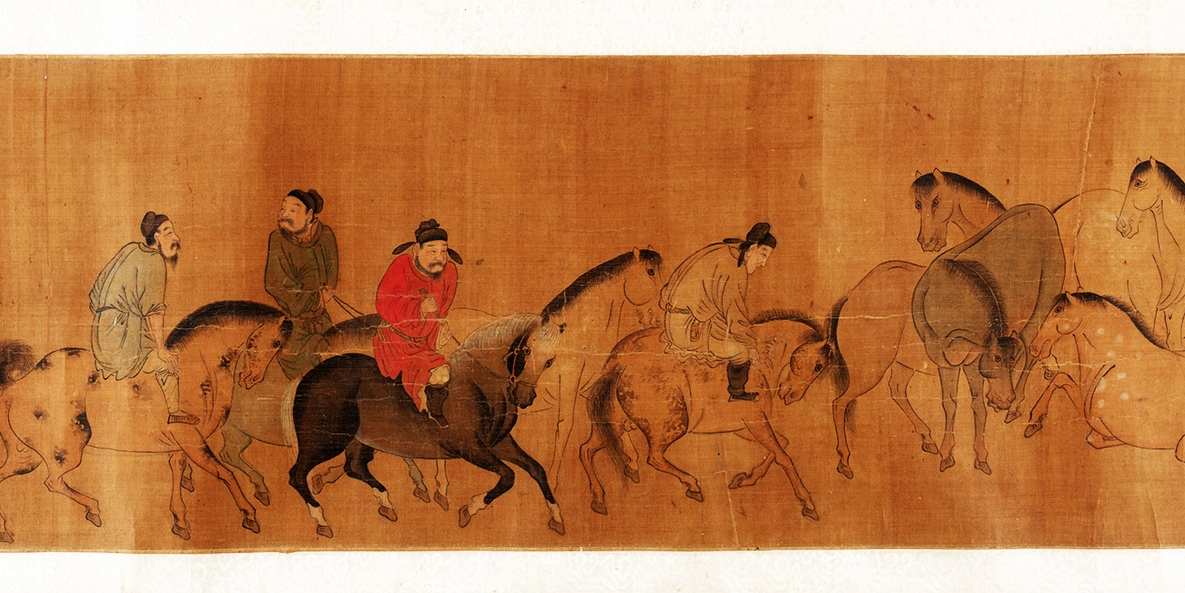
“Celestial Horses,” artist unknown, an ink and color on silk artwork gifted to the Smithsonian Asian Art Museum by Charles Lang Freer, is one of the featured artworks in the Smithsonian’s 2026 Year of the Horse web feature. Photo courtesy the Smithsonian Institute
2. Learn How To Write a Decorative Holiday Couplet
This really cool video, shared by Queenie MW Lam in Hong Kong, shows how to create a couplet of two written Chinese traditional Han characters to create a festive New Year’s greeting. Watch the video here.
The character Fu (福; fú) means fortune and good luck. And, the character for horse is 馬 (it kind of looks like a horse with the four legs, trailing tail and mane flowing out behind).
Note in this video the use of the red paper and the gold writing, plus the little gold gourd next to 2026 (which symbolizes prosperity, protection and harmony), the gold ingots in the upper right-hand corner (inviting wealth in the New Year), and the traditional New Year’s fireworks to the left of the horse.
For all the artists out there who would like to try their hand at re-creating the couplet in the video, here is the English translation of the subtitles at the top of the video:
- First, write a “5”.
- Then, write “2026”.
- Write a reversed “7”.
- Connect the lines to draw the mouth and nose.
- Draw the eyes.
- Fill them in.
- Add the ears.
- Draw the horizontal and vertical lines.
- Use zigzag lines to create the mane.
- Draw the two connected circles to make the bridle.
- Write the other half of the fortune character.
- Use several “S” shapes to form the tail.
- Draw a small circle and a big circle to make the gourd.
- Use two “C” shapes to draw the gold ingots.
- Add small dots to create fireworks.
- Draw some additional decorations.
- The Fu (福) character for the Year of the Horse is complete.
3. Breyer’s Special Year of the Fire Horse Model
Most horse lovers have at least one Breyer horse model on a shelf or in a toy box, most of us many more. Since 1950 this U.S.-based company (now owned by Reeves International, Inc.) has produced lifelike models of equines and other animals. The company’s BreyerFest attracts many thousands of visitors each year to the Kentucky Horse Park in Lexington, proving just how popular their products have become.
In 2026 the company released a special Year of the Fire Horse model called Yàn Wǔ. Stephanie Macejko from Reeves International said that this limited edition has been their most popular release of the year thus far.
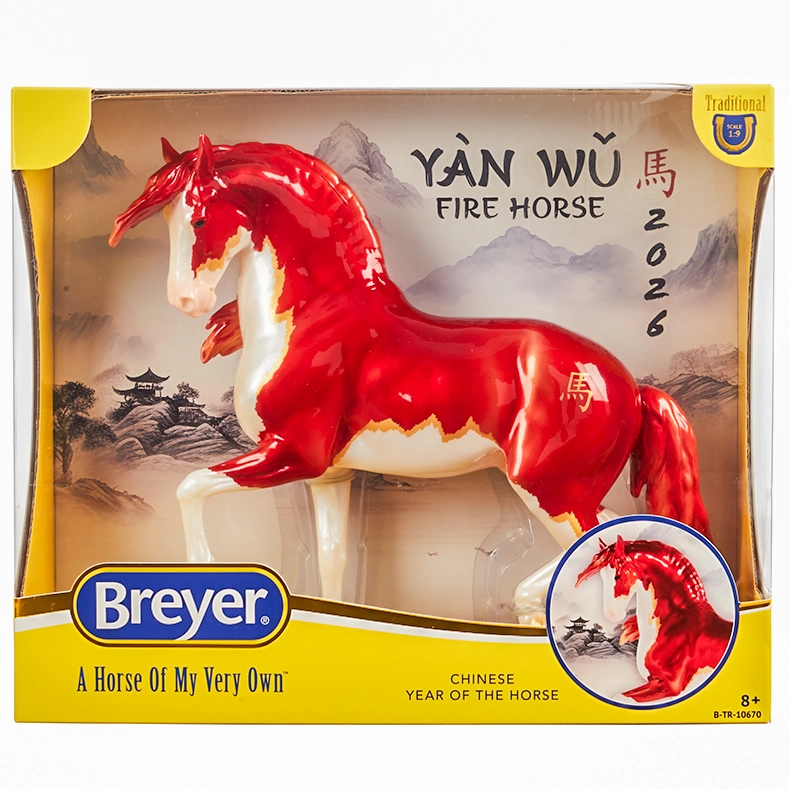
Yàn Wǔ, a Breyer limited-edition model for the Year of the Fire Horse has been their most popular item thus far in 2026. Photo courtesy Breyer
She explained the creative process behind this flashy chestnut and white statue, “For Breyer, every year is the Year of the Horse! For over 75 years, we’ve celebrated all the different breeds and disciplines that inspire us, including those in art and culture, too! The colorway was inspired by Chinese watercolor art, but converted to celebratory metallic reds and golds, with a pearl base. The symbol for horse is shown on the hip, and his name means ‘flame’ and ‘dance,’ which captures the spirit of the horse’s stance and the fact that 2026 is the Year of the Fire Horse.”
According to Macejko, Yàn Wǔ is not their first Year of the Horse tribute. In 2014, Breyer celebrated the Year of the Wood Horse with a limited-edition model painted with a woodgrain finish, and also produced a second collectible model showcasing the colorful smoke used in traditional Chinese celebrations. Before that in 2002, they released “Jade,” decorated to evoke the look and feel of the gemstone, to mark that year’s Chinese New Year of the Horse.
4. Chinese New Year’s Galloping Horses Scroll from LEGO
LEGO, the Danish construction-block toy company, has attracted both young and old fans from around the world since their founding in 1932. LEGO representative Sydney Mauro shared that, beginning in 2019, they have been releasing Lunar New Year sets as part of their seasonal portfolio. These feature festive scenes, zodiac animals and cultural traditions that celebrate Spring Festival.
In 2026 for the Year of the Horse, they introduced the LEGO Galloping Horses Canvas set. It is a build-and-display model that brings traditional Chinese brush painting to life in brick form.
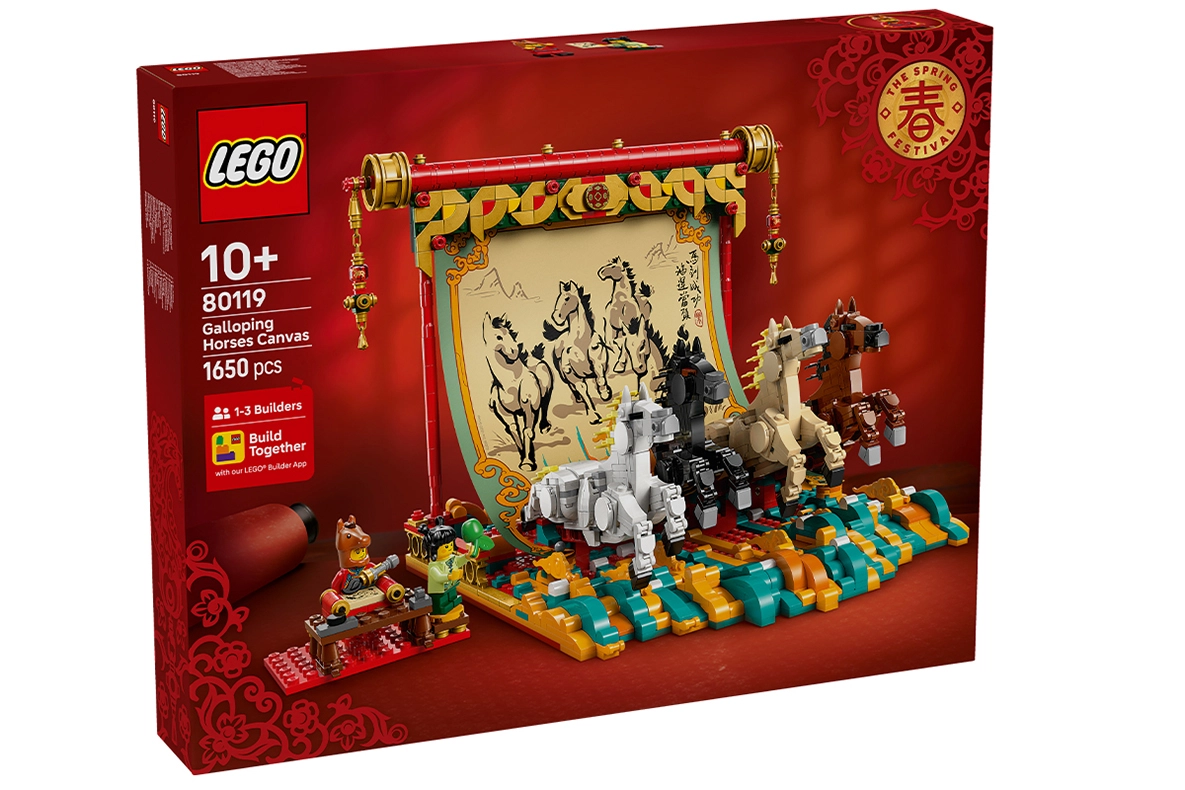
LEGO introduced this Galloping Horses Canvas set in 2026. Photo courtesy LEGO
“The LEGO Group’s Lunar New Year sets are designed to inspire kids and families to celebrate cultural traditions through hands-on building. This year the brick-built horses and printed canvas feature symbols of strength, good fortune and the traditional blessing of ‘success upon arrival’ in the New Year. The set also allows builders to pose the four horses and turn a handle to make them move as if galloping out of the painting, creating a playful Spring Festival decoration families can build and enjoy together,” explained Maduro.
5. Pokémon GO’s Lunar New Year’s Game
For aficionados of Pokémon GO, there is a Lunar New Year event on February 17 with added features as a nod toward the Lunar New Year. Visit here for more information.
2026 Year of the Fire Horse Photo Gallery from Around the World
-
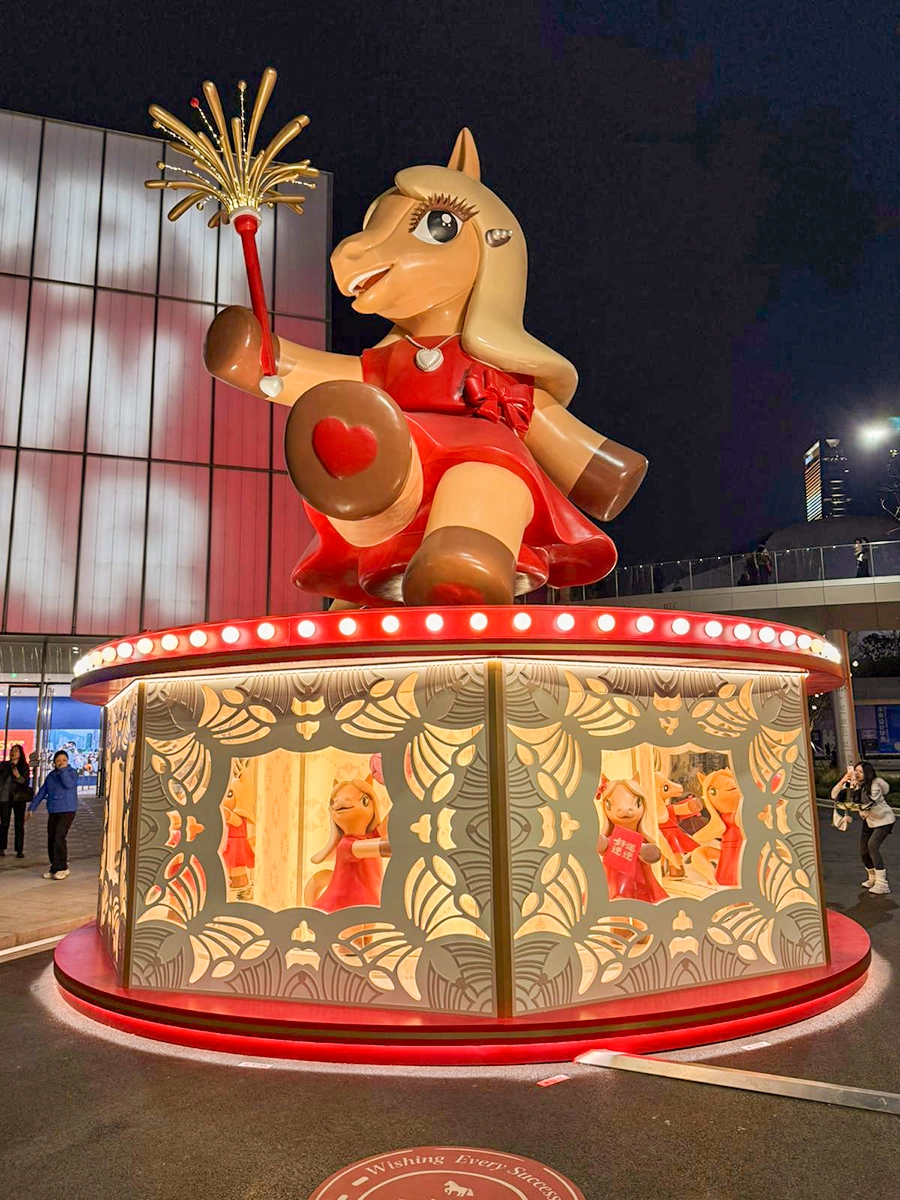
- Chinese New Year of the Horse decorations at Shenzhen Bay MixC Mall in China. Photo by Kathy Cheung
-
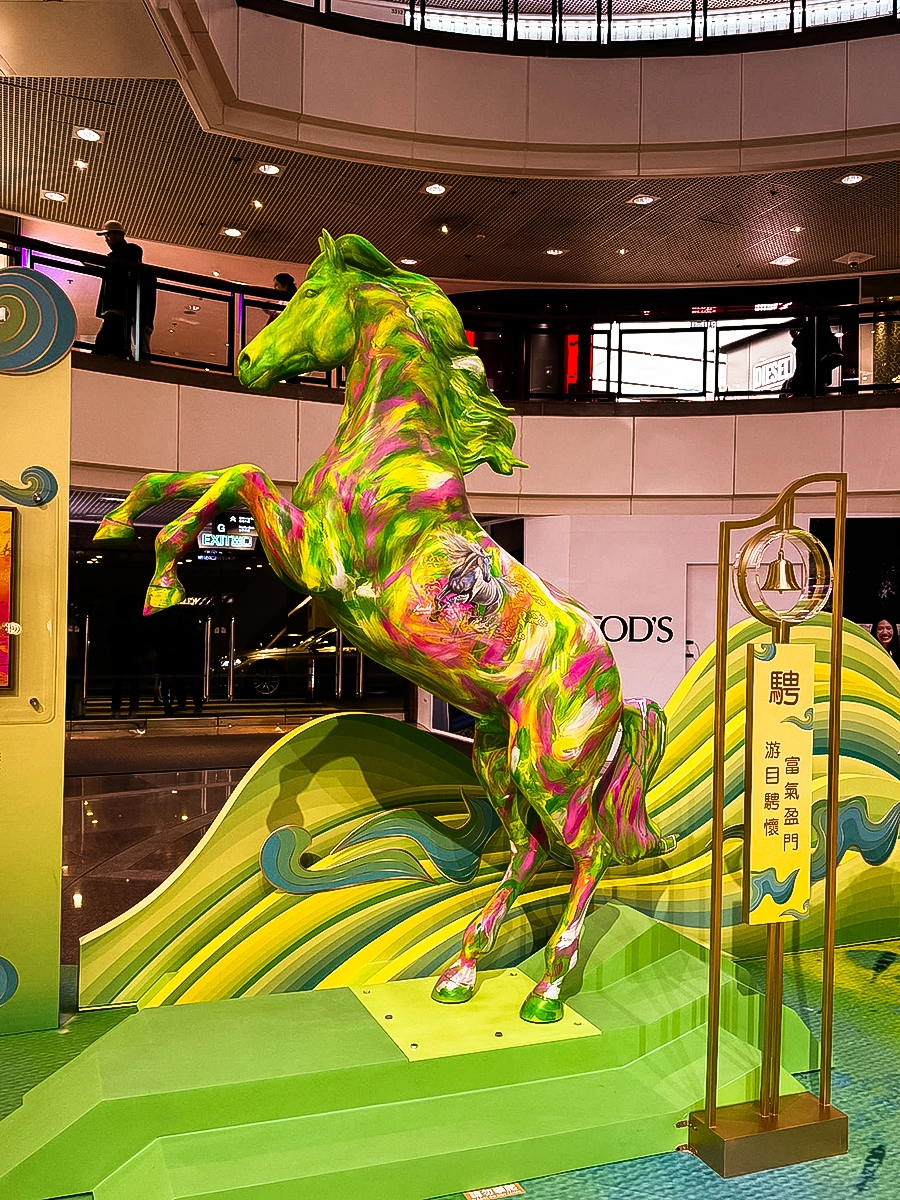
- A colorful rearing horse is part of a New Year’s display at the Harbour City Mall in Hong Kong. Photo by Maya Ho
-
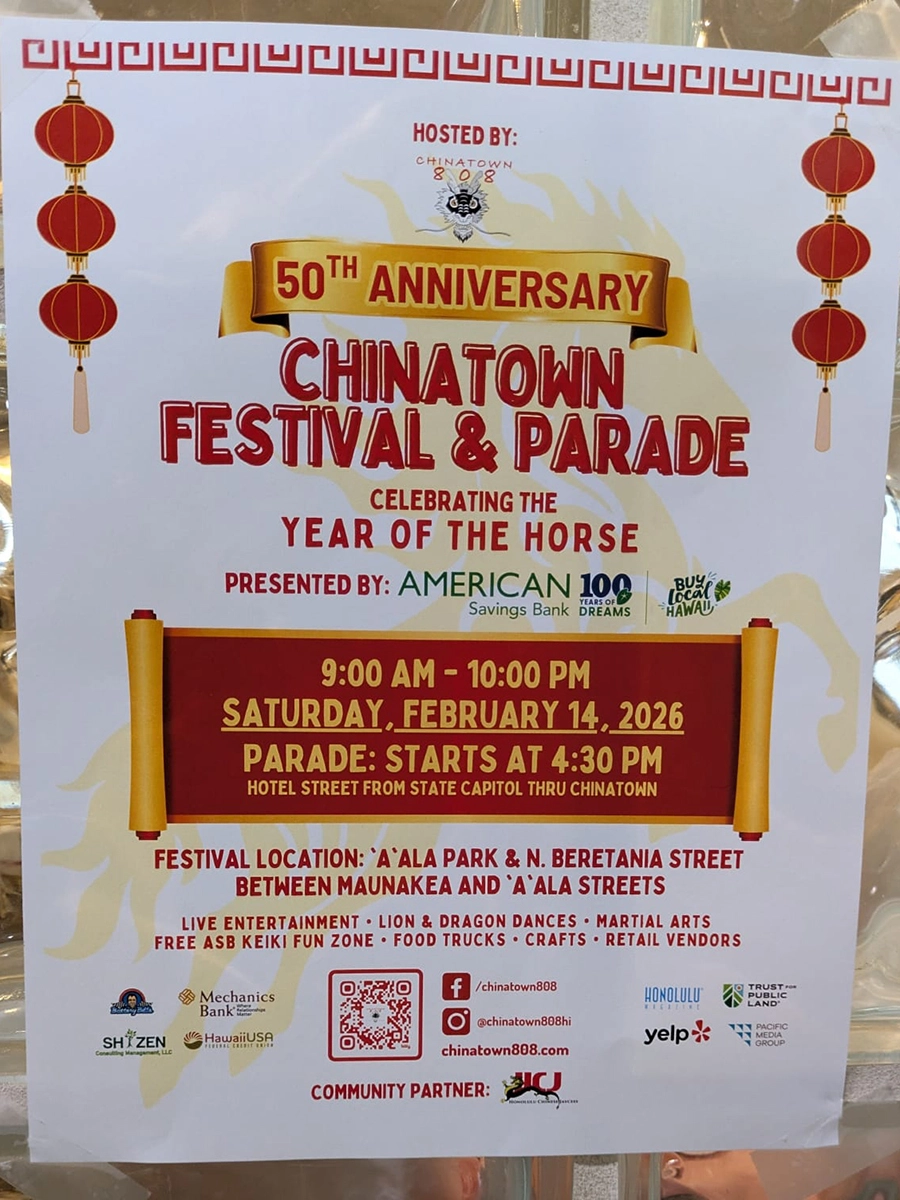
- Poster for 50th anniversary of Chinese New Year Spring Festival and parade in Honolulu, Hawaii on February 14, 2026. Photo by Dorrel Whinery
-
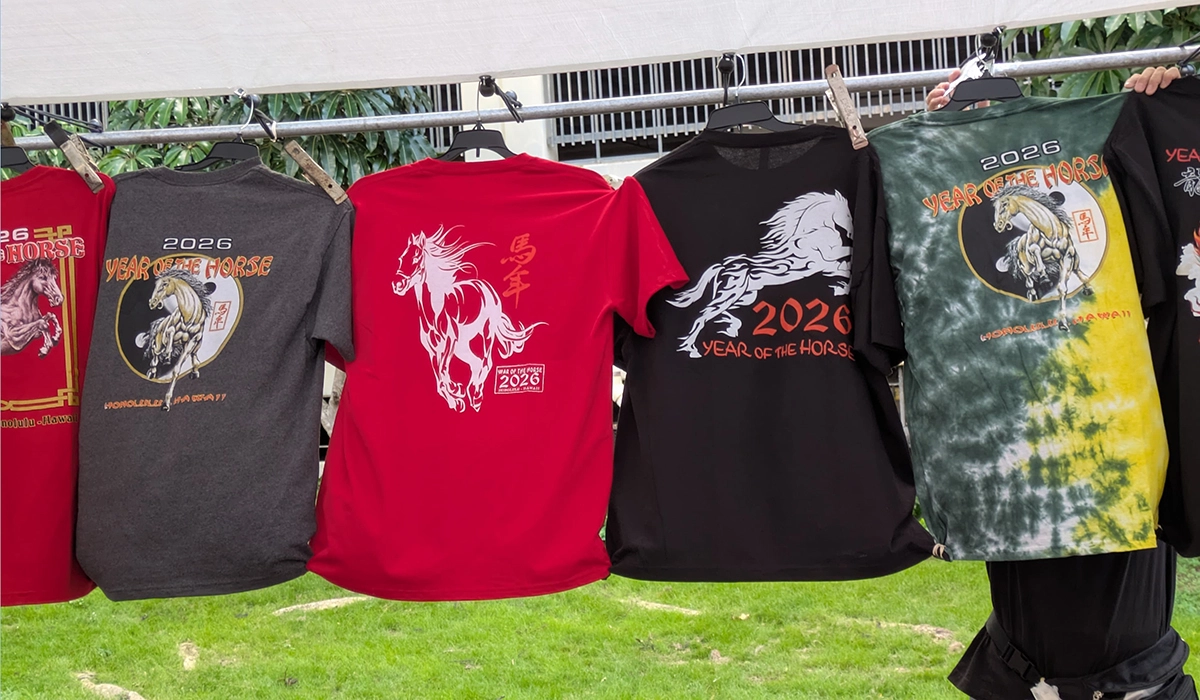
- Year of the Horse tees for sale during the 2026 Honolulu Chinatown New Year Spring Festival. Photo by Dorrel Whinery
-
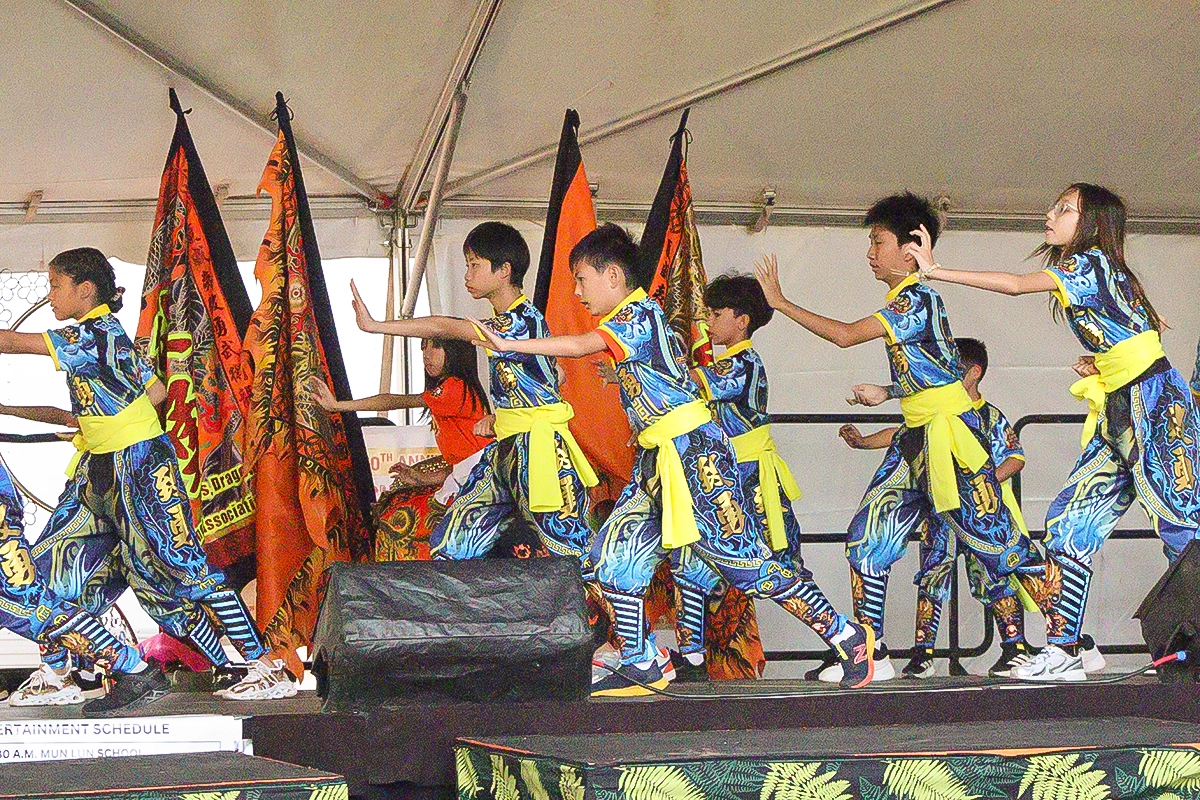
- Martial arts demonstrations during the 2026 Honolulu Chinatown New Year Spring Festival. Photo by Dorrel Whinery
-
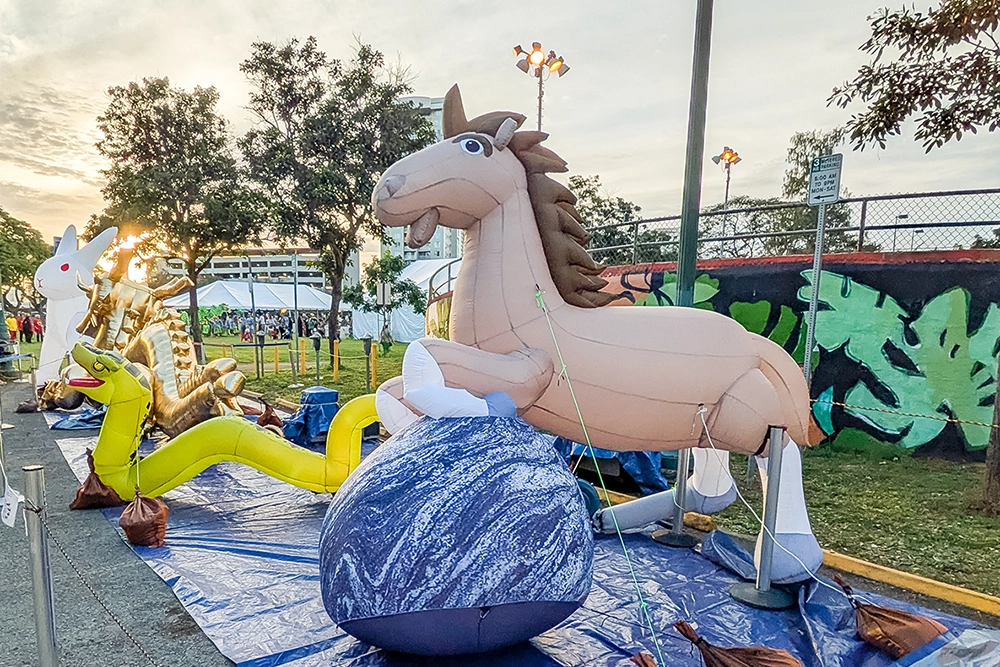
- A balloon horse represents one of the 12 Chinese Zodiac animals during the Spring Festival in Honolulu’s Chinatown. Photo by John Babson
Happy New Year!
So, now on Chinese New Year’s Eve, get ready to ride into 2026. It’s time to say goodbye to 2025, the Year of Wood Snake. Then, break out the celebratory red and gold, gather with two and four-legged family and friends, and get ready for all the Year of the Fire Horse will bring.
Author’s Note: I dedicate this article to my late sister-in-law Jennifer Ho Whinery, a true animal lover, who inspired my interest in Chinese culture. A big thank you to family and friends who helped with the preparation of this article and with photos: John Babson; Kathy Cheung; Maya Ho; Queenie MW Lam, and Dorrel Whinery.