There are 8 common causes of stress in horses, but you can make changes to reduce the effects on your horse.
As herd animals who are also prey animals, horses instinctively feel safer in a group setting with room to flee from danger.
Of course, many domestic horses don’t live in such an environment.
Some are turned out on pasture or even a dirt lot with other horses, but many spend most of their time alone in a stall or corral. These arrangements may be a necessary part of life, but that doesn’t change the fact that it’s not natural for the horse.
Even though horses can adapt, many common management practices can unintentionally ramp up their stress level. Ongoing stress can end up causing health problems, which are often seen in the form of gastric disturbances, including colic and stomach ulcers.
Are you making your horse’s life stressful without realizing it? Take an honest look at your daily routine while considering these common causes of stress. Then take a look at how you can make changes for the better.
Photo by Tomasz Zajda/Adobe Stock
1. Inconsistency
“If you watch horses in a field, they have a routine,” says Kathleen Crandell, Ph.D., an equine nutritionist who works with Kentucky Equine Research. “They often graze in certain parts of the pasture at certain times of day, and rest at certain times. When we become their provider, it’s helpful to them if we put them on a routine because then they know what to expect.”
She notes that without a routine, horses may develop stereotypies, such as cribbing, stall walking, and pawing.
“Horses are creatures of habit and do a lot better with a schedule, [where] you’re feeding and turning out at the same time every day,” says Sam Crosby, DVM, an equine veterinarian since 1994 who maintains his own practice, Crosby Veterinary Services, in Arcadia, Okla.
Crosby often finds that when he examines a horse that is losing body condition and weight, or has gastric ulcers, that horse has not been on a consistent routine.
2. Confinement
Confinement is an ongoing stress that constantly triggers the nervous system. When your horse lives in a stall or in a small corral, regular exercise and/or daily turnout is vital. Making sure other horses are visible also reduces stress.
Whether your horse is stalled or in a dirt lot, hay should be available most of the day and night. Use of a small-hole hay net or slow feeder makes it last longer, so the stomach doesn’t have a long period without forage.
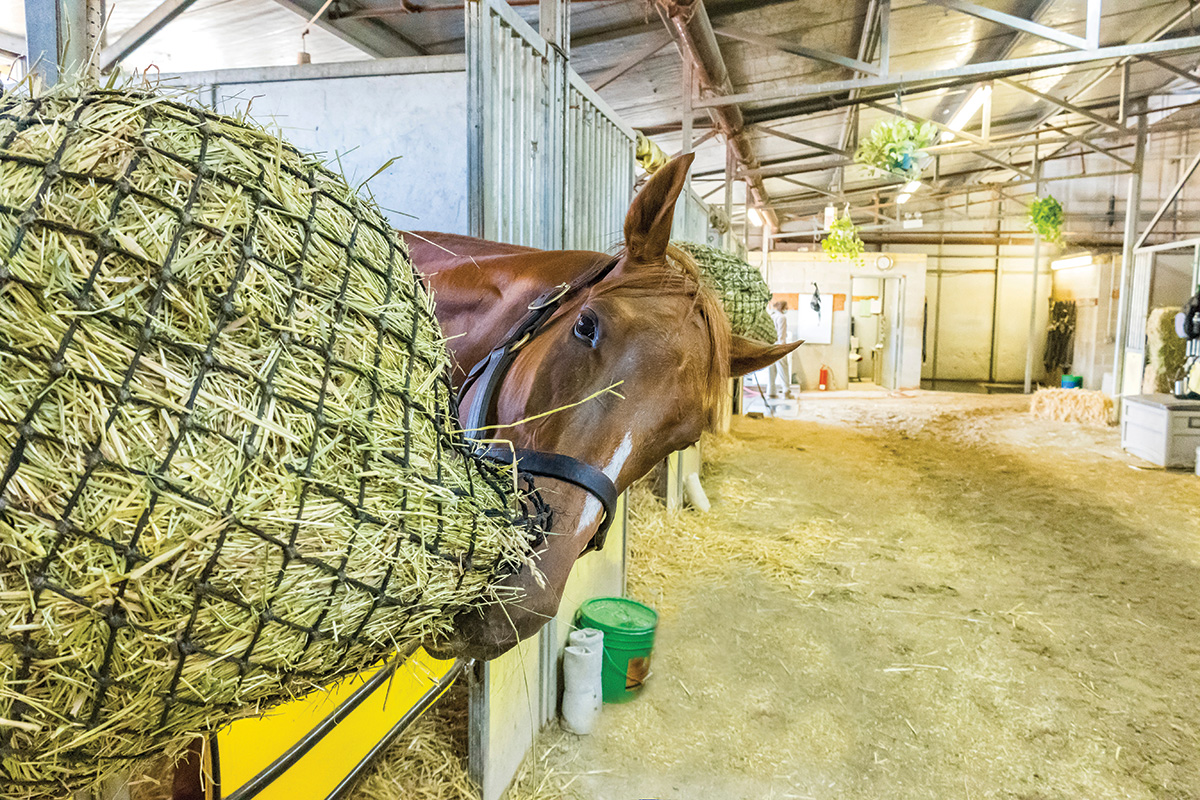
If your horse must be confined off pasture, make sure forage is available most of the day. A slow feeder or small-hole net will keep him from eating too quickly. Photo by Margaret Burlingham/Adobe Stock
Ideally, a horse should eat at least 1.5 to 2 percent of his body weight in forage daily.
3. Herd Dynamics
If you’re fortunate to have your horse in a pasture setting, keep him in a compatible group. In boarding situations where horses come and go, this can be challenging.
“Horses have a natural pecking order and have to establish that, but if one horse is a bully, you have to separate them,” says Crosby.
Once you have an established group that gets along well, it’s best not to change it.
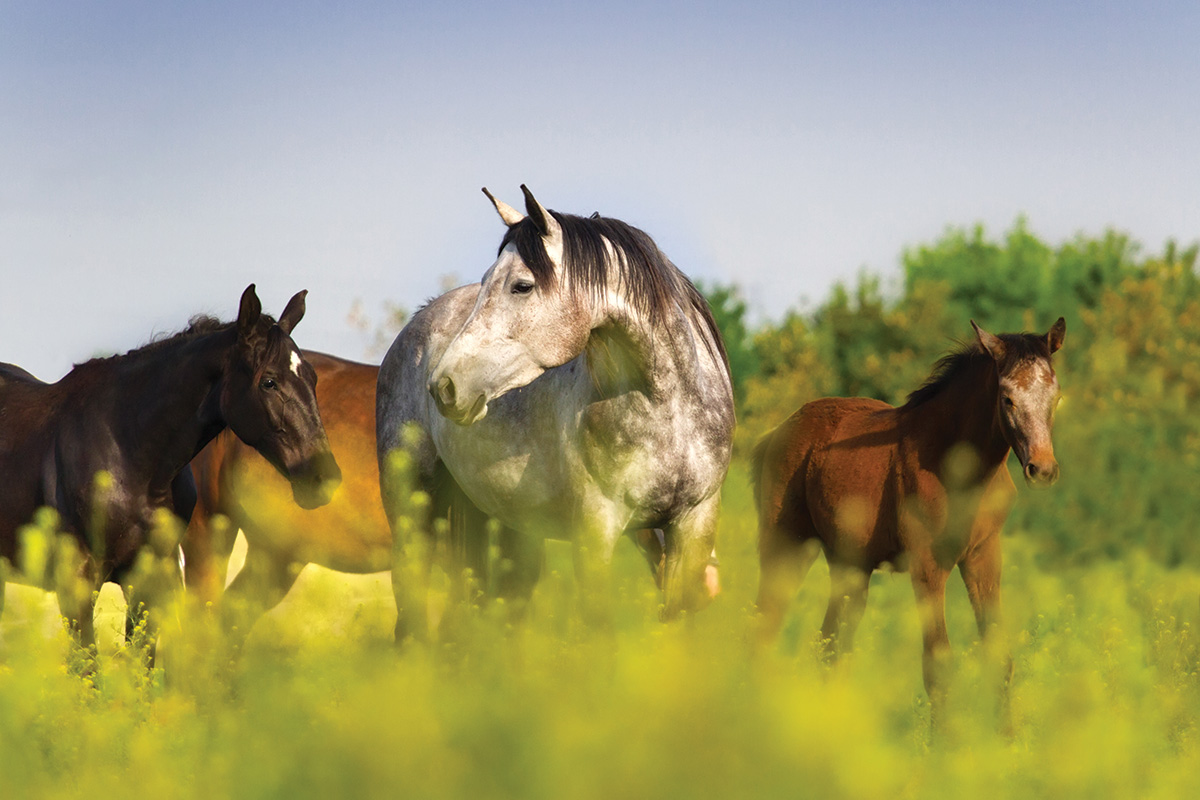
Once you find a compatible pasture herd for your horse, it’s best not to change it if you want to avoid stressing him. Photo by Callipso88/Adobe Stock
Changing herd dynamics, such as moving from one pasture to another and being with different horses can be enough to trigger ulcer development.
Feeding in a group setting is also asking for trouble. It puts horses lower in the pecking order at risk of not getting their share of feed or even getting injured. The safest option is always to separate horses at feeding time and then turn them back out together. If this is not possible, spacing hay piles or grain feeders quite far apart with one more pile/feeder than horses is the next best option.
4. Lengthy Periods Between Meals
“The gut pays the price for stress,” says Crosby. “When the GI system reacts to stress, it lowers the immune system and puts the horse more at risk of contracting respiratory disease and other illnesses.”
One of the biggest stresses to the GI tract is going without forage for hours at a time.
“If your feed routine is first thing in morning and then early afternoon, you’ve got 8 hours between the first feedings, but 16 hours until the next one,” says Crandell. “The longer the stomach is empty, the more acidic it becomes and the more likely the horse is to develop ulcers.”
Because horses are hind gut fermenters, their GI system functions best when fed small amounts of forage throughout the day.
Crandell points out that in the 1500s to late 1800s, when horses were used for work and transportation, it was unheard of to feed less than four to six times a day. Horses were routinely given breaks to graze or eat hay.
Space out feedings evenly so you aren’t feeding large amounts of grain at once or going long periods with no forage intake. This may mean feeding three to four times a day instead of twice.
5. Changing Hay and Feed
Buying whatever hay or feed is on sale and frequently making changes is stressful on the horse’s digestive system.
“Abrupt changes in feed can cause serious changes in the gut,” says Crandell. “If the gut is healthy, the immune system functions optimally; 70 percent of the immune system is in the gut. It’s all about the balance of the microbiome.”
Beneficial bacteria create a mucous layer in the small and large intestine, offering protection from digestive juices and large molecules.
“The beneficial bacteria maintain this mucous lining, but if you disrupt the good bacteria, the mucous layer breaks down, and this is what allows pathogenic bacteria to get through the gut lining and into the blood stream,” she adds.
Changing feed abruptly imbalances the microbial population and can result in damage to this protective mucous lining, making the horse more susceptible to gastric upset and leaky gut.
Always allow a week to make feed changes by adding one-quarter of the new feed or hay to three-quarters of the old. Then gradually add more of the new while tapering out the old. This allows the gut microbes to gradually adjust to the new source.
6. Travel
Transporting horses is common, but travel is a high source of stress, so take practical steps to reduce its impact.
Keep hay in front of horses during travel so they don’t have long periods with an empty stomach.
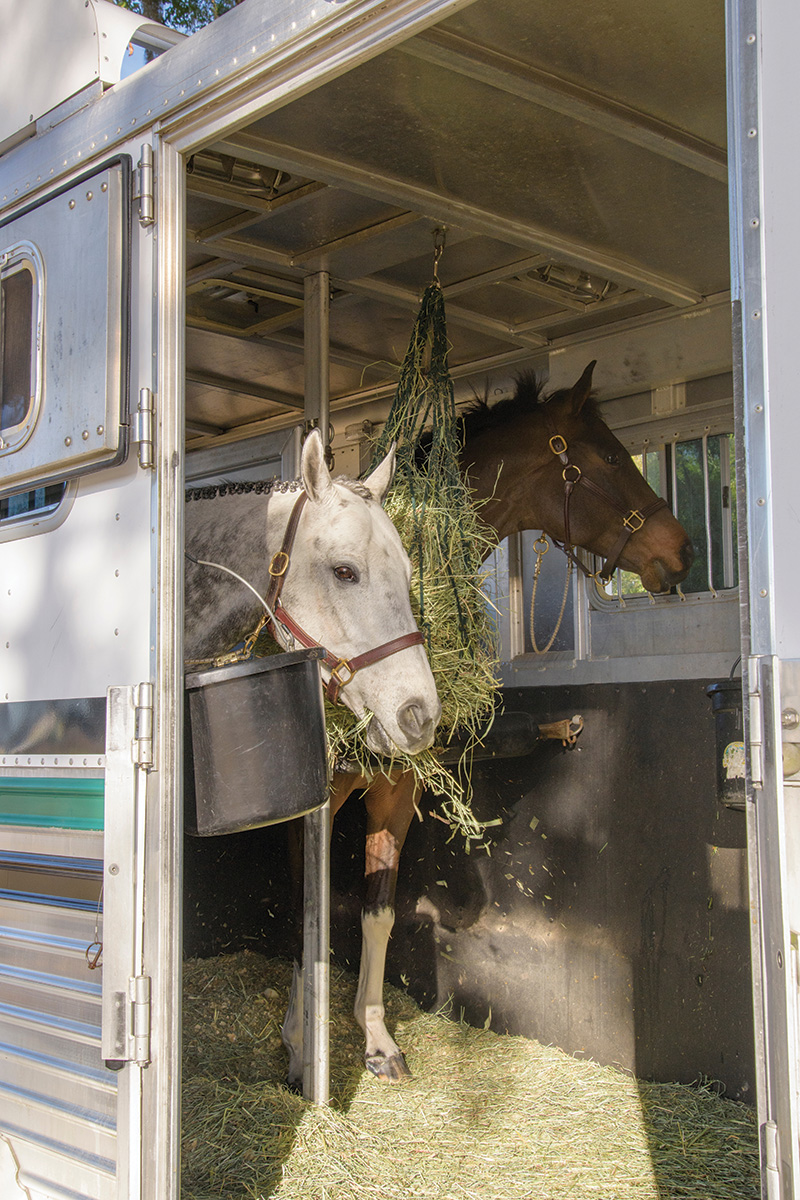
When trailering, hang hay for nibbling on long rides, and keep ties long enough so that horses can lower their heads to clear their airways. Stop every few hours to allow horses to drink. Photo by Mark J. Barrett/Adobe Stock
Don’t tie so short that horses can’t drop their heads at all.
When traveling longer than five or six hours, plan for stops of at least 15 to 20 minutes to encourage horses to drink and urinate, as many won’t do so while the trailer is in motion. On longer trips, schedule overnight stops, or at the very least unload long enough that horses can walk, stretch their legs, and lower their heads, which is important for clearing the airways.
Both Crosby and Crandell recommend supplementing with probiotics for overall gastric health, particularly during travel and competition.
To help prevent ulcers, it’s also beneficial to use a proven medication, such as UlcerGard, two days before, during, and right after travel.
7. Weather Extremes
Living in tornado alley, Crosby has treated many horses after being injured in tornadoes. He’s found that extreme weather can do more than cause physical injury.
“When a horse has been through a big event like a tornado, it has a lasting effect on the psyche,” says Crosby. “These horses will generally be spookier afterward and have problems coping. It’s a common happening and is like PTSD in humans.”
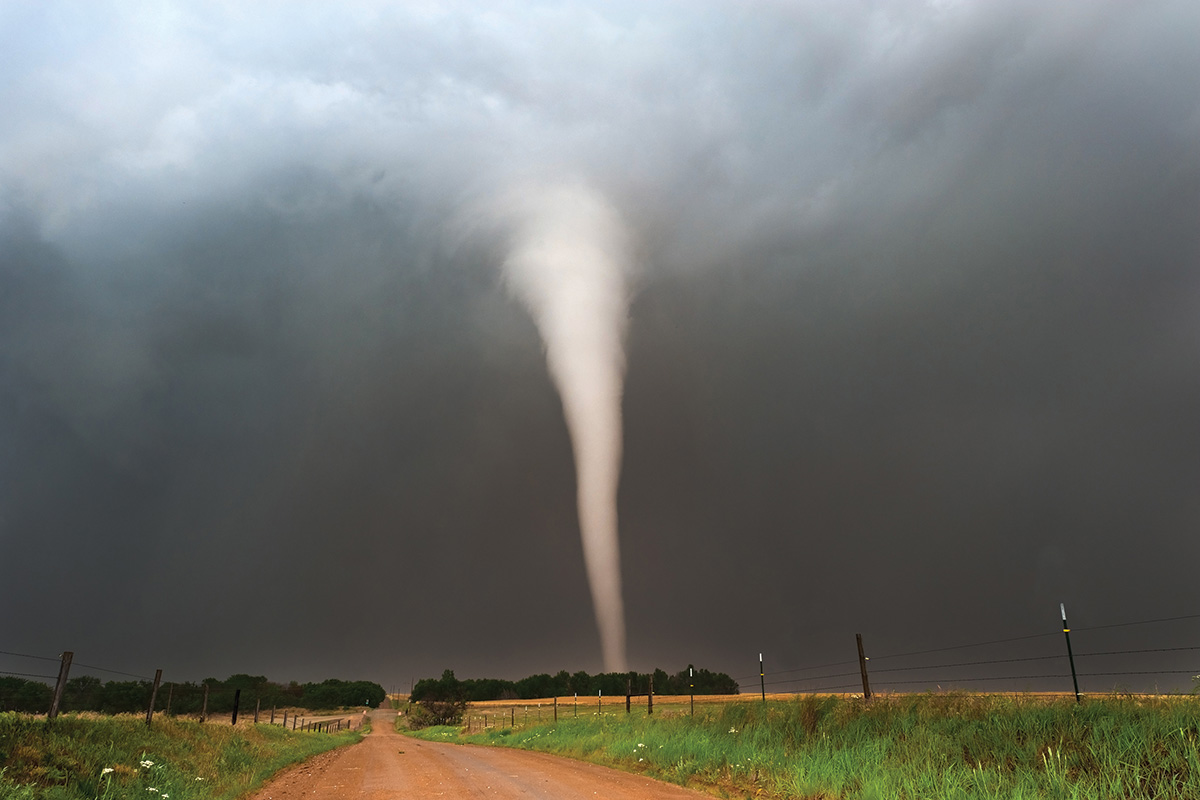
Severe weather events can leave horses with lingering spookiness and other psychological effects. If possible, evacuate when weather warnings come in. Photo by Minerva Studio/Adobe Stock
Although major weather events are totally out of your control, be aware that they can cause significant stress in horses.
If you live in an area with extreme weather, such as tornadoes or hurricanes, have plans in place so your horse is in the safest possible situation. This may mean evacuating ahead of a storm or turning out in a large field instead of keeping the horse inside a barn.
8. Barn Atmosphere
The atmosphere in and around the barn either contributes to stress or reduces it. This includes feed, exercise, and training routines, how horses are handled, human personalities, and even the noise level.
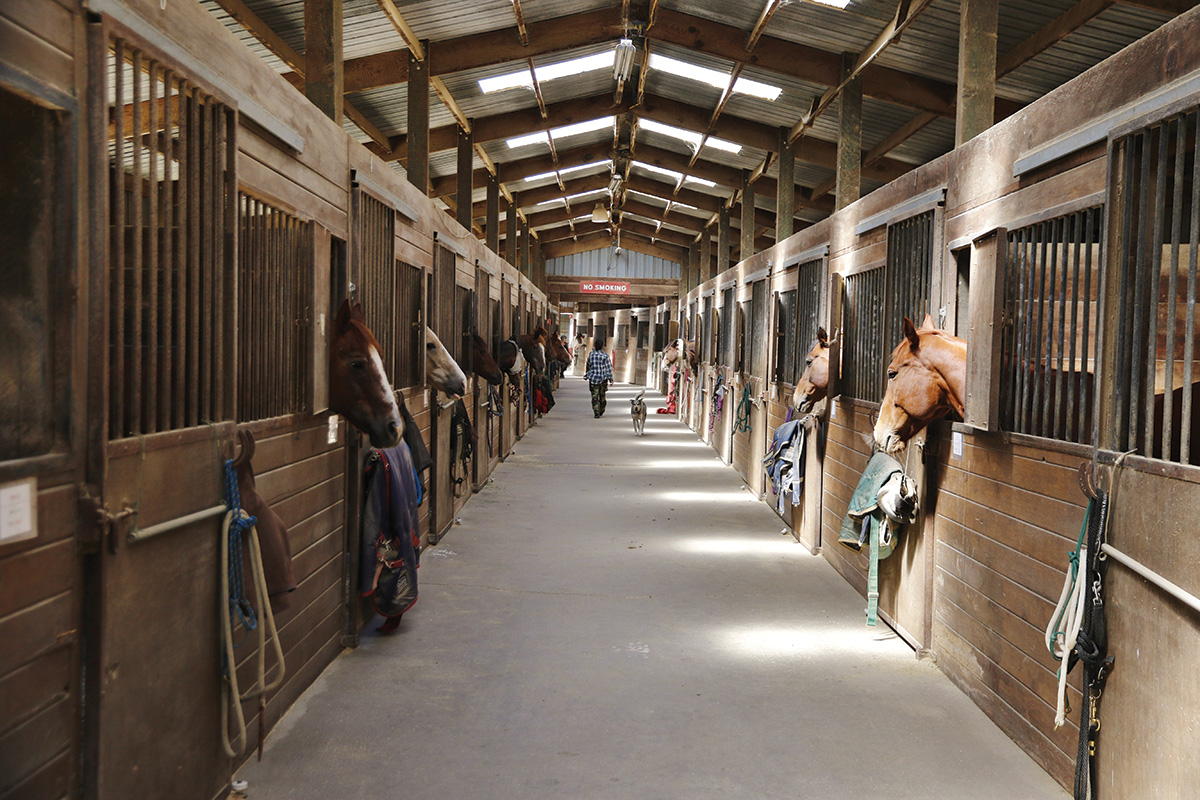
Even the noise level in the barn can contribute to stress. Take a look at how your horse is handling it, and consider making a change if needed. Photo by Mbennett/Adobe Stock
“Your barn should be calm; if it’s not peaceful, the horses will feel it,” says Crosby, who often treats horses whose stress and anxiety is directly related to their daily environment, routine, and how they’re handled.
Do everything you can to promote a stress-free barn atmosphere. On occasion, this may mean moving to a different boarding facility, but if it makes your horse’s life less stressful, it’s worth it.
Signs of Stress in HorsesPay attention to what your horse is telling you without words. For example, lighter-colored and looser manure indicates that stress has affected the balance of the microbiome in the gut. The following are all signs of physical and/or mental stress:
|
This article about causes of stress in horses appeared in the August 2024 issue of Horse Illustrated magazine. Click here to subscribe!