The ASPCA Right Horse program is removing the long-distance barrier to adoption with an innovative program.
Imagine finding the horse of your dreams online, only to discover that he was thousands of miles away. While that may not be an unusual traditional horse shopping experience, for a potential adoptive family, it can seem like an insurmountable obstacle. The good news is that doesn’t need to be the case.
Geographic Barrier
No story about long-distance horse adoption would be complete without at least mentioning sisters Ava and Ilana of West Virginia. Ilana, 12, had already adopted a local horse, but Ava, 11, while reading an article titled “Reimagining Racers” in the March 2023 issue of Horse Illustrated, wanted to adopt a second one.
The story led her to the myrighthorse.org website, the ASPCA’s online adoption platform for equines, where she discovered Little Man, the horse she wanted to call her own.
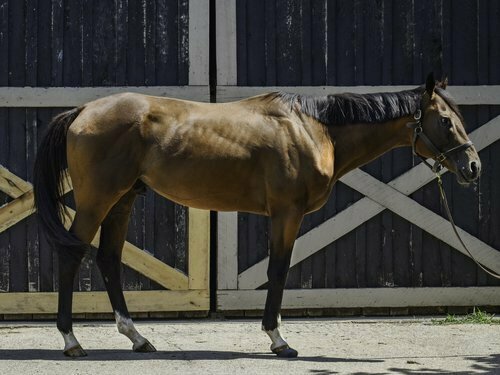
The catch? He was located more than 1,000 miles away at the ASPCA Equine Transition and Adoption Center (ETAC) near Oklahoma City, Okla. Undeterred, Ava worked together with her family to facilitate the long-distance adoption and bring her new horse home.
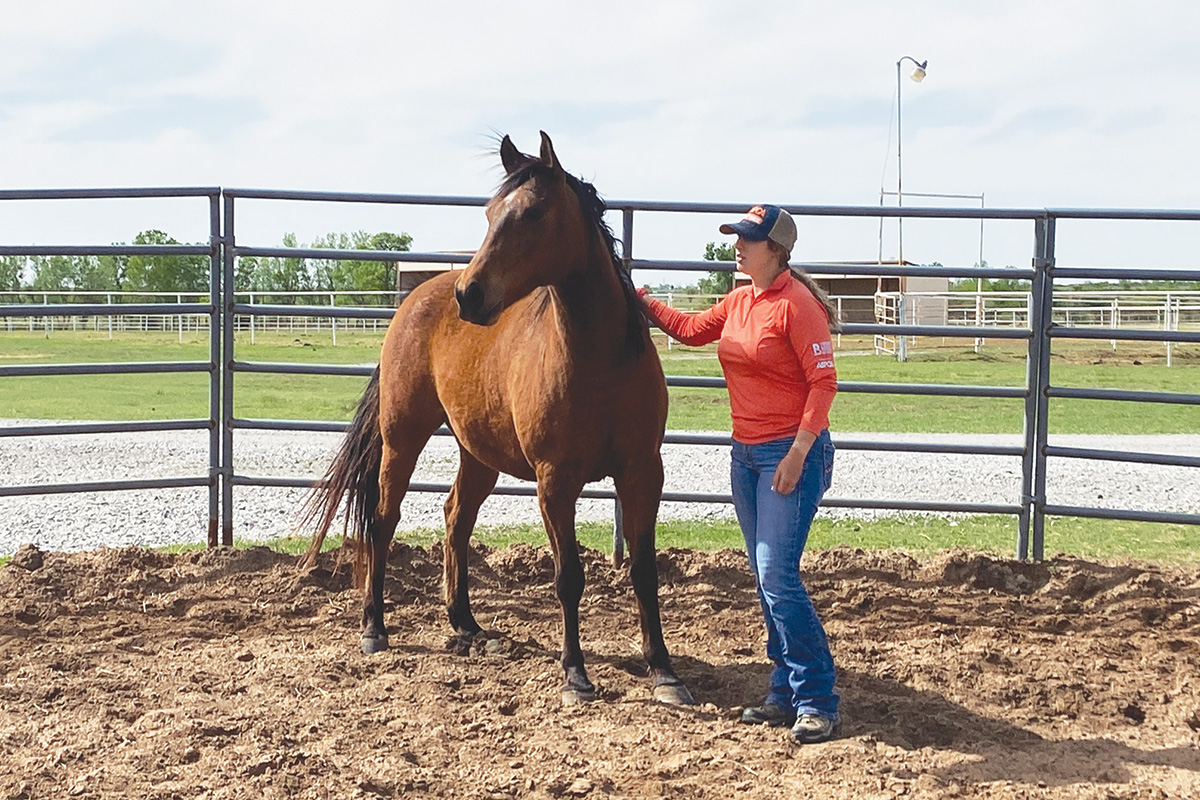
Little Man was located at the ASPCA’s ETAC in Oklahoma, but needed to get to West Virginia. Photo courtesy ASPCA
Raising Awareness
While the tenacity of youth can almost always be counted on to overcome obstacles, long-distance horse adoption can also be easy for the rest of us.
Libby Hanon, equine adoption and marketing specialist with the ASPCA, has some great advice to anyone in this situation. One of the first barriers she faces in placing horses in long-distance adoptable homes is awareness.
“We strive to make people aware that there are adoptable horses nationwide,” she says. “The ASPCA has tried to eliminate that barrier via myrighthorse.org. It’s a powerful tool that brings awareness to adoptable horses. It showcases adoptable horses from 40-plus ASPCA Right Horse Partners.”
She says that these partners are the best of the best, putting horses through a comprehensive intake process, including veterinary and training evaluations, so that they can provide the information that potential adopters seek when searching the website.
Not Sight Unseen
Another potential long-distance barrier for horse adoption is that, for a variety of reasons, the prospective adopter may not be able to physically see the horse before they decide to adopt him. Here again, the ASPCA and Right Horse Adoption Partners work to reduce or eliminate the barrier.
“We pride ourselves on transparency,” says Hanon. “We do everything possible to make the adopter feel as if they are having that in-person experience.”
She says that her organization works with potential adopters through Zoom, FaceTime, or videos to facilitate a similar experience. Using technology, adopters can see the horse being caught in the pasture, groomed, ridden, loaded onto a trailer, and more.
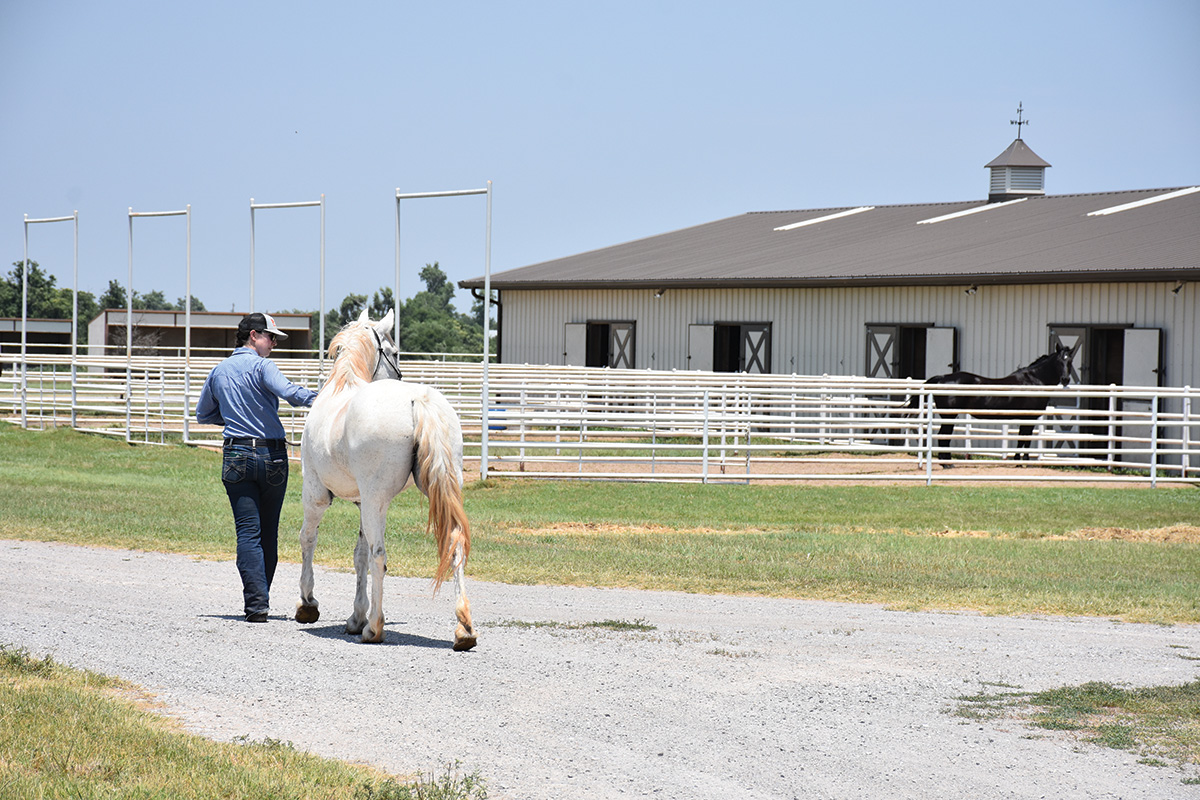
Through Zoom or FaceTime, interested adopters can see horses being caught, groomed, ridden, loaded onto a trailer, and more. Photo courtesy ASPCA
Horse Adoption Express
Getting the horse to his adoptive home thousands of miles away may, at first, seem like a major complication. This is where the ASPCA’s Horse Adoption Express (HAE) program comes in.
“The HAE was instituted because we saw a need on different levels,” says Hanon. “One of those needs was to transport horses between Adoption Partners. Different breeds can have their popularity regionally.”
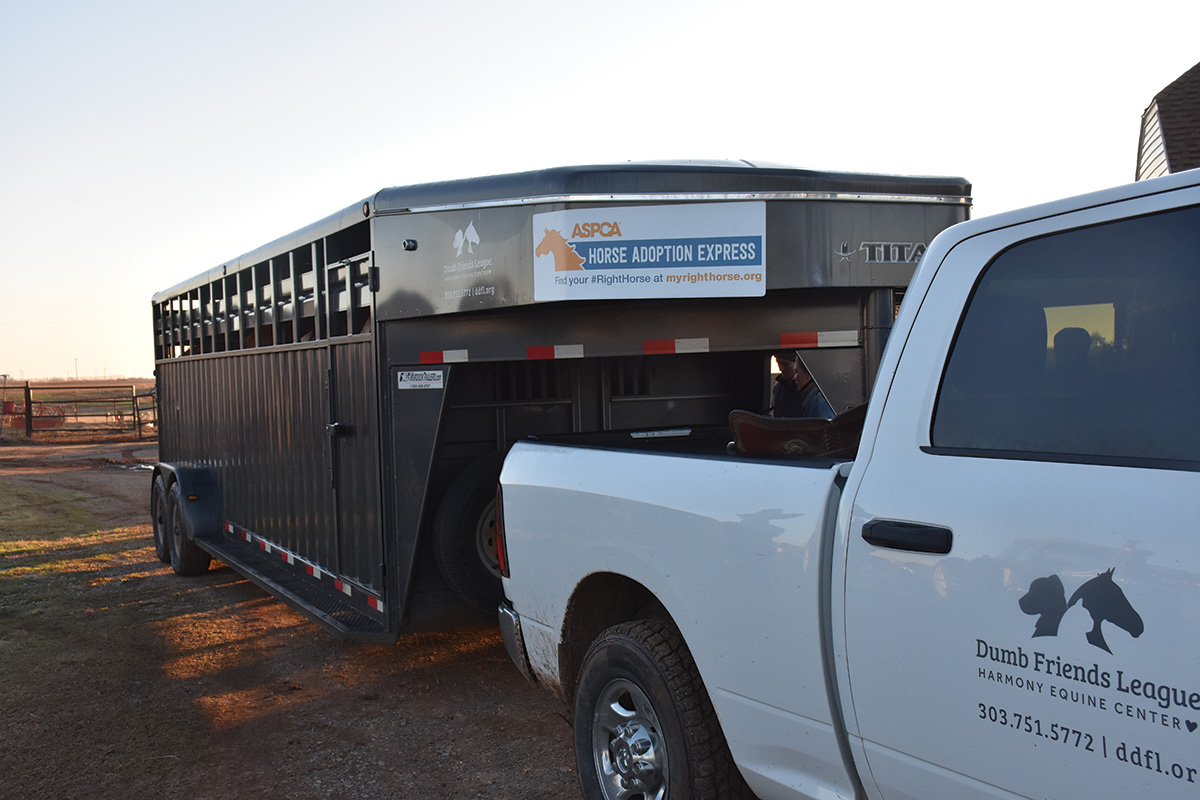
The ASPCA’s Horse Adoption Express now makes it easier to get adoptable horses to new homes. Photo courtesy ASPCA
She describes HAE as a network of followers and transporters that can get horses to other Partners, where they can be adopted more easily.
Another aspect of HAE is to get horses to adopters more simply and economically.
“Getting a horse to an adopter is another way we are lowering those barriers to long-distance adoptions with the HAE program,” says Hanon.
The HAE transport-to-adopter stipend program is offered at any distance to companion or non-riding horses, and if ridable horses are located 250 miles or more away from their adopter, then they are also eligible for a stipend equal to half the cost of transport up to $500. Hanon says that on myrighthorse.org, around 70 percent of the inquiries and adoptions are happening long-distance.
That figure is echoed at the ASPCA, where 75 percent of the adoptions from ETAC in 2023 were long-distance.
Safety Net
Whether you buy or adopt a horse, sometimes things just don’t work out. One of the many positive aspects of horse adoption through an ASPCA Right Horse Partner is that no matter the distance, there are Partners nationwide that provide a safety net and will take these horses back.
Hanon says that successfully placing horses into adoptable homes is her passion.
“My mindset is that every inquiry I get, whether it be local or long-distance, is an opportunity to bring that person into our adoption family,” she says. “We make this doable. We make it fun.”
She explains that she wants adopters and potential adopters alike to feel like a community. The ASPCA encourages potential adopters to visit myrighthorse.org and inquire about their Right Horse with confidence, no matter the distance.
After the RacesBonnie McRae is the founder and executive director of After the Races, a rehabilitation and rehoming facility for retiring racehorses and ASPCA Right Horse Partner in Elkton, Md. In her roles, McRae has been presented with similar would-be barriers, such as the inability to see the horse in person or the high cost of shipping to a far-away adopter. Despite these perceived obstacles, McRae says that she frequently finds herself happily facilitating long-distance adoptions. Nowadays, she says that many people, regardless of their location, are drawn to adopt from her organization due to its reputation of transparency and the desire to set a horse up for success. “All of the horse’s information is put on the website,” says McRae. While this includes information of past injuries or limitations (if any), it also includes quality conformation photos and videos of horses loose and being ridden so people get a good look at the horse they are considering. So far, the organization has placed over 900 horses, with 40 percent of those adoptions being long-distance—as far away as Canada and, recently, the Bahamas! Equally amazing is that the organization’s local and long-distance adoption success rates are virtually the same. McRae feels that part of After the Races’ success comes from an application process that allows the organization to carefully match horses with adopters. For anyone considering long-distance adoption, McRae says knowing your comfort zones, experience level, and having realistic expectations are all characteristics that can make it a resounding success. |
This article about ASPCA Right Horse’s solution to long-distance horse adoption appeared in the August 2024 issue of Horse Illustrated magazine. Click here to subscribe!