Knowing how to warm up your horse is the key to a great performance. If you have a slow horse, you’ll want to make sure he’s listening but not tired out. For horses with lots of speed and energy, it’s important to get their bodies and minds working so they listen well. Here, trainer Cody Crow helps you plan your warmup routines before a ranch riding trail class, but the tips will help no matter where you plan to ride your “whoa” or “go” horse.
What is the Ranch Riding Trail Class?
Ranch riding patterns include obstacles such as poles to sidepass, logs to drag, poles to trot or lope, and segments of extended trotting. The class requires horses to move at slow and fast speeds—and always to listen to their rider’s directions.
“In the ranch riding trail class, there are obstacles where you need your horse to focus and go slow, and times when you want to show that your horse can move out,” Crow says. “It’s important to plan your warmup time so that you can bring the fast horses down to the speed you want and make sure they are patient for the poles or gates. With slower horses, you’ll need to know you can pick up their speed when you want an extended trot.”
Warmup for the Energetic and Speedy Horse
Crow says that many horses labeled “too fast,” “too much,” or “high strung” may need some longeing as part of their warmup, but they will definitely need a warmup that helps activate their brain.
“It’s old school mentality that you go lope them for an hour to wear them out,” says Crow. “Instead, what you need is to get the horse’s brain working with downward transitions, turns, stops, and backs. Otherwise, their bodies are tired, but their minds are busy, and they won’t pay attention to you.”
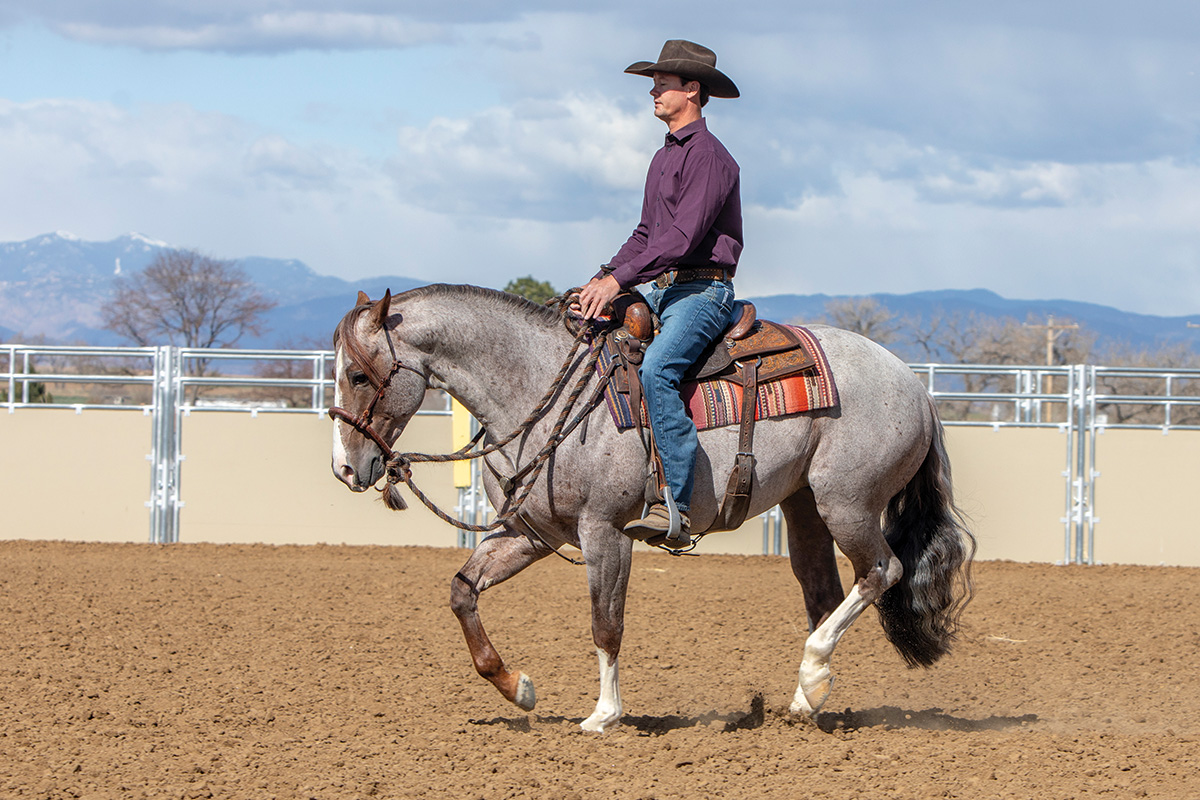
Downward transitions, turns, stops, and backs will engage the speedy horse’s mind on listening. Photo by Heidi Nyland Melocco
Focus on trotting and walking transitions, Crow advises.
“Loping can escalate some horses, and makes it harder to get their brain focused on you,” he says.
If competing, Crow advises that once you have warmed up an energetic horse, make sure to go straight to the show pen for your ride. Don’t warm up and then stand around watching others. If busy and energetic horses get a long break, they may need a whole new warmup.
You may also consider starting the night before. If your horse will be stalled overnight, you may choose to longe him when you arrive. Allowing him to move out will help wear off the adrenaline from travel.
Turning for Attention
At a show, begin your warmup about an hour before your scheduled ranch riding trail class so that you have time to work your horse’s body and mind. Crow likes to work his fast horses in a box formation. He trots straight ahead, then if he feels the horse being strong or going faster than he asks, he makes a sharp turn while continuing the trot.
“Pick up your reins and redirect the horse in a square maneuver,” says Crow. “This takes away the forward motion and asks him to focus on your direction.”
Work your horse in the middle of the arena and avoid going around the entire outside. Trot ahead four to five steps, then pick your reins up and to the side to direct your horse on a new straight line, creating a box or square. Move ahead again and turn when you feel your horse wanting to go faster.
Be careful not to pull on the reins to keep your horse slow. Instead, the box formation will teach your horse that he needs to pay attention, and he will be redirected when he speeds up. When your horse is going at the speed of trot you want, place your hand down in front of the saddle’s horn and allow him to move without interference.
“As soon as I make that square turn, I’ll set my hands down and let my horse go straight again,” says Crow. “If he stays focused and I have his attention, he’s earned the right to just keep going forward and I will leave him alone. If I lose his attention, I pick up and redirect, turning on a new line of the square.”
Crow says if a horse looks around and doesn’t settle in, he’ll pick up his inside rein to tip the horse’s nose in as he also applies leg pressure to encourage a bend. He will walk small circles with his horse’s nose tipped in to one side, then the other. Then he’ll repeat the box pattern again.
When it’s time to warm up at the lope, a “go” horse may pick up speed again. Crow says if you have spent time warming up at the walk and trot, the lope should be manageable, too.
“I do the same thing at the lope that I did at the trot,” says Crow. “Do your square turns and keep your body balanced.”
At the lope, Crow says many riders turn too sharply, using inside direct pressure to pull the horse’s head inside. This can cause your weight to shift to the outside, making your horse scramble to regain his balance. To avoid this, keep him straight through his body and open your reining hand up and out to guide the horse through the turn.
Mix it Up
Instead of just riding around the arena at a walk, trot, and lope and then being done, mix up your warmup.
“Bringing your horse up in speed and then back down is really important,” says Crow. “Some horses are just wired to keep that adrenaline going once they move fast. [Going up and down in speed] keeps them going strong and doesn’t wear them out. If you allow them to move from the trot or lope back to the walk, they realize how tired they are. When you ask for speed again, you aren’t fighting the adrenaline and you seem to get their minds engaged much more quickly than just running full out.”
Warmup for the Slow Horse
If your horse is known to be slow or needs to be pushed to move out, your plan needs to help boost his energy.
“With a slow or lazy horse, our goal is to get his focus and make sure he moves out when asked,” Crow says. “I’ll walk in a straight line and use a direct rein to turn the horse and drive him around in a small circle with my outside leg pressure. I want to get his feet moving.”
Crow says asking for sharp turns can help the horse know that you’re requesting a quick response. He says to be careful and not allow the slower horse to pause after you’ve asked him to move his feet.
“I want these horses crisp and sharp,” he says. “You don’t want a lag between the moment you give the horse something to do and when he does it. You don’t want to have to nag to follow up. If you have a horse that’s too dull and lazy, you can see that the rider is having to beg this horse to step forward or to move his feet. That’s not a good picture in the show. We need to sharpen up those cues.”
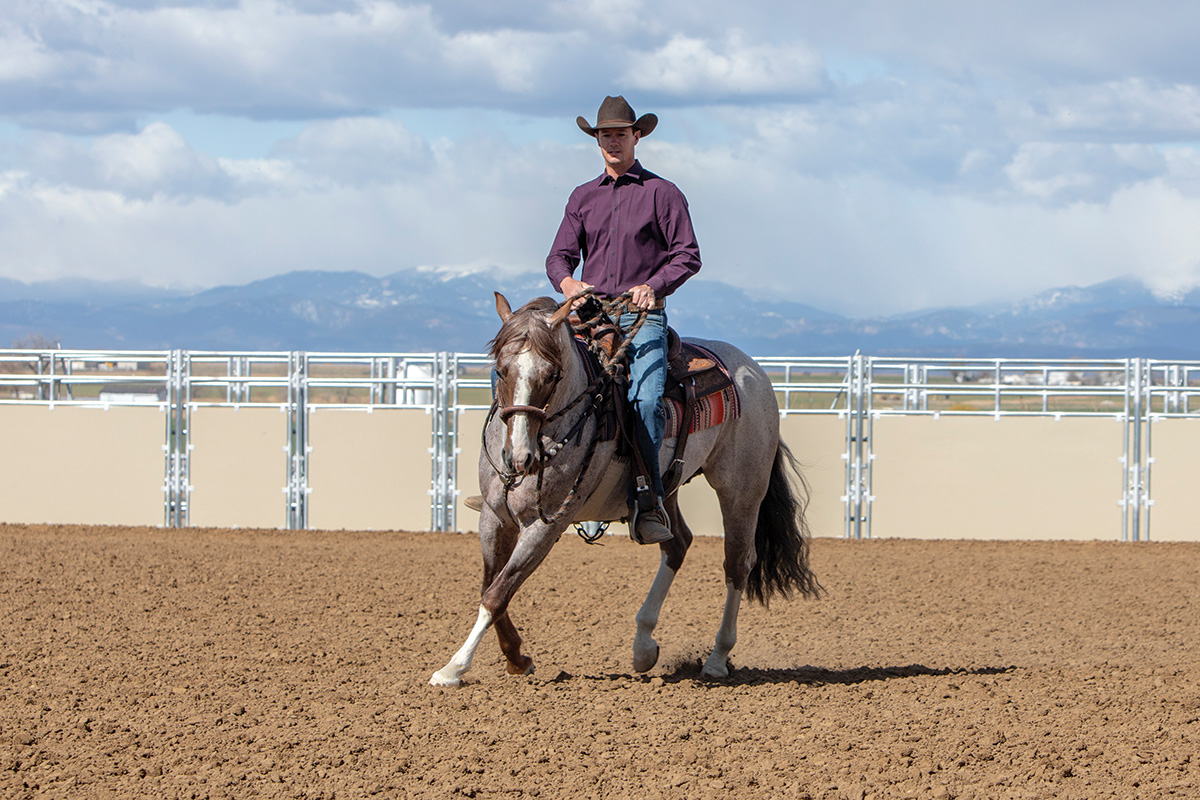
Make a sharp turn at the trot if the fast horse picks up more speed than you want. Photo by Heidi Nyland Melocco
If your horse is on the slow side, adjust your warmup time so that you only warm up for 10 to 15 minutes before going into your class. Make sure not to use up all his energy. Instead, warm up just enough to remind your horse that he should respond quickly to your cues.
After walking for a few minutes, it’s time to get the slow horse to work. Ten minutes before the show, Crow says he will ask a slow horse to extend at the trot and the lope.
“I’ll give the horse a verbal cue and then go to my legs for a cue,” says Crow. “I will really get that horse moving and sharpen him up.”
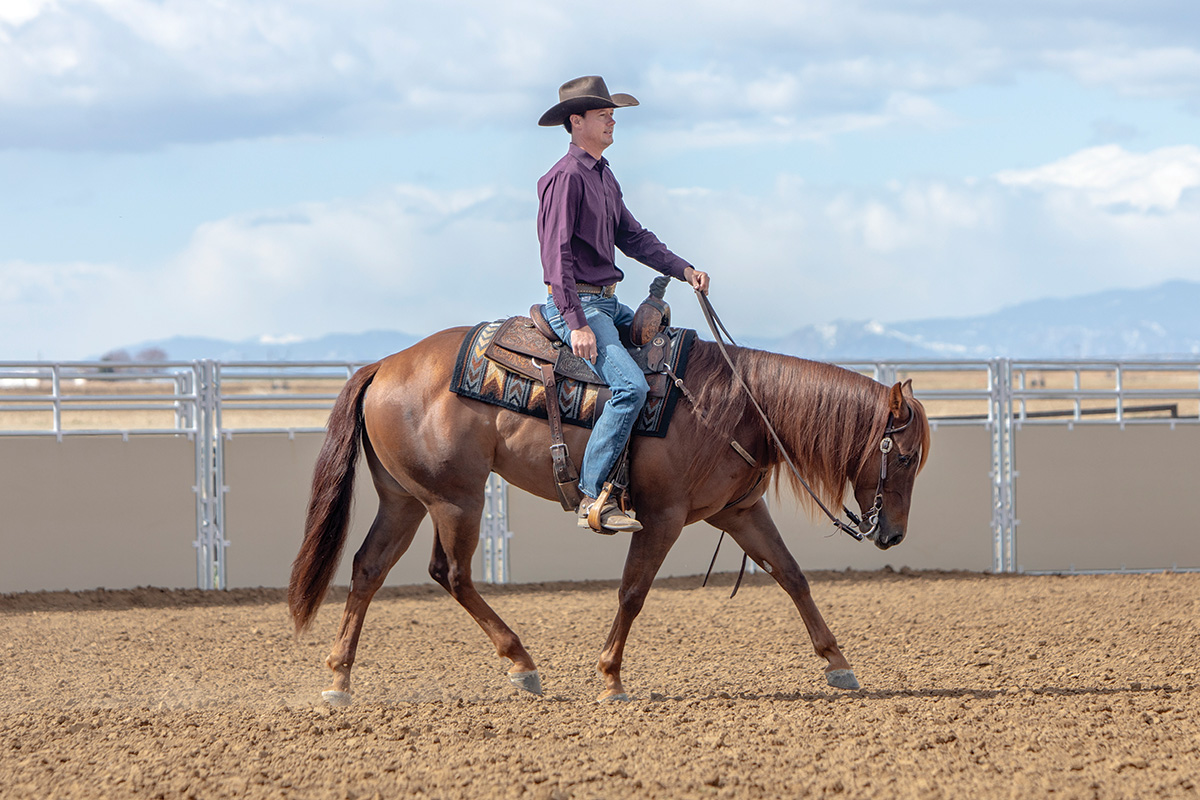
Ten minutes before your class, ask the slow horse to extend at the trot and lope. Photo by Heidi Nyland Melocco
Keep in mind, it’s all about efficiency. You may only be able to cue a horse for speed once or twice. If you warm up too much and ask for speed over and over, you may wear out your horse and not get the speed changes you want in the ring.
If you feel like you need more practice time than your horse does, run your patterns in your mind or practice the key obstacle. Don’t wear out your horse because you feel like you need more practice.
“It’s all about knowing yourself and your horse,” says Crow. “When you know how much practice you both need, you’ll go straight to the pen in good shape.”
A few notes of caution for riding the slower horse: Make sure you don’t pull back on the reins when you’re loping. Some horses will look for any excuse to slow down. Don’t train him that it’s OK to break gait because you inadvertently pulled on the reins. Also make sure you aren’t micromanaging your horse. He should go at the speed and in the direction you choose without having to hold him there. Make sure your reins aren’t tight and that you allow your horse to move out.
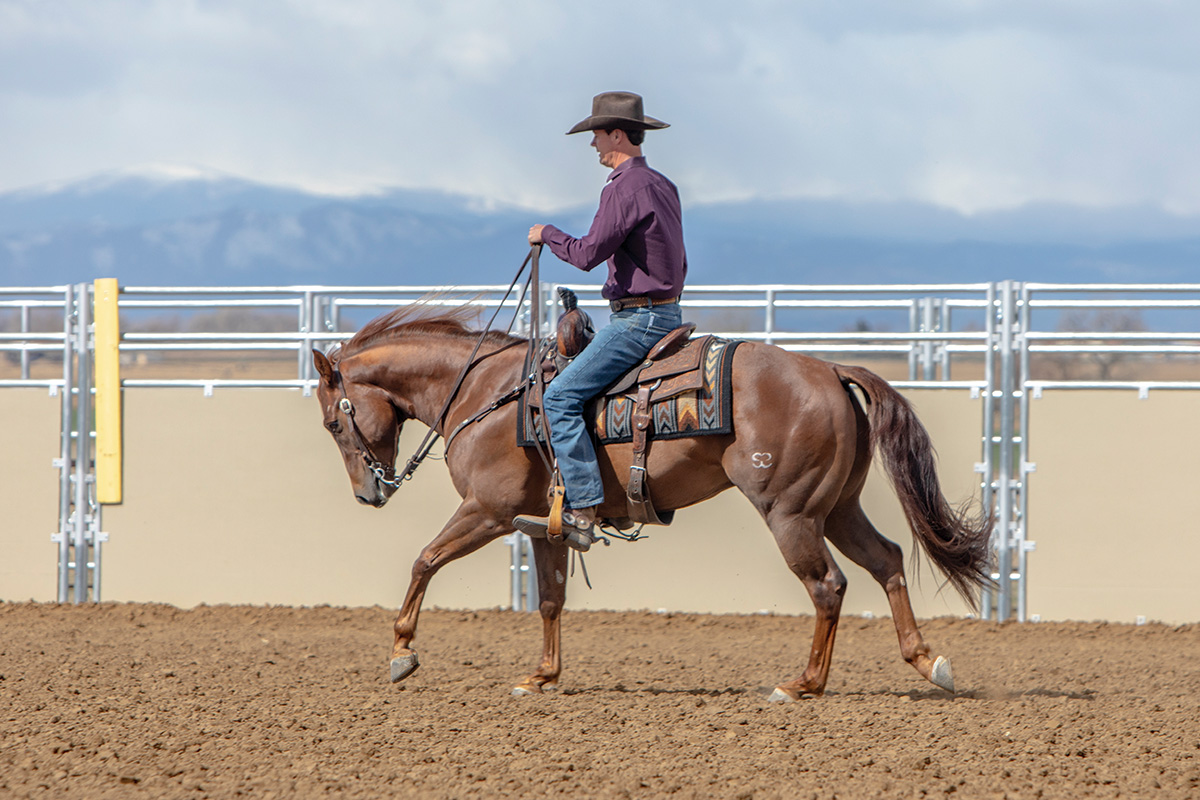
Don’t pull back on the reins while loping, as slow horses often look for any excuse to stop. Photo by Heidi Nyland Melocco
“If you tend to tighten up your reins too much in the extended lope because of your comfort level, remind yourself to look up, straighten your arm and put your hand down,” says Crow. “Make sure you aren’t the reason your horse is slowing down or learning that it’s OK to be a little lazy.”
Having a riding buddy or coach remind you to look up and reach forward when you ask your horse to move out can help you be in the best position and keep your horse moving.
Show Plan
Crow advises using the time that you have to walk the trail pattern to think about the body position and cues you’ll need to help your horse go the speed that you want.
“You get to walk the trail course first,” he says. Make sure you plan how you’ll ride, where you’ll look, and how and when you’ll cue your horse. Having a plan and knowing your horse’s habits—and your habits—will help you know what to do if your horse speeds up or needs a push.
“The goal isn’t just to complete the pattern, it’s to have a confidence-building pattern for your horse so he’ll come back better next time,” says Crow. “From the moment you start warming up until the moment you’re done with your trail class, your main goal is to keep building that horse up so you’re both successful and can keep going and enjoy the ride.”
Meet the TrainerCody Crow owns and operates No Where But Up Performance Horses with his team of trainers in Johnstown, Colo. He trains horses and riders to compete in versatility ranch horse, ranch riding, ranch trail, and reined cow horse competitions. He has earned world and reserve world championships and helped his horses earn titles in American Quarter Horse Association, American Paint Horse Association, Appaloosa Horse Club, National Reined Cow Horse Association, and National Snaffle Bit Association events. More Advice from Cody Crow: |
This article about the ranch riding trail class warmup appeared in the August 2024 issue of Horse Illustrated magazine. Click here to subscribe!