1. Push: Push-Up
The goal of the push-up is to improve upper body strength, shoulder mobility, and posture. This exercise incorporates upper-body postural control with core strength while improving shoulder stability, which adds more confidence and better control with your horse when mounted.
Start on your hands and your knees with your hands positioned under your shoulders. To begin the exercise, assume a high plank position (or modify with knees on the floor). While keeping your body straight, lower your chest and hips down toward the floor as far as you can. Push up to the starting position and repeat.
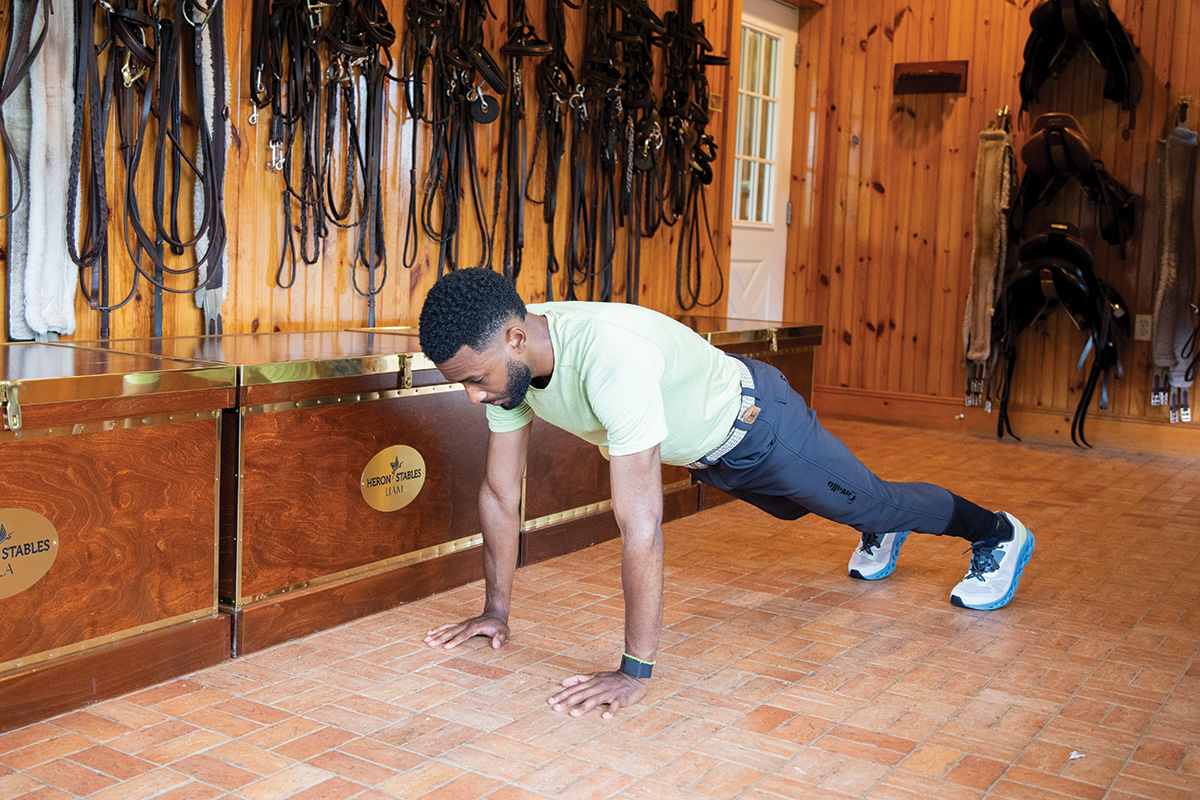
Assume a high plank or modified plank position (on knees).
This should feel like an upper-body workout of your shoulders, chest, and triceps. You should also feel your core, glutes and quads working to maintain a stable position.
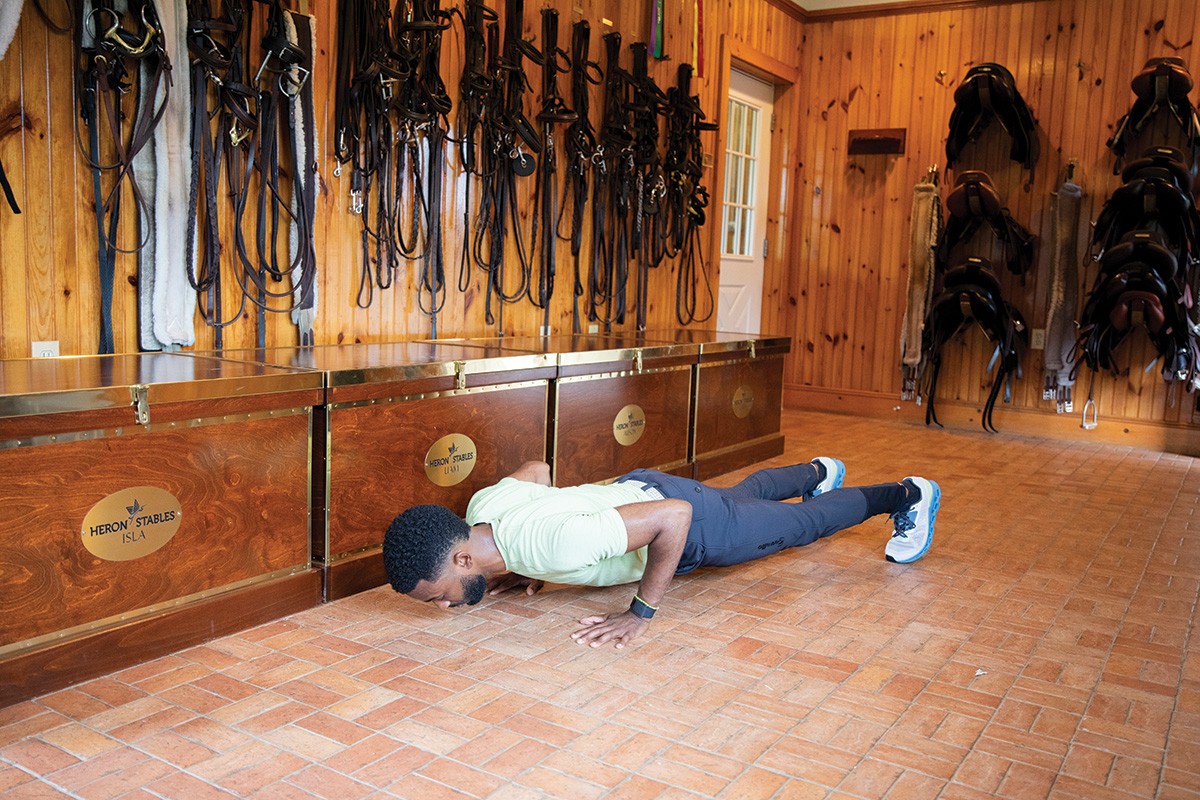
While keeping your body straight, lower your chest and hips down to the ground as far as you can.
Form Tips
- Keep your body in a straight line with your neck neutral.
- Engage your core muscles throughout the movement to stabilize and protect your lower back.
- Stay evenly balanced through both arms as you lower down and push up.
2. Level Change: Bodyweight Stationary Lunge
The goal of this exercise improves the strength, balance, and stability every equestrian needs for effective riding. The unilateral nature of lunges mirrors the independent leg actions required in the saddle, ensuring precise cues. Strong and stable legs aid in maintaining a centered seat, especially during intricate movements or dynamic transitions.
Start standing upright with your feet together, then step forward with one leg, keeping the other leg stationary. Lower your body until both knees are bent at about a 90-degree angle. Ensure your front knee is directly above your ankle, and the other knee hovers just above the ground. Pushing through your front heel, return to the starting position. Repeat.
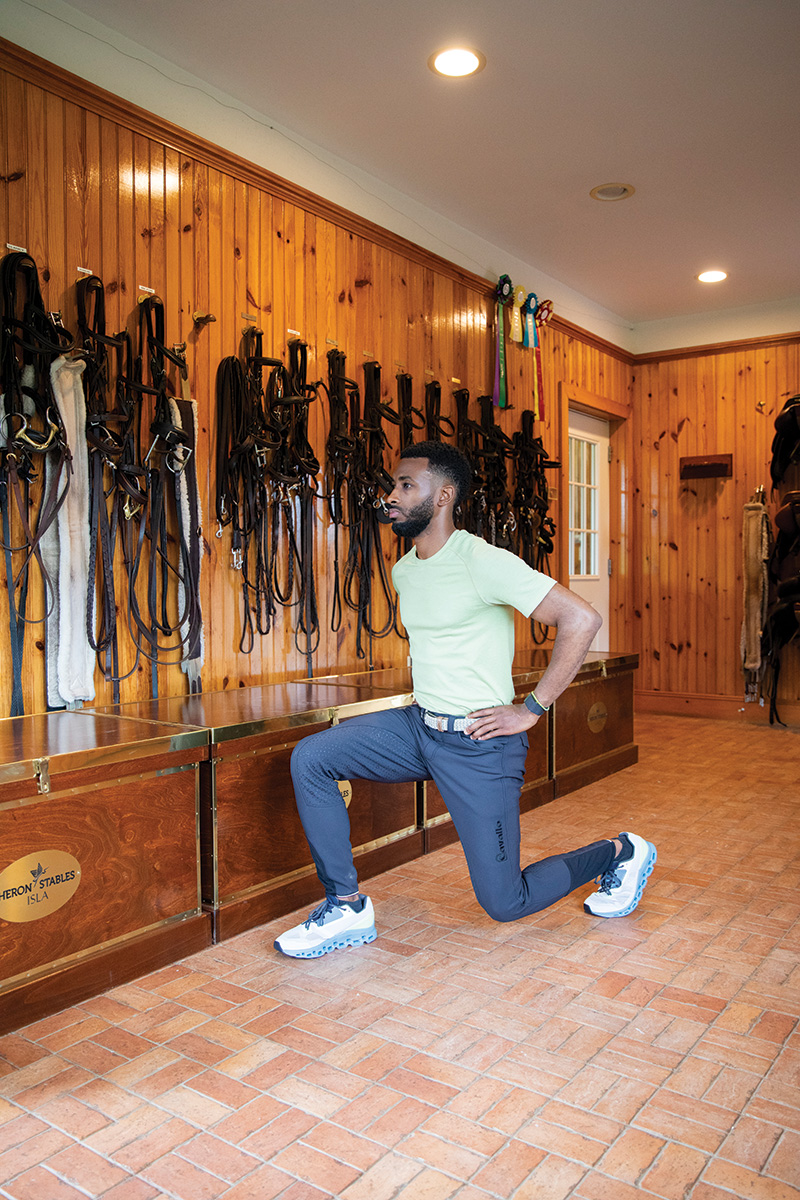
Step forward with one leg. Lower your body until both knees are bent at about a 90-degree angle. Keep your front knee directly above your ankle, and the other knee just above the ground.
You should feel all the muscles in your legs working, especially the quad muscles. Your front leg should be doing most of the lifting.
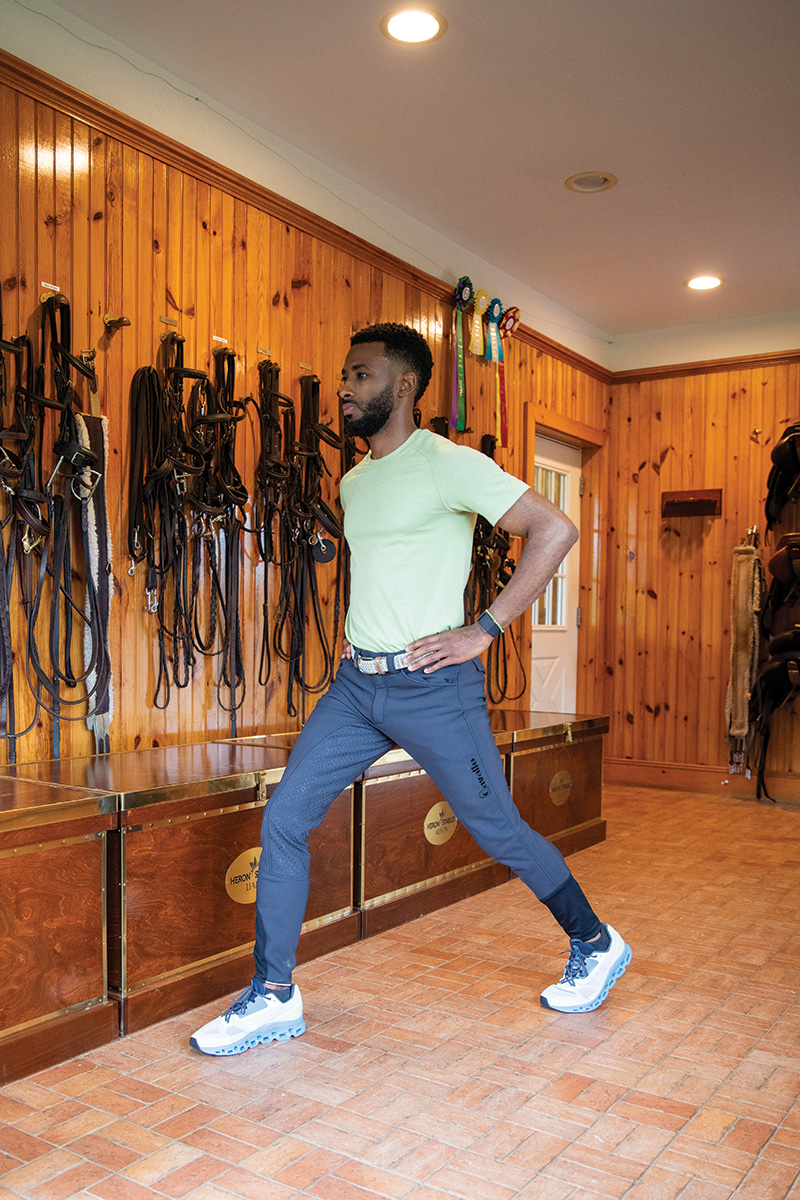
Pushing through your front heel, return to the starting position.
Form Tips
- Refrain from pushing from your back leg.
- Maintain your balance by engaging your core.
3. Pull: Single Leg & Arm Row
The goal of the row is to improve your balance, position and shoulder mobility for better posture in the saddle.
This exercise offers numerous benefits that enhance riding performance. Rows improve your posture and stability in the shoulder girdle by strengthening your upper back and shoulder muscles, both of which are important for maintaining balance with your horse. This exercise helps correct body asymmetry, helping create more balanced aids.
Begin in a standing position on one leg and hold the dumbbell in your opposite hand. From this position, hinge forward at the hips, reaching down with the weight. At the bottom of the hip-hinge position, perform a row motion by starting with your arm straight. Initiate the row motion and pull your shoulder blade back while bending your elbow toward your ribcage.
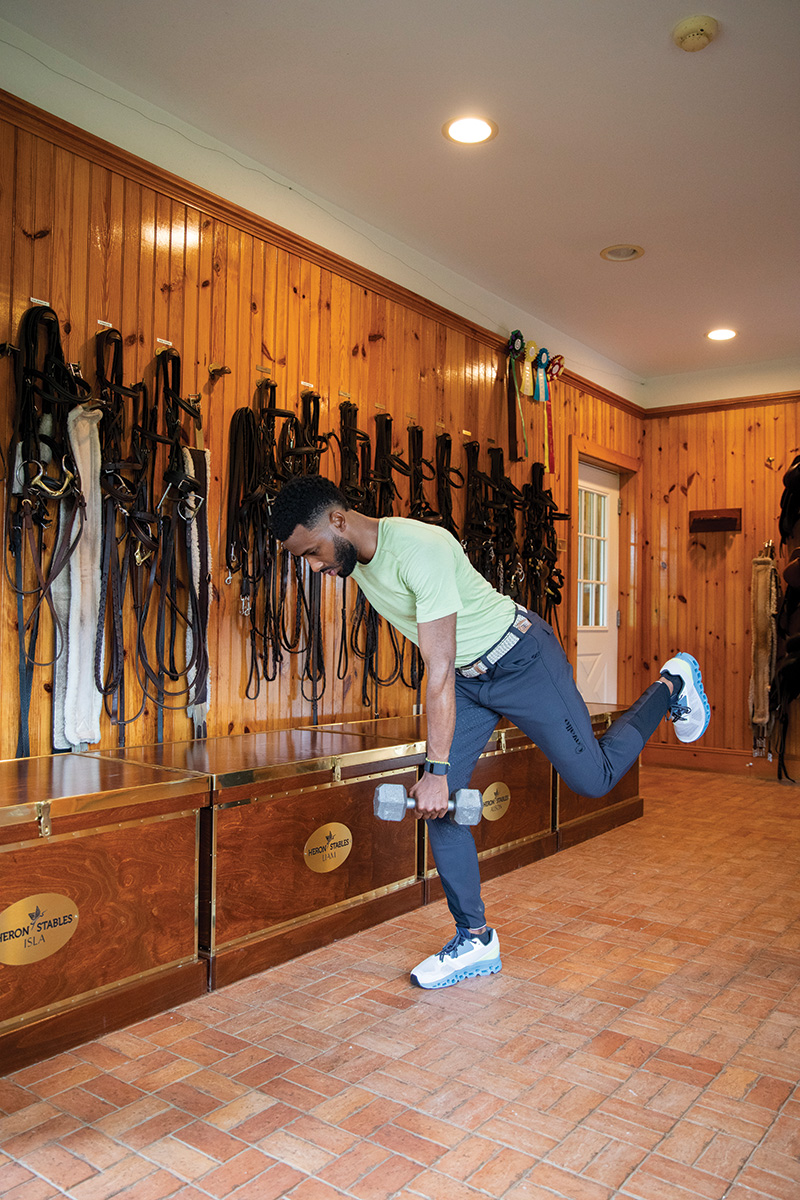
Begin standing on one leg, holding a dumbbell in the opposite hand. From this position, hinge forward at the hips, reaching down with the weight.
You will feel the muscles of your leg working, including your quads, hamstring, glutes, and foot muscles. When performing the row, you work your shoulder muscles and the muscles surrounding your shoulder blade.
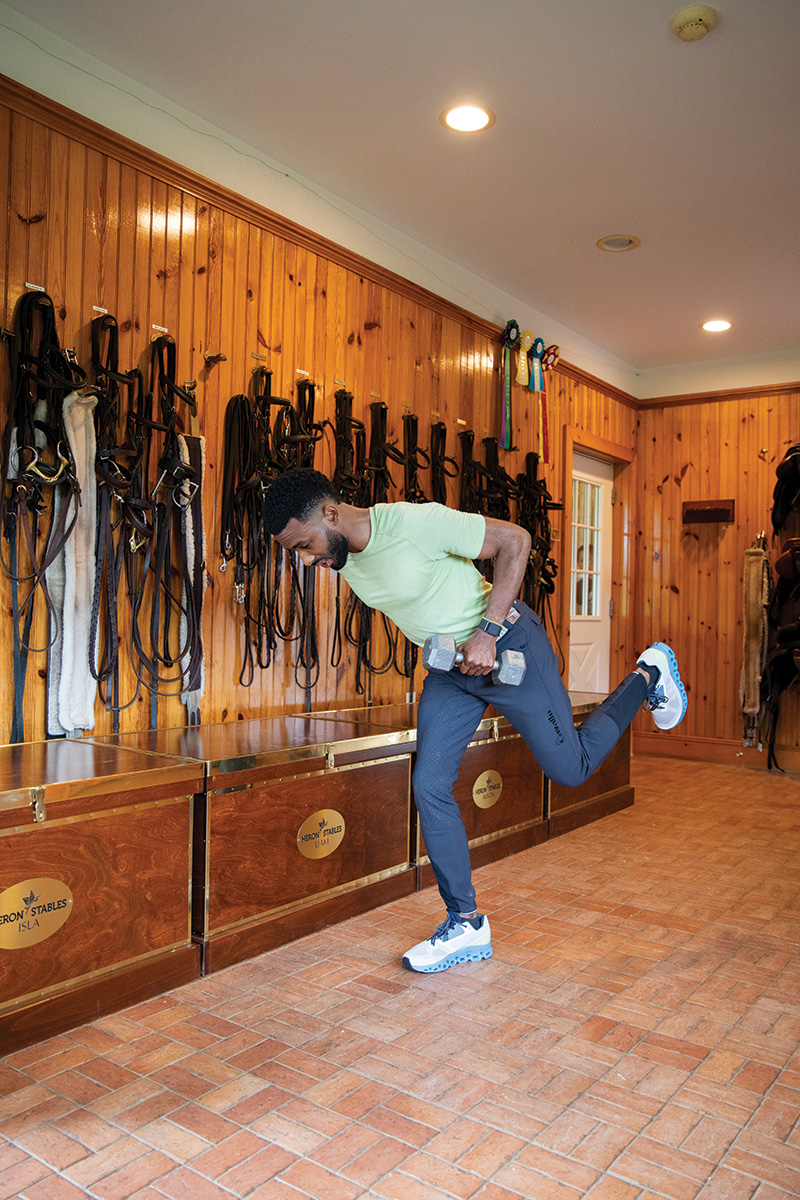
Perform a row by pulling your shoulder blade back and your elbow to the side of your torso.
Form Tips
- Perform a hip-hinge by pushing your hips back and shifting your torso forward.
- Don’t lock your knee straight; instead, keep a slight bend in it.
4. Rotation: T-Roll
The T-roll is a fantastic exercise that combines elements of strength, balance, and mobility, all of which are important for riders.
This exercise strengthens your core, which is crucial for maintaining a stable seat and effective aids in the saddle. The rotational component also improves your shoulder stability and overall body awareness and control. These are factors that can contribute to better self-carriage and communication with your horse.
This exercise also engages your shoulder and back muscles, which promote better posture and upper-body strength for more effective rein control and pressure.
Begin in a high plank position, with your hands underneath your shoulders and your body forming a straight line from head to heels.
Engage your core and shift your weight onto one hand. Lift the opposite hand off the ground and rotate your torso, extending your arm toward the ceiling to make a “T.” Hold this position briefly before returning to the starting plank position. Repeat the movement on the other side, rotating and extending.
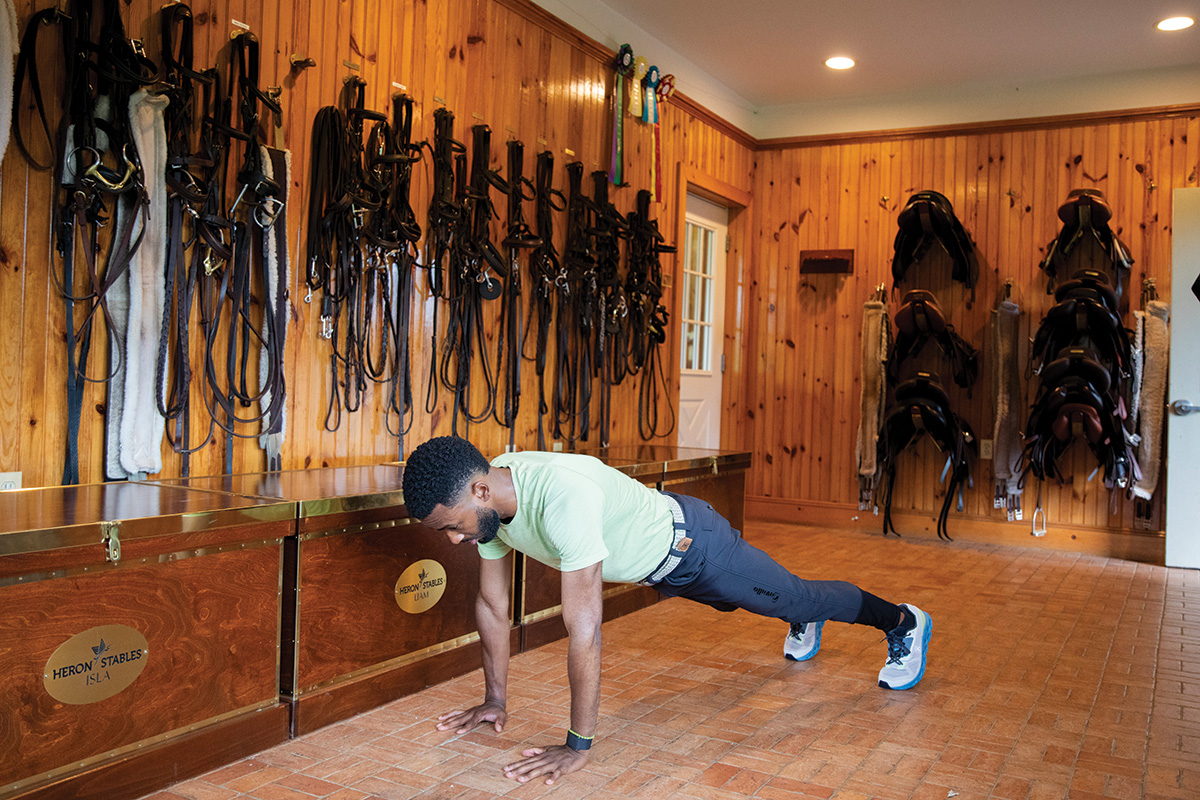
Begin in a high plank position with your hands underneath your shoulders and your body forming a straight line. Engage your core and shift your weight onto one hand.
You’ll feel your core muscles engaging for stability. Your shoulder and arm muscles are stabilizing when holding the plank and during the rotation. Your obliques engage during the twisting motion, and your back muscles contribute to maintaining the “T” posture.
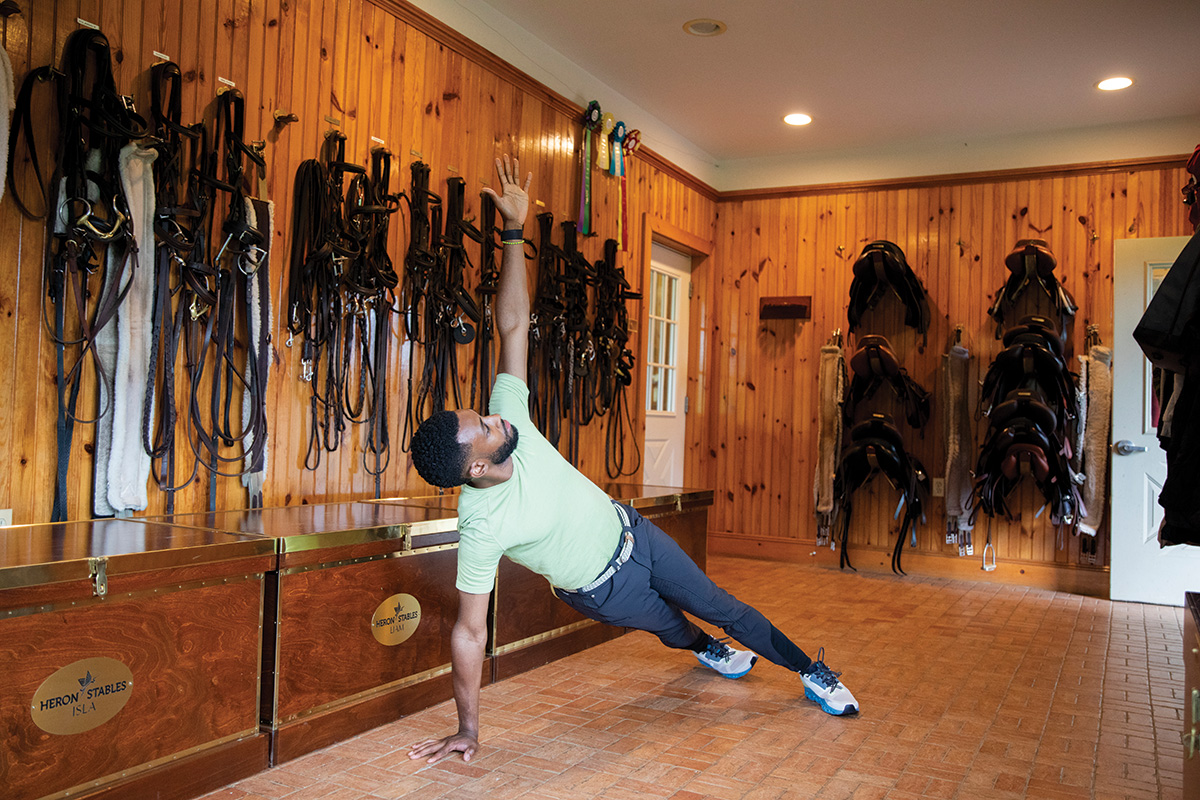
While keeping your core engaged, lift the opposite hand off the ground and rotate your torso, extending your arm toward the ceiling in a “T” shape.
Form Tips
- Keep your body in a straight line when in the plank position; avoid letting your hips sag or lifting them too high.
- Maintain a strong, engaged core throughout the entire movement to stabilize your spine.
- Keep your weight-bearing arm straight (but not locked) to support your body during rotation.
- Choose a controlled, deliberate pace for the exercise to ensure proper form and maximum benefits.
- If balance is a challenge, you can widen your foot stance in the plank position for more stability.
5. Locomotion: Anterior Reach
The goal of the anterior reach exercise is to improve single leg stability, proprioception (sense of body position) and balance.
This is an effective single-leg exercise that engages your core, improves balance, and promotes functional mobility, all of which are crucial for maintaining a steady seat and effective aids when riding. By strengthening your lower body, this exercise will help improve your stability in the saddle, a fundamental component of good horsemanship.
Start by standing straight with your feet hip-width apart. Choose a leg to extend. Keep your toes lifted and foot flexed. While extending this leg, push your hips back and slightly bend the knee of your standing leg, keeping a flat back and an engaged core.
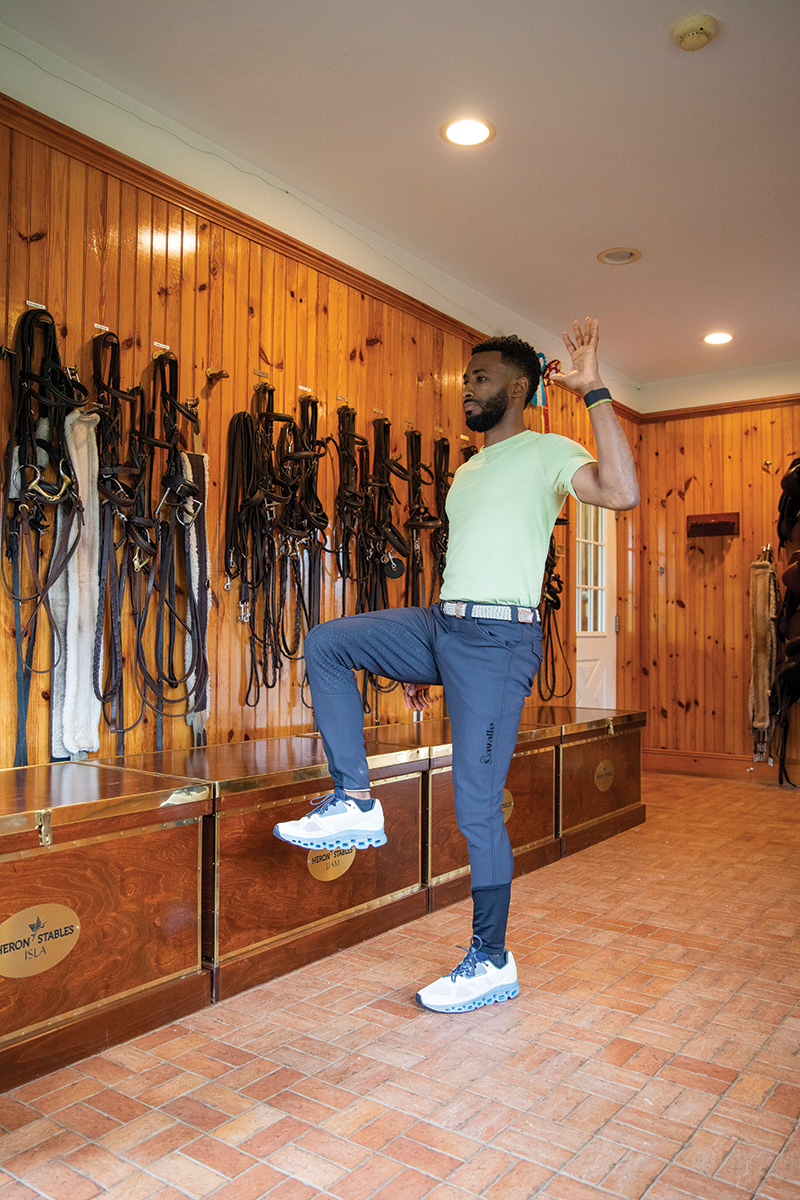
Begin by standing up straight. Choose a leg to raise, keeping your foot flexed.
Gradually lower your torso, reaching your back leg parallel to the ground. Hold this position for a second, then return to a starting position. Repeat the same motion with the other leg.
This primarily engages your core and lower body, specifically the hamstrings, glutes, quadriceps, and calf muscles. It also engages the stabilizing muscles of the foot and ankle.
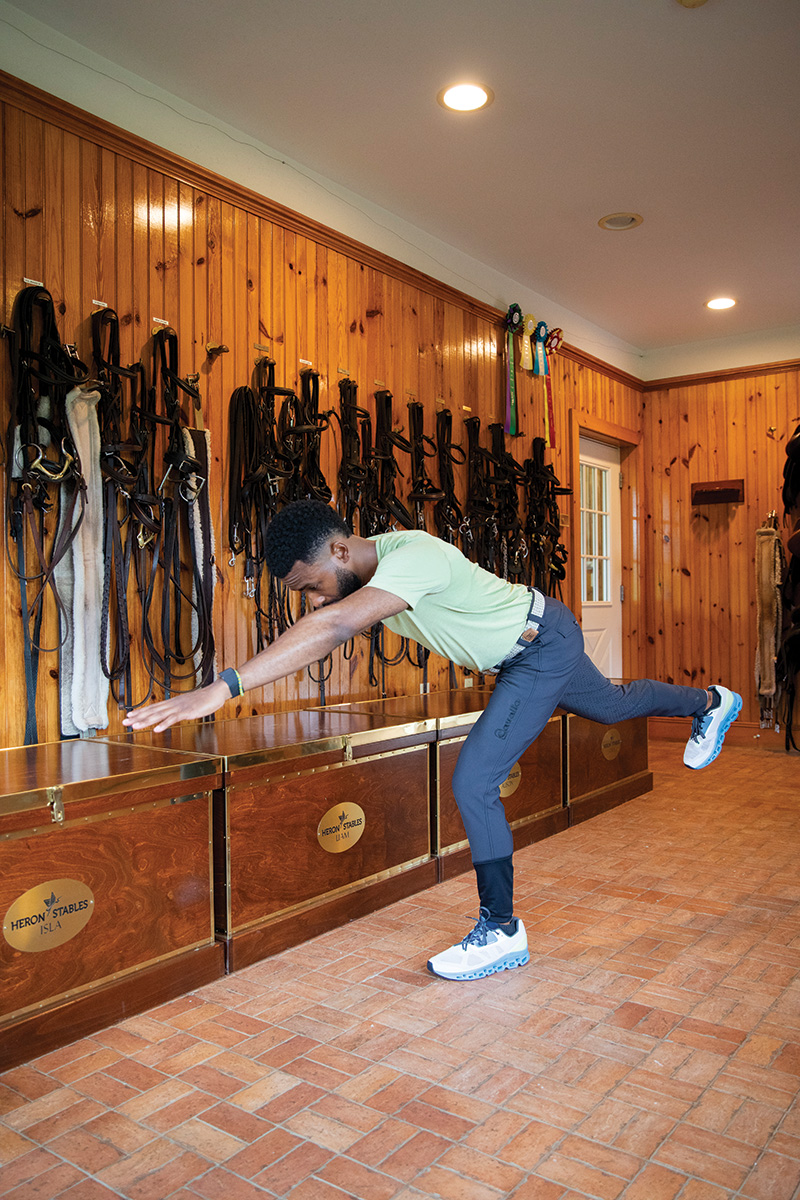
Push your hips back and slightly bend the knee of your standing leg, gradually lowering your torso and raising your back leg until parallel to the ground.
Form Tips
- Keep a neutral spine and engage your core.
- Perform the exercise with slow, controlled movements to make it more effective.
- Focus on maintaining balance and form, not how far you can reach.
- If balance is a challenge, do this exercise near a wall or a stable object for light support.
- Begin with a smaller range of motion and gradually increase as your strength and balance improve.
More From Ifa Simmonds
Get more info on Ifa Simmond’s Equestrian Fitness Academy website, or message him to set up a clinic, workshop, or live training session.
This article about functional exercises for riding appeared in the September 2024 issue of Horse Illustrated magazine. Click here to subscribe!