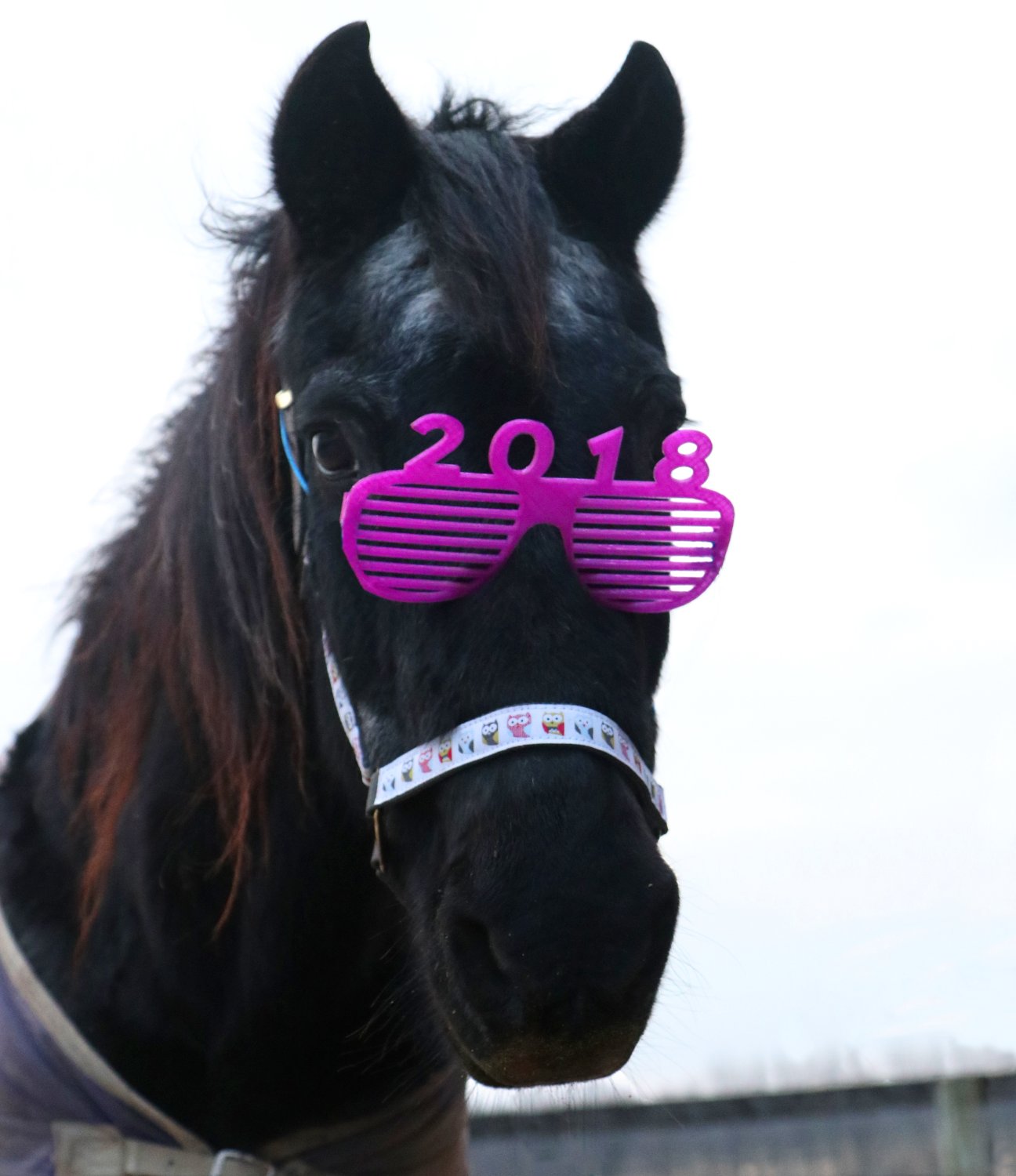
Like many draft breeds, the Percheron was used on farms across Europe and America. Today, the breed’s smaller registry numbers are primarily due to the costs associated with caring for horses. The Percheron Horse Association of America (PHAOA) currently has 34,084 horses registered.
“To help preserve the breed, individuals should prioritize continuing to register purebred livestock,” says Stacie Lynch, PHAOA executive director. “This investment is crucial for maintaining the breed’s integrity and ensuring the ability to trace pedigree and breeder information.
“It’s important for breeders to recognize the broader impact of registration, extending beyond just mares and stallions to include geldings,” she continues. “By registering all horses, regardless of their roles, breeders contribute to the breed’s welfare, support the registry, and safeguard the legacies of exceptional horses. This proactive approach ensures that each remarkable individual is duly recognized and remembered for generations to come.”
And the Percheron is definitely a breed worth remembering. Not many breeds can go from energetic high-stepping show horses to calm, quiet stable ponies, but the Percheron can. It’s one of the reasons lovers of the breed are so dedicated to them.
The Ames Percherons
“I grew up with draft horses,” says Jacqui Shaw, manager at Ames Percheron Farm, Inc., in Minnesota. “My dad, Jim Westbrook, bred Percherons when I was young and then became a professional hitch driver. It’s a family tradition. It just gets in your blood.” Jacqui’s husband Travis is also hitch driver for Ames Percheron Farm. He got his start in middle school with his neighbor’s draft horses.
The Ames family has a long history with the breed, starting with John and Eliza Ames, who immigrated to America from England in 1874 and farmed with Percherons. In the early 1900s, they began to show them.
As time went on, showing became their focus. In the early 1990s, brothers Dick, Butch, John and Ron Ames decided to invest in a team of driving Percherons to be sponsored by their company, Ames Construction. It was a way to keep their family tradition alive, and Dick had a real passion for the horses.
Showing a Big Hitch
Today, the Ames Percherons show in six- and eight-horse hitch configurations year-round, attending between 10 and 15 shows annually. And they have it down to a science. A team of five to six people can get the team ready in as little as 45 minutes, though the average is 90—still a speedy time!
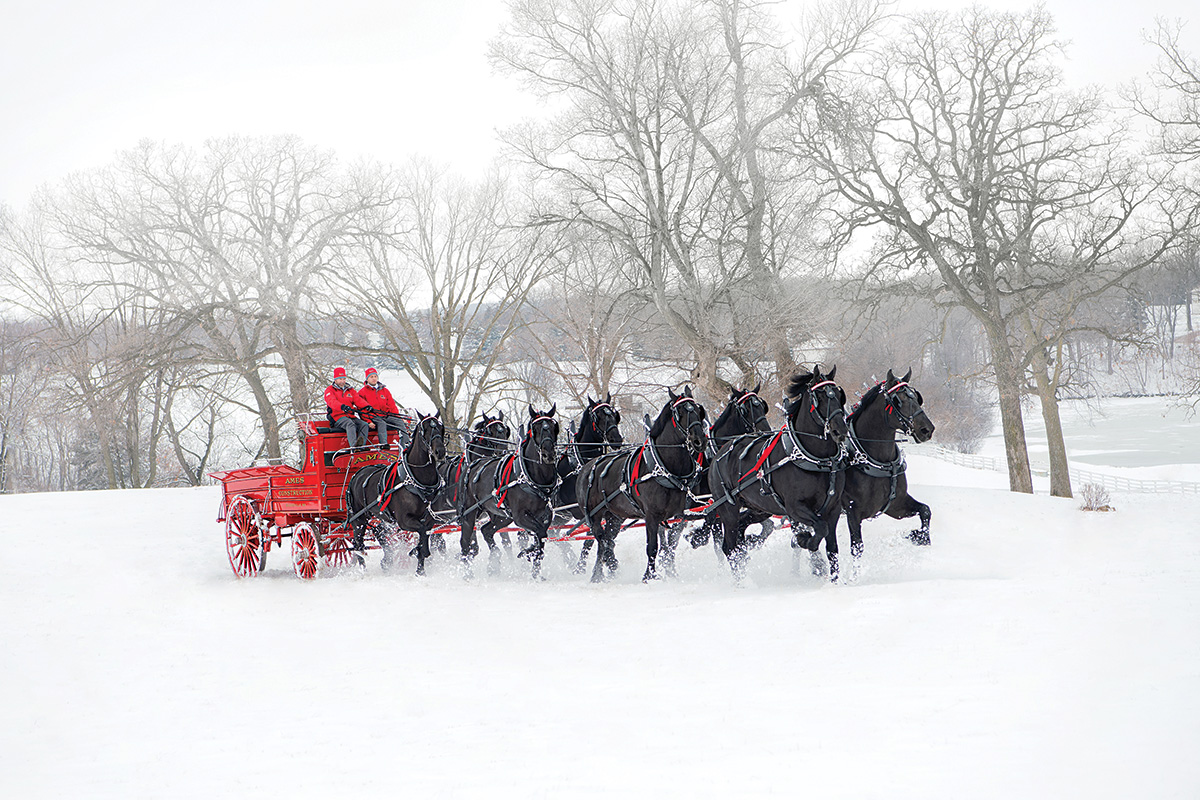
The Ames Percherons show in six- and eight-horse configurations year round. Photo by Avalon Photography
And getting to the show? That takes two 53-foot big rigs: One that holds the harnesses and cart, and one that hauls the 10 horses. The trailer has space for 15 horses, but Jacqui says they never take that many.
Ames used to show teams of dapple grays, but Jacqui says the color is getting harder to find as it fell out of fashion, and some of the main breeders of gray Percherons were PMU farms in Canada that are now closed. So, they switched to an all-black team, for the most part.
“We still have a couple grays that get dyed to match the blacks for shows,” says Jacqui. (They use animal-safe cattle dye, and it’s legal at the shows they compete at.) “It’s all about appearance at these shows, and we even dye the blacks to make sure their coats really shine. Some get bleached by the sun, so we need to cover the brown. Almost every team at our level dyes their horses, in all breeds.”
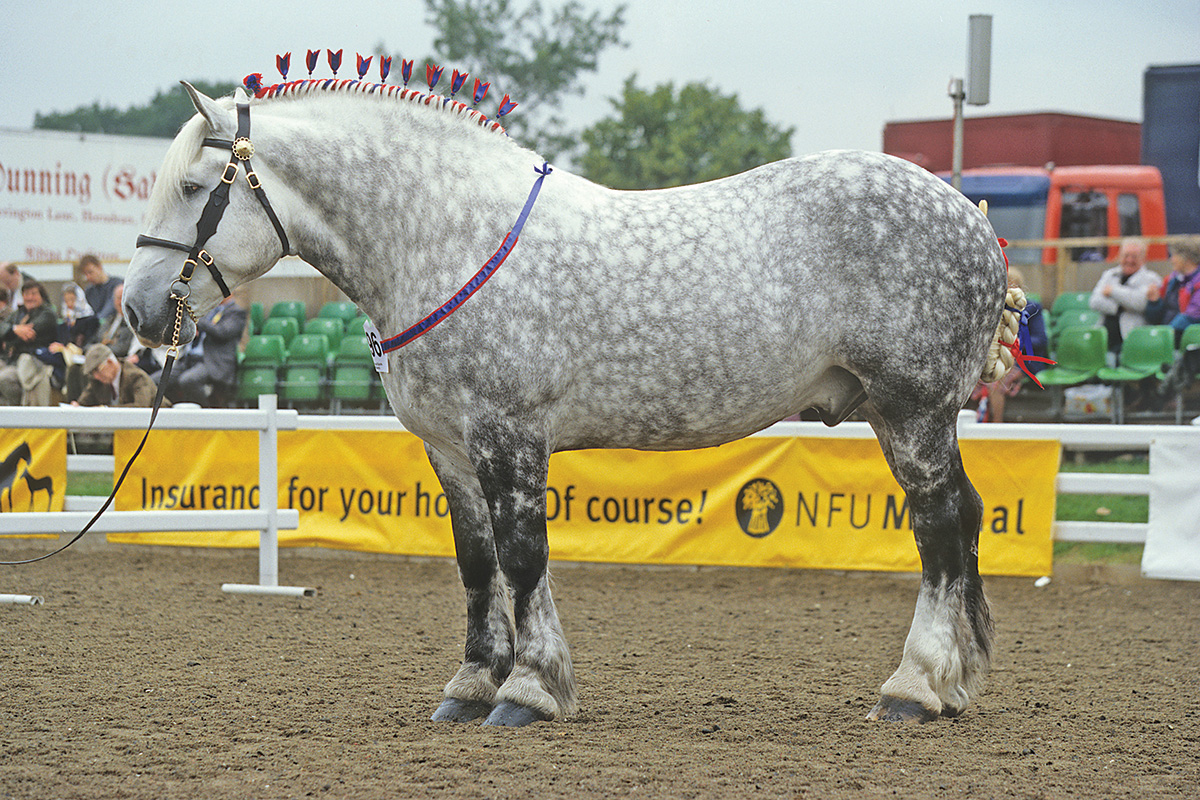
While once common within the breed, gray Percherons are now outnumbered by black horses. Photo by Bob Langrish
A Dual Personality
Since 2000, Ames Percheron Farm has won the North American Classic Series six-horse Championship four times, and has multiple national titles in both the six- and eight-horse hitch. But Jacqui says that even if they couldn’t show, she and her husband would be content to just take care of the horses.
“These guys, the big horses, have a real gentle demeanor in the barn,” she says. “We train them to be flashy when they are showing, so you hook them up and they have a whole different personality. They are a powerful athlete that gives their all.
“But then you take them back to the barn and they put their heads down and just want to be petted,” she continues. “I’ve had a lot of riding horses, but they don’t have that split personality, where they can turn off the ‘hot’ when they aren’t showing.”
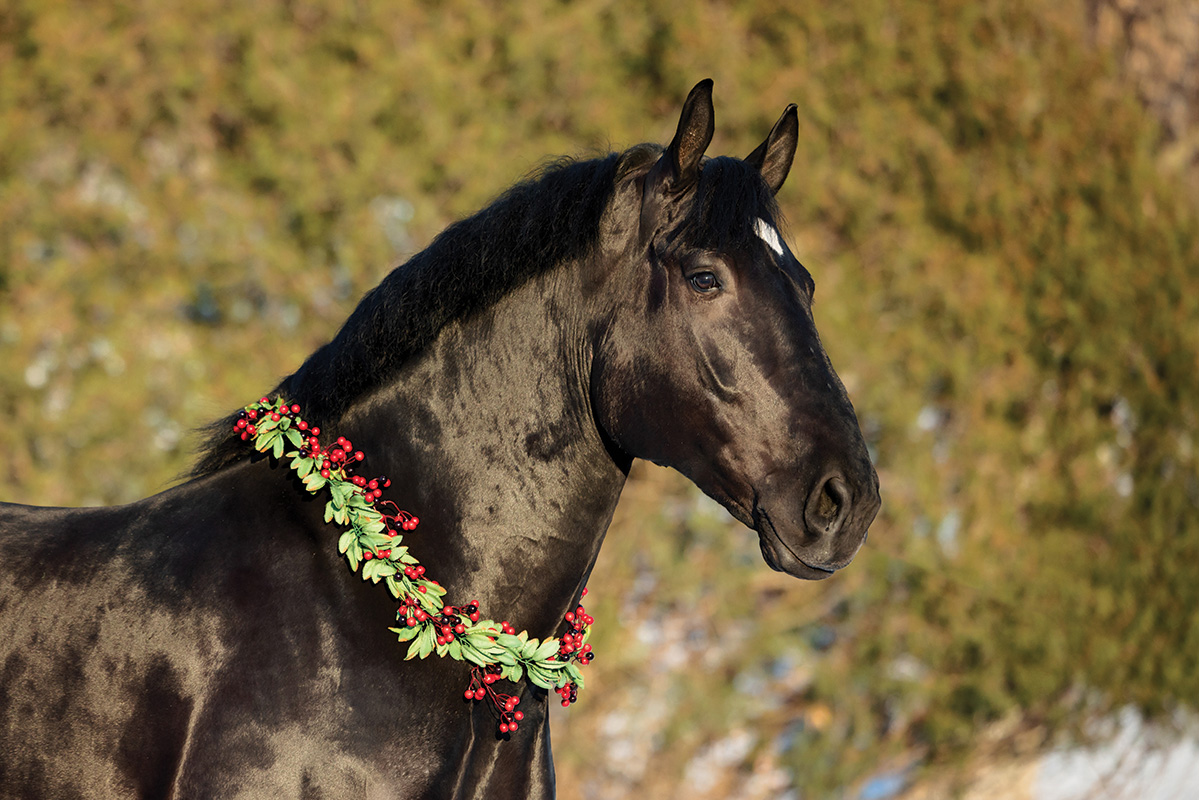
Jacqui Shaw says her Percherons can turn on the fire when it’s time to perform, but are sweet in-your-pocket horses around the barn. Photo by Shelley Paulson
This sweet personality makes them a fan favorite, as crowds of people gather around to meet and pet them at shows.
“We get people saying they want one when they are ready for retirement, because they are so sweet and gentle,” Jacqui says.
This article about the Percheron appeared in the November/December 2024 issue of Horse Illustrated magazine. Click here to subscribe!