Imagine setting up an obstacle course for your horse, filled with colorful cones, playful tunnels, and even some fun jumps. It’s like creating a playground for your equine friend! Agility exercises with your horse provide a great way to improve your bond with him by enhancing communication and trust.
Groundwork is the foundation for effective training and significantly impacts equine behavior and performance. But you might be thinking, “I just want to ride!”
However, groundwork is far from boring when you realize how it strengthens the bond between you and your horse, enhancing communication, confidence, and trust. It is the foundation of everything you do with your horse, allowing you to understand each other better, creating a bond that makes riding even more enjoyable and effective.
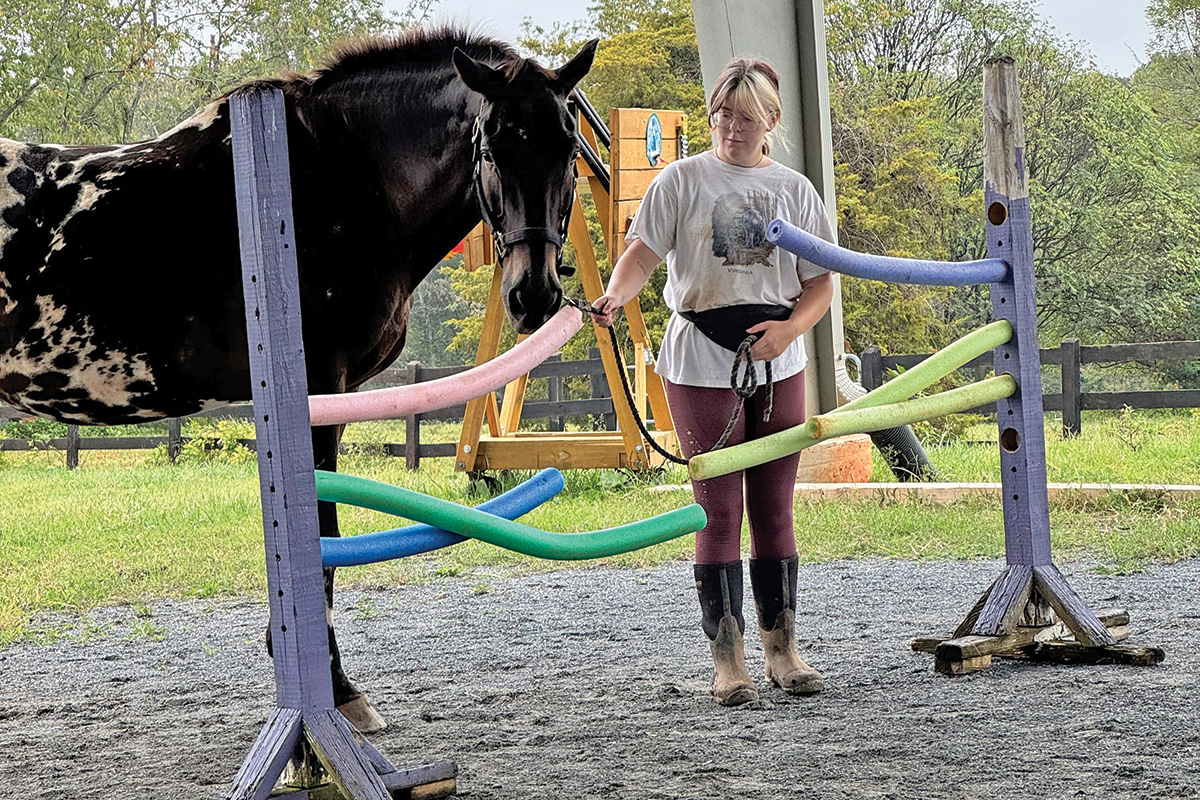
At Brook Hill Farm, a horse rescue and therapeutic riding center in Virginia, the authors used Vanessa Bee’s horse agility program based on her book, The Horse Agility Handbook, to work with at-risk youth and rescue horses. Photo by Jordan Altman
Speaking Horse
Why speak to your horse from the ground, and not under saddle? Communication with a horse comes from reading his body language and having him read yours.
Though we all love to ride, when you do, your horse can’t see your body language clearly. As prey animals, they rely on subtle cues for survival. If you can tap into that horse language code, you can find a plethora of useful information.
In the wild, these subtle movements—of the ears, nostrils, eyes, mouth, tail, and feet—solidify horses’ social networks, let them live in peace with each other, and help protect them from predators. By paying attention to these signals, you can deepen your interspecies connection and have healthier, safer, and more rewarding experiences with your horse.
Domestic horses speak horse with a human accent; they adjust their language to speak to us. What horses do—whether they need to protect themselves or accept us—is directly related to how we make them feel.
Developing this communication through groundwork helps you understand your horse’s needs and emotions better, making all your interactions, including riding, more effective and enjoyable.
This challenging equine sport, started in England in 2009, is similar to dog agility. It begins by teaching the horse to lead, then to go over obstacles on the lead using body language and verbal commands, and finally completing the course at liberty using the same signals, allowing the horse to choose to participate.
Getting Started with Horse Agility
All you need is your horse, a halter, a long lead line so the horse can move freely, and some homemade obstacles. Use items you already have.
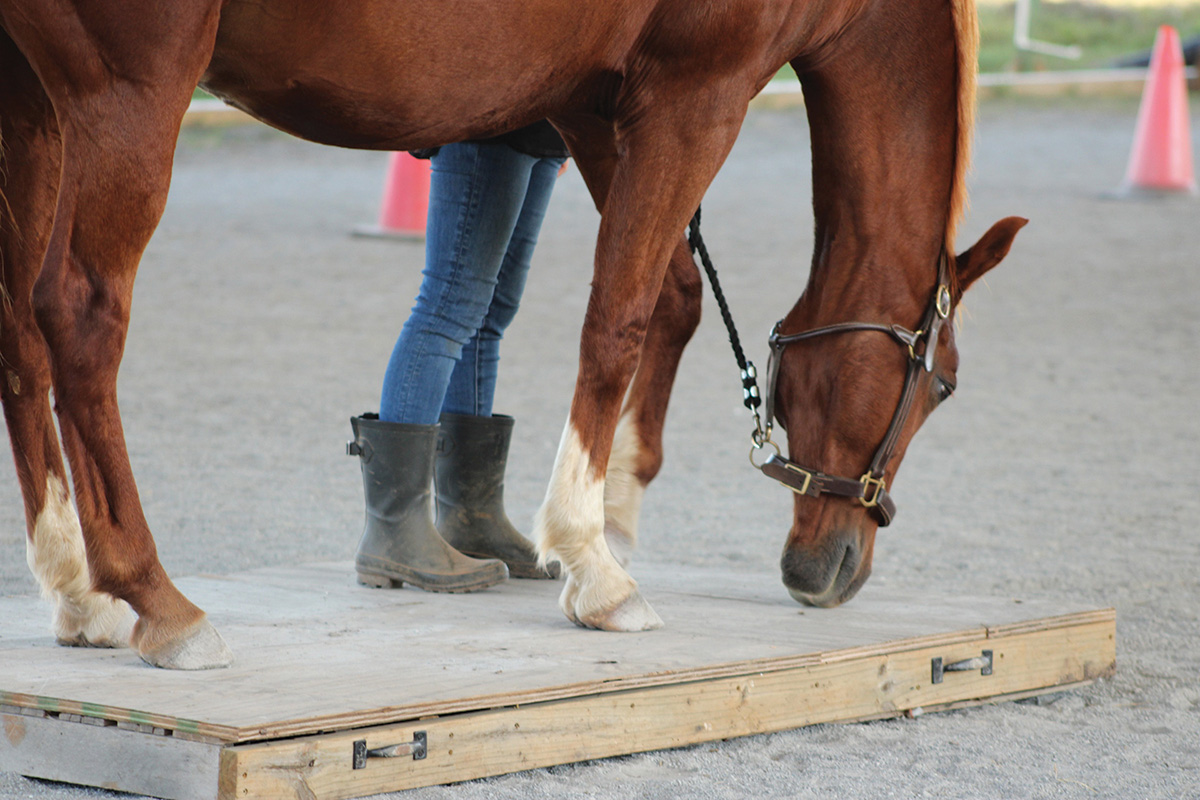
Any equine-safe object can be used to add new challenges, such as this trail course bridge. Photo by Jordan Altman
Simple Ideas for Horse Agility Obstacles
- Two cones with a tarp folded up between them for the horse to walk on
- Two poles to make a narrow chute
- Umbrellas making a chute
- Jump standards with plastic bags or balloons through the holes
- Flags in standards or cones
- Streamers strung between standards or cones
- A curtain made of streamers to walk through
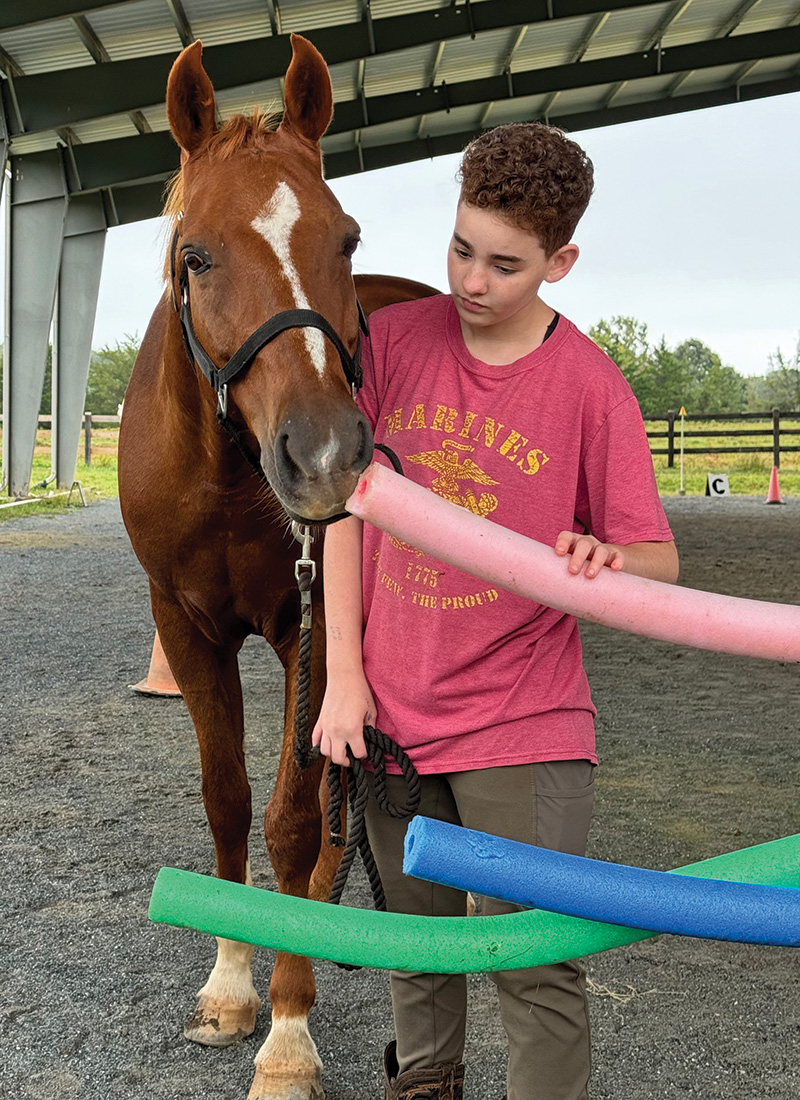
Be creative. Pool noodles are our favorite! Photo by Jordan Altman
Phase 1: Leading
Start by leading your horse forward, backward, right, and left. Be able to halt. Make sure you can lead your horse without dragging him or him pulling you away. Use basic commands and consistent body language to guide the horse through a simple pattern.
Phase 2: Desensitization
Introduce your horse to obstacles gradually.
Set up a course of obstacles in the arena and let him explore the objects. Allow him to look, smell, and paw the objects. Help him learn the objects are not scary, building confidence by using lots of praise, and do not punish for spooking.
Once he is comfortable, guide him through the obstacles on the lead.
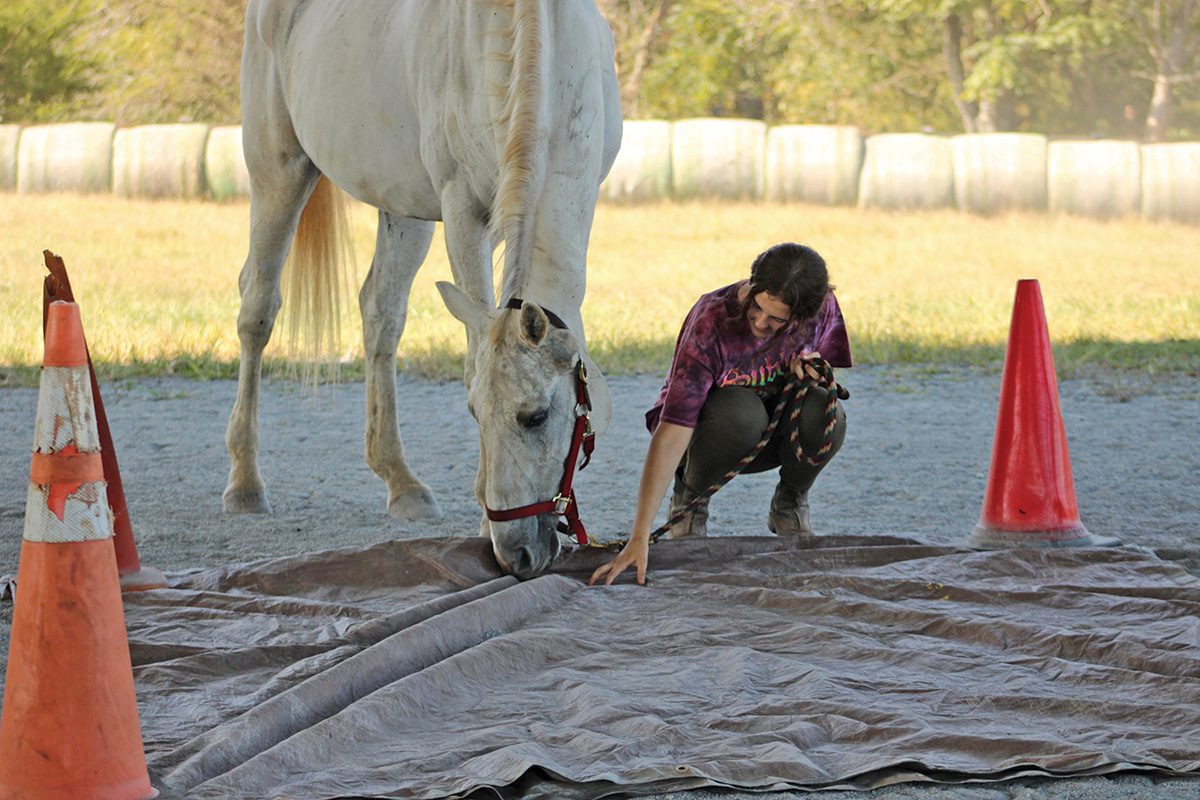
Phase 2: Allow your horse to sniff and explore the objects so his confidence grows. Photo by Jordan Altman
Phase 3: Horse Agility
Once you can complete the course successfully on the lead, turn the horse loose and see if he will follow you at liberty through the pattern. You’ll be amazed at the results!
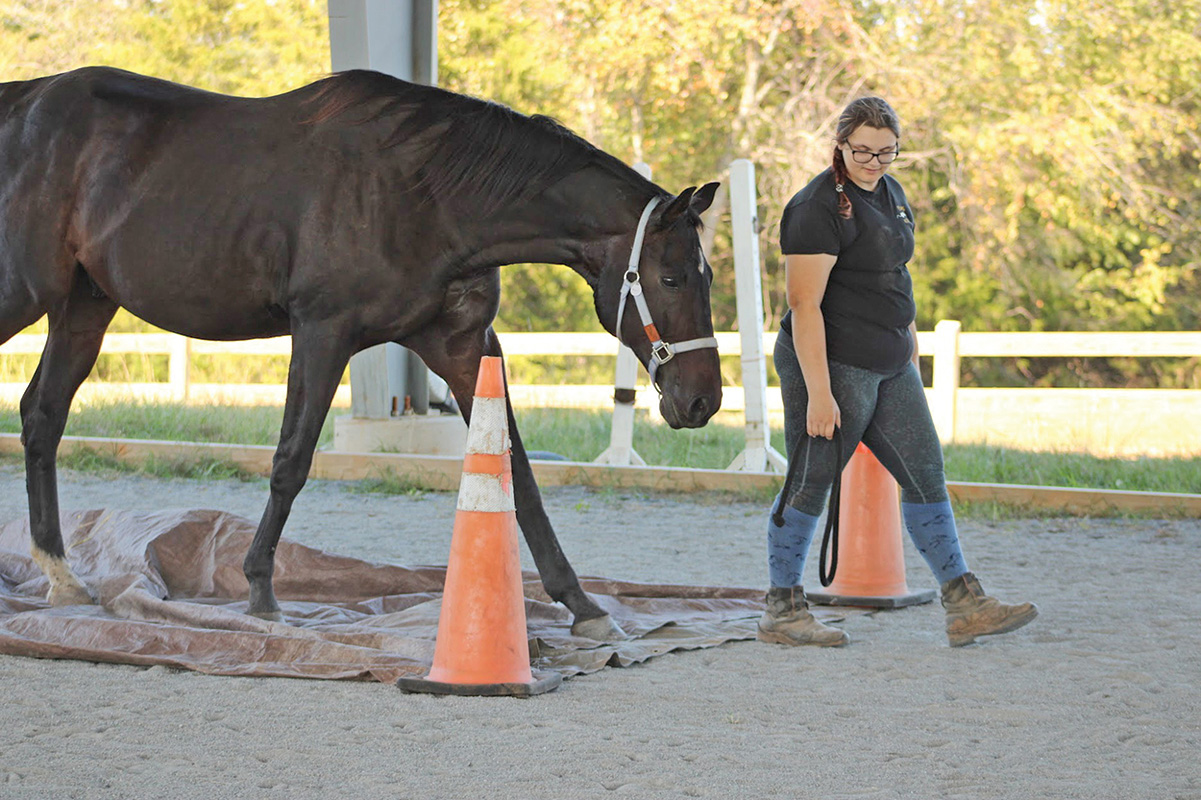
Phase 3: Once your horse is confident leading over the obstacles, unclip your rope and watch the magic happen! Photo by Jordan Altman
So, next time you’re tempted to skip the groundwork, remember: Horse agility is the key to building confidence, unlocking a deeper connection and smoother rides—plus it’s just plain fun!
Testimonials◆ “Horse agility has taught me how to be more in the moment with my horse.” ◆ “I am learning to have clear, positive communication, and not control.” ◆ “I never thought I could get my horse to follow me. We now have a better partnership built on respect and not control.” ◆ “It has helped me learn how to calm myself when I get frustrated or angry when my horse doesn’t want to work with me.” ◆ “It has taught us both how to handle personal space.” ◆ “It has helped me learn how to communicate more effectively. Also that the way I say things is important.” ◆ “After falling off my horse, I was afraid. Working with the horse on the ground gave me the confidence to get back on.” |
This article about horse agility appeared in the January/February 2025 issue of Horse Illustrated magazine. Click here to subscribe!