In recent years, states across the U.S. have seen increased legalization of medical and recreational cannabis. But humans aren’t the only ones experiencing the benefits of the non-high-inducing, therapeutic component of the plant, called cannabidiol (or CBD for short). Equine CBD use has many benefits, as well.
By the end of 2026, U.S. sales on pet CBD products are expected to hit $1.1 billion. While more than three-quarters of the CBD-related pet products purchased in 2021 were bought for dogs, horses are getting in on the action, too. Horse owners are using CBD products to address:
◆ Inflammation
◆ Arthritis
◆ Respiratory issues
◆ Allergies
◆ Pain (acute and chronic)
◆ Immune system issues
◆ Anxiety
◆ Stress/trauma
◆ Gastrointestinal problems (ulcers, leaky gut, et cetera)
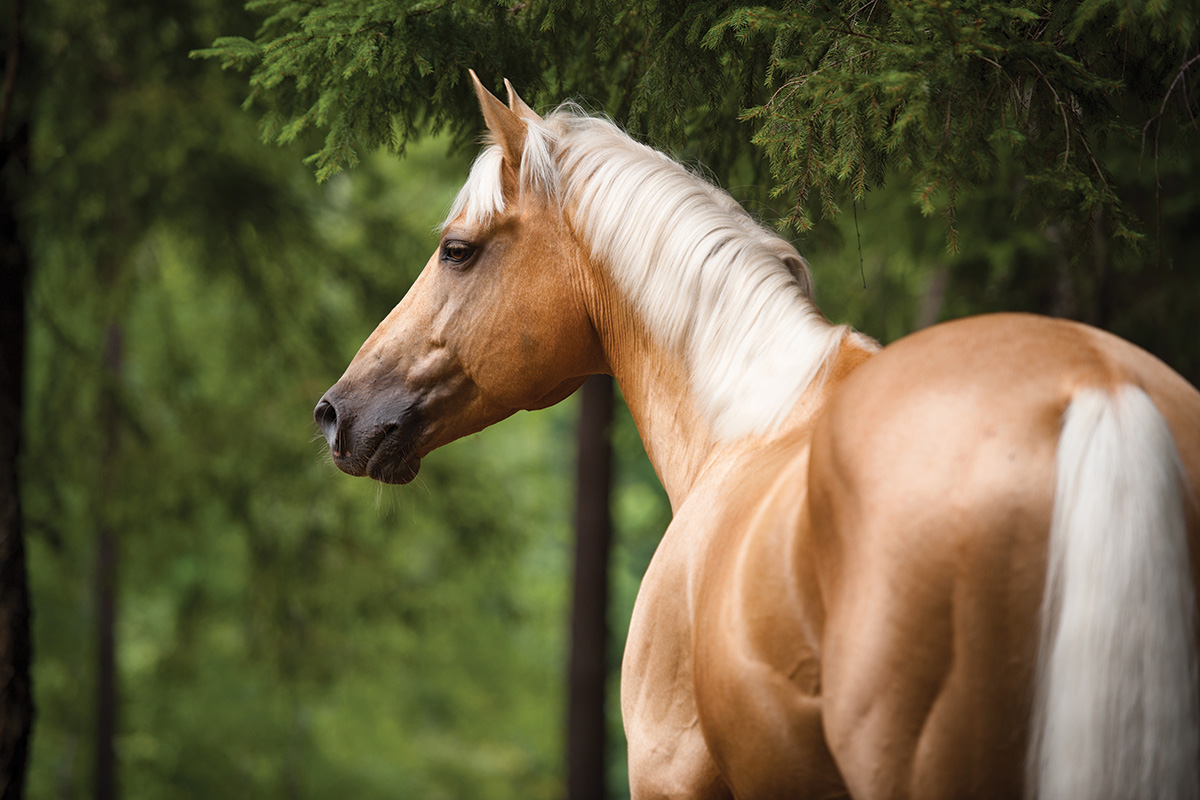
Photo by Viktoria Makarova/Adobe Stock
Why CBD Works in Equines
All mammals have an endocannabinoid system (ECS) located throughout the body, which helps the nervous and immune systems self-regulate and communicate. The ECS searches out instability and seeks to return the body to a balanced state.
CBD acts on cannabinoid receptors in the brain, organs, and the immune system, allowing the ECS to be more productive in coping with instabilities such as inflammation, pain, anxiety, immune deficiencies, digestive disturbances, and more.
CBD is one of the most common cannabinoids found in cannabis plants, which include both hemp and marijuana. Hemp has 0.3 percent or less THC (tetrahydrocannabinol), which is the cannabinoid in marijuana that causes the sensations of being “high.”
There are different ways to extract CBD from plants, with CO2 extraction being the purest. Chemical extraction methods may use toxic chemicals, making this method undesirable. Reputable manufacturers will note their extraction method.
Forms and Dosage
CBD products for horses are sold as pellets, powders, and oils. To avoid contamination from chemicals, heavy metals, or other soil toxins, choose products made in the U.S. or Canada from organically grown hemp. Check websites for a Certificate of Analysis (COA) showing the product has been third-party tested and is free of THC, heavy metals, mold, et cetera.
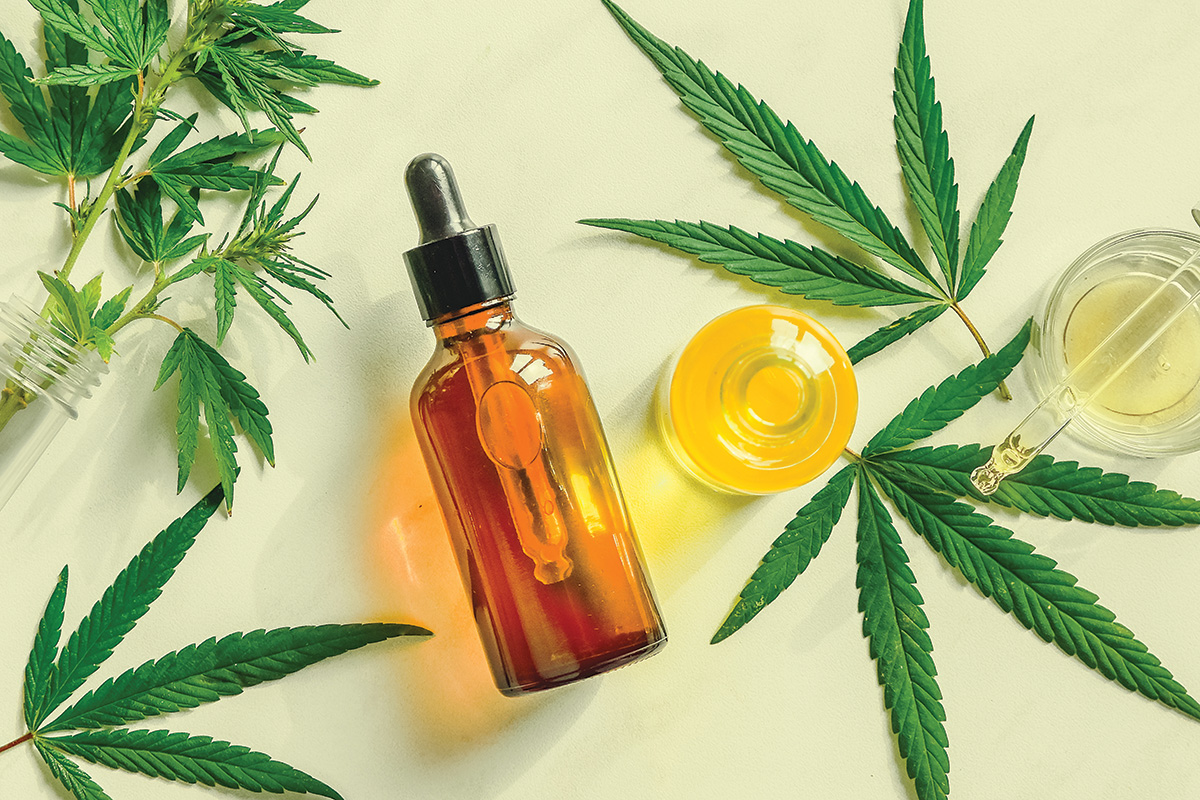
CBD products for horses are most commonly sold in one of three forms: pellets, powder, or oil. Photo by Irina Evva/Adobe Stock
If the product has a NASC quality seal, this guarantees the product was made by a member of the National Animal Supplement Council, so you can feel confident it contains what the label states.
Dosage depends on the horse’s weight and the specific condition being addressed. The most common doses in pharmacokinetic studies for a 1,000-pound horse would be 225 to 1,350 mg of CBD oil once or twice daily. Thus far, only one study has shown increased liver values with these doses. More research on long-term use is needed.
The dose can be adjusted up or down depending on how the horse responds. Although positive effects may be seen within days, it may take up to two weeks to see obvious benefits.
Any side effects are typically mild. Current research has not identified effects on mental activity or GI effects in the short term, but long-term safety is unknown.
Consider the Research
In a recent study at the University of Messina in Italy, hemp oil was added to the protocol of horses with joint osteoarthritis who were already being treated with phenylbutazone (bute).
The group of horses receiving CBD oil had “a significant reduction in heart rate, respiratory rate, white blood cell count, and oxidative stress.” Those horses also scored lower in the Horse Chronic Pain Scale (HCPS), showing improved pain relief and quality of life.
“The good news is that the outcome of pharmacokinetic research has been quite consistent despite different CBD products, doses, horse populations studied, and research groups,” says Taralyn McCarrel, DVM, who was an Assistant Professor at the University of Florida when the school conducted CBD research on horses in 2021. She is currently an Associate Professor of Large Animal Surgery at the Ontario Veterinary College, University of Guelph. “In research, one study never stands alone as the answer—we like to see broad consistency across studies to confirm results.”
McCarrel says current published literature supports these general conclusions:
◆ Oral CBD has poor absorption from the GI tract (very little of what we give ends up in bloodstream circulation).
◆ The acid forms of cannabinoids (CBDA) are better absorbed, but potential clinical effects of these need more investigation.
◆ THC can be detected despite being in low concentrations in hemp oils, and the 7-COOH CBD metabolite remains detectable in the circulation for longer than other metabolites tested.
She points out that despite hemp oil having less than 0.3 percent THC as required by law to qualify as a hemp oil, horses in the University of Florida study, whether given lower or higher doses, had detectable levels of THCA (the acidic form of THC).
“While the CBD and many other metabolites were eliminated from the bloodstream quickly and became undetectable, the 7-COOH-CBD metabolite remained at high levels throughout our sampling window,” says McCarrel, who still holds Courtesy Faculty status at the University of Florida College of Veterinary Medicine.
Should Your Horse Try CBD?
Many horse owners are using CBD products, and there are plenty of products on the market. That said, McCarrel points out three major areas that should give owners pause.
“The first is that we don’t know much more than we know,” she says. “Based on the current literature, it appears that low doses of CBD have minimal effects in the short term, but the safe and effective dose for any particular indication is not known, and long-term safety of any dose is not known.
“The second major issue is that CBD products can differ based on the species and characteristics of the plant,” McCarrel continues. “There is currently no regulatory control of these products at the federal level, and patchy to nonexistent regulation at the state level. So, it’s a ‘buyer beware’ environment at present.
“Finally, for performance horses, it’s important to know the regulations of whatever organization the horse may compete under and be aware that these products are banned by several of them,” she says. “Cannabinoids are banned by the FEI [Fédération Equestre Internationale]. CBD and THC are also prohibited in Thoroughbred racing in the United States, with THC being in a higher class than CBD for racehorses. Owners and veterinarians need to be mindful of the risk of detection of prohibited substances in horses competing in regulated sports.”
Regulatory Status
McCarrel notes that the regulatory environment for CBD products is currently in a state of limbo.
“Given that we are still in the infancy of CBD research in horses, and the very long and expensive process required to achieve FDA [Food and Drug Administration] approval for pharmaceuticals, I would not expect to see an FDA-approved pharmaceutical labeled for use in horses anytime soon,” says McCarrel.
She explains that on the human side, many CBD producers have asked for regulation as a food supplement, which is less expensive and rigorous, but it would provide some regulatory control over quality.
“The FDA’s position is that they have no path for regulation of CBD as a supplement because CBD is an active ingredient in an approved pharmaceutical for treatment of certain seizure disorders in people, and food supplements cannot contain approved pharmaceutical products,” notes McCarrel. “So other than an approved pharmaceutical, which does not exist in veterinary medicine at present, the CBD market is effectively unregulated.”
Due to this lack of regulation, it falls on horse owners to do their homework and choose CBD products made by reputable companies. Since state laws vary regarding the use of CBD products, check your state’s regulations before purchase.
This article about equine CBD appeared in the January/February 2025 issue of Horse Illustrated magazine. Click here to subscribe!