DNA tests for humans have become popular in recent years. People are interested in learning more about their genealogy and discovering what geographical regions their ancestors lived in. When a technology like this becomes available, the proverbial cat is out of the bag, and the technology soon spreads into other industries. And the equine world has not been isolated from this progress.
Just a few strands of mane or tail hair can open the gateway to facts about your horse you couldn’t otherwise know. So then the question arises: Just because you can DNA test your horse, should you? What are the insights you could hope to gain, and are they worth the cost of the test?
DNA tools have been used by breed registries for decades to verify the parentage of a new foal. But there are other potential benefits of performing an equine DNA test—and the resulting useful information that can fall into four basic categories.
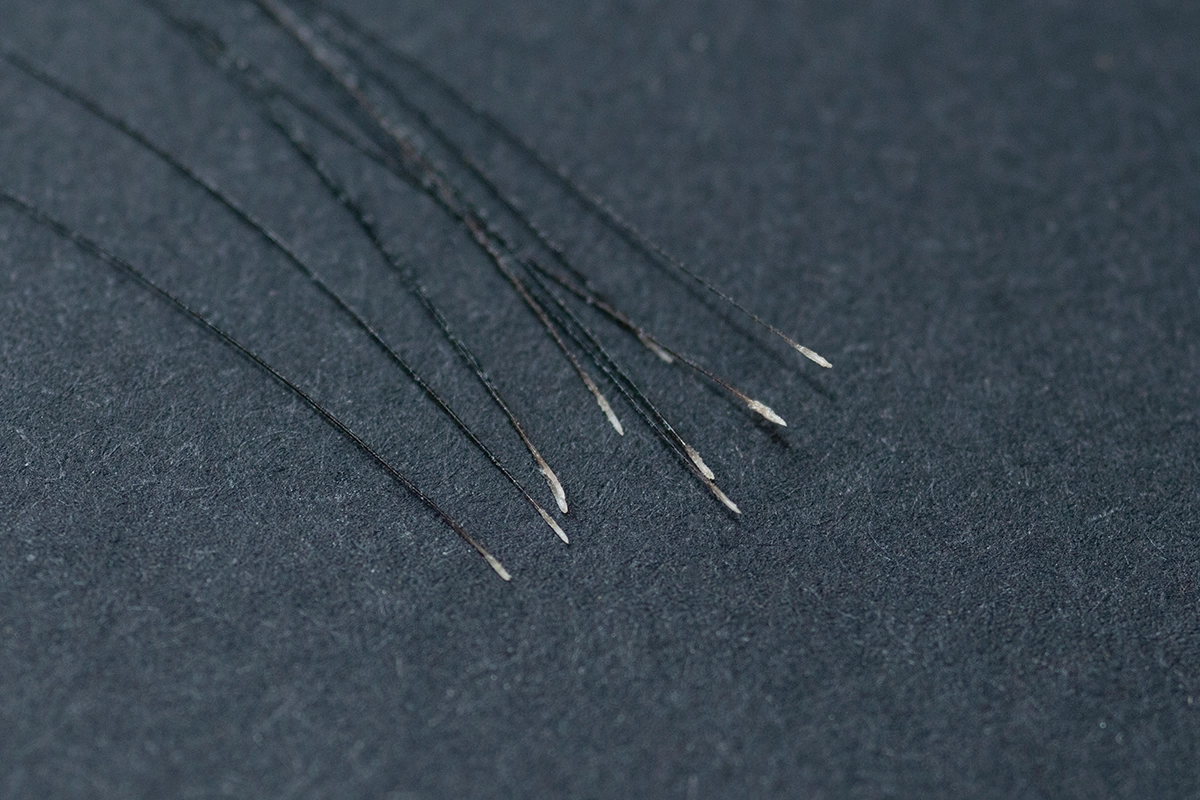
Close-up of individual mane hairs pulled from the root that contain enough cells to send in for DNA testing. Photo by Daniel Johnson
Color Information
A DNA test can provide very reliable results concerning your horse’s coat color genetics. This is because horse coat colors rely on simple inheritance, with some very specific genes and modifiers are directly responsible for visible results.
What you can’t visibly see from looking at your horse are the nuts and bolts of his dominant and recessive coat color traits. For instance, a black mare might have the hidden ability in her genes to produce, say, a chestnut foal if the stallion also carries that gene.
DNA tests can also easily identify modifiers like dilute, roan, and gray. Knowing your horse’s coat color genetics is helpful when considering future breeding plans, as it will give you an understanding of what color the resulting foal might be. Additionally, coat color genetics are just plain fascinating, and can help explain your horse’s precise color.
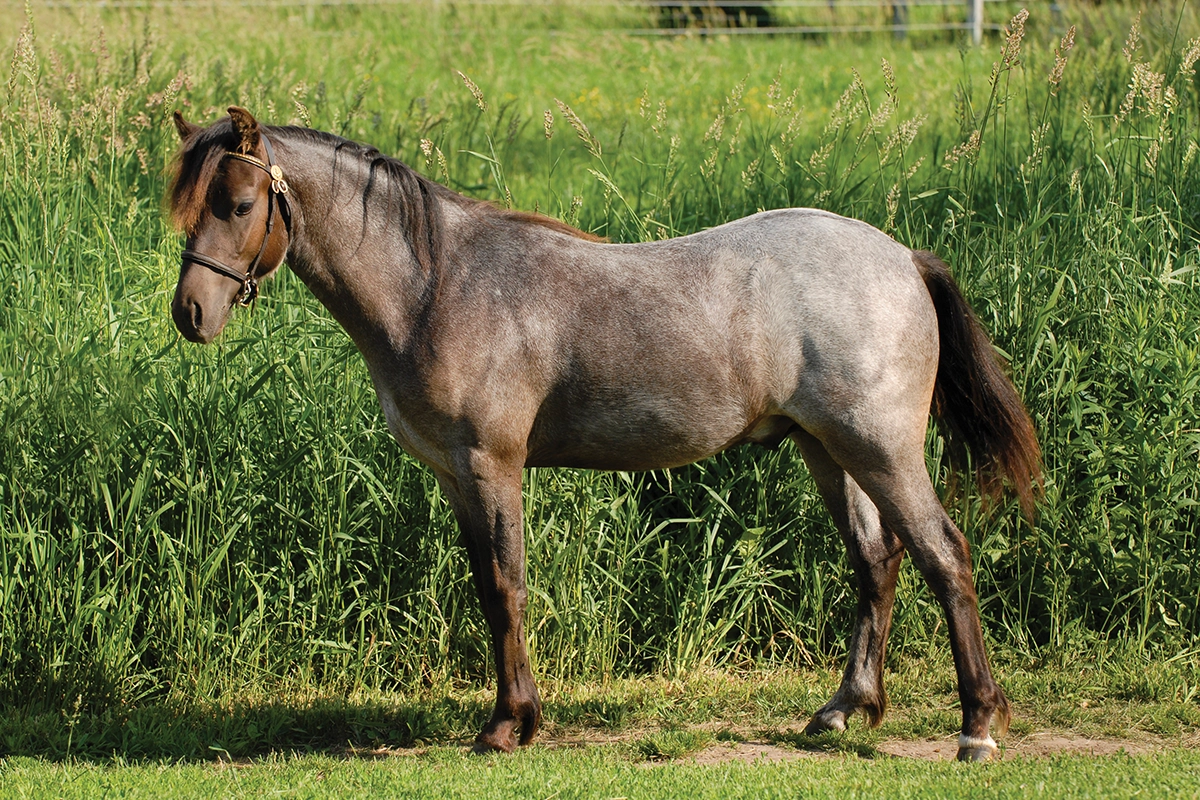
A DNA test revealed that this colt’s base color is black, modified by one creme/dilute gene and one roan gene. Photo by Daniel Johnson
Health Information
Many equine health issues are unique to the individual horse and his environment. For example, genetics aren’t at play if a horse contracts a tick-borne illness.
But many equine diseases are genetic or have genetic ties. DNA testing can indicate whether your horse possesses the genes that could lead to that disease. It doesn’t necessarily mean your horse will ever display symptoms of the disease, but that the potential exists.
Other times, a horse is a carrier of a genetic disease, and while they’ll never actually develop the disease, they could pass it on to their foals. Sometimes a genetic disease is breed-specific; for example, you might test an Arabian horse for severe combined immunodeficiency (SCID), which can lead to foals with weakened immune systems. Quarter Horses may be carriers of the gene for hyperkalemic periodic paralysis (HYPP), a muscle disorder. These are but two examples; you can test for many genetic equine diseases.
Breed Information
In the case of a grade horse with no pedigree information available, a DNA test can potentially determine the breeds of his ancestors, giving you at least a rough idea of what general mixture of blood he carries. While interesting, this information might not be all that helpful in some situations.
For one thing, it’s probably fairly apparent just from looking at your horse what might be in his background. A draft appearance, an Arabian flair, pinto markings, height, bone, head shape—all of these already provide clues to his unknown heritage. A DNA test might give you some more precision in this area, but the success of the DNA test in this manner hinges on the size and samples available in the testing lab’s database.
Additionally, many horse breeds have influenced others across history, such that equines as a whole share a lot of “horsey” DNA, making these tests challenging to interpret.
Fun Information
Finally, some DNA tests provide you with a dose of entertainment. Some DNA testing services offer “family” matching, where it might be possible to identify close relatives of your horse—cousins, aunts, uncles, et cetera.
Other DNA tests may offer performance information, such as indications of a horse’s potential athletic abilities, or whether they’re capable of a special gait like pacing or a running walk.
How Does DNA Work?
You don’t really have to understand how DNA works to see the benefits of a DNA test, but a basic grasp of the topic can be helpful.
DNA is a long chain of molecules inside every living cell, made of sugars, nitrogen, and phosphates. The exact arrangement of these molecules on the DNA chain determines how a living thing constructs proteins, so DNA can literally be thought of as a code or an alphabet that contains the directions to build a living creature.
Every cell in an animal’s body contains a complete set of instructions for building that individual. Different small segments of DNA—the genes—affect different physical characteristics.
These segments are inherited from each parent, so DNA tests can be used to identify relatives. Genes can be complicated, as there’s not always a single gene associated with a single trait, and the environmental factors that affect your horse throughout his life can play a big role in shaping who he is. So while DNA tests can teach us a lot about our horses, they aren’t crystal balls, either.
Equine DNA Testing ServicesTexas A&M University University of California Davis Gluck Equine Research Center (University of Kentucky) |
Key Takeaway
So, is there value in these tests? Absolutely—if the information is useful or entertaining to you. There is value to be had in color information, as it is highly accurate and can be helpful to breeders.
Genetic disease information can help you plan for your horse’s future. Insights into your horse’s heritage or even the geographic regions his ancestors lived in can be fun, though perhaps less useful. It’s mostly up to your curiosity level and your budget.
This article about equine DNA tests appeared in the July/August 2025 issue of Horse Illustrated magazine. Click here to subscribe!