Riding is simple, right? After all, there’s a pedal for each foot! While leg cues are important, simply kicking a horse to go is counterproductive and creates dullness. As we debunk this long-held myth of “Just kick your horse to go forward,” let’s pause for a moment and consider world-class riding examples in both rodeo and racing.
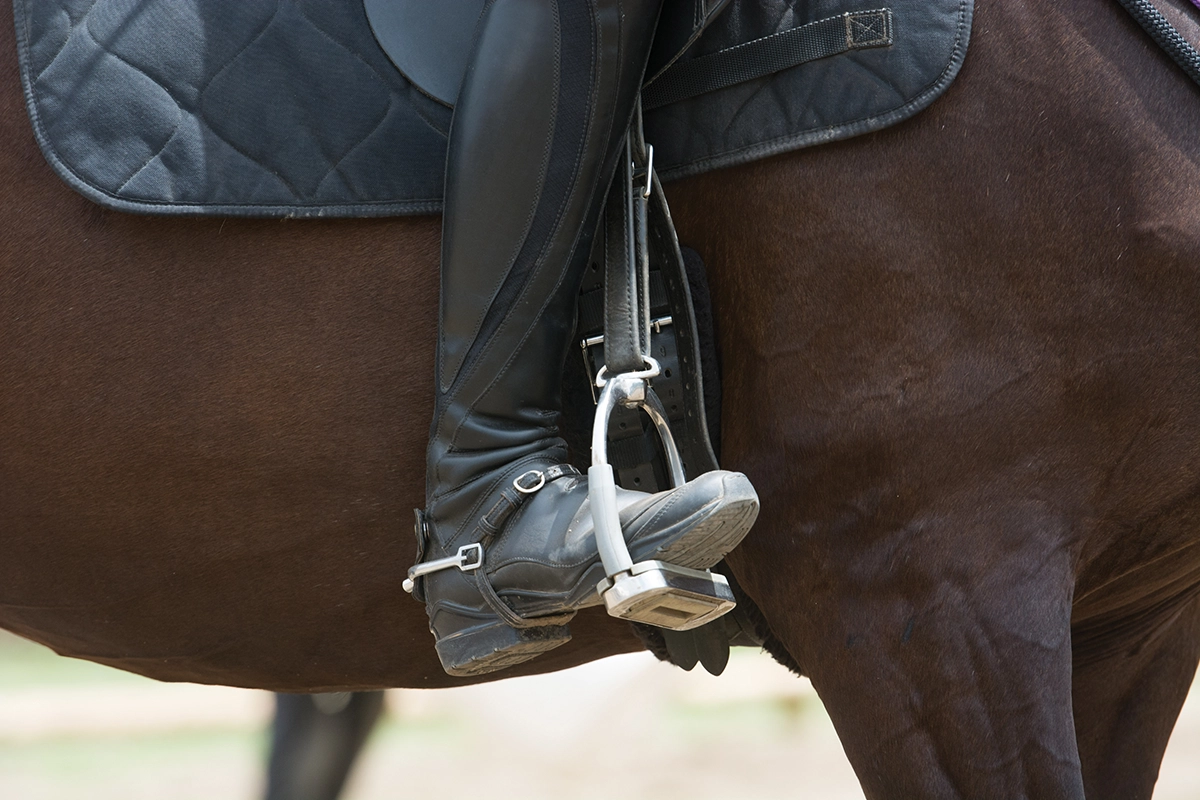
Think back to the last horse race you watched. Can you remember a single jockey who kicked their horse to speed them up? Now, juxtapose that image against the powerful bucking horses who dominate the rodeo arena. How are the cowboys coaxing their horses to perform with even bigger bucks? Kicking, of course.
So why do we choose not to kick our horses to go forward? A few simple reasons:
1. Kicking creates brace and opposition (think rodeo bucking horses).
2. Kicking limits our communication to just one message: Go forward (think of all the other things we want our legs to say).
3. Kicking bypasses the most effective path to forward movement: our body energy (think Thoroughbred jockeys).
One of the greatest keys to riding success is to replace kicking to go forward with fair and effective phases of pressure in your body language and in your legs.
Horses are masters at knowing what happens before what happens, happens—which means we can teach our horses to synchronize with our body energy even before we use our legs. Start with your energy first and build to a squeeze down your legs to create understanding and willing forward motion.
I teach all my students to “smile with all four cheeks, and turn that smile into a squeeze,” releasing the squeezing pressure as soon as the horse responds. And this is just the beginning!
My definition of true Horse-Man-Ship is the perpetual and progressive series of habits and skills that both horses and humans need on the ground and in the saddle to become partners, in preparation for purpose and performance. No matter your chosen specialty, the pathway to success and harmony comes down to the quality of your habits and skills.
As we progress in our horsemanship, we continue to refine our communication so that legs mean yield sideways, speed up, back up, haunches in or out, and so much more! The result? A responsive horse with soft, balanced movement who listens to whisper-light cues.
Our goal is to teach you how to train your horse safely and effectively at home, so that both you and your horse can have more fun and achieve excellence together, creating a true partnership based on trust and mutual understanding.
Learn more about our digital home-study curriculum, the Levels Program, at Parelli.com and take your riding to the next level of communication and understanding.
Pat Parelli’s Horsemanship Myth Series
◆ Debunking 5 Common Horsemanship Myths
◆ Horsemanship Myth 1: “Catch your horse any way you can.”
◆ Horsemanship Myth 2: “Saddle them up and get on.”
◆ Horsemanship Myth 3: “Kick them to go.”
◆ Horsemanship Myth 4: “Pull them to stop.”
This article appeared in the July/August 2026 issue of Horse Illustrated magazine. Click here to subscribe!