
Learn more about cellulitis in horses, which occurs when a subcutaneous bacterial infection gets out of hand.
You walk out to catch your horse and bring him in for morning feed, but he’s not at the gate. He’s standing a ways off, but as soon as he starts to move, it’s obvious something is very wrong.
He’s significantly lame, reluctant to even put weight on his left hind leg, which is so swollen it’s almost double the normal size. What’s going on?
He’s had some hard workouts this week. Could this just be “stocking up?”
Cell phone in hand, you call your veterinarian and then slowly lead your hobbling horse into the barn.
By the time the vet has come and gone, you have a diagnosis and a treatment plan.
Cellulitis.
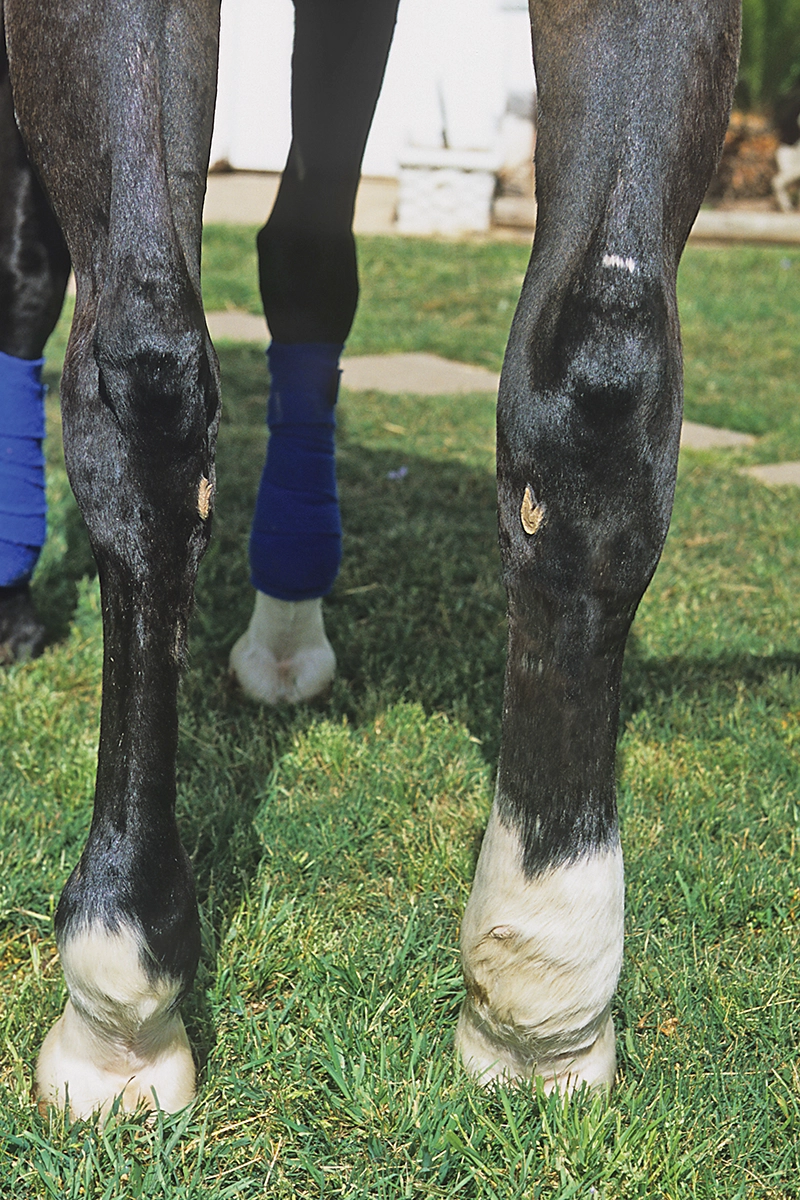
Unlike stocking up, which usually occurs in both hind legs (or even all four legs) and goes away after exercise, cellulitis does not. Photo by Bob Langrish
What is Cellulitis?
A bacterial infection within the connective tissue beneath the skin, cellulitis is a serious and painful condition that must be addressed promptly so it doesn’t progress and cause complications.
Also referred to as septic cellulitis, the infection often occurs in one limb—frequently a hind leg—although it can develop anywhere on the body.
“Cellulitis is a soft tissue infection that is often due to a puncture wound. It can happen anywhere in the body, but most of the time, it’s in a leg,” says Sam Crosby, DVM, whose equine veterinary practice is based in Arcadia, Okla. “It can also be introduced by a systemic infection, such as an infection of the bloodstream.”
Because cellulitis can develop rapidly, at first glance, it may appear that the horse has a fracture—especially because the considerable swelling is usually accompanied by dramatic lameness.
“The horse often doesn’t want to put weight on the leg and can be a 3 to 5 [out of 5] on the lameness scale,” he adds, noting that horses with cellulitis may react painfully just to having the limb touched.
In addition to obvious lameness when cellulitis is in a leg, other clinical signs include:
◆ Marked swelling (“stovepipe” appearance if in leg)
◆ Heat in the swollen limb
◆ Very painful to the touch
◆ Pitting edema (when an indentation remains in the swollen spot after you press on the skin)
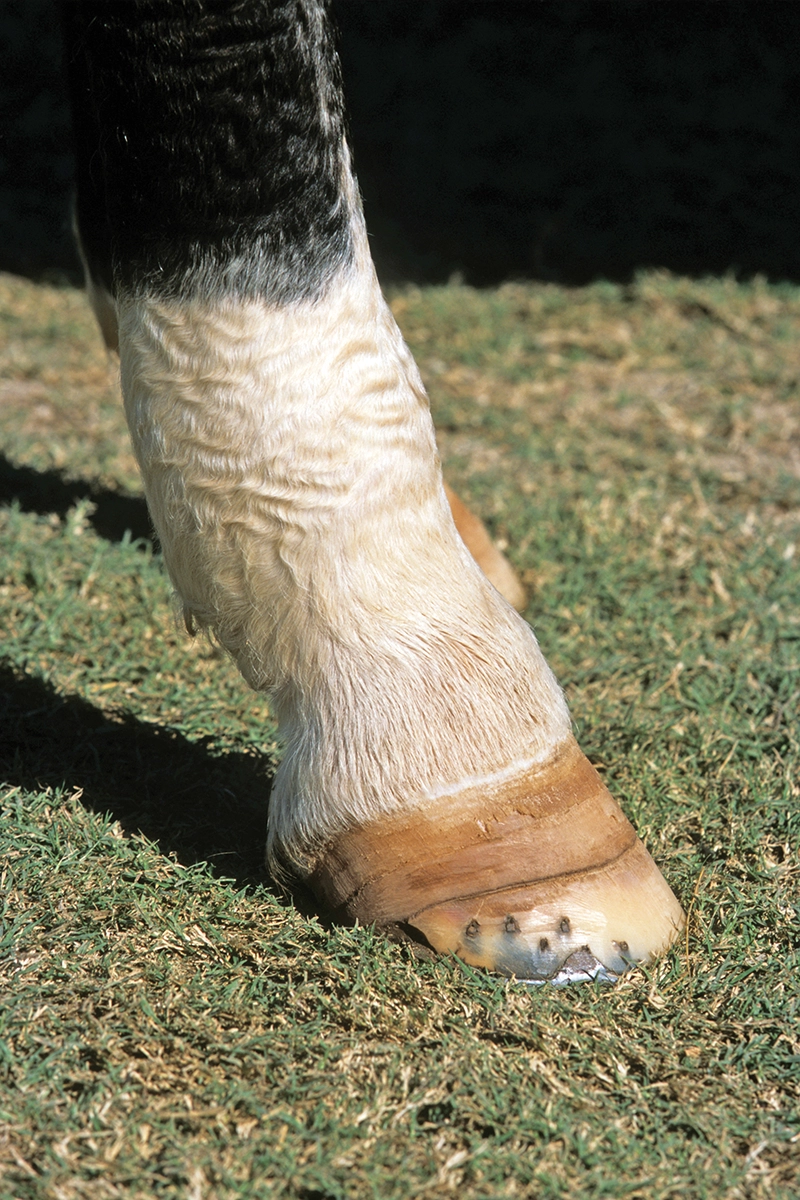
In addition to marked lameness, a swelling or “stovepipe” appearance, generally in one hind leg, is a common clue that cellulitis is the cause. Photo by Bob Langrish
Diagnosis
If your horse shows clinical signs of cellulitis, call your veterinarian promptly. While you’re waiting for the vet to arrive, take your horse’s temperature to see if he’s running a fever. You can also hose the swollen leg with cold water to offer some relief.
The veterinarian will conduct a physical exam and will generally pull blood to run a complete blood count (CBC). A high white blood cell count indicates infection.
“We can also do a quick stall-side blood test called an SAA,” says Crosby. “This can be done on site and checks for inflammatory conditions, including infections. Vets often use both CBC and SAA test kits.”
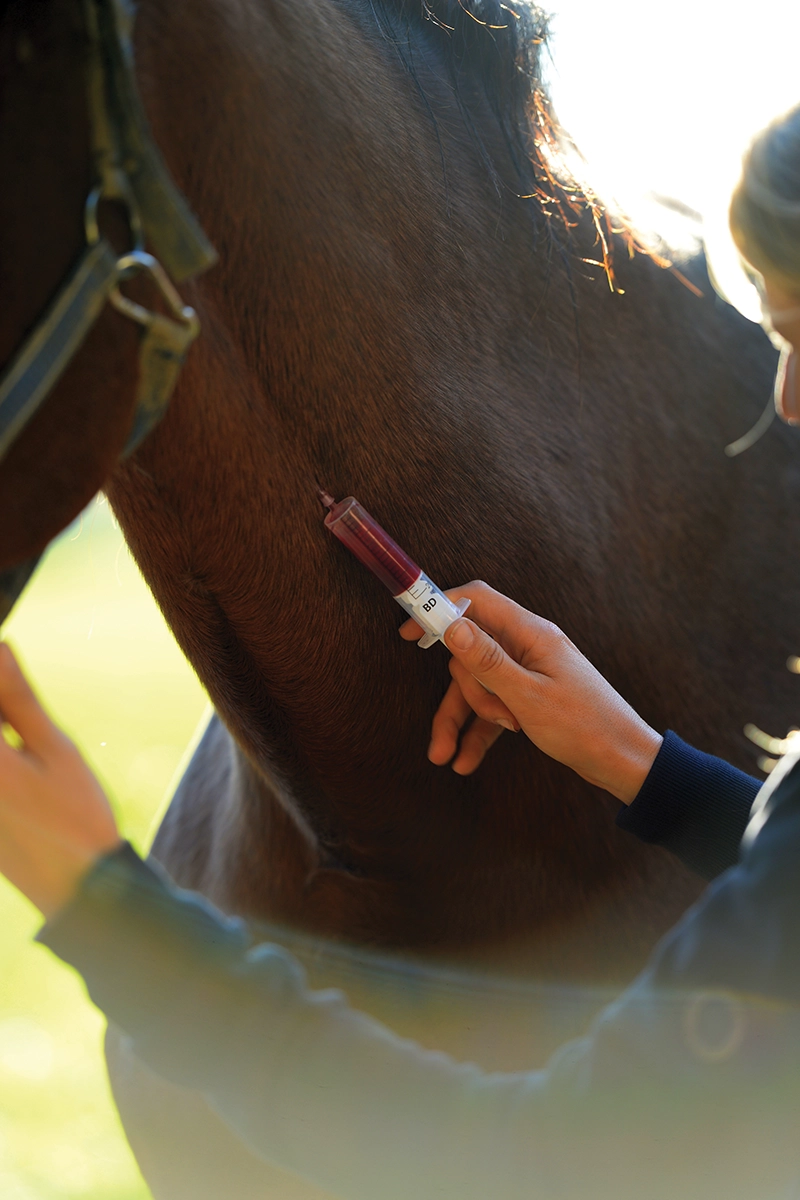
If cellulitis is suspected, your horse’s veterinarian will run a complete blood count (CBC). A high white blood cell count indicates infection. Photo by GRUBäRin/Adobe Stock
If there’s any question of a foreign body being involved, the veterinarian may also use radiography or ultrasound to take a deeper look at the affected area.
“It usually takes 12 hours or more to develop cellulitis, but it can also show up several days after an injury,” he adds.
Treating a Horse for Cellulitis
“Cellulitis is very painful for the horse, and you want to get the swelling down as quickly as possible because it can cause other problems if not treated,” says Crosby.
If allowed to progress without treatment, cellulitis can lead to skin ulceration, abscesses, tissue necrosis or even sepsis. Other complications can include inflammation of the lymph vessels (lymphangitis), which can cause permanent damage. Laminitis in the supporting limb has also occurred in severe cases of cellulitis.
If a wound is discovered while examining the horse, the veterinarian may take a sample to culture and determine specific bacteria. But the first step is usually putting the horse on a course of broad-spectrum antibiotics to get the infection under control. This can also help stave off any secondary infection.
Your veterinarian will also prescribe an anti-inflammatory like phenylbutazone (Bute) or flunixin (Banamine) to reduce inflammation and pain.
In some cases when the condition is due to an infected wound, the veterinarian may need to address drainage and debriding of tissue.
It’s crucial to address the swelling caused by accumulated fluid. Hosing with cold water will help. Your veterinarian may recommend the use of poultice or a similar product to help draw out fluid. In addition, you’ll likely be told to hand walk your horse multiple times a day, as movement helps reduce the swelling.
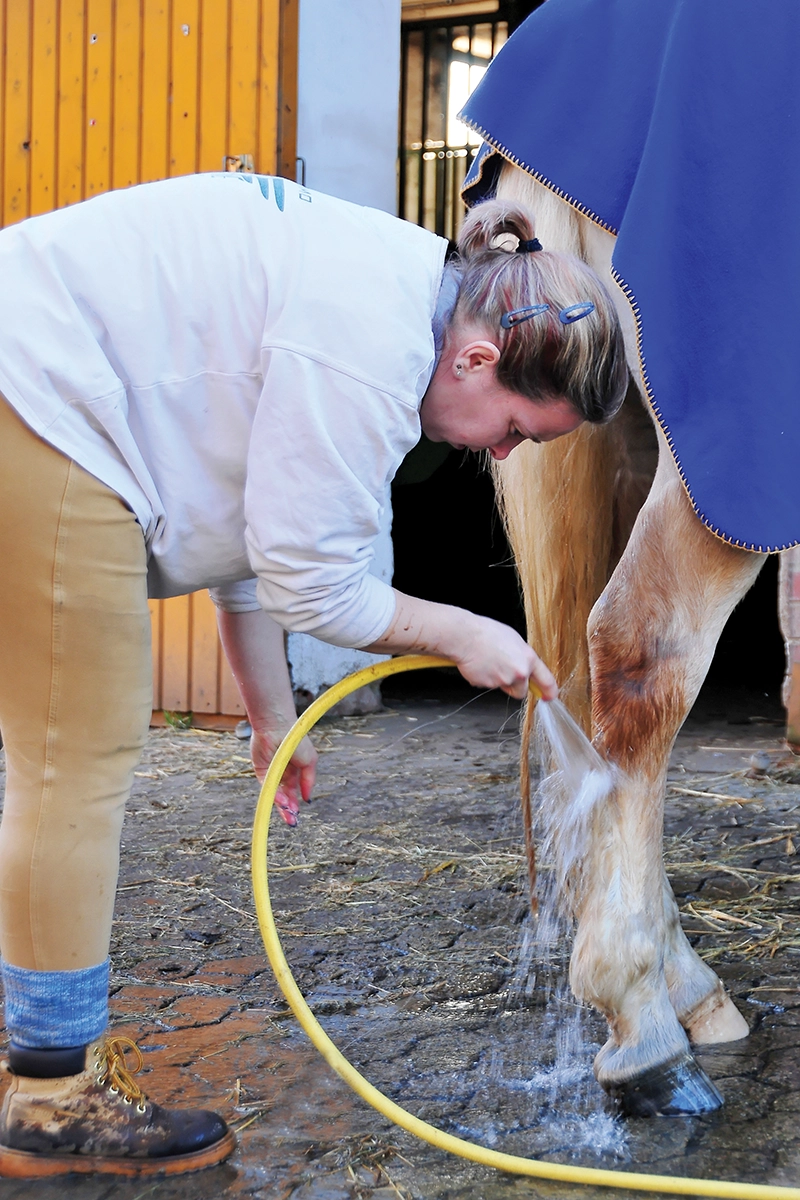
It’s crucial to address the swelling caused by accumulated fluid. Hosing with cold water will help. Photo by R. Andreas Klein/Adobe Stock
Don’t bandage the swollen limb unless specifically instructed by your veterinarian, or you may cause additional swelling.
What It’s Not
“True cellulitis is typically in one limb,” says Crosby. “If all four limbs are swollen, it’s more likely systemic, such as purpura hemorrhagica (PH). This happens when blood vessels become ‘leaky’ after a respiratory infection like strangles or influenza.” He adds that PH is a result of an improper immune response and isn’t contagious.
Cellulitis is also very different from “stocking up,” which occurs when fluid in the lower legs accumulates during a period of inactivity, such as being stalled overnight. This edema can involve both hind legs, both forelegs, or all four legs. The swelling is typically the same in all affected legs, which aren’t hot to the touch or painful. With stocking up, the swelling usually resolves quickly once the horse is exercised or turned out.
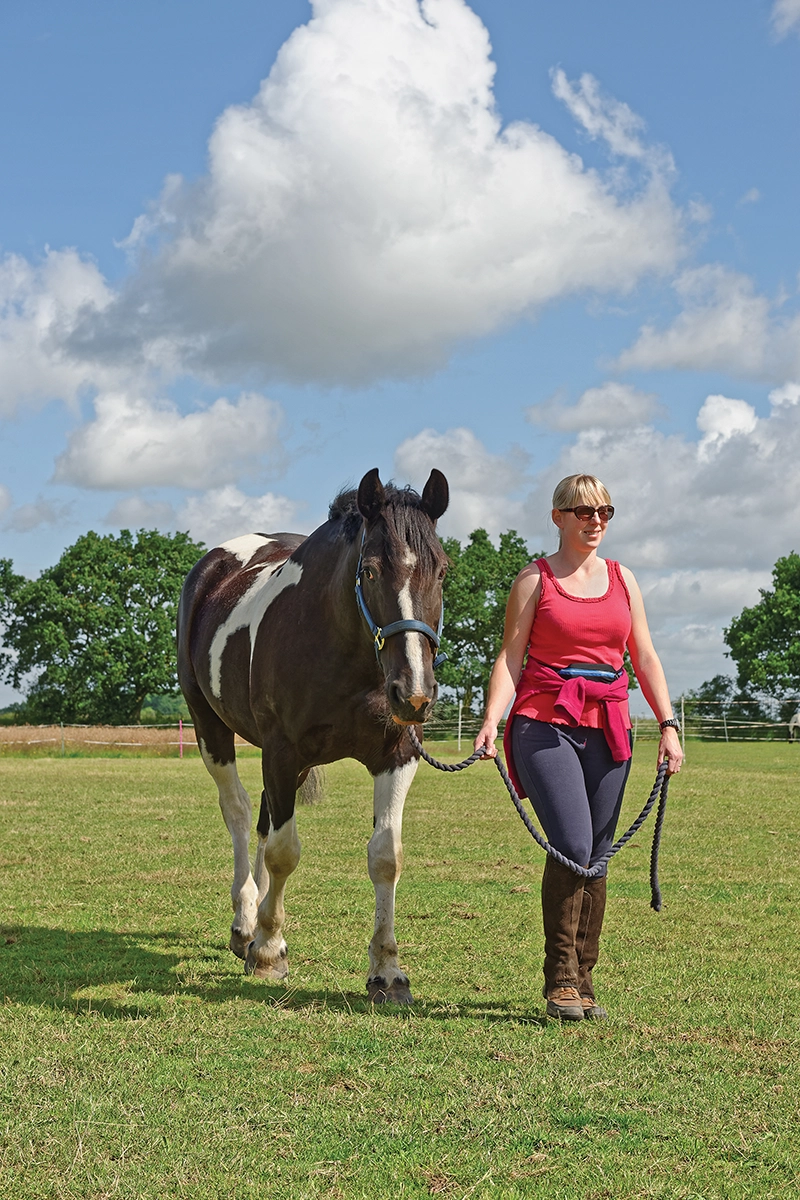
Your vet will likely advise hand-walking your horse multiple times per day to help reduce swelling. Photo by Oger Ashford/Adobe Stock
Cellulitis Prevention
Unfortunately, once some horses have had cellulitis, they can have recurrent cases if they end up in a situation where bacteria is introduced under the skin again.
To prevent cellulitis, it’s important to clean any wound or breaks in the skin promptly. Treat the area and keep it clean to avoid infection.
Even if you aren’t riding, don’t skip daily close observation of horses. Check legs and pick hooves every day. Run your hand up and down each leg to feel for any injuries that may not be immediately obvious. Beware of any small wounds, breaks in the skin, or hoof cracks that can allow entry for bacteria, and treat them accordingly.
Scratches, dew poisoning, cracked heels, hoof abscesses, et cetera can all allow bacteria to enter beneath the skin, potentially setting off infection.
“Don’t assume any cut is minor; it can become serious if it develops into cellulitis,” cautions Crosby, who recently treated a bad case of cellulitis after a horse developed a subsolar abscess in the foot.
Because cellulitis is caused by bacteria, stable management is important. This includes keeping stalls and turnout areas clean and dry, so horses aren’t routinely standing in moist, dirty, or muddy conditions.
This article about cellulitis in horses appeared in the May/June 2025 issue of Horse Illustrated magazine. Click here to subscribe!