Unlock your mobility using these four key exercises to become a stronger equestrian.
The physical aspects of riding are often described as a blend of stability, balance, and strength, but there’s a critical piece missing from this conversation: mobility. This may surprise you, but even the best riders struggle with areas of suppleness in the saddle.
I see it often in dressage, where some riders are more stable and others are more flexible. Neither is better than the other, but it’s important to know that each rider should strive to build more stability before moving on to suppleness. Incorporating mobility training in your program in the right ways can help you move more freely with your horse without limitations.
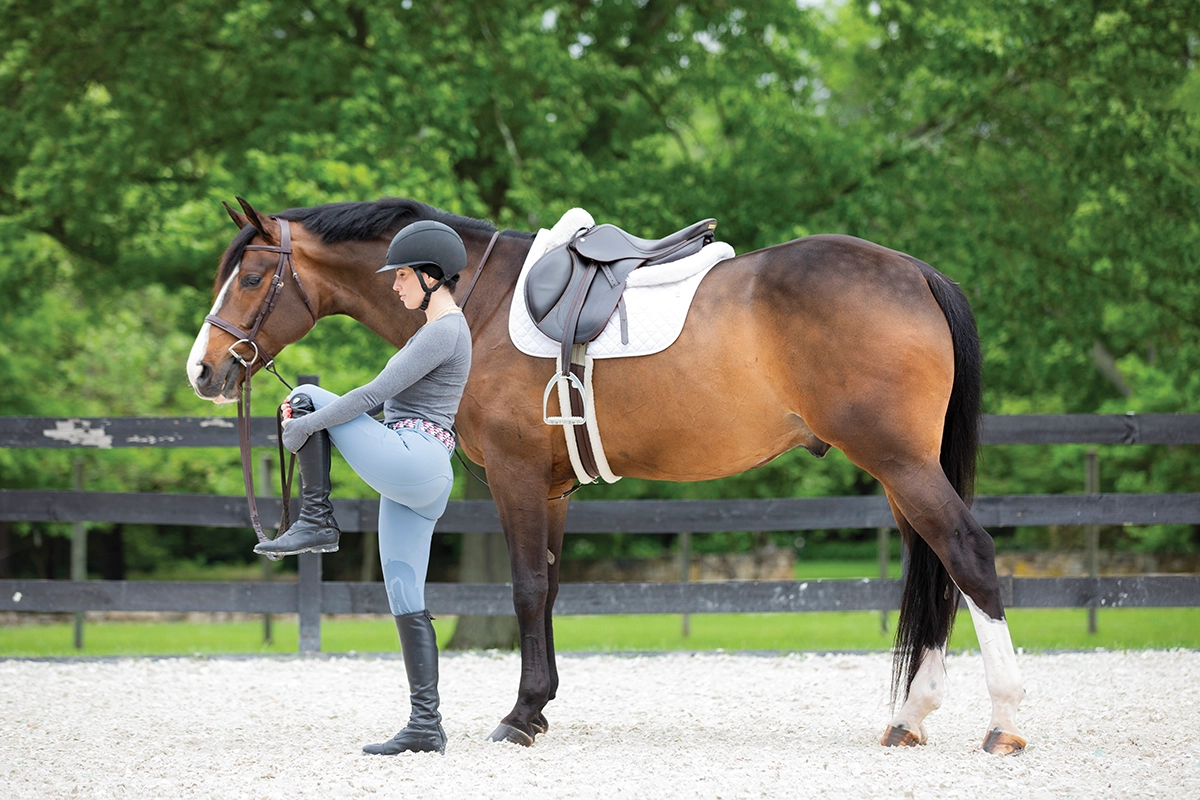
Photo by Jamie Isaacs Photography
Have you ever felt stiff, struggled to maintain a deep seat in the sitting trot, or found yourself gripping through transitions while riding? Chances are mobility, or a lack thereof, is playing a role in some of these common habits.
Most equestrians don’t think about mobility until something starts to feel a bit past “off.” You might focus on stretching tight muscles or building strength, when what you really need is a foundation of controlled, functional movement. This foundation and strategic process is supported by my essential four pillars for riders: stability, suppleness, strength, and stamina.
So, how can you improve your mobility to ride with more ease, effectiveness, and confidence?
Why Mobility and Suppleness Matter
When we talk about mobility, we’re referring to how well a joint moves through its full range of motion with control. Suppleness refers to the ability to bend, twist and move with ease and without discomfort.
It’s not just flexibility. The ability to stretch your hamstrings doesn’t necessarily translate into the mobility to ride well. Mobility is dynamic, meaning you need to be able to move in and out of positions without stiffness or tension through a certain range of motion.
Think about your pelvis, for example. It’s the foundation of your seat, responsible for absorbing motion and keeping you balanced. If your hips are stiff, your pelvis can’t move properly with your horse, which often leads to compensation in your lower back, knees, and even shoulders. Suddenly, riding feels like more effort than it should.
The same goes for the spine. A stiff rider in the upper body can’t adjust fluidly to the horse’s movement, making it harder to maintain an upright posture through various forward and backward movements, and especially rotational movements.
Then there’s the lower leg. If your knees and ankles lack mobility, you’ll struggle to keep your weight in your heels, causing your leg position to become braced rather than supportive, which lacks stability.
All of this means that mobility isn’t just a bonus—it’s a necessity. When you have it, everything about your riding feels more efficient and natural. Without it, you’re constantly fighting against your horse’s forces and your body.
On the Subtle Side
Mobility issues don’t always show up in obvious ways. In fact, many equestrians don’t realize they have a mobility restriction until they start noticing certain patterns in their riding or horse, such as:
◆ Feeling tense or stiff, especially during sitting trot or transitions.
◆ Issues maintaining an upright riding position, often riding with upper body pitched forward (in front of the vertical).
◆ Struggling to keep a deep, stable seat without gripping.
◆ Difficulty adjusting your pelvic position smoothly; for example, shifting your weight for halts and transitions.
◆ Persistent aches in your low back, hips, or knees during and/or after riding.
Or perhaps you have the experience of feeling like no matter how much stretching or strengthening work you do, something still feels “off.” If so, mobility training might be the missing piece in your riding routine.
The good news is that improving mobility doesn’t require hours of extra work, just a little focused effort in the right areas consistently over time.
Simple Mobility Exercises
The best way to improve is to move with intention, and this extends to mobility as well. Instead of forcing extreme stretches and looking for pain, think of mobility work as training your body to access movement with control.
Here are a few exercises that can make a real difference in the saddle.
1. 90-90 Hip Transitions
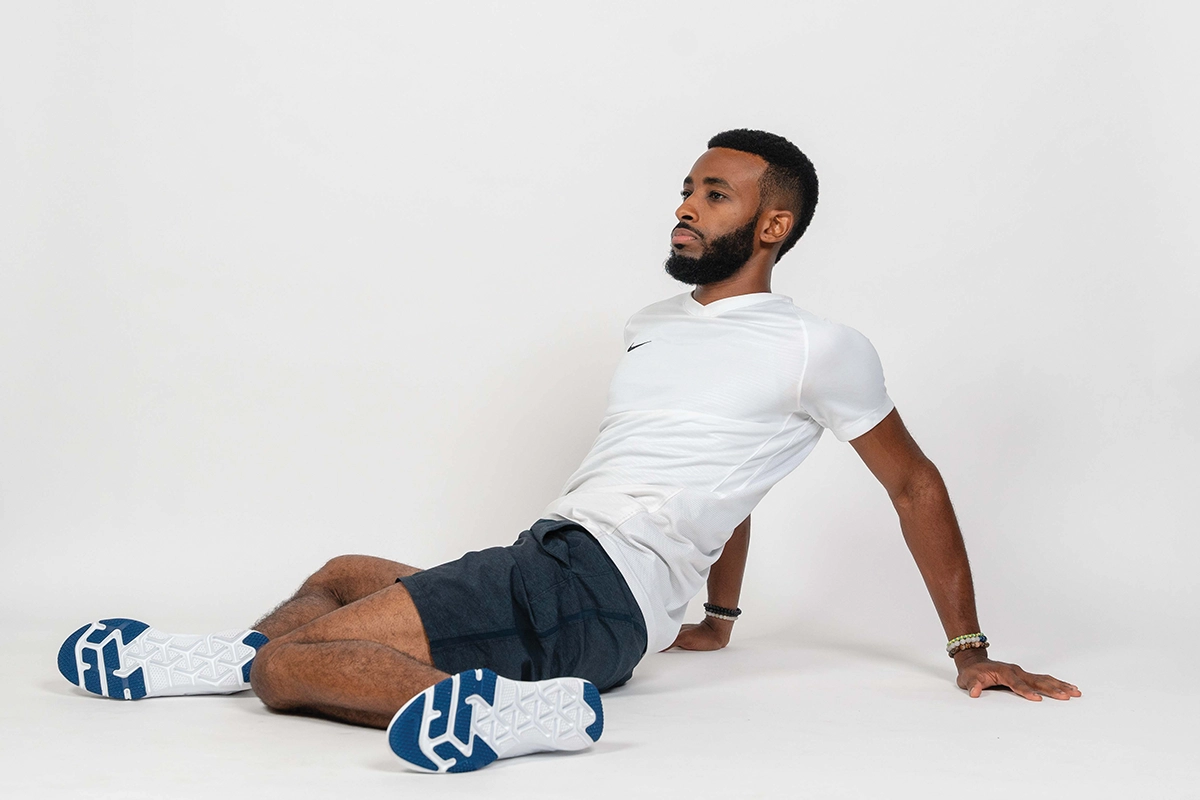
90-90 hip transitions strengthen your hips while improving their ability to open and rotate, which translates directly to a more supple seat in the saddle. Photo by CMJ Photography
Your hips are your connection to the saddle, and if they’re stiff, your seat will experience restrictions. I share the 90-90 hip transitions mobility drill with my clients, it’s a foundational movement for improving internal and external hip rotation, which is key for riders seeking a balanced seat.
Start seated with both knees bent at 90 degrees: your front knee positioned with the knee out (external rotation) and your back knee pointed inward toward the front foot (internal rotation), forming two right angles. Sitting upright with your hands behind you for support, alternate slowly side-to-side, maintaining control as you rotate through the hips.
This movement strengthens your hips while improving their ability to open and rotate, which translates directly to a more supple seat in the saddle.
2. Standing Calf Stretch
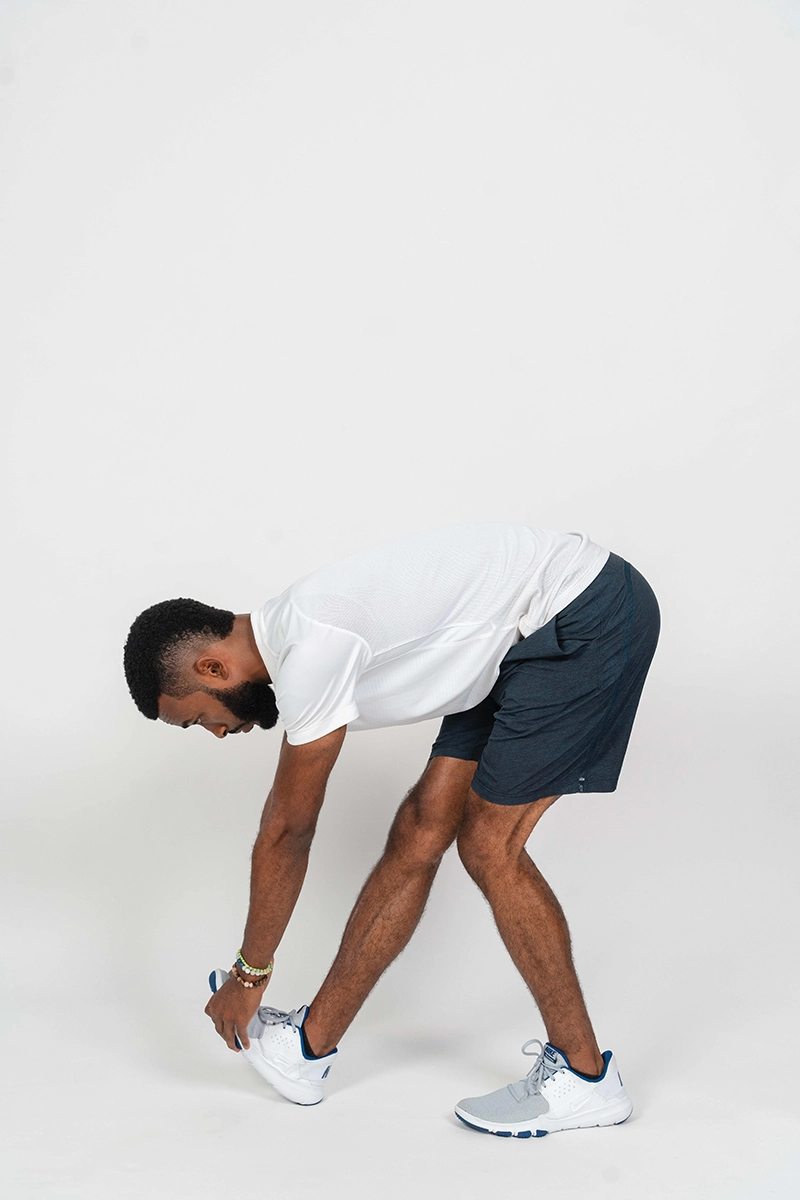
The standing calf stretch enhances flexibility through the posterior chain and encourages ankle flexion. (Variation 2). Photo by CMJ Photography
If your ankles are stiff, you’ll struggle to keep your weight in your heels without tension. One of the simplest ways to improve ankle mobility is the standing calf stretch. This mobility stretch targets the ankle, calf, and hamstring all in one simple motion.
Variation 1: Stand with one foot forward and gently bend your knee over your toes while keeping your heel down. Slowly rock forward and back, feeling a gentle stretch through the ankle joint.
Variation 2: Start upright with your front leg extended and heel grounded, then hinge forward at the hips and reach toward your front foot while your back leg remains straight but slightly bent for support.
This movement enhances flexibility through the posterior chain, encourages ankle dorsiflexion (heels down), and helps you maintain better lower-leg mobility and alignment in the saddle.
3. Standing Knee Hug
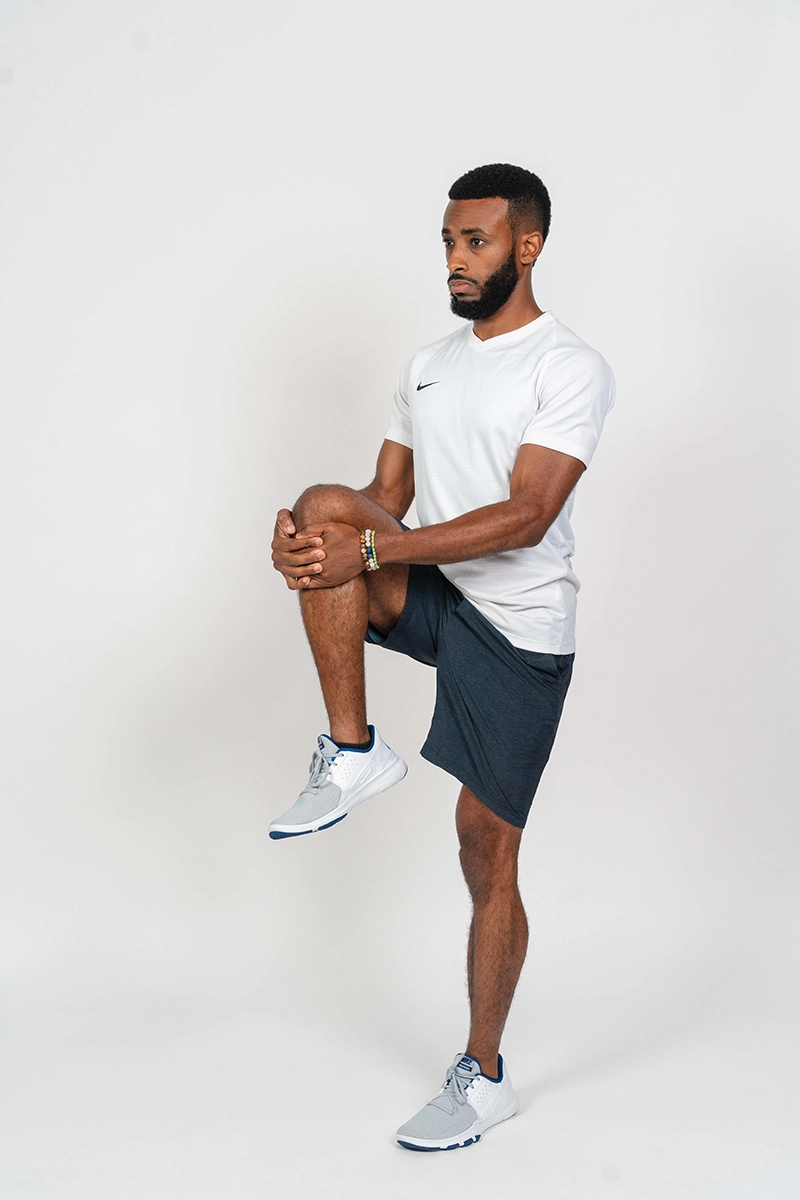
The standing knee hug is a mobility stretch that targets the glutes and hip flexors while improving balance and posture. Photo by CMJ Photography
Tight hips can cause an arch in your lower back while riding, inhibiting pelvic movement and making it harder to stay balanced and upright. A quick hip stretch can help release this tension and relax your pelvis to move more freely.
The standing knee hug is a mobility stretch that targets the glutes and hip flexors while improving balance and posture. This stretch promotes single-leg stability and enhances hip mobility.
Stand tall with your feet less than hip-width apart, then lift one knee and use both hands to gently pull it in toward your chest, keeping your standing leg straight but not locked. Keep your pelvis slightly tucked to avoid overarching your lower back. Hold for 15 to 30 seconds per side.
4. Wide-Stance Windmill
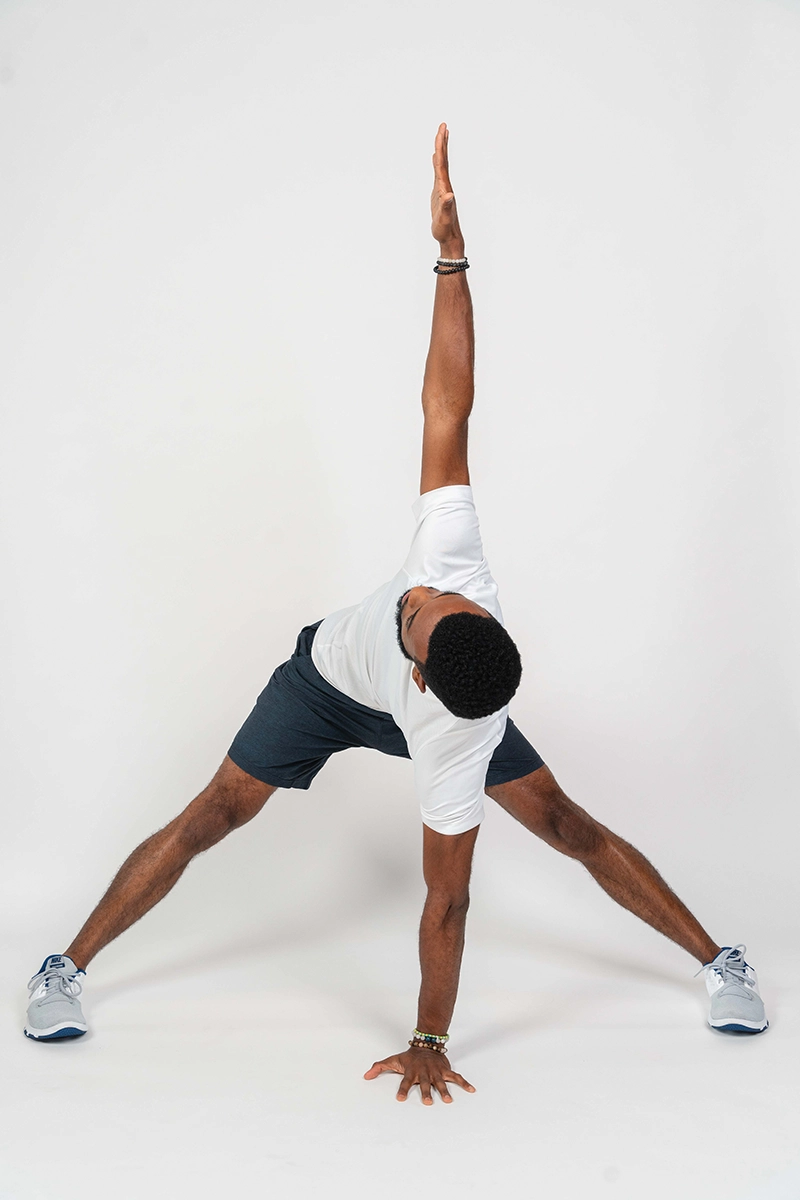
The wide-stance windmill enhances cross-body coordination and improves spinal mobility, helping your spine and core stay engaged without stiffness. (Variation 2). Photo by CMJ Photography
A strong core is important, but so is core mobility—your ability to move fluidly while remaining stable. The wide stance windmill is a core rotational movement, designed to activate your core, open up the thoracic spine, and increase hamstring and hip flexibility. Talk about an all-in-one exercise!
Begin in a wide-legged stance with your feet pointing forward. Hinge at the hips and reach one hand toward the middle of your feet while extending the other arm straight up toward the ceiling.
Variation 1: Look down while doing the movement.
Variation 2: Look up, adding an extra stretch through your neck as your eyes follow your raised hand.
This movement enhances cross-body coordination and improves spinal mobility, helping your spine and core stay engaged without stiffness. You should be able to actively breathe while holding this movement.
Incorporating Mobility Work Into Your Routine
So how do you incorporate mobility work into your routine? The key is consistency—but that doesn’t mean you need to spend an hour a day stretching. Just five to 10 minutes, two to three days per week after you ride can make a huge difference.
Think of mobility as the foundational pillar that allows all your other training to work better. When your joints move freely, your strength becomes more effective, your balance improves naturally, and your riding feels more connected. Instead of constantly “fixing” position issues, you’ll be able to focus on refining your communication with your horse.
This article about mobility exercises for equestrians appeared in the July/August 2025 issue of Horse Illustrated magazine. Click here to subscribe!