Every horse, like every human, has a dominant side, postural habits, and physical imbalances. These can stem from conformation, past experiences, poor training, poorly fitted tack or carrying unbalanced riders, pain, weakness, or simply everyday life. Over time, asymmetry can limit a horse’s range of motion, increase the risk of injury, and create resistance in training. The good news is consistent, well-informed groundwork can help bring the horse back into balance—physically, mentally, and emotionally.
The Five Domains animal welfare model developed by David Mellor, Ph.D., includes nutrition, environment, health, behavior, and mental state. By incorporating these into your assessment, you can build a detailed welfare picture that highlights not just physical issues, but emotional and psychological factors that may contribute to asymmetry.
For example, a horse that is mentally guarded or physically sore may brace through his back and neck, creating uneven muscle development. A horse that doesn’t feel safe may favor one side to keep an eye on perceived threats.
Understanding Asymmetry
Asymmetry can be structural (related to conformation), functional (related to how the horse moves), or a combination of both. While some degree of asymmetry is natural, it becomes a concern when it affects the horse’s ability to stay sound and healthy.
To correct asymmetry, we must first learn to see it. This begins with observing the horse in stillness and in motion: at the walk, trot, and canter; in straight lines and bending lines; and traveling up and down inclines.
Look at the shape of the horse: Does he have tight or differently developed muscles on one side? Does his barrel lean or twist? Are his hips level? Are his nostrils, ears, and eyes aligned? Does he stand with all four feet balanced underneath himself?
Learning to see symmetry and a lack of symmetry in the horse’s body is both a science and an art.
An Assessment Tool
Groundwork gives you the perfect window into recognizing asymmetry. Begin by observing your horse at the halt and in movement. You can evaluate how he carries himself through:
The cardinal planes
- Top / bottom
- Left / right
- Front / back
Direction of movement
- Forward / back
- Up / down
- Left / right
Does your horse rest one hind leg more than the other? Is his neck stiff or his jaw clenched? When you ask for movement, does he step evenly? Are transitions smooth, or rushed and lacking coordination? Does your horse struggle with canter leads? Is his poll level or tilted? Does his back lift or drop? Does he lean, collapse a shoulder, or overbend? Is there impulsion from the hind end, or resistance during transitions?
Groundwork, when approached thoughtfully, becomes a holistic method to promote symmetry, soundness, wellbeing, and self-carriage. Using principles grounded in the Five Domains Model, along with the science and art of observation and movement, you can assess and positively influence your horse’s wellbeing—starting from the ground up.
Developing Symmetry
Once you detect an imbalance, you can begin to address it. In-hand exercises that promote self-carriage are foundational. Begin at the halt with subtle bodywork techniques like:
- Hindquarter tucks: these encourage the horse to engage his abdominal muscles and lift his back.
- Wither lifts: these activate the thoracic sling.
- Telescope neck stretches: These ask the horse to reach forward and down, lengthening the topline.
- From there, move into in-hand work at the walk and trot, encouraging forward movement that starts from the hindquarters. On both straight and bending lines, observe whether the horse leads with his nose or shoulder. Use positive reinforcement when he finds correct alignment; this builds confidence and promotes a calmer parasympathetic nervous state.
- Lateral work, like haunches-in and shoulder-in, can improve impulsion, coordination, suppleness, straightness, and balance.
-
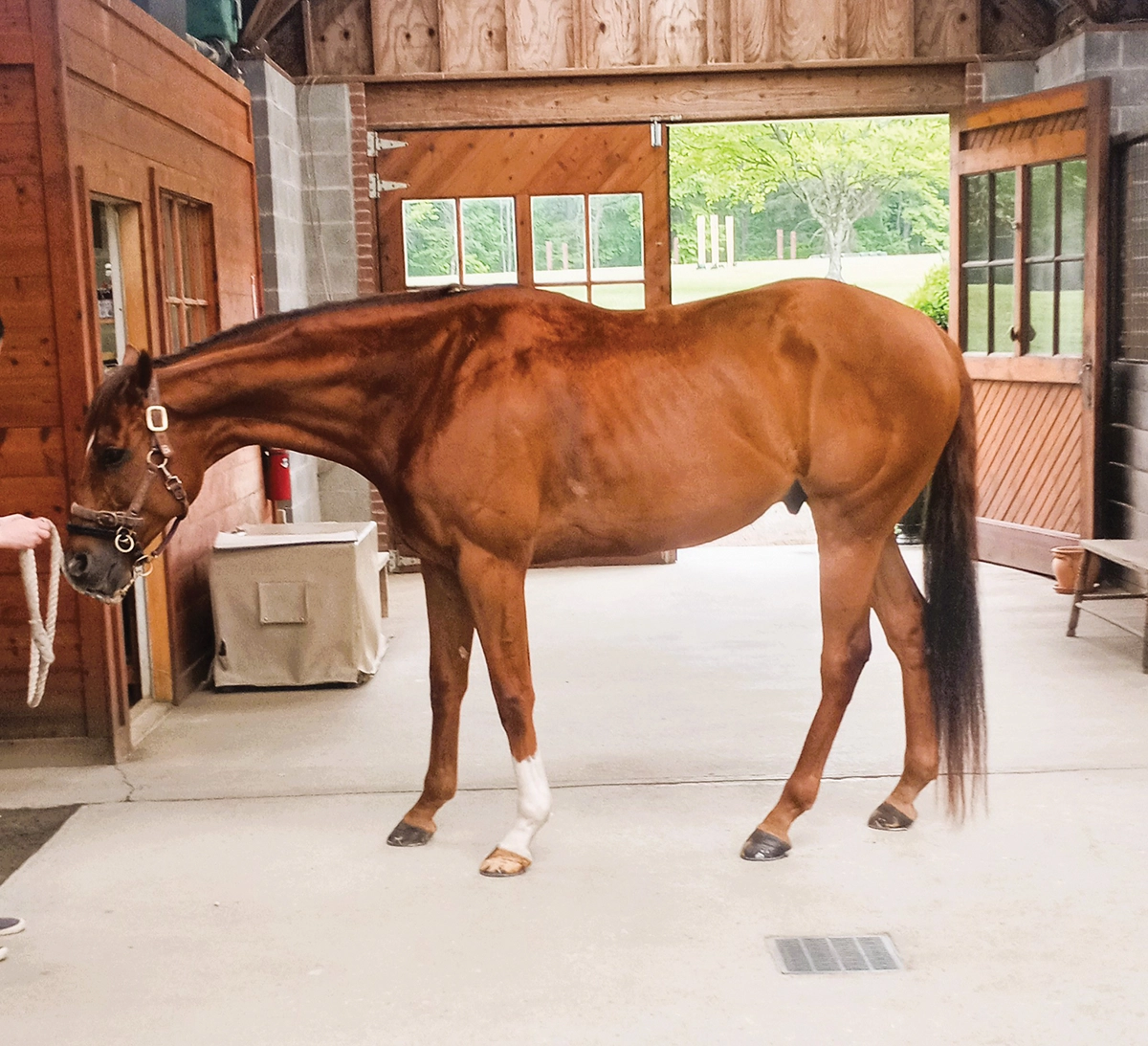
- Bravo, a 9-year-old off-track Thoroughbred, shows lovely symmetry. He is trained by Tad Coffin, who won both individual and team gold medals in eventing at the 1976 Montreal Olympics. Photos courtesy Tad Coffin
-
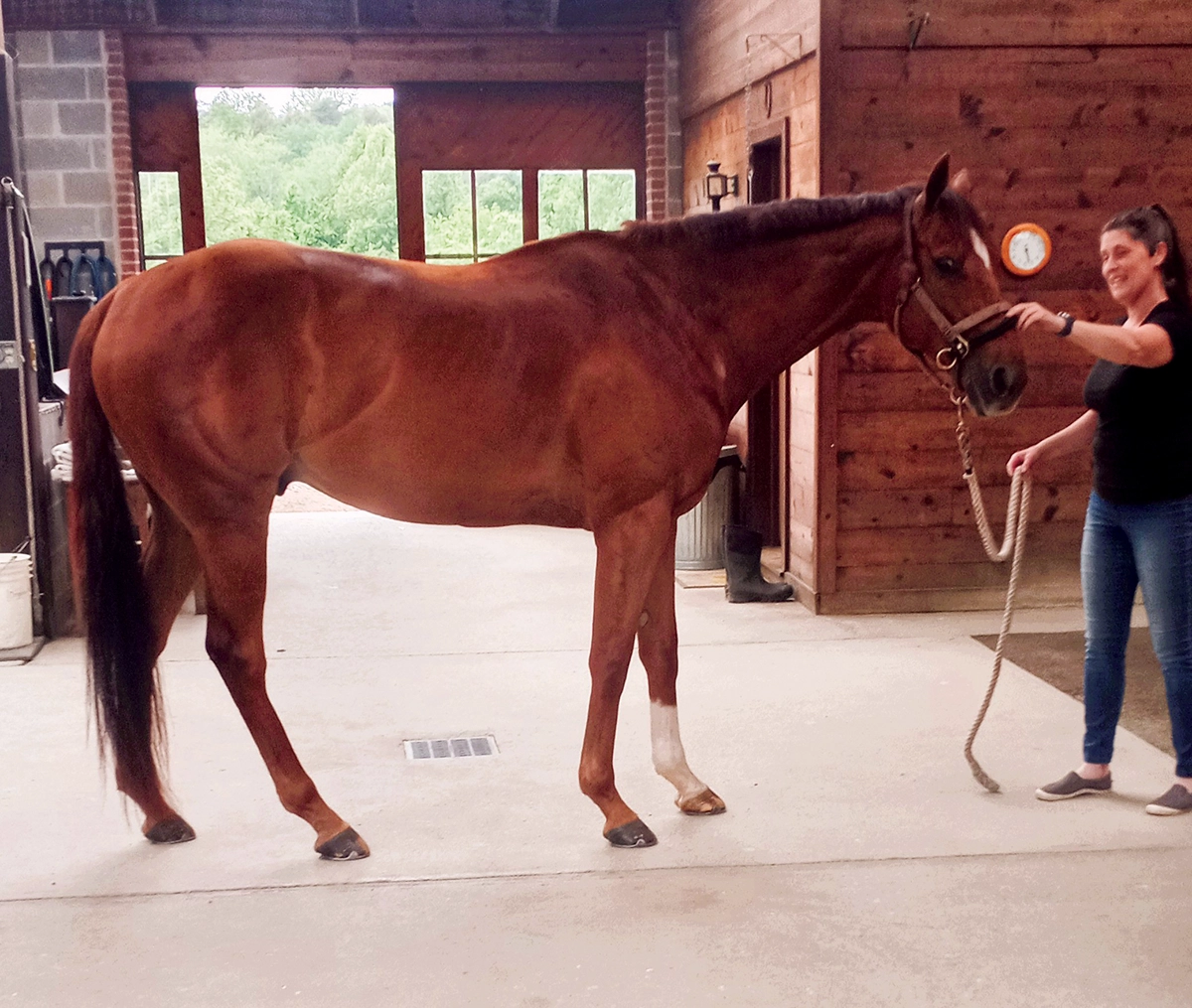
- Bravo, a 9-year-old off-track Thoroughbred, shows lovely symmetry. He is trained by Tad Coffin, who won both individual and team gold medals in eventing at the 1976 Montreal Olympics. Photos courtesy Tad Coffin
-
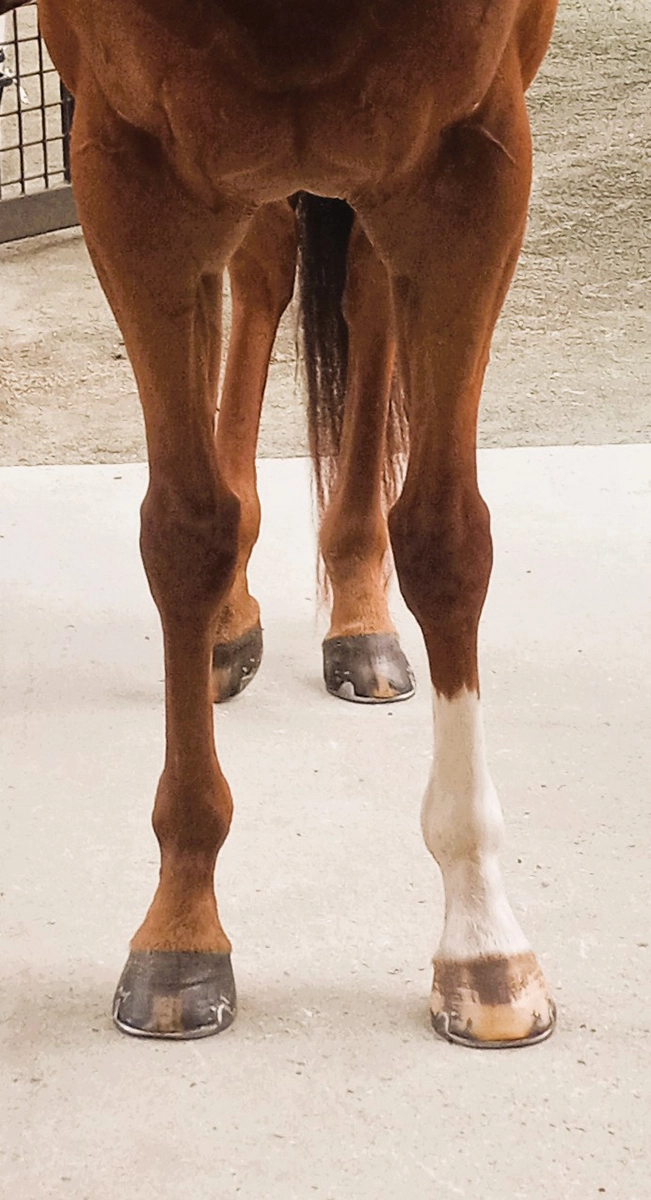
- Bravo, a 9-year-old off-track Thoroughbred, shows lovely symmetry. He is trained by Tad Coffin, who won both individual and team gold medals in eventing at the 1976 Montreal Olympics. Photos courtesy Tad Coffin
-
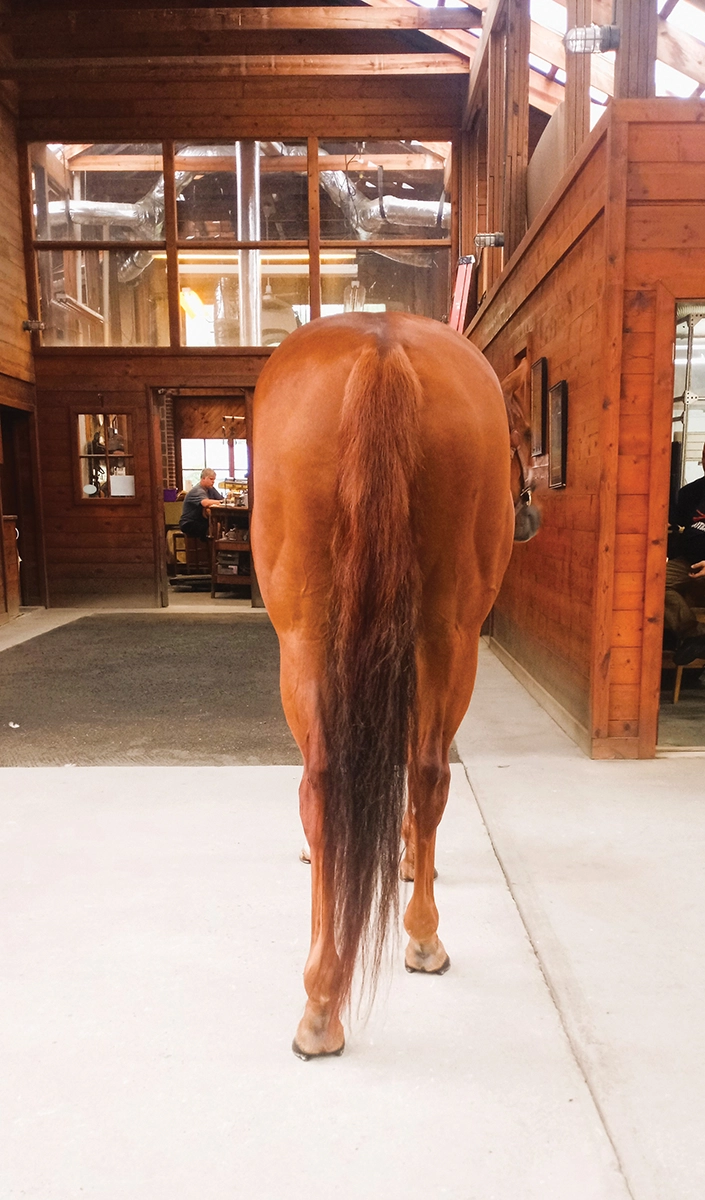
- Bravo, a 9-year-old off-track Thoroughbred, shows lovely symmetry. He is trained by Tad Coffin, who won both individual and team gold medals in eventing at the 1976 Montreal Olympics. Photos courtesy Tad Coffin
Each movement helps the horse understand how to step farther under his center of gravity and rebalance by shifting more weight onto his haunches and lightening his forehand.
Liberty Work
Working at liberty, the conversation deepens. The horse has the freedom to say “yes” or “no.” This builds trust and confidence and enhances the quality of the relationship. Exercises like moving through obstacles, engaging in direction changes, or mimicking your posture help the horse become more body-aware and mentally connected.
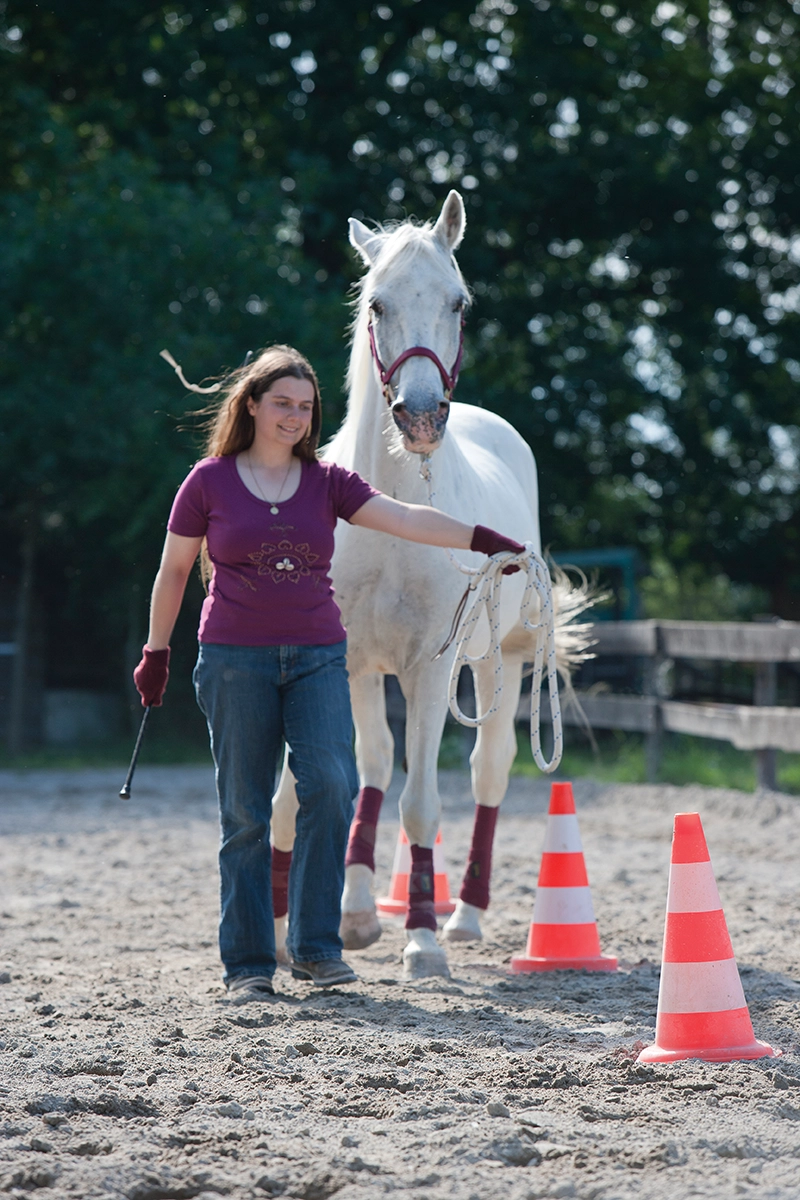
Exercises like moving through obstacles, direction changes, or mimicking your posture help the horse become more body-aware and mentally connected. Photo by Christiane Slawik
Liberty work encourages the horse to take responsibility for his own balance and enhances proprioception while supporting the development of strength, coordination, and mental focus.
The Human Role
A balanced horse begins with a balanced human. As a handler, your posture, timing, and intention affect how the horse responds. Being aware of your own “strong side” and body language allows you to guide the horse with clarity and fairness.
Training your eye is key. Add the use of your hands, video feedback, or professional guidance to refine your ability to detect subtle changes. Symmetry is about finding ease, flow, and comfort in movement.
The quest for symmetry and balance is a lifelong endeavor to build a better connection between you and your horse.
Special thanks to Cathy Languerand and Arnau Gomà for this article. Both are members of the Horses and Humans Research Foundation (HHRF) Equine Well-Being Committee. Please visit horsesandhumans.org to learn more.
This article about groundwork for asymmetry appeared in the September/October 2025 issue of Horse Illustrated magazine. Click here to subscribe!