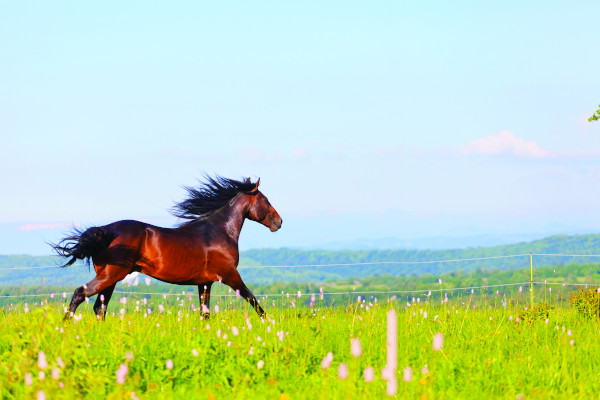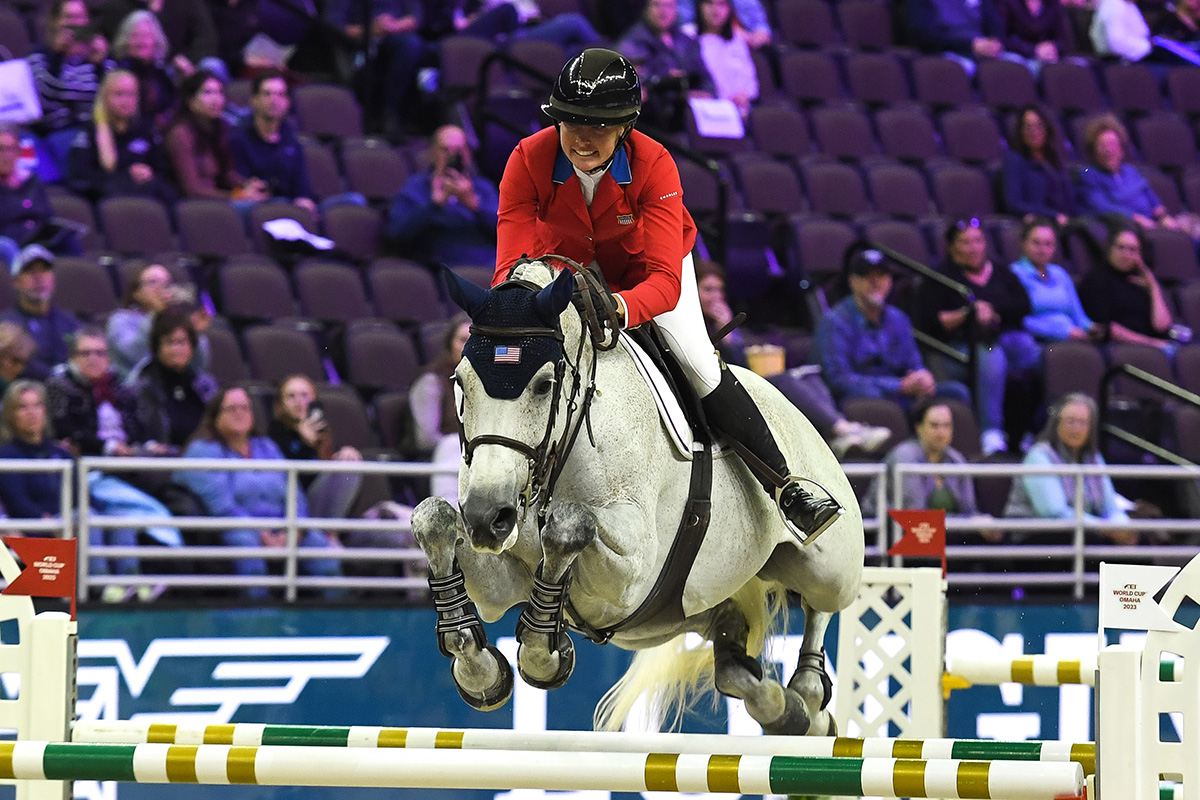
There is a moment in every great horse-and-human partnership that no camera fully captures: a horse standing two hundred feet away, completely free, no halter, no lead, no round pen, turning its head at the sound of a familiar voice, then coming running, ears forward, happy and entirely by choice.
I was reminded of this recently while listening to internationally renowned liberty trainer and performer Sylvia Zerbini, a ninth-generation circus artist who has performed everywhere from Ringling Brothers to Cavalia, speak about her life’s work with Arabian horses. The amazing performances of a dozen Arabian horses move as one, entirely at liberty, is genuinely breathtaking.
Ask Sylvia if she is a horse whisperer, and she will correct you. The term she prefers is horse listener. That distinction deserves our attention, and not only from equestrians.
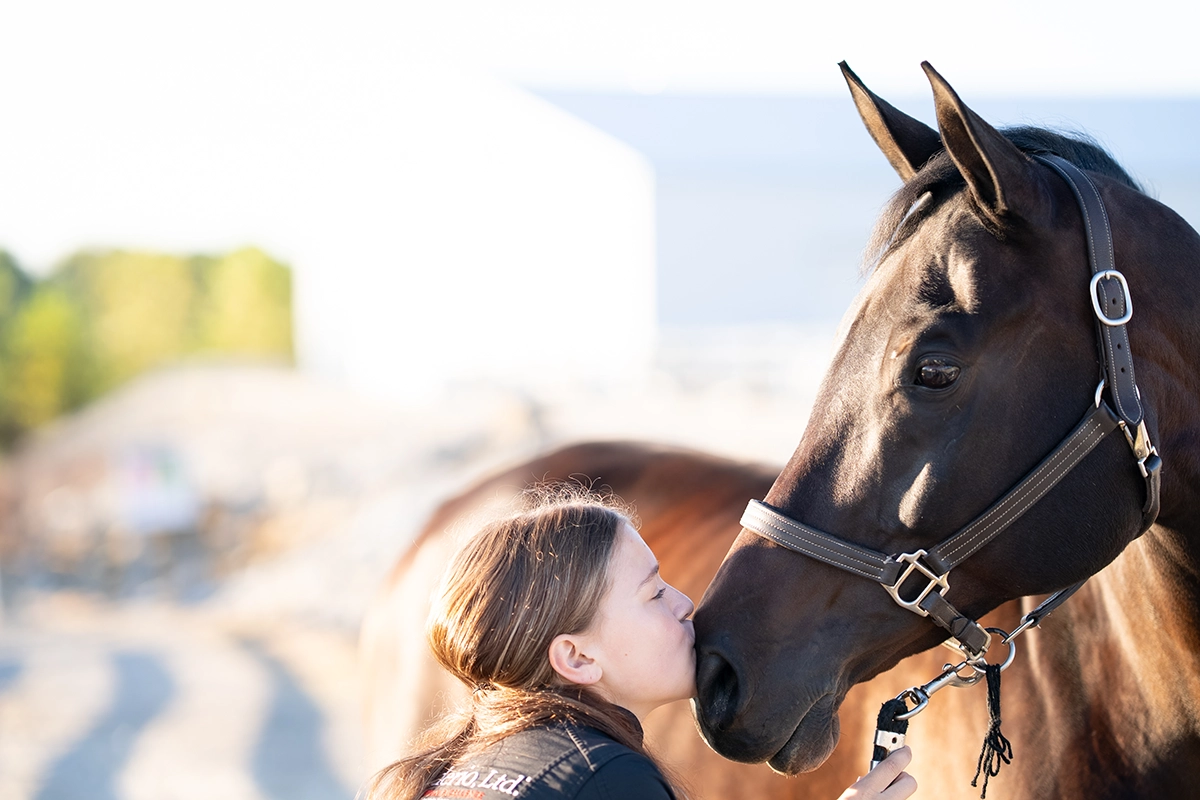
Photo courtesy Arabian Horse Association
Connection Cannot Be Rushed
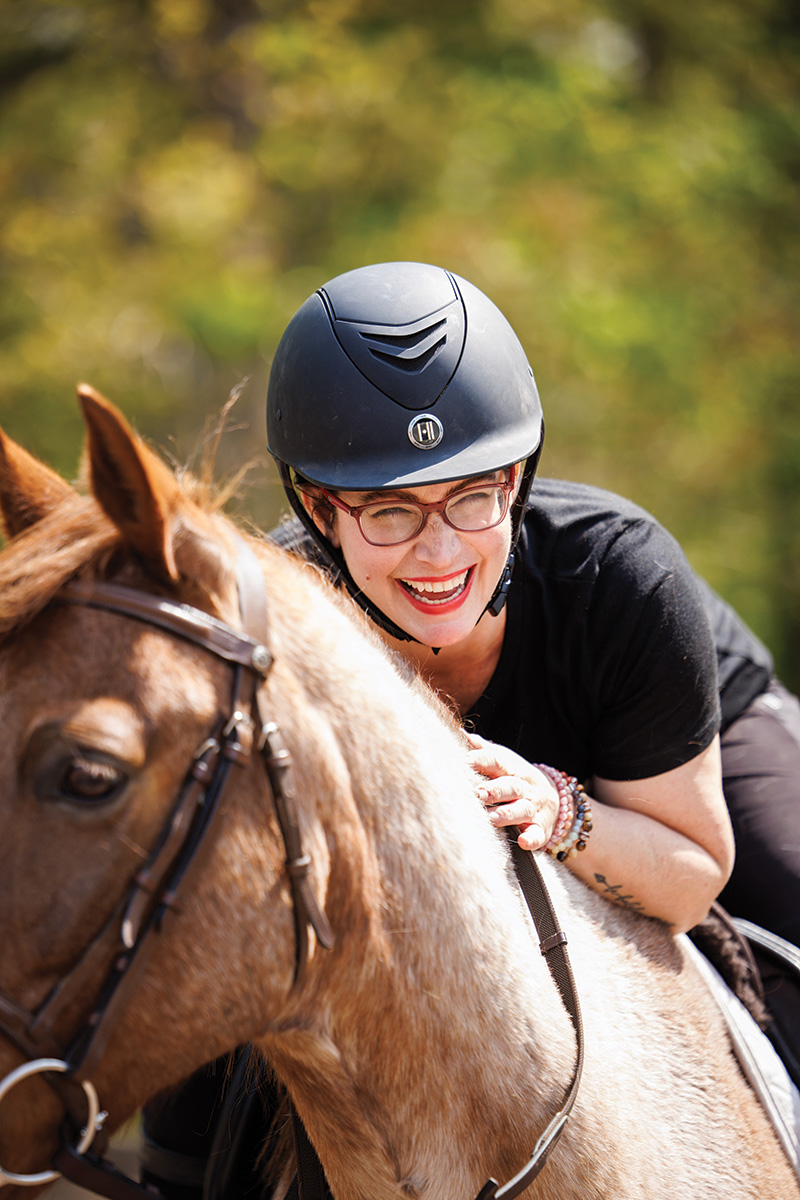
Liberty work has become much more popular in recent years, but it is often reduced to pattern training. Horses are creatures of habit, and it is fairly easy to train a horse until it repeats the same movements. What is much harder, and much more meaningful, is building a relationship rooted in connection. One in which the horse is free to walk away, and chooses to come back instead.
That kind of trust cannot be forced or rushed. It is built over time, through careful observation and a genuine effort to understand each horse as an individual. Sylvia does not train any two horses the same way. She studies their personalities — who is confident, who is insecure, who acts tough but would spook at a sudden noise — and she builds her team around those traits. The sensitive horses go toward the back. The confident leaders go up front. The whole approach depends on knowing each horse well enough to protect it, place it correctly, and set it up to succeed.
If that sounds like a lesson in leadership, it should. The best leaders, whether in barns, boardrooms, or volunteer organizations, succeed for the same reason. They take the time to understand who they are working with, and they earn trust before they ask for performance.
Why the Arabian?
Sylvia works with many breeds and loves them all. But she is very clear about which horse taught her to listen: the Arabian.
Those of us who live with this breed know exactly what she means. The Arabian’s sensitivity is not wildness or fragility; it is intelligence, awareness, and an almost uncanny attunement to human energy and intention. Arabians read us. They watch our eyes, register our body language, and respond to what we communicate before we have said a word. For Sylvia — a trainer who works without whips, lines, or fences — responsiveness is not simply helpful; it is the entire foundation of the work.
There’s a telling story from Sylvia’s Cavalia years. When she first proposed bringing Arabians onto that grand stage, there was skepticism. But her Arabian liberty act became one of the show’s most beloved features, winning over audiences around the world. Anyone who has watched an Arabian in motion understands why they are so captivating.
What Audiences Are Really Responding To
Sylvia has described audience members moved to tears at her performances, and her explanation is instructive: it is not the trainer they are responding to. It is the horses — their evident joy, their individual personalities, their freedom. They break formation, get distracted, look out into the crowd, then scramble happily back into place. What audiences witness is not obedience; it is a relationship.
This is why liberty work resonates so powerfully right now. In a world that moves faster and faster, and where so much is automated or transactional, people are hungry for real connection that fills a void — the honest, natural, reciprocal connection. A horse choosing to partner with a human, with nothing forcing it to do so, is about as pure of a connection you can get.
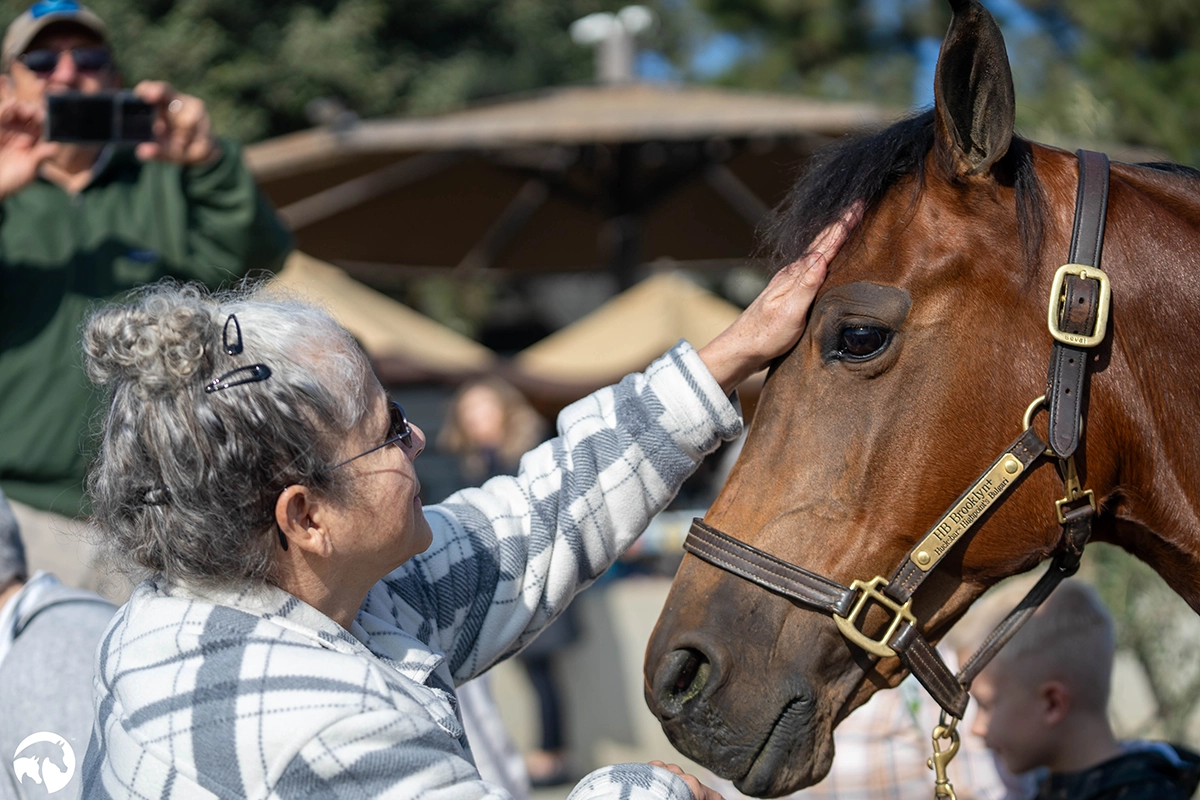
Photo courtesy Arabian Horse Association
It feels especially fitting for the Arabian. This is a breed that did not simply live near humans, it lived with them. For centuries, Bedouin families raised Arabian foals alongside their own children, often bringing mares into their tents for safety and warmth. That closeness shaped the breed itself: an intelligence that reads people easily, a sensitivity that responds to the smallest shift in tone or body language, and a willingness to bond deeply with the humans in its life. The same qualities that drew Arabian horses and humans together in the desert centuries ago are the qualities people are searching for today.
An Invitation to Every Horse Owner
You don’t need a herd or an equine theater to apply these lessons. The invitation is simpler: slow down. Spend unstructured time with your horse. Watch where they look because a horse will always look somewhere before it goes there. Learn their signals, their moods, their individual character. Pay attention to their energy, and you will know when something isn’t right long before a problem announces itself.
For those of us in the Arabian community, there is also a stewardship responsibility. Performers like Sylvia introduce our breed to audiences who may never have experienced the majesty of an Arabian horse. Every performance, every clinic, every barn tour is an ambassador moment, a chance to show the world what we already know: that the Arabian is not just intelligent and beautiful, but profoundly connected to the people who take the time to listen.
Our horses are constantly communicating with us and we need to take the time to connect and listen back.
Learn more at arabianhorses.org.
This article is a web exclusive for Horse Illustrated magazine. Click here to subscribe!