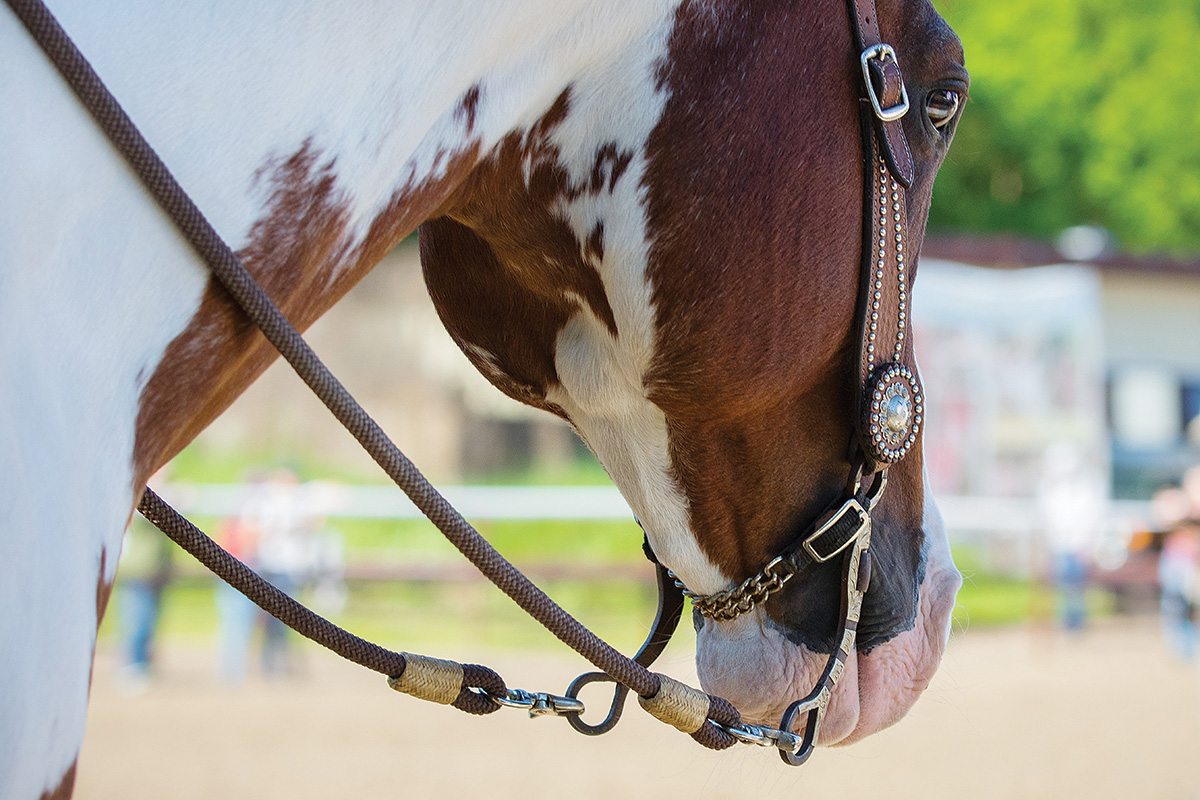
Photo by Svetlana/Adobe Stock
“Knowing how bits should sit and fit in a horse’s mouth could help avoid serious problems and setbacks—I suggest using a bit-sizer to start,” says Alan Fisher, a champion trainer with over 20 years’ experience based in Eastover, N.C., who specializes in western pleasure prospects.
He says that riders need to learn the control points of different bits, the mechanics behind mouthpieces, and what exactly should be achieved with each type of bit.
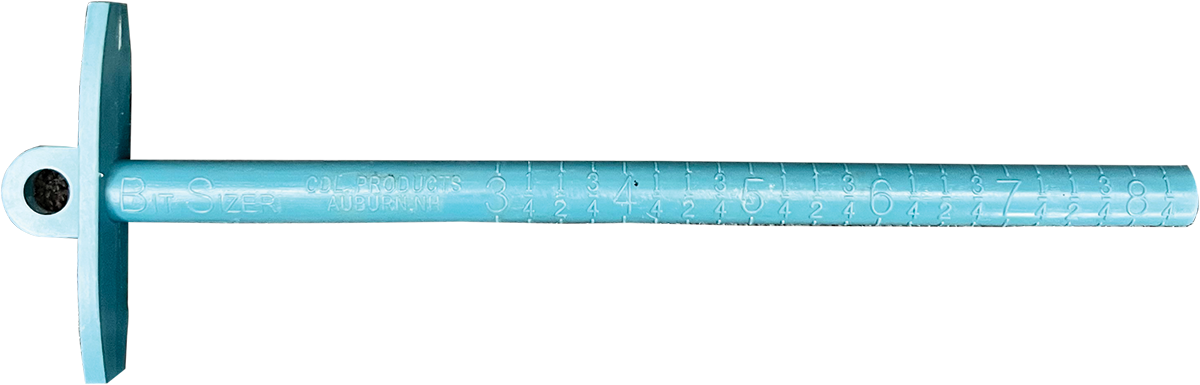
A bit sizer is great to have as the first step in finding the right bit for your horse. Photo by Laura Boynton Jobson
Snaffles vs. Ported
There are two important categories of bits: ported (leverage) and snaffle (direct action).
Ported or “correction” bits come in low, medium, and high leverage levels, and feature an inverted curve, U-shape, spoon-shape, square-hinge or spade-shape at the center of the mouthpiece. These shapes provide tongue pressure relief. Western bits have shanks that connect the reins to the bit, which vary from 4 to 8 inches long.
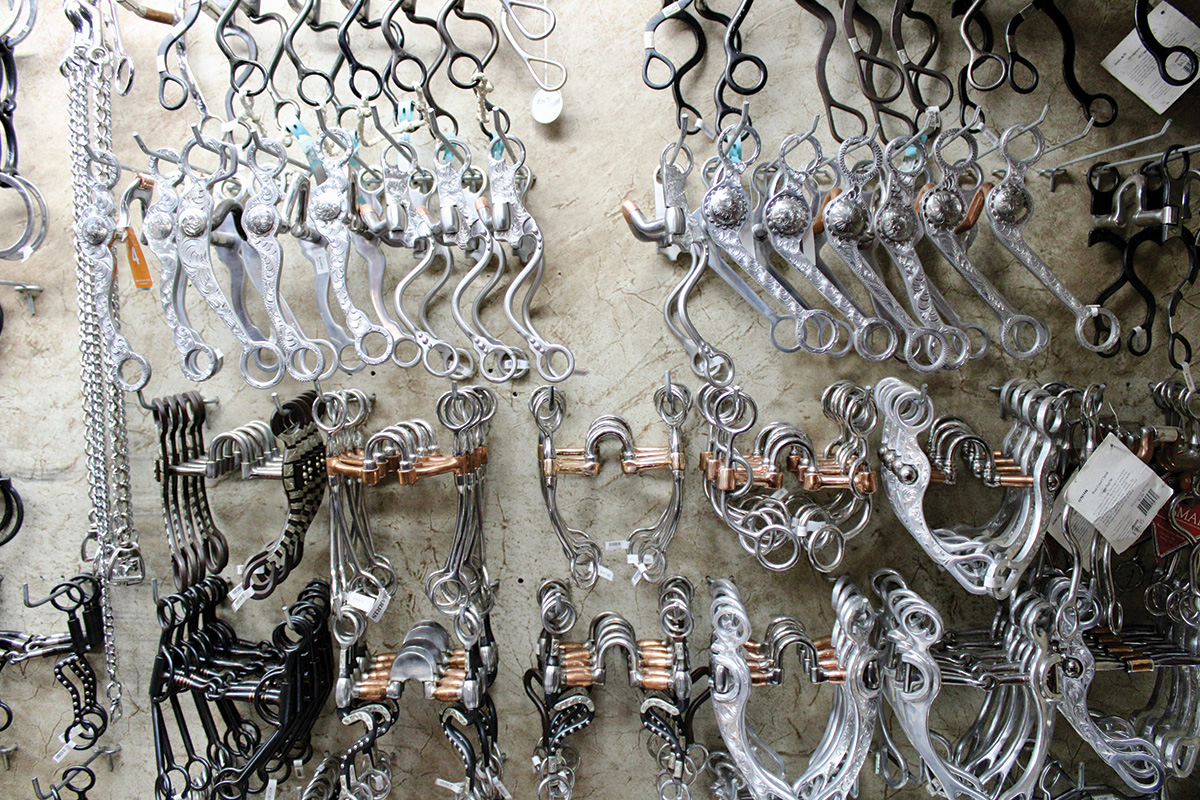
Western curb bits have many styles of shanks, metals, and mouthpieces to choose from.
Both English and western ported bits come with a chain or curb strap to stop the bit from harming a horse’s mouth.
Snaffle bits work by direct pressure from the ring to the rider’s hand through the rein, and either type of bit can be made from stainless steel, copper, titanium, sweet iron or aluminum. Some mild snaffles are made of plastic, rubber, leather or fabric material.
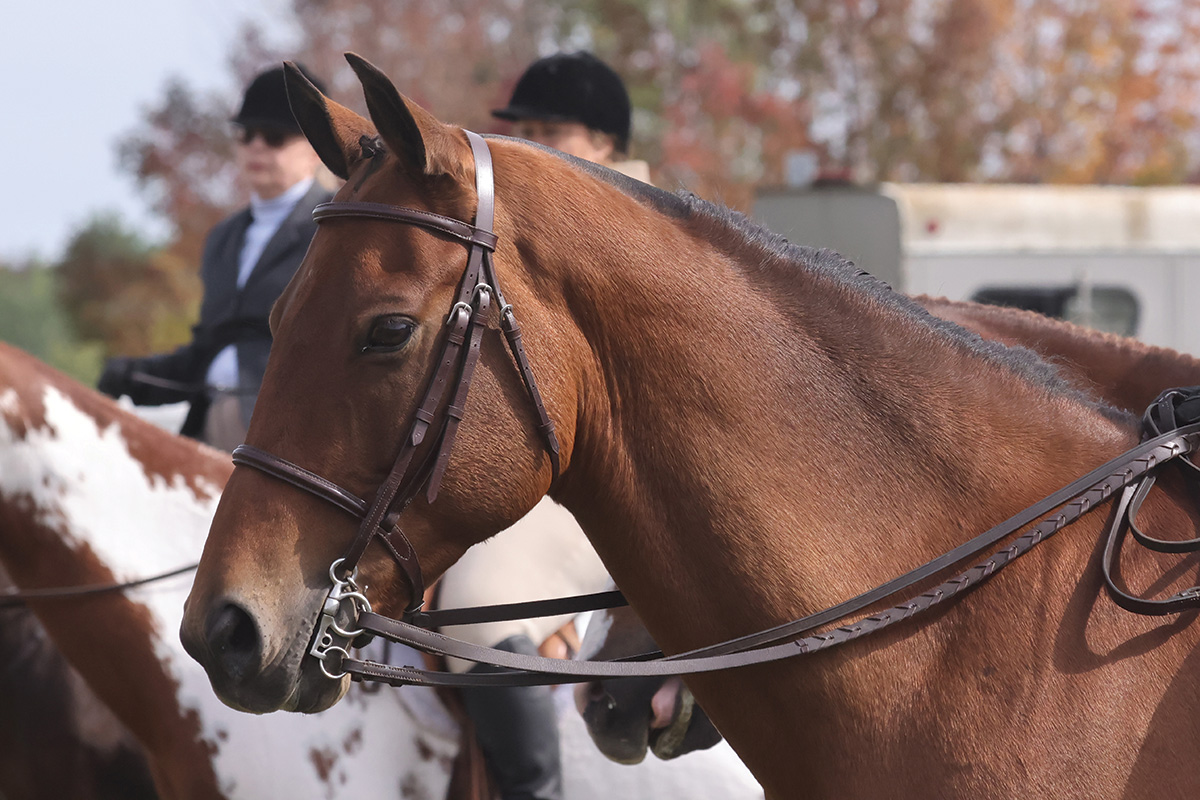
Snaffle bits use direct action from the rein. Full-cheek rings help guide and turn the horse. Photo by Nigel Baker/Adobe Stock
Snaffle Cheek Pieces
While ported bits always have a shank cheek, there are several common styles of cheek rings in snaffles, each with a different effect.
◆ Loose rings move with the horse’s lips, tongue and jaw by gliding through the attached mouthpiece.
◆ Full cheeks have two short bars coming off the sides, one on top and one on the bottom of the fixed mouthpiece. This bit is useful for young or inexperienced horses who need help with steering or to learn how to carry their head without tilting.
◆ D-ring and eggbutt snaffles are both fixed options that resemble the letter D or an oval-egg shape. These are less likely to move side to side in the mouth.
Snaffle Mouthpieces
As opposed to the mouthpieces described above for ported bits, snaffles have straight mouthpieces with various shapes and joints.
◆ Non-jointed snaffles have a mouthpiece that’s straight across with no breaks in the metal, rubber or plastic.
◆ Single-jointed snaffles are considered a basic, and feature a break in the bit with a joint in the middle that creates a V-shape in a horse’s mouth that puts rein pressure on the bars of the jaw and edges of the tongue.
◆ Double-jointed snaffles follow the shape of the tongue better than a single-jointed bit. They have two joints that connect the sides of the bit with a central link.
◆ Smooth snaffles are on the milder side and work well with sensitive mouths and for beginners who aren’t as gentle on a horse’s mouth.
◆ Twisted-wire snaffles are considered more severe and are commonly used for horses that tend to hang or pull on the rider’s hands, or when more control is needed, such as galloping cross-country.
◆ Roller bits have movable pieces that rotate and help a horse to relax his mouth and jaw.
Combo Action
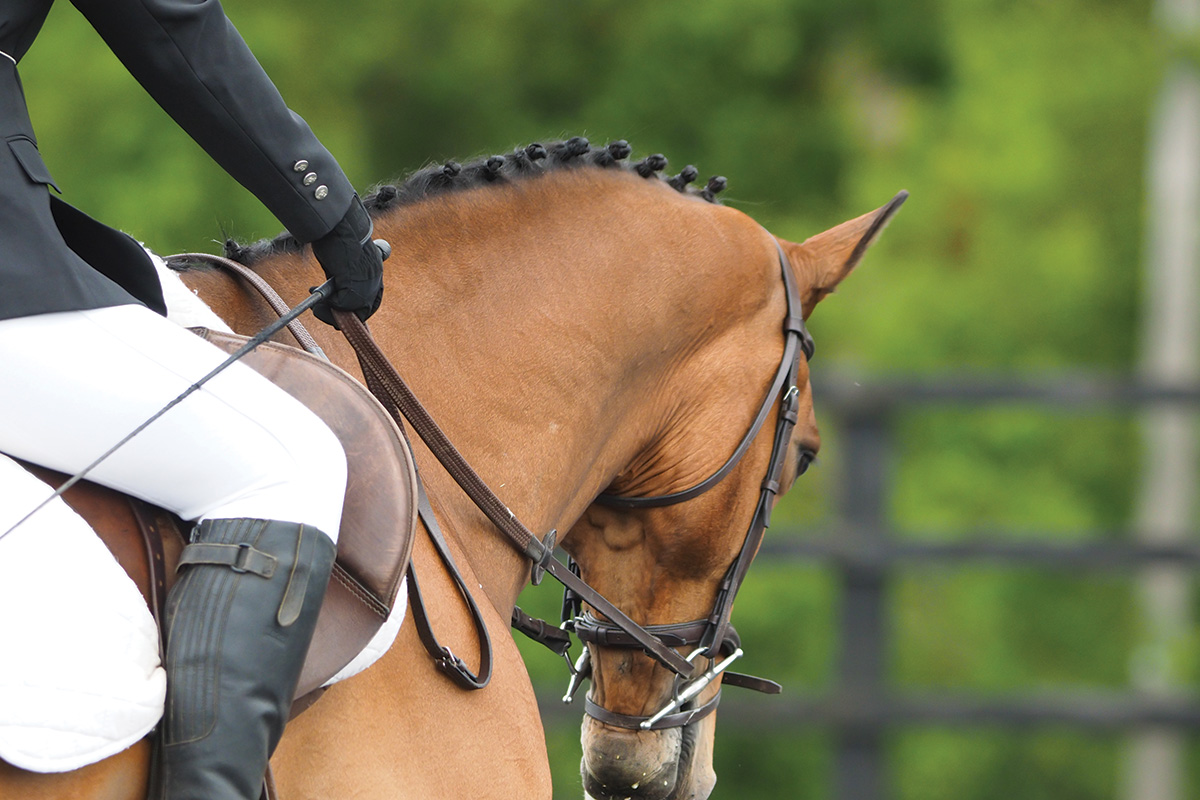
English riders sometimes use leverage bits combined with snaffle action.
◆ Double bridles have a curb bit and chain, a snaffle bit with small loose rings called a bradoon, and two sets of reins. They are used in upper-level dressage and show jumping, as well as saddle seat riding.
◆ Pelham bits are most often found in hunter rings, on foxhunters, and on the polo field, and are designed to combine the action of a curb bit with a snaffle, like a double bridle.
This bit provides leverage on the jaw with its lower shanks and curb chain to encourage flexion at the poll and stronger brakes, while the snaffle mouthpiece gives turning control.
Pelhams are usually used with two sets of reins, although “converters” are available for beginners that switch the bit to one set of reins—but these negate much of the bit’s action.
Pelhams combine leverage and snaffle action using two sets of reins. Photo by Janet/Adobe Stock
Soft Feel
Western trainer Shawn Alter shares that nerves and being scared is why most riders have heavy hands and tend to use the bit too aggressively.
“You must take the time to practice and gain the muscle memory of going to the horse’s mouth softly, asking first, and giving him a chance to respond while softening with your fingers to create a nice flow without any yanking,” says Alter, who owns Shawn Alter Quarter Horses in New Alexander, Pa., and specializes in showing, training, selling and judging horses for local and open shows.
“To be an efficient and well-rounded rider, you’ll need to learn to ride more with your seat and legs, and have less pull on the reins.”
A Bit Reactive
“Horses often learn to be angry at the bit when they feel rushed or pushed beyond their abilities,” says all-around Quarter Horse trainer Melissa Jones, who owns Jones Performance Horses along with her husband, Chris, in Reelsville, Ind. “Horses who haven’t learned to give to the bit or choose not to give tend to turn defensive and act out.”
The more you are heavy-handed or jerk on a horse’s mouth, the more the horse will want to get away from that pressure, she says.
“Not leaning on a snaffle is important because our goal is for the horse not to lean on the bit, and holding will reinforce that.”
Releasing Pressure
Trainer Alyse Roberts says that releasing bit pressure as a reward is key for teaching a horse to self-carry correctly.
“I’d rather see a rider who releases hand pressure too soon rather than too late,” says Roberts, who owns Alyse Roberts Performance Horses located in Purcell, Okla., and specializes in all breed hunter under saddle. “Hanging on the bit defeats the purpose and can upset a horse who is trying to do his job, but the rider keeps getting in the way.”
Dental Check-Up
All-around trainer and judge Jamie Dowdy says that it’s critical to rule out physical discomfort in the mouth, which gives the impression of bit trouble.
“A yearly dental exam is needed, especially in young horses, as they can be experiencing mouth and teeth soreness due to shedding baby caps and possible wolf teeth,” says Dowdy of Hartman Farms, a Quarter Horse facility in Marshfield, Mo. “Older horses need routine dentals for preventative measures to stay ahead of any developing problems.”
Just walking into a tack store and looking at the wall of bits can seem daunting. Our bit experts all mentioned that having an experienced trainer guide the transition to a new bit is a smart way to set your horse up for steering, control and—most importantly—communication success.
This article about bits appeared in the November/December 2024 issue of Horse Illustrated magazine. Click here to subscribe!