Engagement of the hindquarters is a crucial part of everyday riding, used across all disciplines. The hindquarters are the powerhouse and the engine, creating all the things that we want from our horses, including impulsion, straightness, and efficient turns. Here, we’ll profile an exercise that improves hindquarter engagement by giving both you and your horse a feel for a properly executed turn on the haunches.
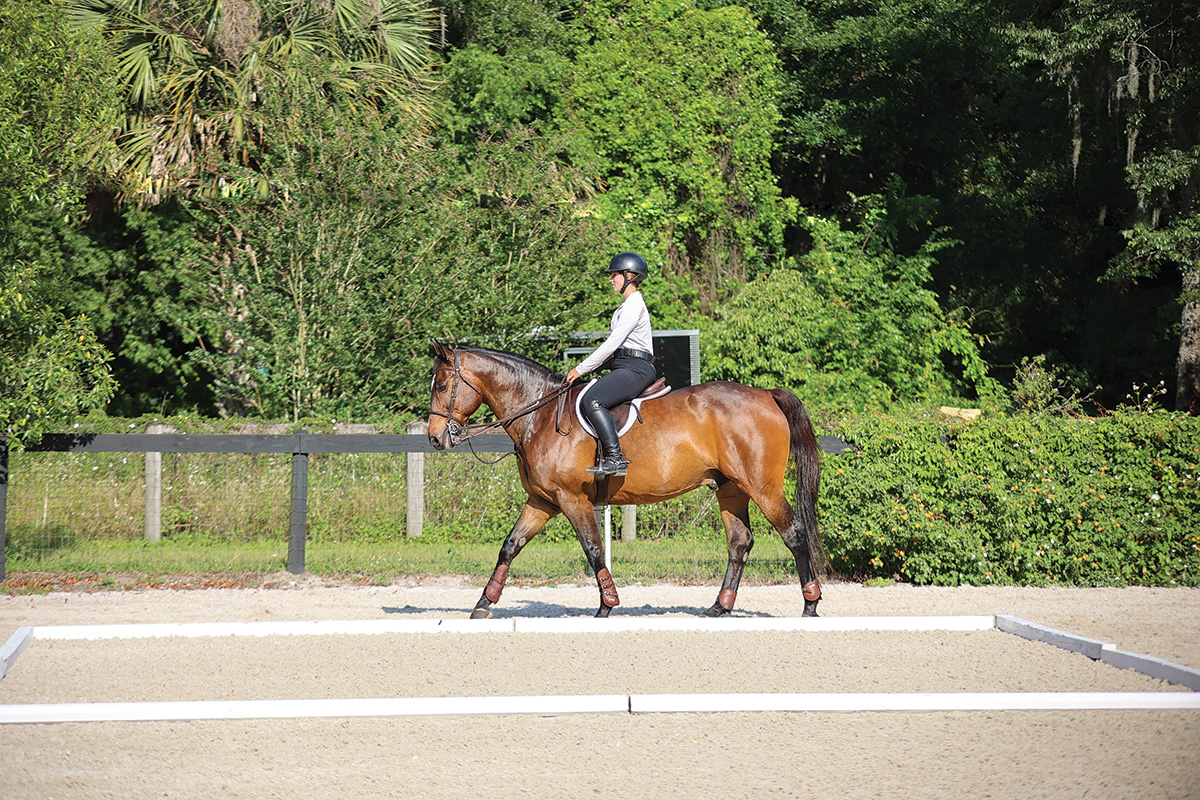
Photo by Allyson Weiland
Warming Up
Set up for this exercise by placing eight poles in a square shape, with two poles creating each side of the square. If you don’t have poles to create the shape, get creative with any (safe!) items you do have on hand. Each side of the square will be about 20 feet long.
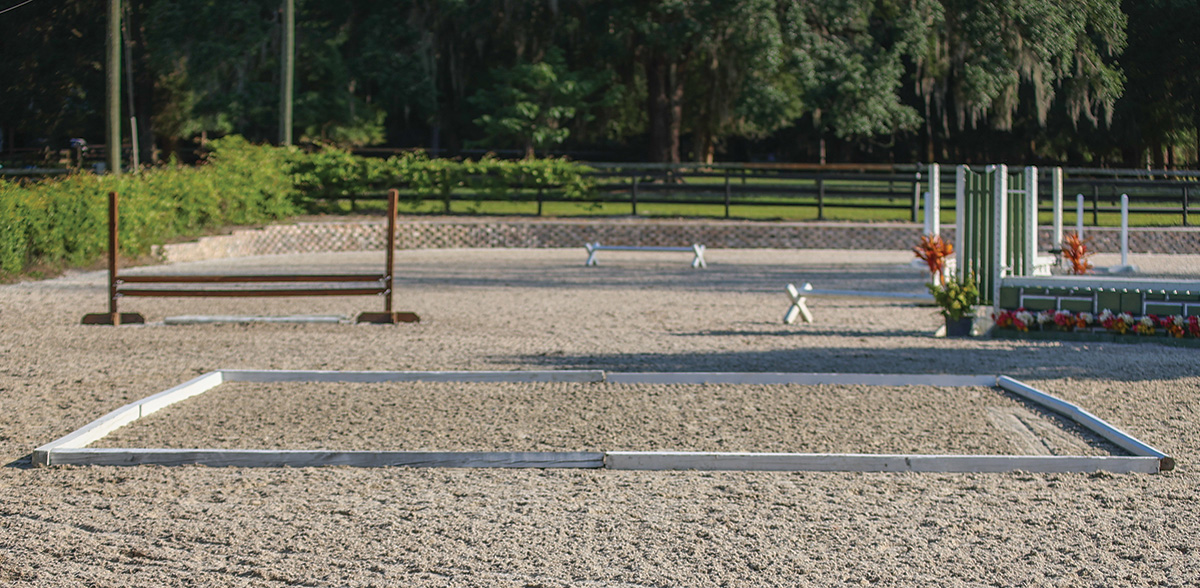
Create a box using two poles to form each side. Photo by Allyson Weiland
As you warm your horse up prior to beginning this exercise, leg-yields and circles are beneficial. In the circles, focus on riding your horse from back to front with him pushing from behind and working up into the hand.
During the leg-yields, be sure to note how your horse is moving off of each of your legs. If your horse has a notably weaker side, you will probably want to start on his stronger side so that the two of you can more easily sort out the exercise in the beginning.
At the Walk
Begin the exercise by bringing your horse alongside one of the box’s sides in a forward, working walk. As you approach the last quarter of the side of the square that you’re on, begin to collect the horse’s step slightly, half-halt, and then apply outside leg just as your horse’s front legs have passed the corner of the box. This will result in your horse performing a quarter-turn on the haunches, with his body still parallel to the next side of the square.
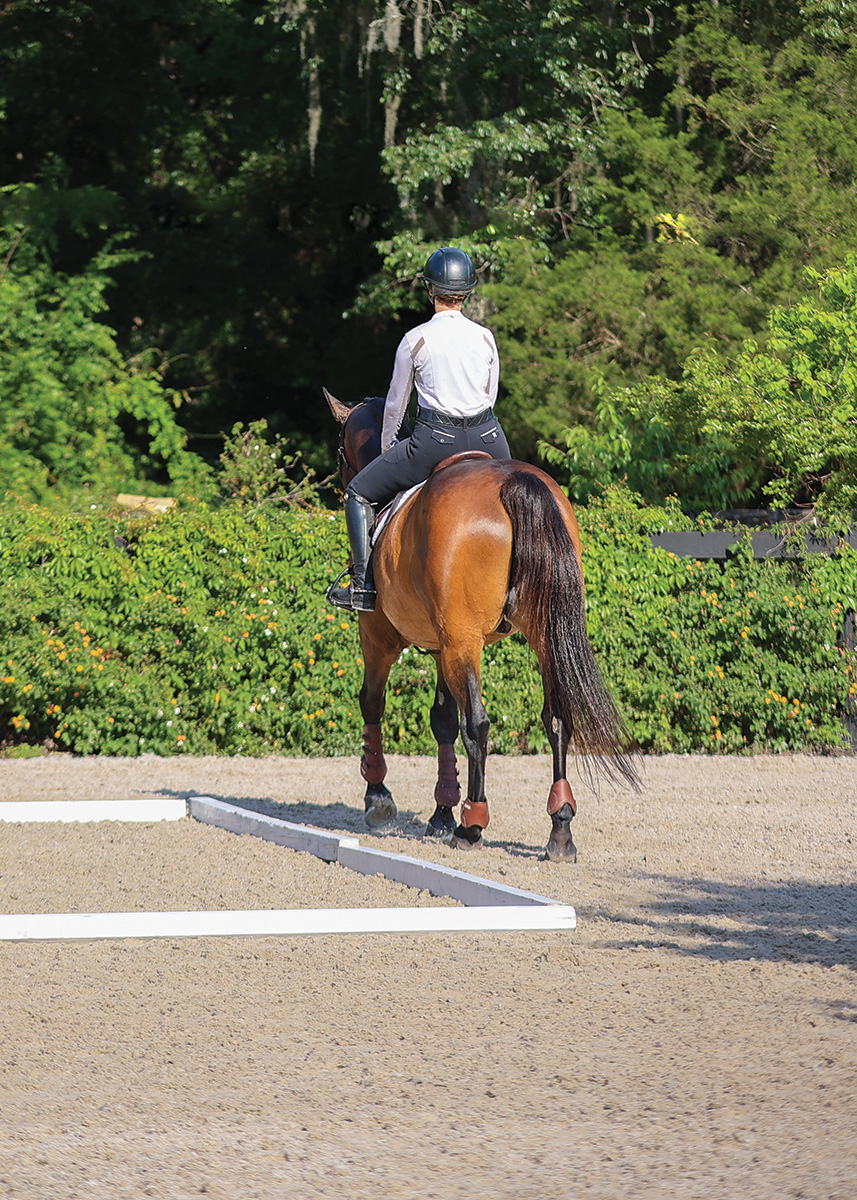
As you approach the last quarter of the side, begin to collect your horse’s step slightly with a half-halt. Photo by Allyson Weiland
The most common mistake is for the horse’s shoulders to fall to the outside, bulging out around the turn. Instead, you want him to rock back and lift during the half-halt, sending his energy into his outside hind leg to aid him in executing a pivot-like motion that turns his body and then propels him forward with power in the new direction.
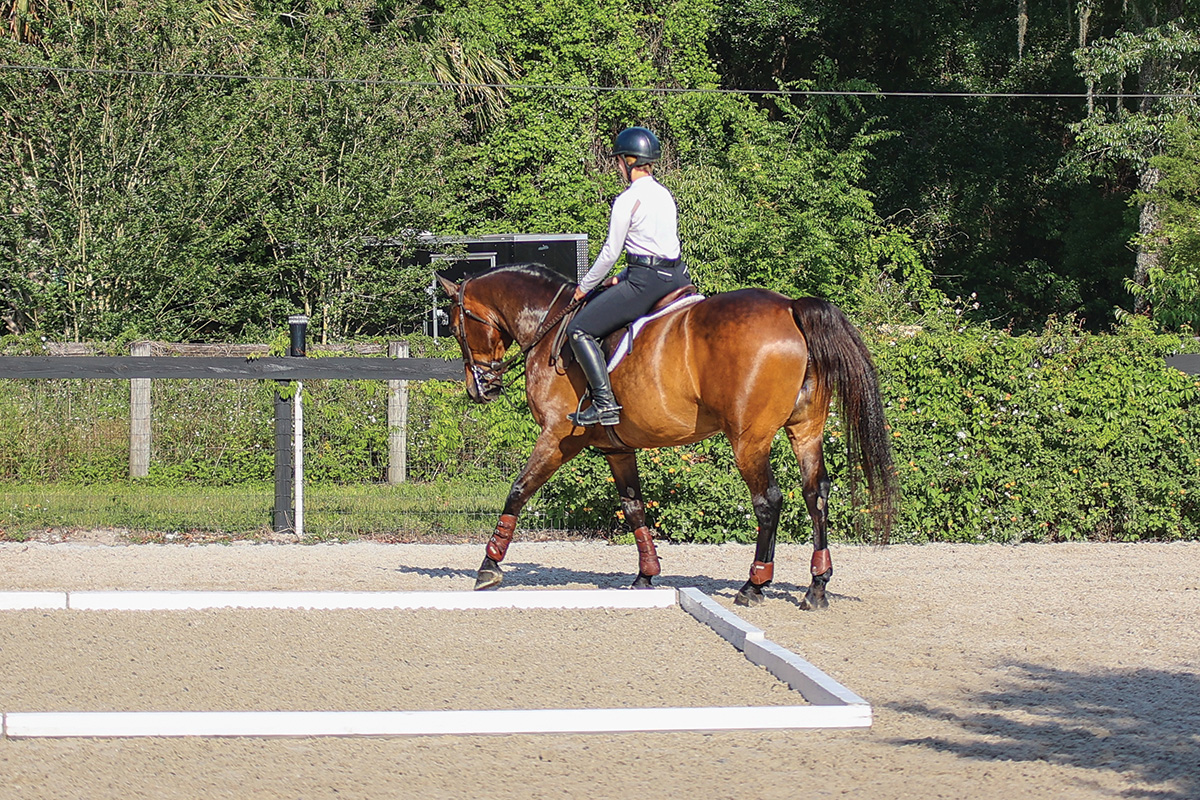
Apply outside leg just as your horse’s front legs have passed the corner of the box. Photo by Allyson Weiland
This can be maintained with strong outside rein contact blocking the horse’s shoulder from popping out. His energy will then continue to flow forward through the cycle of being captured by the collection, rocked back into his hindquarters by the half-halt, and then funneled around the turn by the outside leg.
If the horse is slow to respond to your outside leg pressure, use a bumping leg or a whip/crop to improve his response to your leg the first few times.
At the Trot
Once you have fine-tuned your timing and understand the feeling you are searching for from your horse, you can move up to the trot. I generally find this easiest in the sitting trot, as your seat is very useful for reminding the horse to rock back and balance.
By this time, your horse should be moving willingly off your leg. As he carries more momentum in the trot, don’t allow him to swing loosely around the corner and end up further from the pole guides in the trot than he was in the walk. He should maintain his power and collection and use it to keep the turns sharp.
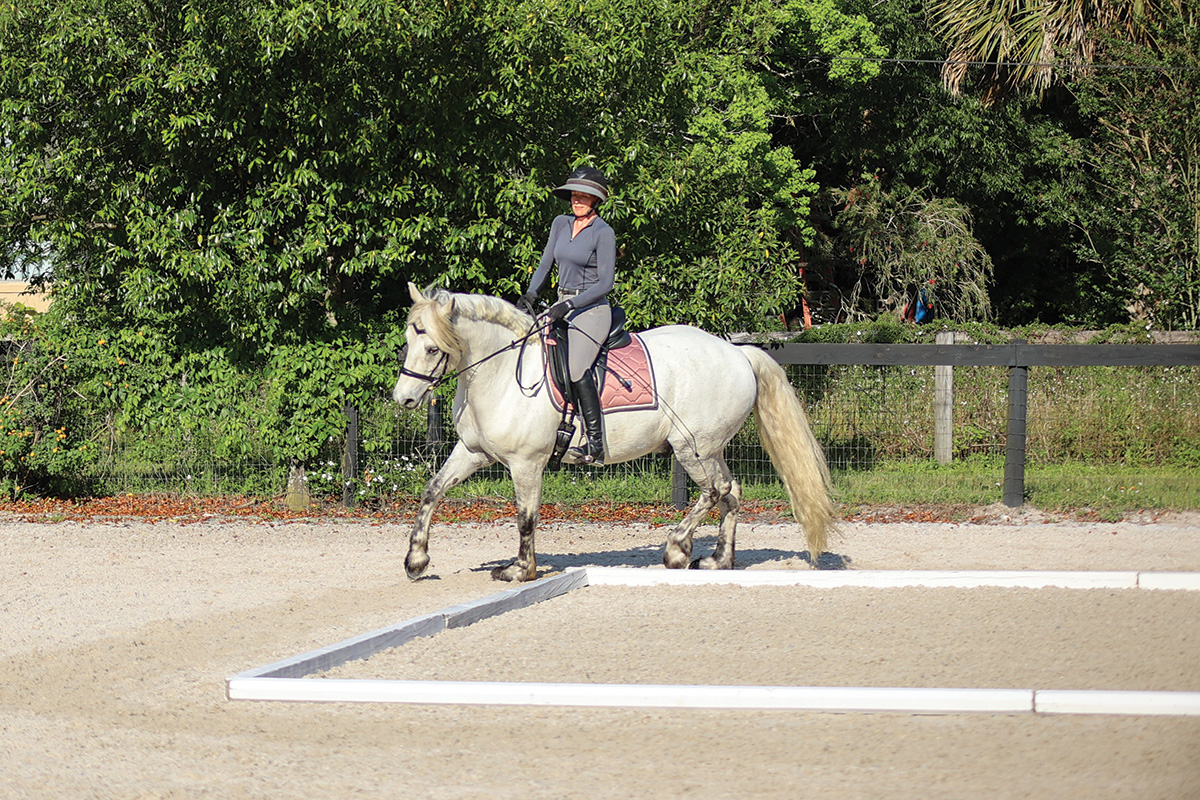
At the trot, maintain power and collection to keep the turns sharp, not floating away from the corners. Photo by Allyson Weiland
During this exercise, it’s crucial to allow your horse to take breaks and go to another section of the arena to stretch. It’s also not an exercise that should be drilled endlessly if your horse is finding it difficult. Revisit it over the course of a few days or weeks so as to not make your horse sore or frustrated in one session.
More Advanced Work
If you have been successful with this exercise and have a horse working at a more advanced level, use two sides of the box as a guide for trying a square turn in the canter. This is especially difficult, so I wouldn’t suggest asking your horse to do this for more than one or two turns at a time.
Another way to expand this exercise is by using it as part of an extension and collection exercise. The extension section could be anything you choose. For example, ride the full box in trot, then working canter across the diagonal, do a flying change of lead, canter back toward the box, collected trot, then ride the box again in the other direction.
There are plenty of times during your horse’s career that he may need an exercise to sharpen him up to the leg, create strength and muscle memory in the hindquarters, or that you need to remind yourself to make better use of your outside aids to support turning. This easily set-up exercise can do all of those for you, and more!
More Training Advice from This Author
◆ Achieve the Correct Timing of Riding Aids
◆ How to Improve a Lazy Horse’s Responsiveness
◆ Solutions for a Horse Stopping at Jumps
◆ Making a Spooky Horse More Confident
◆ How to Train a Horse That’s Rushing Jumps
This article about an exercise for your horse’s hindquarter engagement appeared in the September 2024 issue of Horse Illustrated magazine. Click here to subscribe!