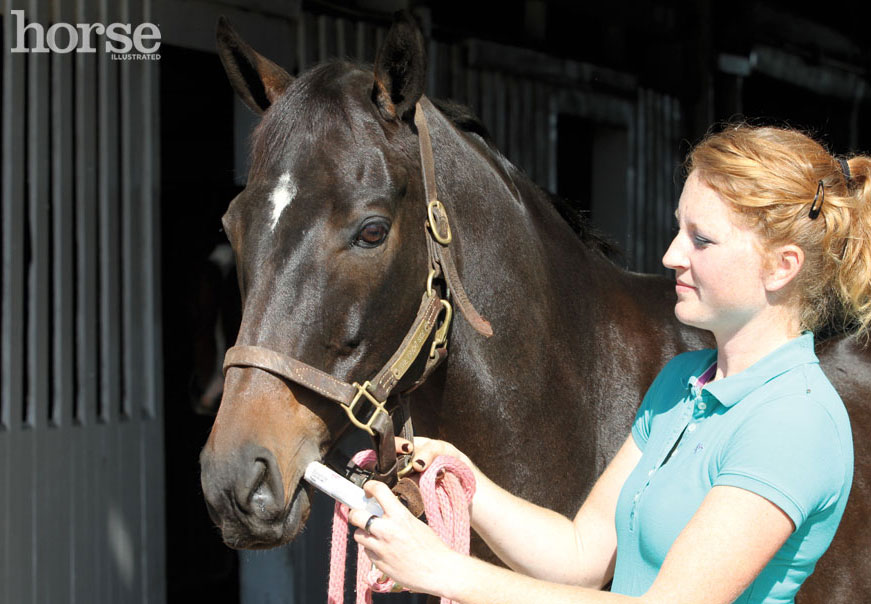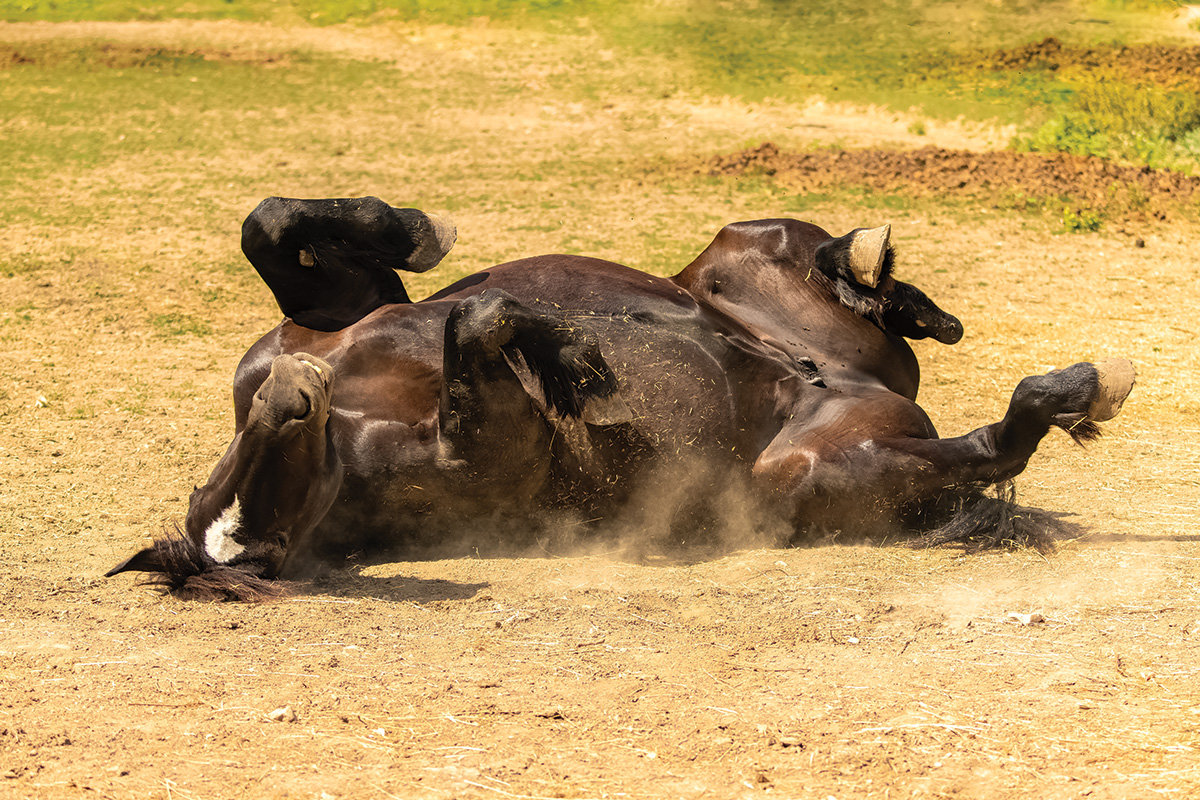
Any time back pain develops in an athlete, it can impact performance and attitude—whether that athlete is human or equine. In recent years, “kissing spines” has become a common diagnosis in performance horses exhibiting back pain. The condition is widely represented in riding horses of many breeds.
Dorsal spinous processes (DSPs) are the bony projections at the top of the horse’s vertebrae. When those projections touch (impinge) or overlap (override), this is referred to as “kissing spines.” The area of the back where the condition is most often diagnosed is between thoracic vertebrae T13 and 18—directly under where a rider sits in the saddle.
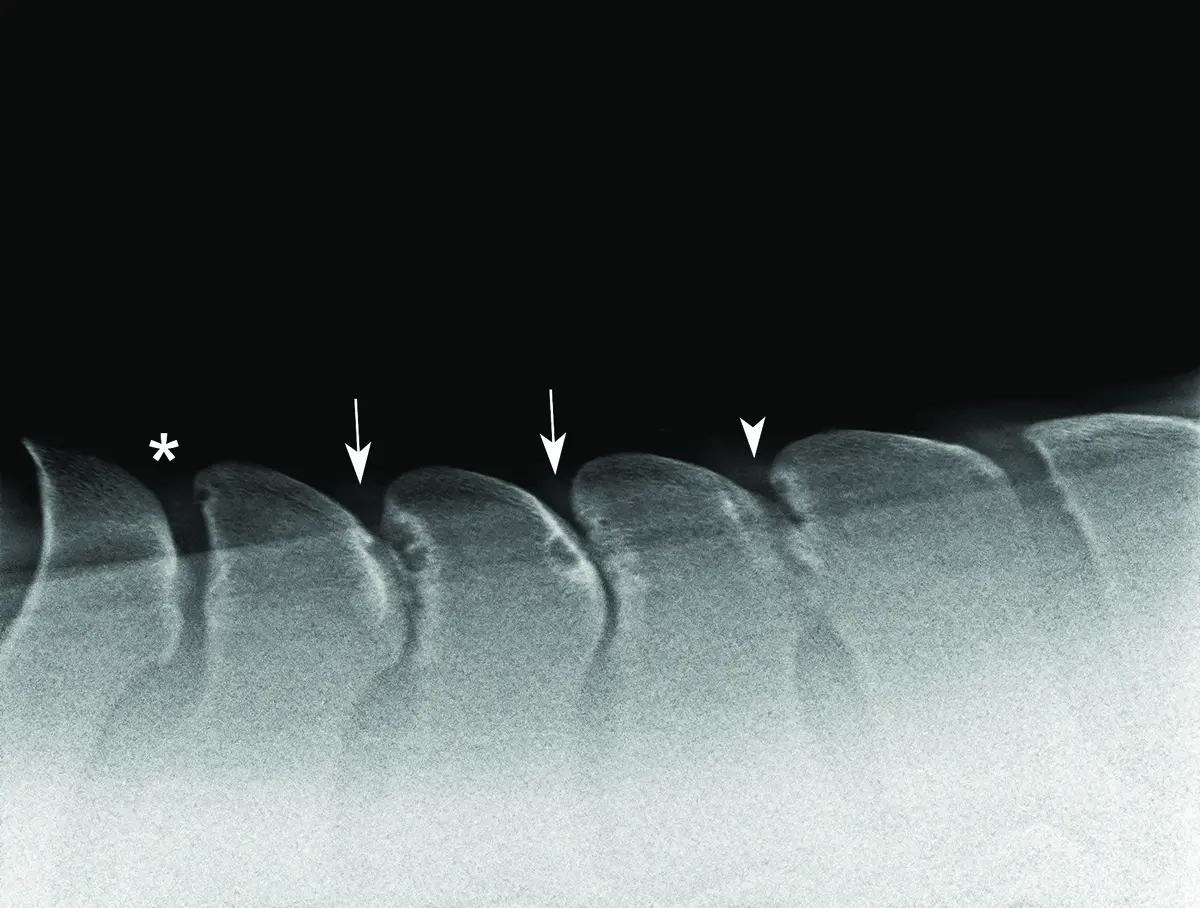
A horse with four sites of impingement with bone remodeling, suspected to be causing the horse’s pain under saddle. Photo by Alan Nixon
Signs a Horse May Have Kissing Spines Include:
◆ Obvious discomfort with pressure on back
◆ Loss of muscling across topline
◆ Change in behavior (tail swishing is common)
◆ “Hollowed out” back when ridden
◆ Resistance to transitions between gaits
◆ Asymmetric, uneven gaits
◆ Difficulty picking up correct lead or maintaining canter
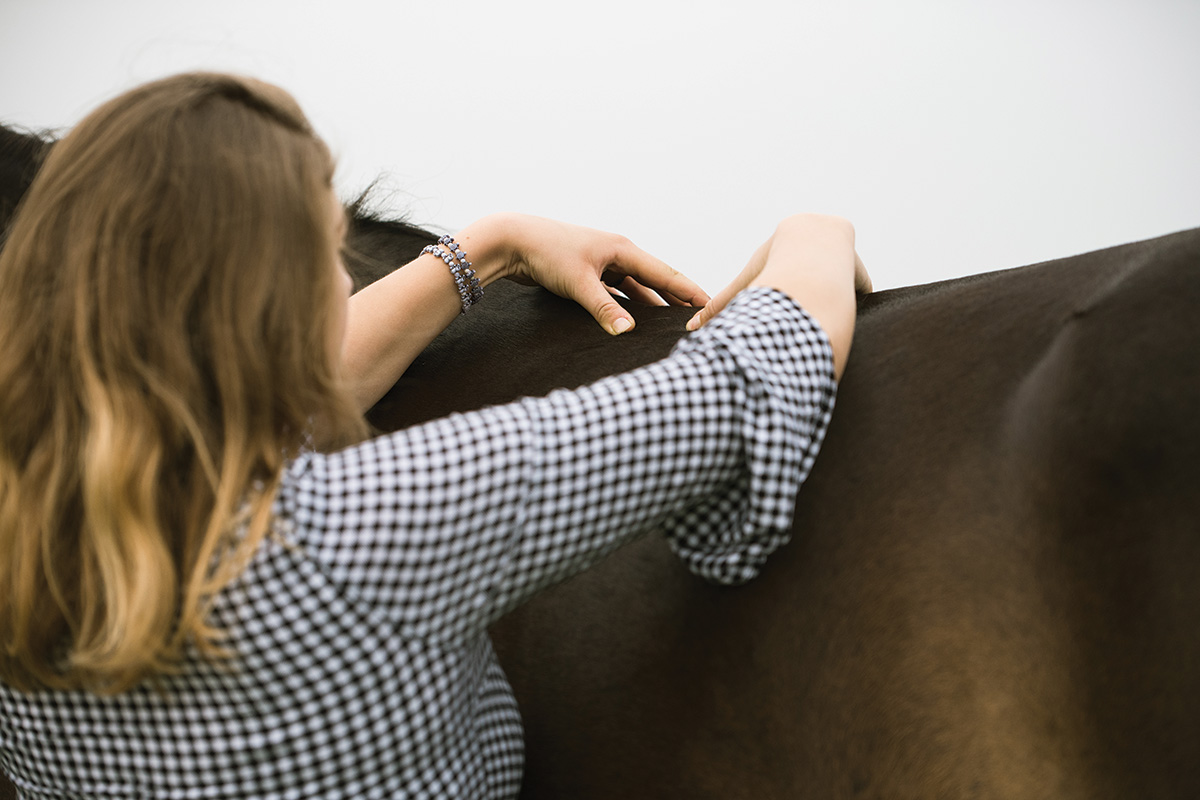
Obvious discomfort from pressure on the back is one possible indicator of kissing spines. Photo by Talitha/Adobe Stock
A Diagnosis is Not Always Career-Ending
Although radiographs may look alarming, the presence of kissing spines isn’t necessarily the kiss of death for a horse’s athletic career. In fact, many horses whose X-rays reveal the condition have no clinical signs and compete at top levels.
Researchers at the University of California-Davis recently studied groups of horses that compete successfully in high-level show jumping and racing over fences. X-rays of these horses’ backs showed that kissing spines was very common, yet there was no correlation with poor performance. In fact, horses with the worse radiographic evidence of kissing spines often had better jumping scores and racing accomplishments.
“It’s incredibly common to have horses show abnormalities of their backs on X-rays, but our clinical experience and research studies show that kissing spines doesn’t necessarily mean a horse has back pain or poor performance,” says Sarah le Jeune, DVM, DACVS, DACVSMR, CVA, of UC Davis, who regularly works with horses with the condition. Le Jeune specializes in equine integrative sports medicine and rehabilitation, and she is also a surgeon.
“Kissing spines is getting blamed clinically for a lot of things, so you have to rule out other problems,” says le Jeune. “I rarely see horses with primary back pain; it’s usually secondary to lameness, poor saddle fit, or unbalanced riding.” Her goal is getting to the root of the problem and fixing it.
“Back pain and lameness are highly correlated and hard to separate,” she notes. “If there’s an underlying lameness, once the horse is better, he starts using his back better.”
Not Just X-Rays
Radiographs alone should never be the sole evidence for a diagnosis of kissing spines. It’s believed that almost 35 percent of horses show evidence of the condition on X-rays, but they may have no clinical signs.
“Typically, when you X-ray horses’ backs, they’re sedated, and their posture is passive,” says le Jeune. “They’re not engaging their abdominal muscles and are kind of slouching.”
This doesn’t reflect the horse in movement with an engaged hind end and lifted back.
“It’s not uncommon to see kissing spines on X-rays, but the sedated, standing horse is not the same as the dynamic horse in motion,” she adds.
The condition has even been seen on X-rays of foals’ backs, which proves it’s not related to being ridden.
When conducting a pre-purchase exam, le Jeune won’t necessarily “red flag” a horse with kissing spines on the X-rays if he moves well and has no back pain, but she lets the buyer know it could become a problem if the rider is not able to ride the horse with an engaged and lifted back.
Because the condition is so frequently seen on X-rays, an accurate diagnosis of kissing spines must include clinical correlation.
“Horses with clinical kissing spines have obvious pain upon palpation and riding,” says le Jeune. “The diagnosis has to be confirmed with physical examination and palpation of the back, including a thorough lameness evaluation, neurological evaluation, and saddle fit evaluation.”
She also recommends evaluation of the horse being ridden by a veterinarian well-versed in sports medicine.
Why Horses Develop Kissing Spines
There is no single answer as to why some horses develop kissing spines. Likely, the condition is the result of multiple factors, including breed predisposition and genetics, poor saddle fit, unbalanced riding, and lack of training that allows the horse to not engage his core.
At times, conformation is to blame. A horse that genuinely has bad posture related to conformation may be physically incapable of using his body properly for high-level performance.
“Saddle fit is a huge problem,” adds le Jeune. “The saddle has to fit the rider, not just the horse. Most owners want to do what’s right by their horses. It might mean getting a different saddle or becoming a more balanced rider. It takes self-awareness and willingness to address the root problem.”
Different Approaches to Kissing Spines
When all other issues have been ruled out and a horse has a definitive diagnosis of kissing spines, there are different approaches to addressing the condition:
◆ Medical treatment
◆ Postural rehabilitation
◆ Surgery
Medical treatment may involve muscle relaxants, anti-inflammatory medication, and steroid injections between the offending DSPs. Some horses with the condition may benefit from steroid injections a couple times per year to reduce inflammation in the affected area(s) of the back.
Le Jeune has also seen improvement using shockwave therapy, chiropractic adjustment and acupuncture. Although these therapies can be very helpful, the horse must still have a strong back and move correctly, which is why postural rehabilitation is key.
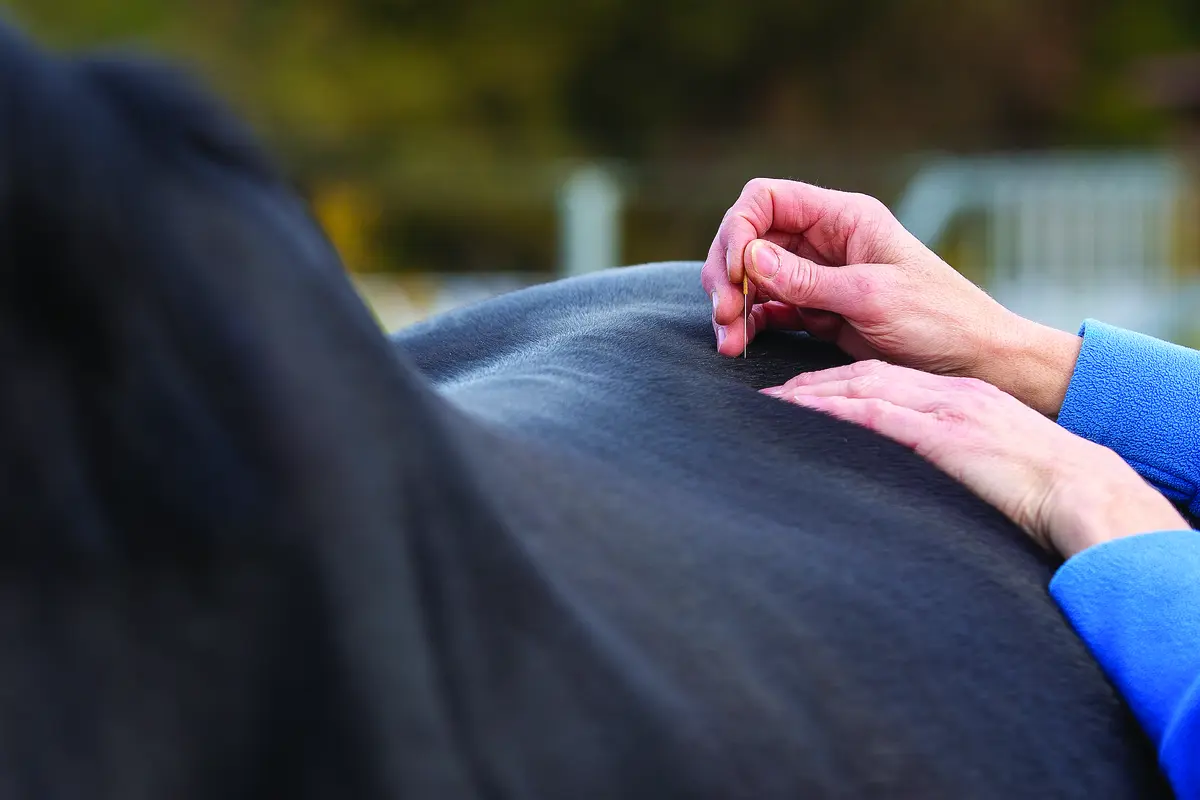
Secondary to postural rehab, Le Jeune has also seen improvement using shockwave therapy, chiropractic adjustment and acupuncture. Photo by RD-Fotografie/Adobe Stock
Postural rehabilitation involves exercises that engage core muscles and strengthen the muscles that support the spinal column. The goal of postural rehabilitation is getting the horse to use his back properly, by tucking his pelvis and lifting the back.
“Postural rehab can include resistance bands like the Equiband Pro System, the ProSix, or the Pessoa Lungeing System,” says le Jeune. “All of this is done without a rider and rehab can take two to three months.”
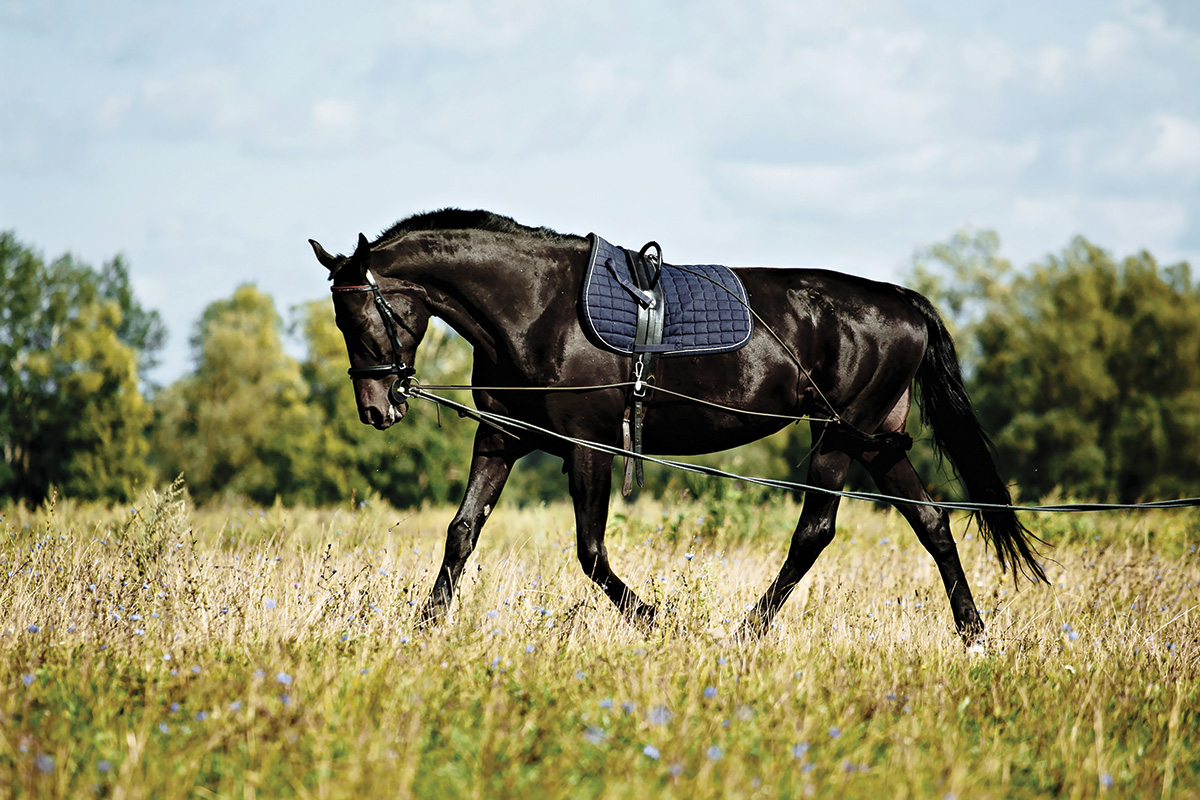
Postural rehabilitation, which might include the Pessoa longeing system, involves exercise that engages core muscles and strengthens the muscles that support the spinal column. Photo by matilda553/Adobe Stock
When owners choose surgery for severe cases, there are two options. The most common surgery, known as interspinous ligament desmotomy (ISLD), involves snipping the ligament(s) holding those segments of the spine together.
“A branch of the spinal nerves in that region are cut during the surgery, so it’s like a neurectomy, meaning the horse won’t be able to feel that area of the back,” explains le Jeune, adding that this may possibly make the back less stable.
A more radical and invasive surgery, known as ostectomy, actually cuts away the top of the dorsal spinous processes that are touching.
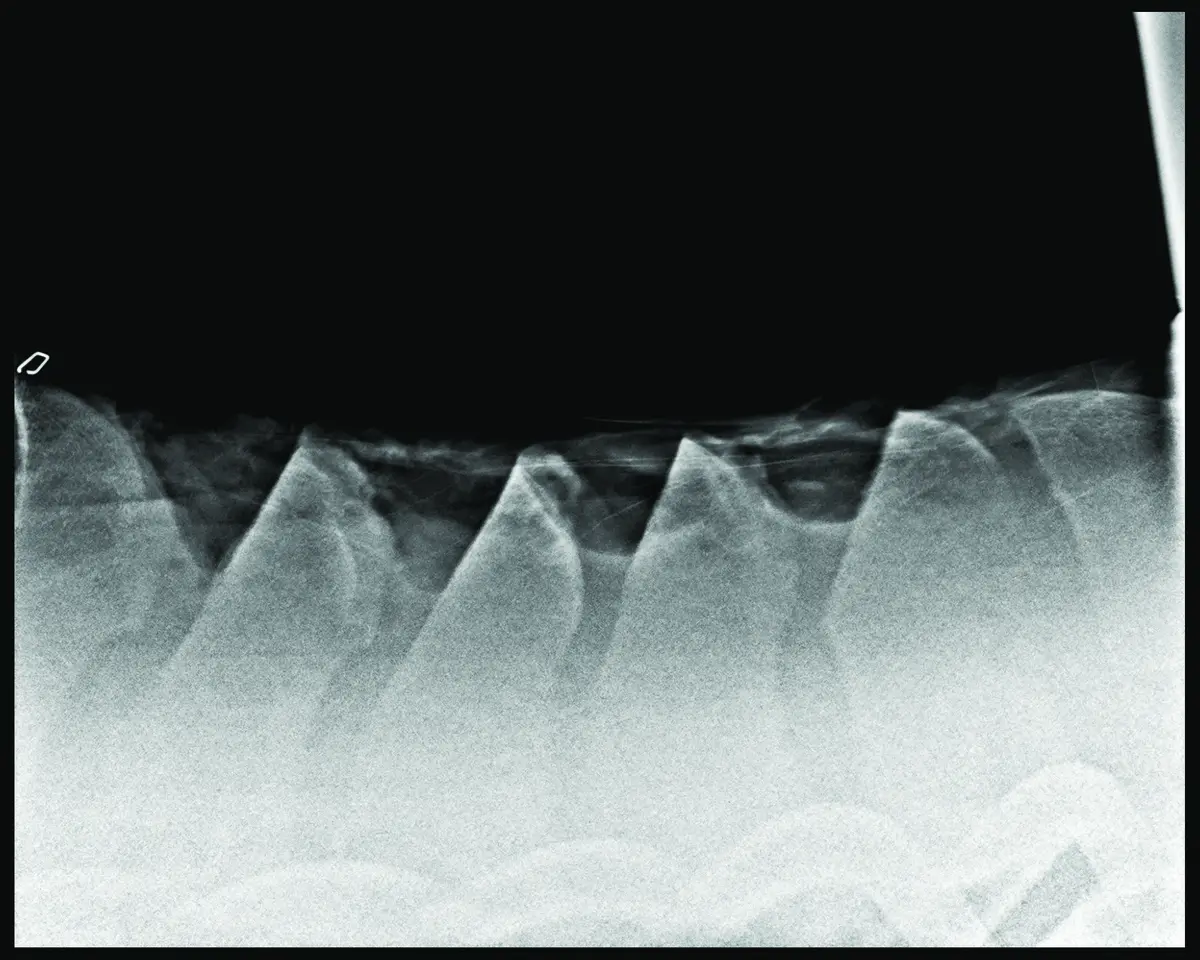
Post-operative image of the same horse following cranial wedge ostectomy of the four sites. Photo by Alan Nixon
Some surgeons are combining ISLD surgery with a process known as “bone shaving,” which removes smaller bone sections and is less radical than an ostectomy.
While surgery for kissing spines is common, le Jeune believes it’s only warranted when the diagnosis is absolute and there are no better treatment options. In practice, she has found that postural rehabilitation is often a more successful approach.
When an owner chooses this option, it’s important to work with an expert who is experienced in rehabilitation, which is usually a veterinarian who is board certified in sports medicine, so don’t hesitate to seek out a specialist.
Return to Work
Most horses with clinical signs are able to return to work after treatment, but owners should be aware that rehab takes time and commitment on their part.
“As long as you’ve ruled out everything else, it’s very rare that postural rehab doesn’t work,” says le Jeune. “But correct riding is crucial. You need to have a skilled rider once the back is strengthened in order to keep the horse engaged and using his back properly.”
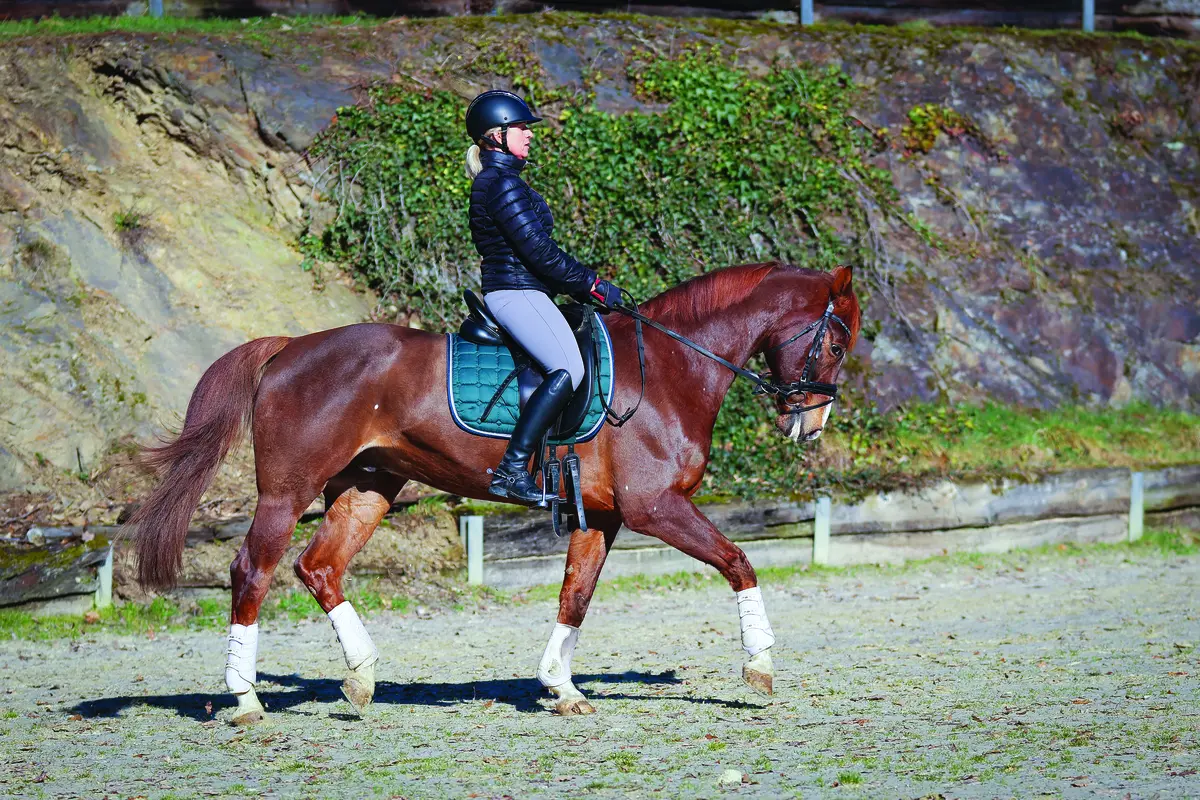
Correct riding is crucial when returning to work. A strong equine back and skilled rider is needed to keep the horse engaged and using his back properly. Photo by RD-Fotografie/Adobe Stock
As an avid rider herself, le Jeune understands the condition from this perspective.
“Once the horse develops more back muscling, he’ll get wider, so you may need to adjust or change saddles,” she adds, noting that regular saddle re-evaluation is essential, with adjustment as needed.
Key Takeaway
Although kissing spines has become a common diagnosis in performance horses, le Jeune emphasizes that the condition shouldn’t be the go-to explanation for poor performance or back pain.
She encourages owners and veterinarians to definitively rule out any other problems, particularly lameness, before confirming a diagnosis of kissing spines and pursuing treatment.
She adds that choice of treatment should always focus on what’s right for the horse long term—not necessarily the option that brings about the fastest results.
This article about kissing spines in horses appeared in the January/February 2025 issue of Horse Illustrated magazine. Click here to subscribe!