Over the last decade, the equestrian world has become a hotbed for ethical treatment questions. The 2020/2021 Tokyo Olympics and then the Paris Olympics brought our sport under even larger scrutiny, with outside groups like PETA and mainstream media weighing in. This past decade has also brought with it landmark laws, including the banning of whisker trimming by the Fédération Equestre Internationale (FEI) for their competitions going into effect January 1, 2021. Many believe these are just the first steps in calling for more change, including banning whisker trimming by other organizations, as well as banning flash nosebands, which have been under high scrutiny for being over-tight at high-profile sporting events.
Others believe these are rare instances of misuse, and that most horse owners are doing what’s best without the need for regulations or laws.
Flash Nosebands
Flash nosebands have a second attachment coming off the center of the cavesson or regular noseband that circles around the lower part of the horse’s face in front of the bit and around the mouth. The purpose is to keep the horse from opening his mouth—gaping—and possibly getting his tongue over the bit. Proponents say it encourages the horse to chew on the bit and stabilizes the bit in the horse’s mouth while not allowing the horse to evade it, thus giving more control.
Due to questions raised about overtight nosebands at the recent Paris Olympics and other events, The FEI has introduced a measurement tool to ensure all nosebands, not just flashes, are not overtightened at competitions.
“Currently, there is not a rule change proposal banning flash nosebands, but the FEI has introduced a measurement tool to ensure the appropriate tightness of the noseband at competitions,” says Danielle Henson, sport communications manager for the United States Equestrian Federation (USEF).
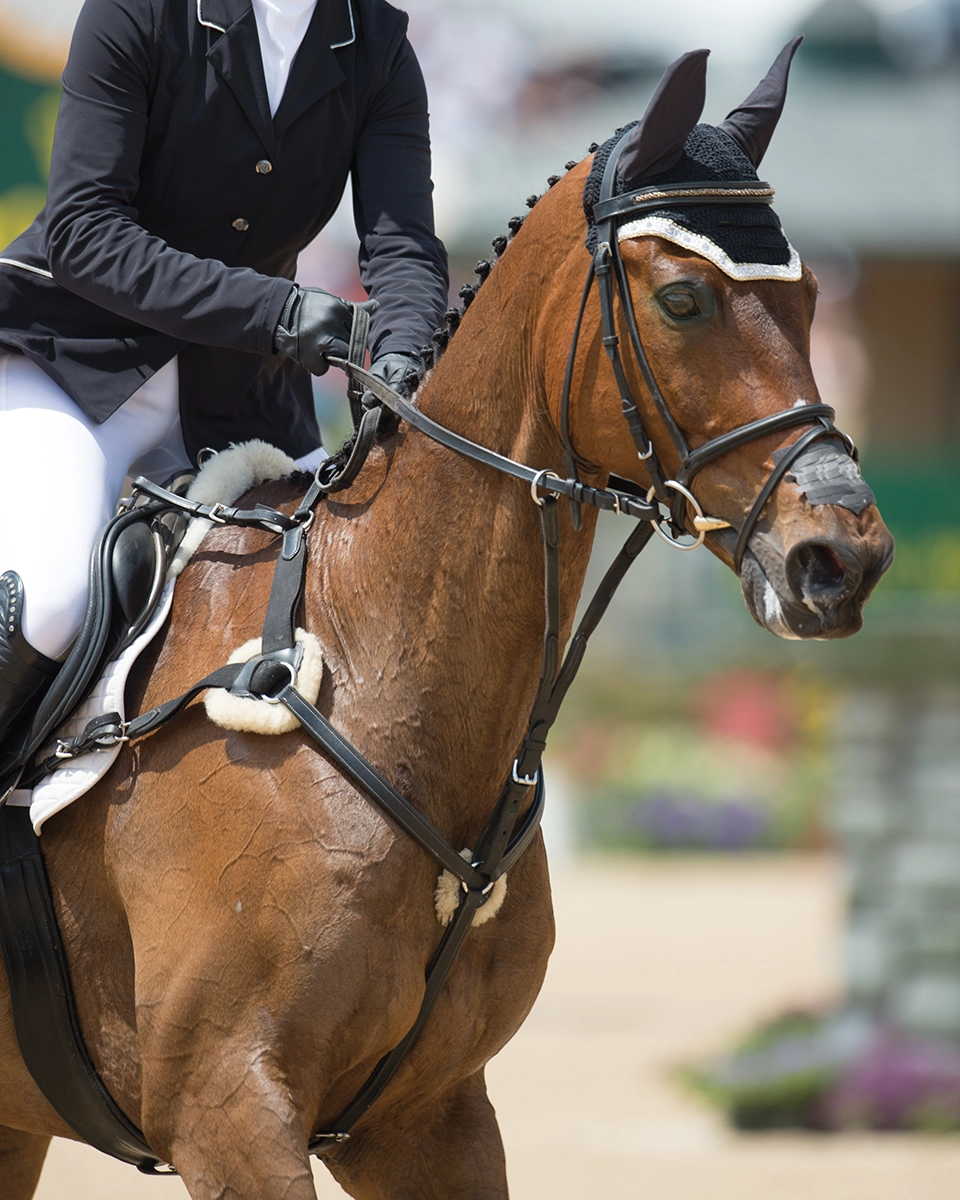
The FEI started checking noseband tightness with a measuring device May 1, 2025. Photo by Shawn Hamilton/CLiX/Adobe Stock
“We are not aware of discussions regarding flash straps or any initiatives to ban them,” shares Malina Gueorguiev, manager, governance communications, stakeholder & media relations communications department for the FEI.
There are those who believe this is not enough, however, and that flash nosebands should be banned to avoid people misusing them at home as well as in the show ring. Those against them claim that training can overcome issues including bit evasion and opening their mouth, which can also be signs of discomfort that owners and trainers should not dismiss.
“Flash nosebands don’t solve anything other than masking improper training, in which the horse shows proof of that by opening the mouth to escape pain and pressure of harshly handled bits,” says Josepha Guillaume, a horse welfare consultant, trainer, and author of Dressage in Hand: What horses want you to know. “Tight nosebands, whether flash or otherwise, prevent the horse from relaxing and mobilizing the jaw, which is in turn needed to mobilize and relax the shoulders and back. Having to brace against harsh bit action and a too-tight noseband prevents the horse from using the correct and natural muscles, and therefore prevents correct movement and the much-sought-after collection in any form. No one would expect a human athlete to perform his best with someone forcing a head and neck shape, or tight belts along the face, or the mouth strapped shut. Yet, it is expected from horses.”
Mary Kautz, founder of Equine Harmony Connection in Oregon, explains that flash nosebands restrict licking, chewing and swallowing, all of which are ways horses release tension.
“Banning flash and drop nosebands in competitive events will result in more relaxed horses, increased harmony between horse and rider, and higher standards for ethical training practices,” she says. Both trainers agree that the issues flash and other nosebands mask could be fixed with humane training, rendering the need for the nosebands moot.
Whisker Trimming
Many continue to trim their horse’s whiskers for breed and other shows. Go to any Arabian or Miniature Horse show in the United States, and you won’t find a single hairy face. Owners and trainers feel the clean look accentuates the horse’s facial features.
“At this time, USEF is not pursuing a ban on whisker trimming,” says Henson. “We recognize that discussions surrounding the topics of nosebands and whisker trimming are ongoing. USEF is committed to ensuring that our rules and regulations reflect the best interest of horses and the sport, and we will continue to monitor developments both nationally and internationally.”
Like your cat and dog, a horse’s whiskers are not just facial hair, like a man’s beard, but are sensory tools the animal uses to interact with his environment.
“The horse’s whiskers are sensory hairs, and horses use them like ‘feelers’; trimming them therefore reduces the horse’s sensory ability,” says Gueorguiev when asked why the FEI banned whisker trimming.
Article 1004.1.i of the FEI Veterinary Regulations specifies: Horses are not permitted to compete in FEI Events: if the Horse’s sensory hairs have been clipped and/or shaven or in any other way removed unless individual sensory hairs have been removed by a veterinarian to prevent pain or discomfort for the Horse.
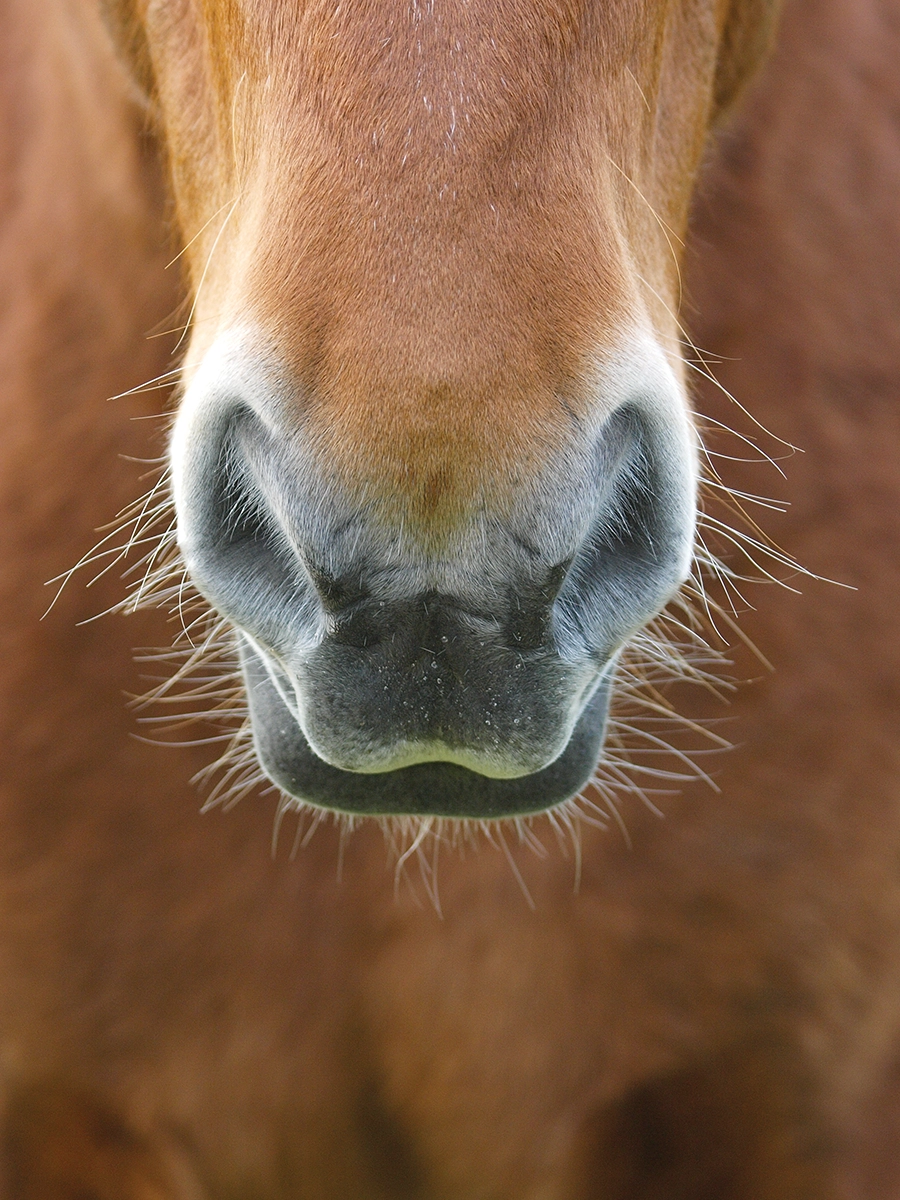
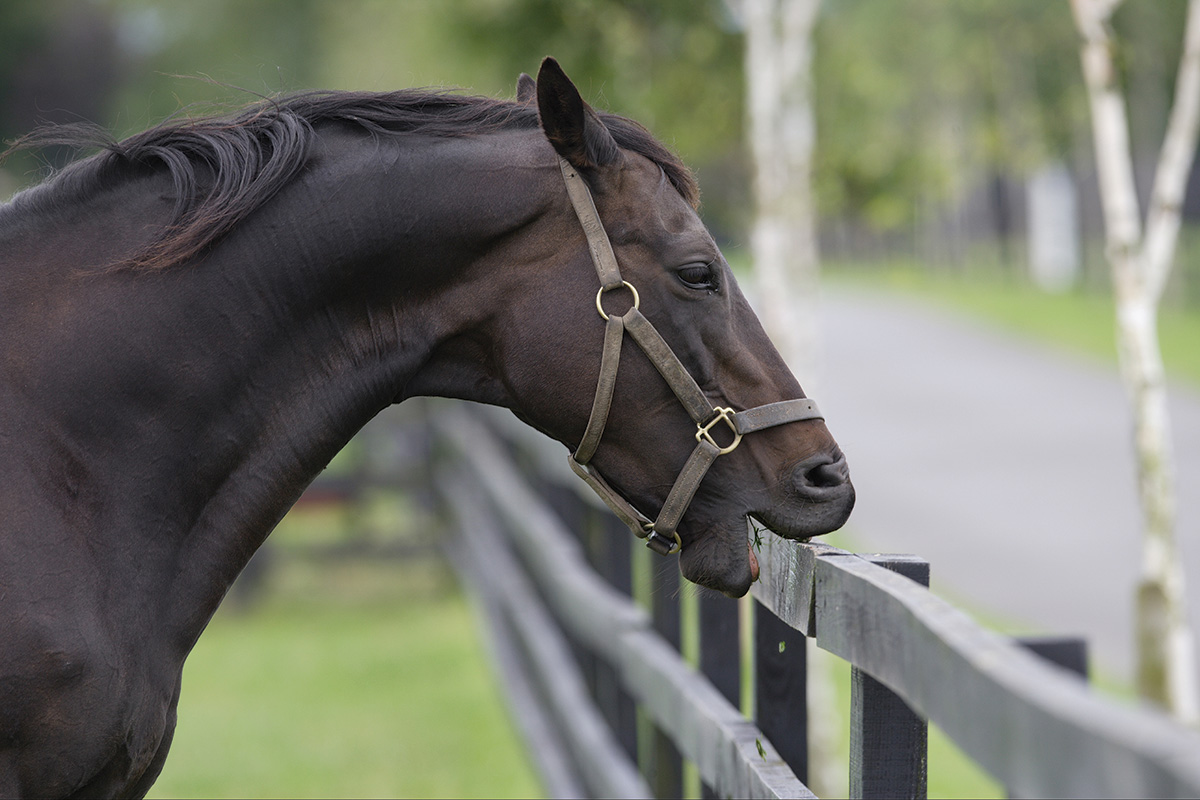
The FEI banned whisker trimming at its competitions in 2021. Photo by Nigel Baker/Adobe Stock
“The sensory hairs around a horse’s eyes and muzzle serve many functions, including helping them locate food and avoid injury,” explains Kautz. “These whisker hairs allow the horse to compensate for the blind spot in front of their nose and detect electric fences. In low-light conditions, the whiskers help the horse detect objects in their environment. Horses whose whiskers are trimmed suffer many disadvantages. These horses are unable to navigate as effectively or gather details about their environment. Without their eye whiskers, they are also more likely to injure their eyes.”
With articles like “Why it Might be Time to Stop Riding Horses” in the mainstream media, the equestrian world will continue to face issues like these—and more—in the coming years. The hope is that, at the end of the day, regardless of what side of the fence you graze on, we will all come together for the benefit of the horse.
This article about the issues of whisker trimming and flash nosebands appeared in the May/June 2025 issue of Horse Illustrated magazine. Click here to subscribe!