When Tiffany van der Kooi was young, she was reading Horse Illustrated magazine and was drawn to the big, black, majestic horse in the centerfold poster with a flowing mane and tail. She hung up the poster and decided that one day she was going to own a Friesian, her dream breed.
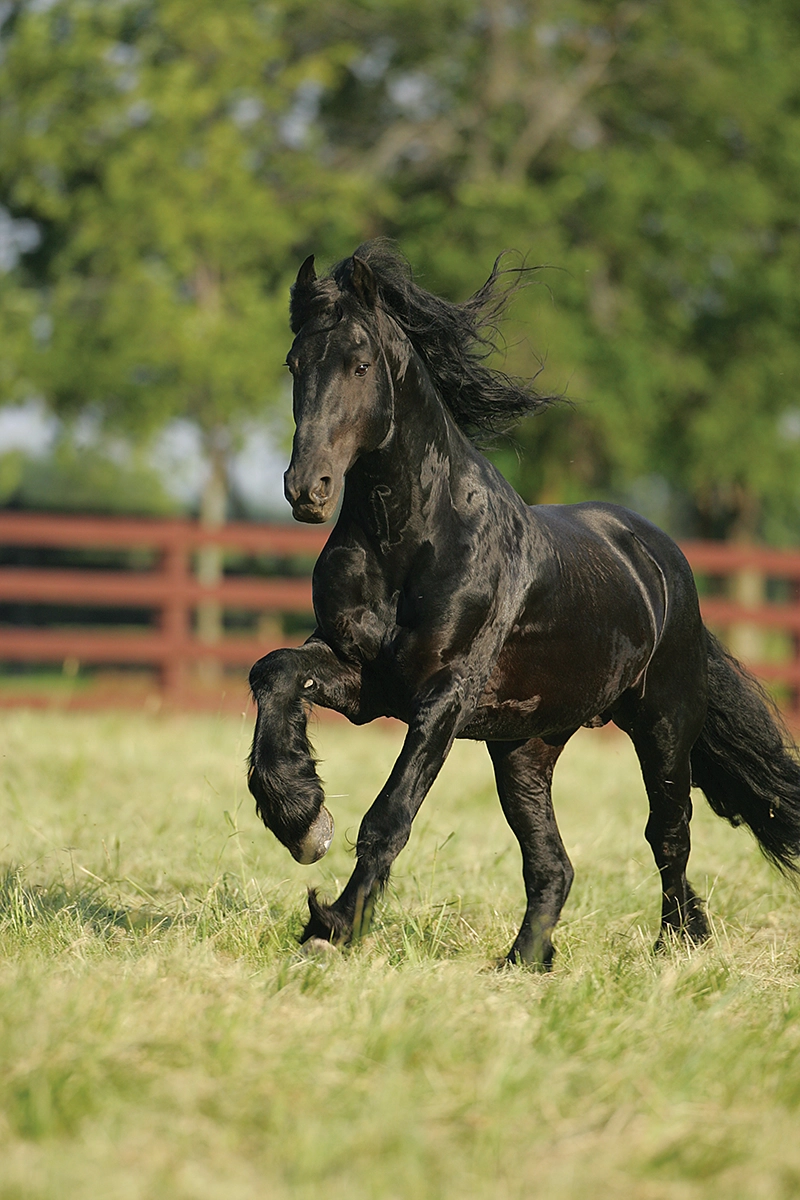
Photo by Bob Langrish
Friesian horses originally came from Friesland, which is a province in The Netherlands. The breed first appeared in North America in the 1600s, but due to inbreeding, they eventually all but vanished. However, in 1974, Friesians were reintroduced to North America, and have since held their place as a growing breed.
The versatility of Friesians has helped keep them relevant in the ever-changing sport horse world. They can be used as pleasure and competition mounts, and are also commonly used for driving, costume, and sometimes even light farm work.
Living Her Dream
When van der Kooi was in her 20s, she made her dream come true by buying a Friesian mare who was both in foal and had a foal at her side—a three-for-one deal! She decided to try her hand at breeding, and now runs the largest Friesian stallion station in the United States.
Having grown up riding other breeds, she adored the calmer nature of the Friesians and the fact that she could take her stallions to shows, completing her U.S. Dressage Federation bronze and silver medals. She now shares her horses with her children.
Her farm, Black Pearl Friesians, now stands six stallions. They have a full medical-grade laboratory and produce both frozen and fresh-cooled semen that ships across North America, including to Canada. They also serve mares on site with artificial insemination (no live cover).
To help produce the best quality horses possible, van der Kooi focuses on preventing inbreeding and matching the right stallion with the right mares. During stallion testing, the horses receive scores on everything from their temperament to the specifics of their conformation.
Licensed stallions also undergo genetic testing to ensure the longevity of the breed. She states that inbreeding has gone down significantly; her stallion, Omer 493, has the lowest kinship score in North America and has been critical for helping bring the inbreeding numbers down.
Mounted Shooting & More
Carey Clausen latched onto Friesians when she was just 5 years old after watching the movie Lady Hawk. Six years ago, while looking at an Andalusian stallion to breed one of her mares to, Clausen stumbled upon Sil VoN de Oostwal, better known as Patro’n. Through a series of events, he became hers about a year later.
While not the typical mount for mounted shooting, Patro’n and Clausen have made their mark in the sport. While Patro’n is proficient at driving and dressage, Clausen loves showing off everything else Friesians can excel at.
In addition to mounted shooting, Clausen uses Patro’n for ranch work and has found that he is excellent with cattle; he’s even been to concerts and church services. He has helped countless people learn to trust horses and has grown a bit of a fan base, both in the mounted shooting community and beyond.
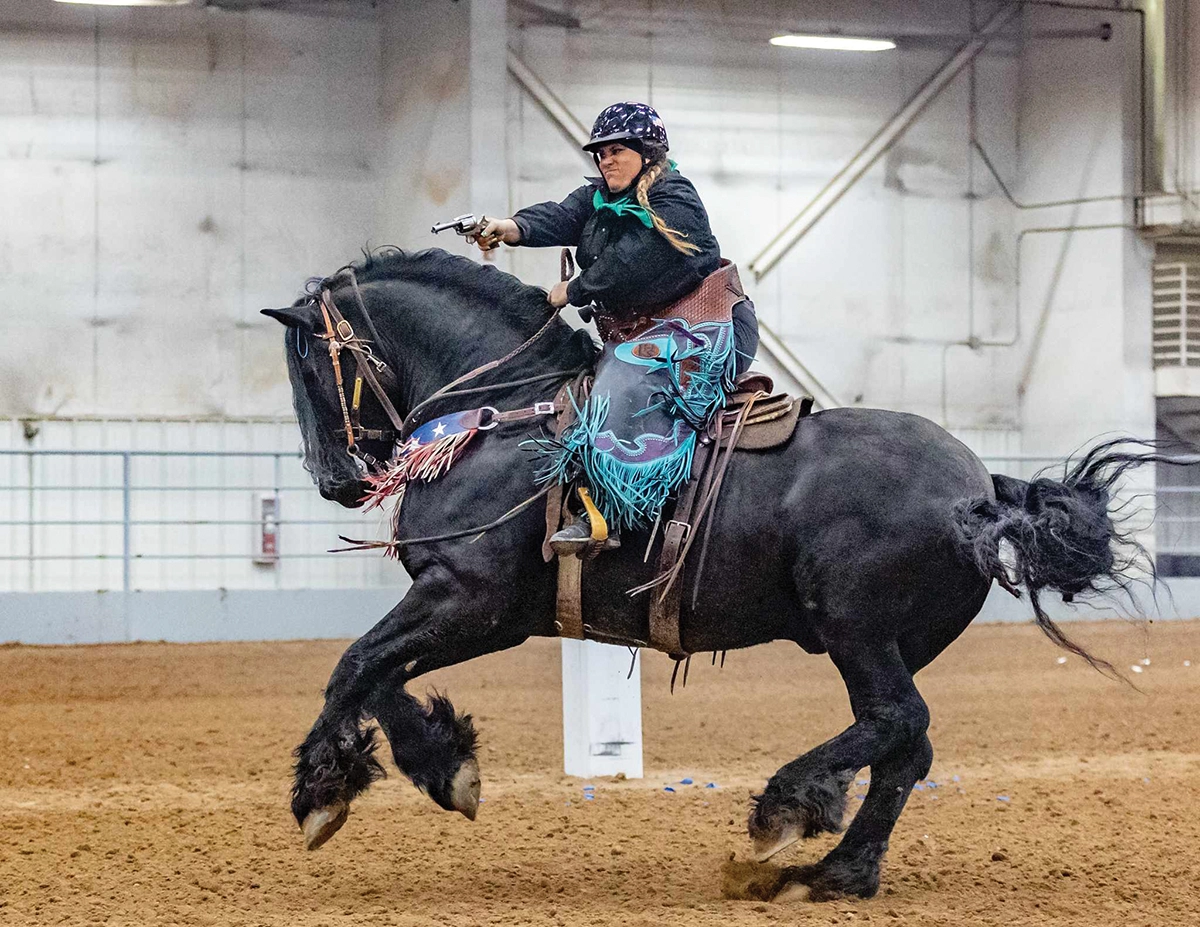
Carey Clausen’s Sil VoN de Oostwal (“Patro’n”) is proficient in driving and dressage, but they also work cattle and compete in mounted shooting. Photo courtesy Carey Clausen
Champion Mare
Kasi Barrow’s mare, Daenerys Van Scarpa Kroon AAA, was bred in 2017 by Deanna Arbucci of Scarpa Ledge. Daenerys remained with Scarpa Ledge for her first few years and produced a colt in 2022 before being purchased by Barrow. Daenerys is Barrow’s first full Friesian, and in their time together, they have accomplished an ever-growing list of accolades.
Barrow took Daenerys to the Friesian Horse Association of North America (FHANA) Central Mare Show East and, under the guidance of trainer Wim Cazemier, she accomplished a driving score of 85.5, earning her AAA and IBOP Champion of the day. She also was selected as Champion of Ster Mares 5 years and older and Provisional Kroon Mares and several other awards, leading her to being the overall Champion of the day.
To help continue the Friesian breed’s growing success as well as Daenerys’s list of accomplishments, Daenerys was bred to Ulbran 502 for a 2025 foal.
Barrow noted that Daenerys’ journey is just beginning. She plans to continue her future in both sport and breeding and is amazed by her willing, affectionate, and intelligent personality. She continues under saddle training with Anna Fischer, and Cazemier continues to assist with driving.
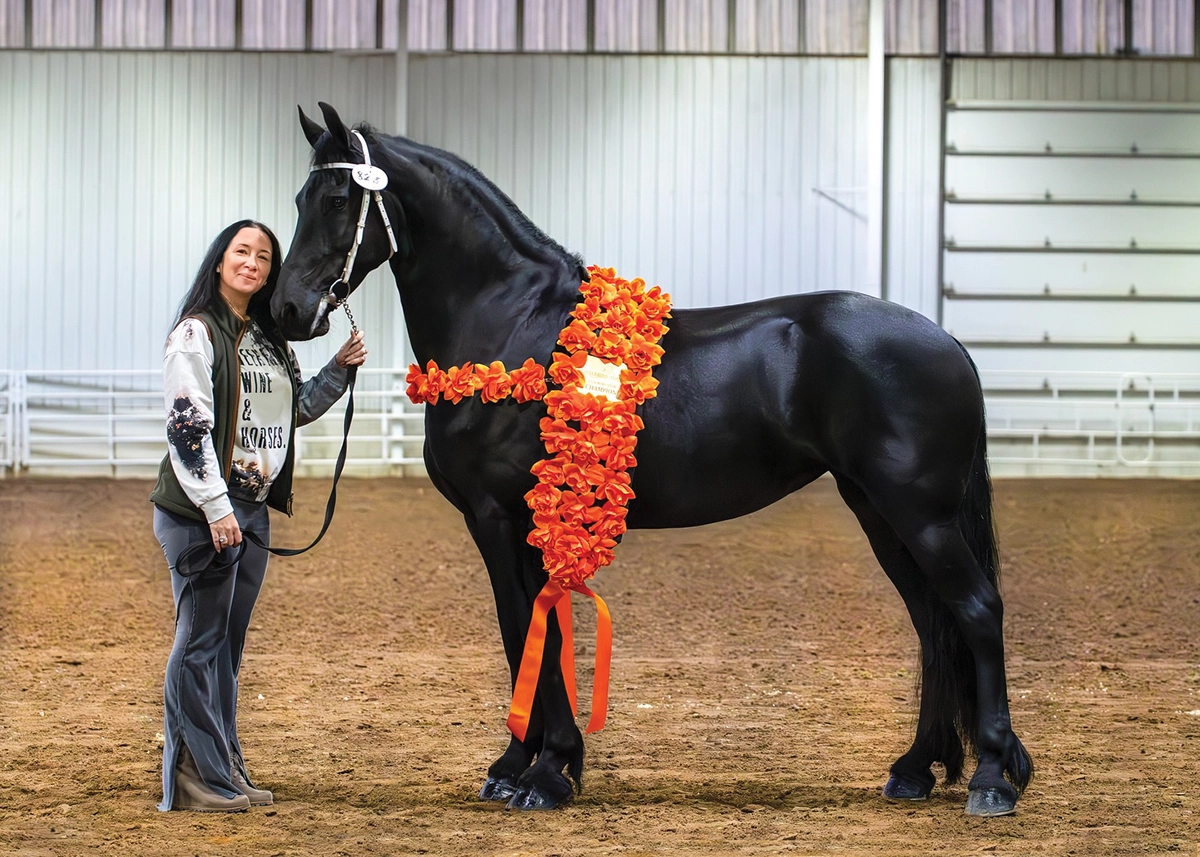
Kasi Barrow’s mare, Daenerys Van Scarpa Kroon AAA, was Overall Champion of the day at the the Friesian Horse Association of North America (FHANA) Central Mare Show East. Photo courtesy Kasi Barrow
The Friesian Breed by the Numbers
From dressage to driving and mounted shooting to working cattle, it’s clear that Friesians are a versatile breed that continues to grow in popularity.
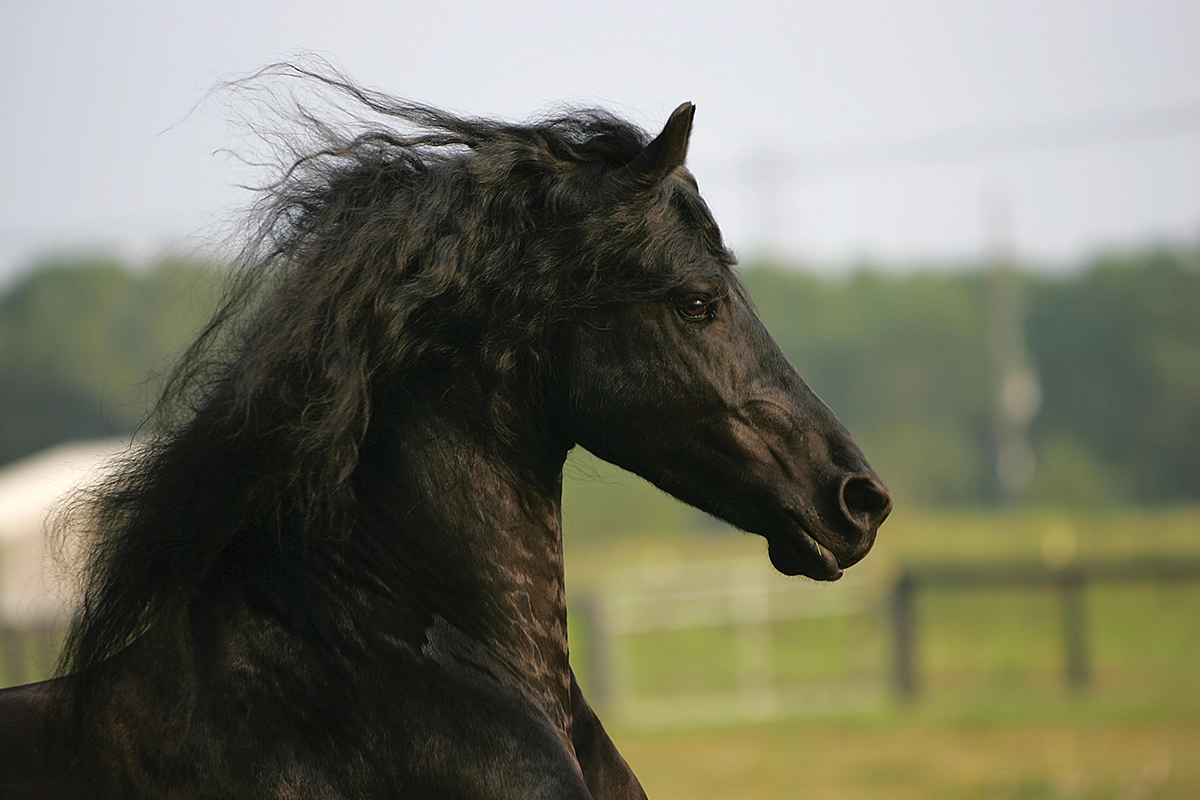
Photo by Bob Langrish
◆ Population: Worldwide, there are over 45,000 registered Friesians. In North America, there are around 8,000 Friesians.
◆ Height: Average 15.2-16 hands, but some are taller or shorter. Stallions must be 15.3 by the age of 4 to be in the studbook.
◆ Weight: 1,300+ pounds on average.
◆ Color: Black, with white markings minimized by selective breeding.
To learn more about Friesians, visit the Friesian Horse Association of North America website at www.fhana.com and the Koninklijk Friesch Paarden-Stamboek (KFPS) at www.kfps-presenteert.nl/en.
This article about the Friesian breed appeared in the July/August 2025 issue of Horse Illustrated magazine. Click here to subscribe!