Good things come in small packages—and Miniature Horse owners would swiftly say amazing things coming in miniature packages! Created in the 1950s when pony farms in America started to breed equines that were conformationally correct, miniaturized versions of larger horses, the Miniature Horse quickly stole the hearts of America.
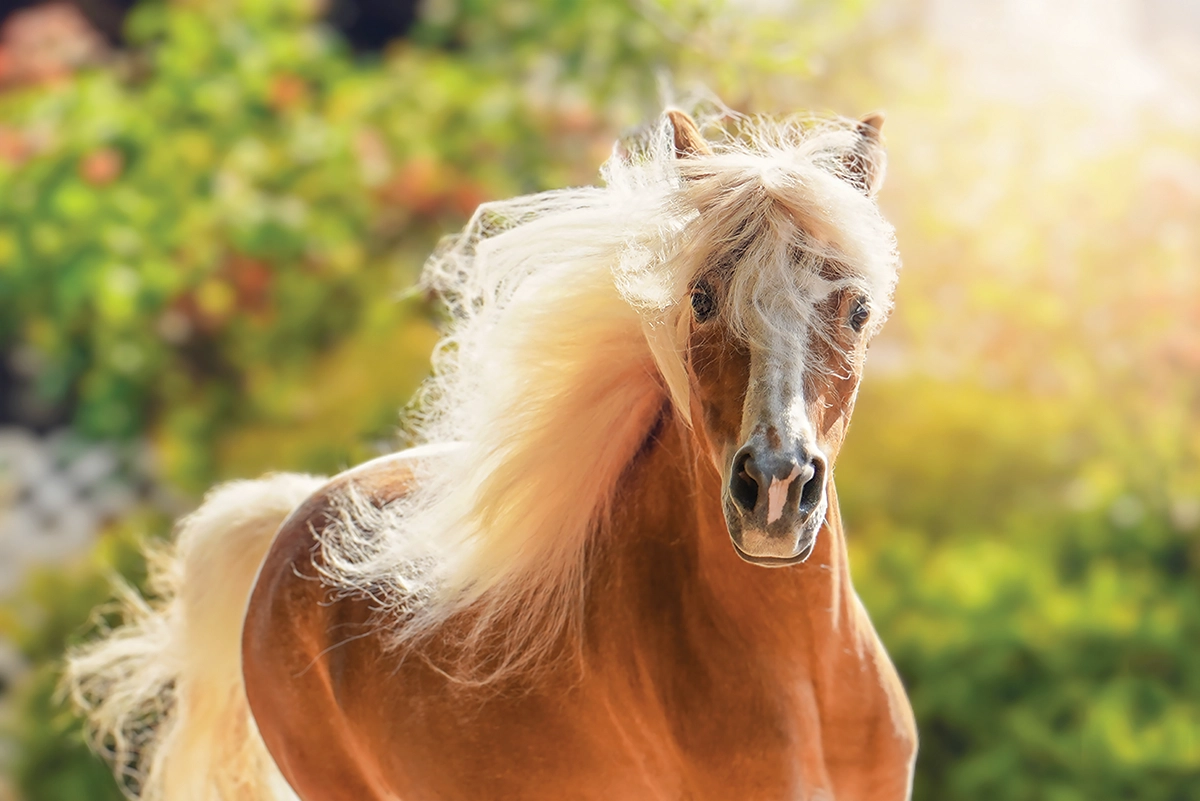
Photo by Kelsey Erickson/Midnight Studios Photography
Due to growing popularity, the American Shetland Pony Club, Inc. (ASPC) created the American Miniature Horse Registry (AMHR) in the 1970s. It’s the oldest Miniature Horse association.
Size Matters
When it comes to Miniature Horses, size matters. The AMHR has two height divisions, and an equine must fall into one of these two scales to receive permanent registration papers. Division A Miniatures are up to 34 inches in height, and Division B Miniatures are between 34 and 38 inches tall. (Unlike other equines, Miniature Horses are measured at the last mane hair, not at the top of their withers.)
The height divisions are mainly used for show purposes, explains ASPC President Rob Crater of CLC Stables.
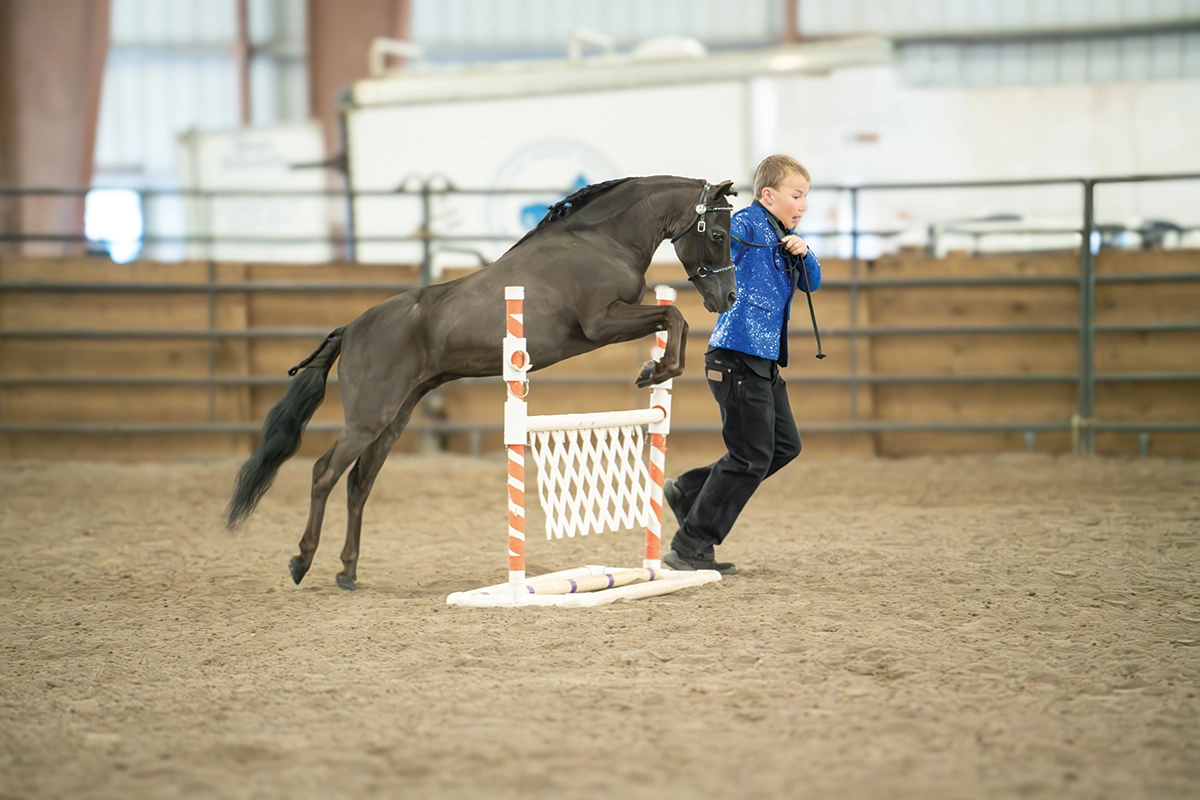
Minis excel in in-hand classes, where they tackle trail obstacles, jumping, and more. Photo by Kelsey Erickson/Midnight Studios Photography
Other Small Facts
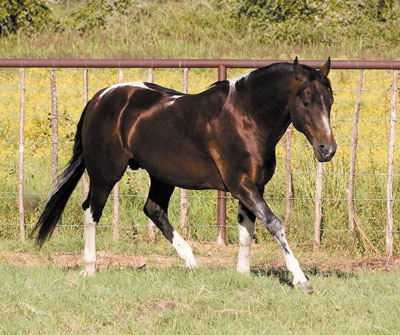
Along with two sizes, Miniature Horses come in a full spectrum of coat colorings and patterns, including Appaloosa, which is a very popular color pattern, according to Crater.
The Falabella is a small equine breed from Argentina. Registered Falabellas can be dual-registered with the AMHR if they meet the height requirements. Miniature Horses registered with the American Miniature Horse Association can also be registered with AMHR.
Miniature Horses are given temporary AMHR papers until they are done growing.
“We don’t give a permanent height card until they have reached their actual 6th birthday, and that is when their papers go permanent as well,” shares Crater.
Registering around 10,000 equines each year, it’s clear the Miniature Horse is very popular, and it’s easy to see why. As farms get smaller, having an equine that takes up less space is an asset. And as hay and grain prices soar, the Miniature Horse is easier on the feed bill, too.
Success in the Show Ring
But owners of Miniature Horses love them for more than just being more economical; the breed is known for being easygoing, calm, and a willing equine partner.
“My love for the Miniature Horse started shortly after purchasing my first Mini, RHMF Geminis Twinklin Star,” says Katie Gauthier, a member of Aerial Performance Horses, owned by Brenna Hardin. “It didn’t take long for me to jump headfirst into the world of showing Miniature Horses, and I have never looked back! I’ve found Minis to be excellent companions and partners that are a joy to work with and be around.”
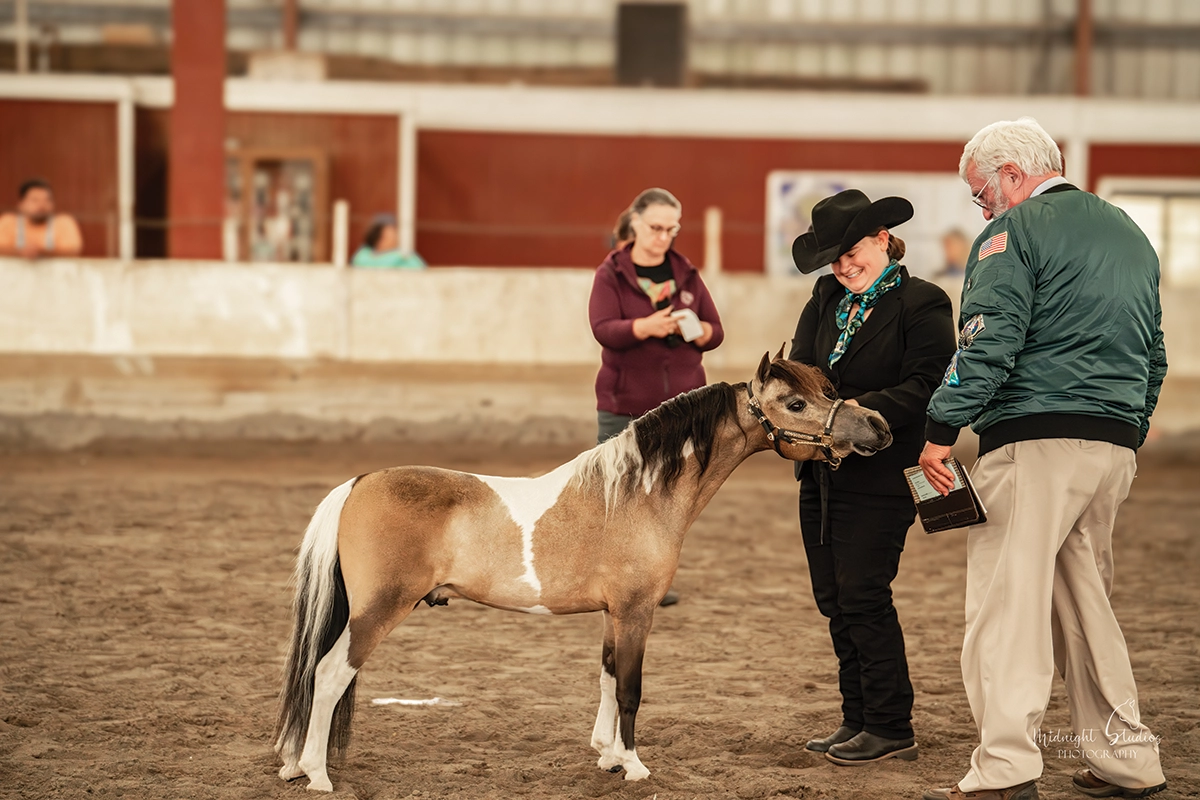
Aloha Acres Neon Memory (“Gizmo”) and Brenna Hardin, owner of Aerial Performance Horses, a program dedicated to developing and highlighting the Miniature Horse. Photo by Kelsey Erickson/Midnight Studios Photography
Many Miniature Horse owners are equestrians who can no longer have a larger equine for a variety of reasons. Miniature Horses allow people to continue doing the sport they love with—let’s face it—an adorable partner.
They excel at all types of driving classes, from combined driving to carriage classes. And while most seem to truly love driving, many also excel at in-hand events, including jumping, showmanship, and trail.
“Miniatures also often compete successfully at local all-breed open shows, and they can be found in the 4-H show ring as well,” says Crater. “The AMHR National Championship Show hosted each September in Tulsa, Okla., consistently draws more than 1,500 Miniature Horses from across the United States and Canada, making it the single largest competition for Miniature Horses. In fact, AMHR Nationals is one of the larger horse shows of any kind in the United States. AMHR rated shows offer a variety of classes, including halter, showmanship, obstacle driving, costume, park harness and roadster driving.”
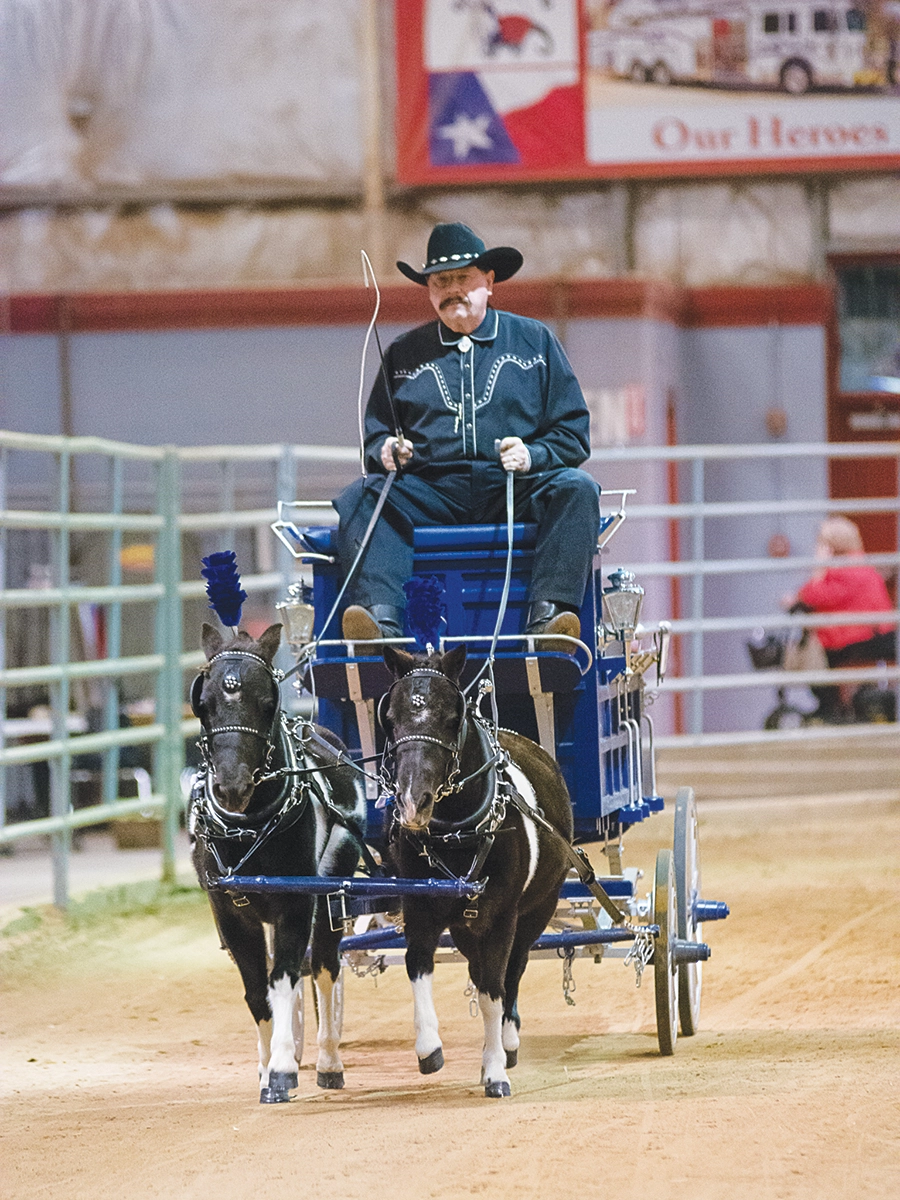
Ever popular as a driving breed, the Miniature Horse shows in many types of harness classes. Photo by Phil Zander/Horsepics Photography
Miniature Horses: Fun for All
Outside of showing, Miniatures Horses have proved their prowess as therapy animals, visiting hospitals and nursing homes. They are even used as service and guide animals.
Want something that will take you down the trail, road, or beach in a cart? The Miniature Horse will do it with a style and willingness. You can see them in parades, as pasture companions, and more.
“They are great all-around horses,” says Crater.
American Miniature Horse vs. American Shetland PonyEstablished in 1888, the American Shetland Pony Club (ASPC) is also home to the American Miniature Horse Registry (AMHR), the oldest Miniature Horse registry, founded in 1971. These two pint-sized breeds have a lot in common, but there are some important differences. ◆ The American Shetland Pony Club is a breed (bloodline) registry. ◆ The American Miniature Horse Registry (AMHR) is a height registry. ◆ Shetland Ponies can be registered with the AMHR if they meet the height requirements. |
This article about the Miniature Horse breed appeared in the January/February 2025 issue of Horse Illustrated magazine. Click here to subscribe!