When it comes to liberty training, we start with teaching the horse to come on command, which was discussed in Part 1 of this series. After the horse is coming willingly, we start calling him to us while he is in motion, and after that, we work on liberty circles. Once you have your horse coming to you and circling, you have a big portion of liberty figured out. Here’s how you can build on liberty basics.
Circles on a Lead
As discussed previously, the cues to call the horse are to step backward, call him with your voice cue, and possibly motion to him with the whip. After your horse is doing that from a standstill, it’s time to add some energy to the equation.

Begin by circling the horse around you, keeping him near the perimeter of the round pen. Photo by Bronwyn Irwin
Start by sending the horse around you, wearing a halter and long lead, on a left circle in a round pen. Hold the rope in your left hand and a longe whip or training stick in your right hand. Once the horse has gone around in one or two circles, swing the whip under the rope and out in front of him, which will block his forward motion.
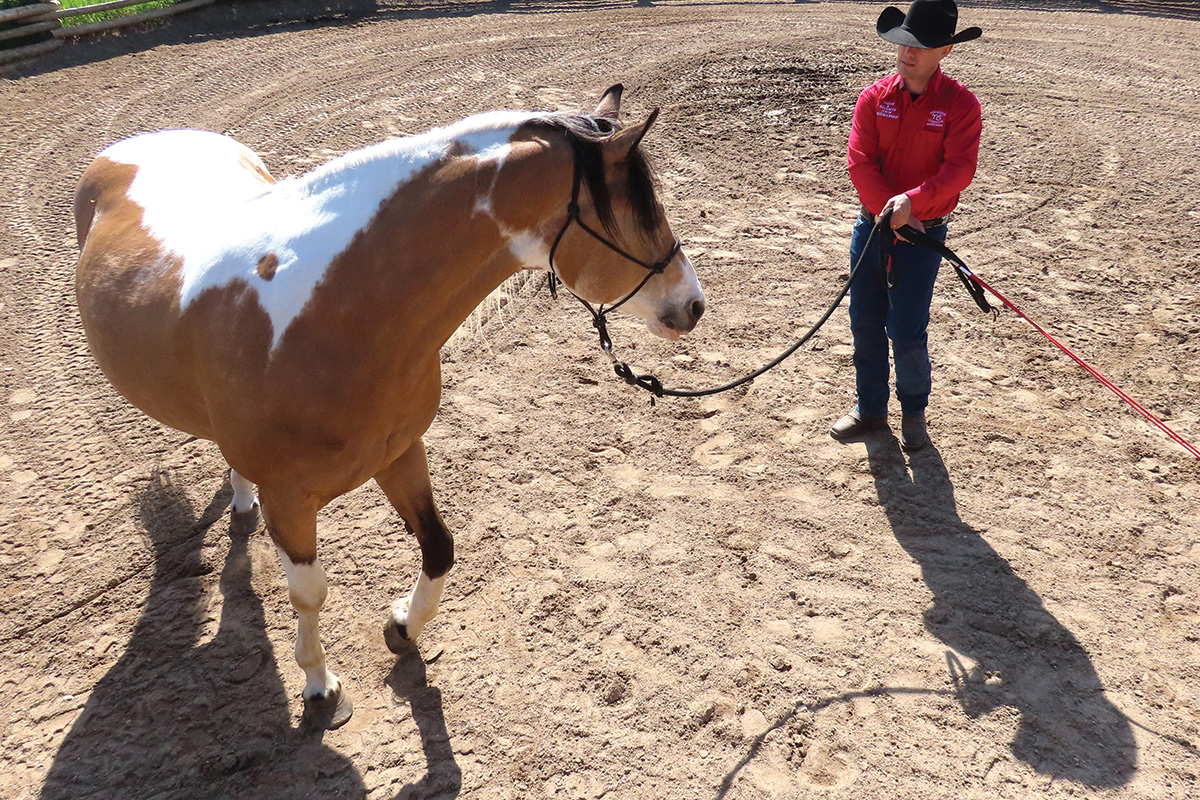
Give your voice command, and at the same time, swing the whip in front of the horse to block his forward motion. Photo by Bronwyn Irwin
At the same time, call your horse with your voice cue and step back, drawing him to you. Repeat this a few times, then go the other way and repeat the exercise with the horse traveling on circles to the right.
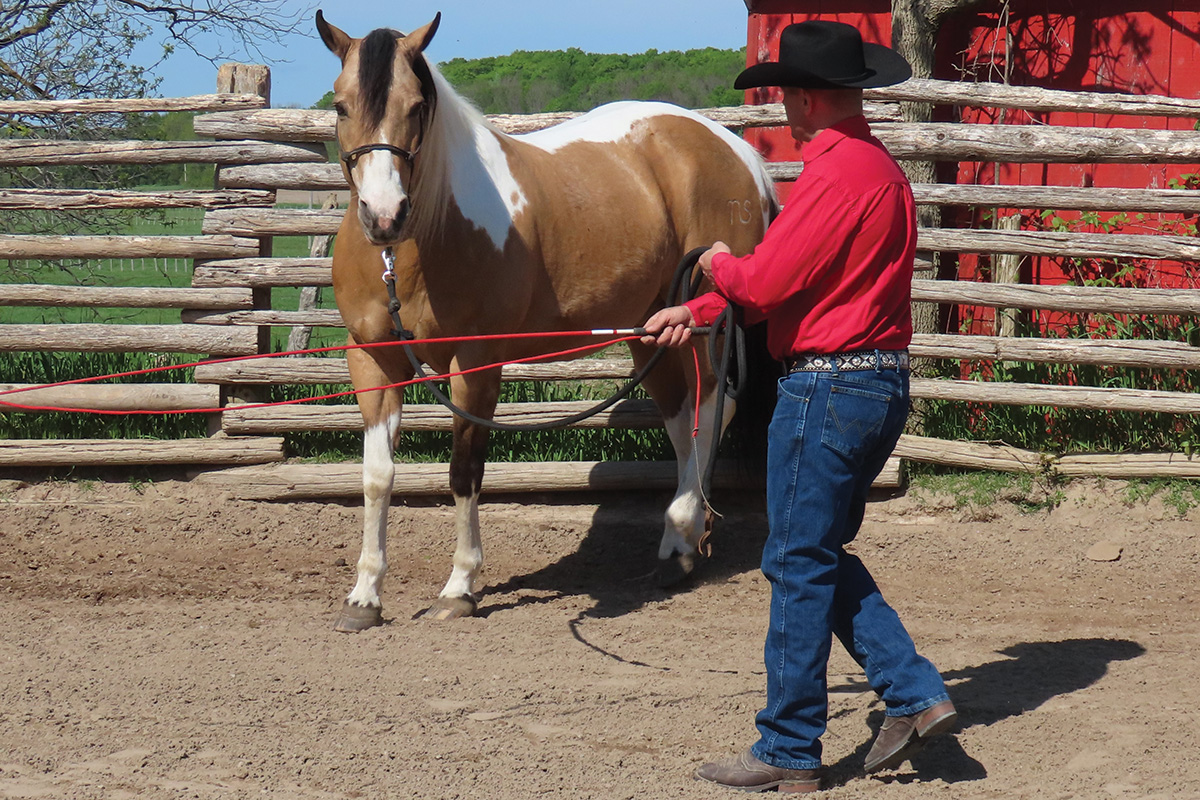
Leave the lead on in the beginning to help the horse understand that he should come to you, that way you can pull on the lead if necessary. Since you have already taught the horse how to do this from a standstill, this part should be relatively easy.
Loose Horse
Once you have had some success, take the halter and lead off and repeat the exercise with the horse loose. Send him around, cut him off just a little bit, and at the same time back up to draw him to you.
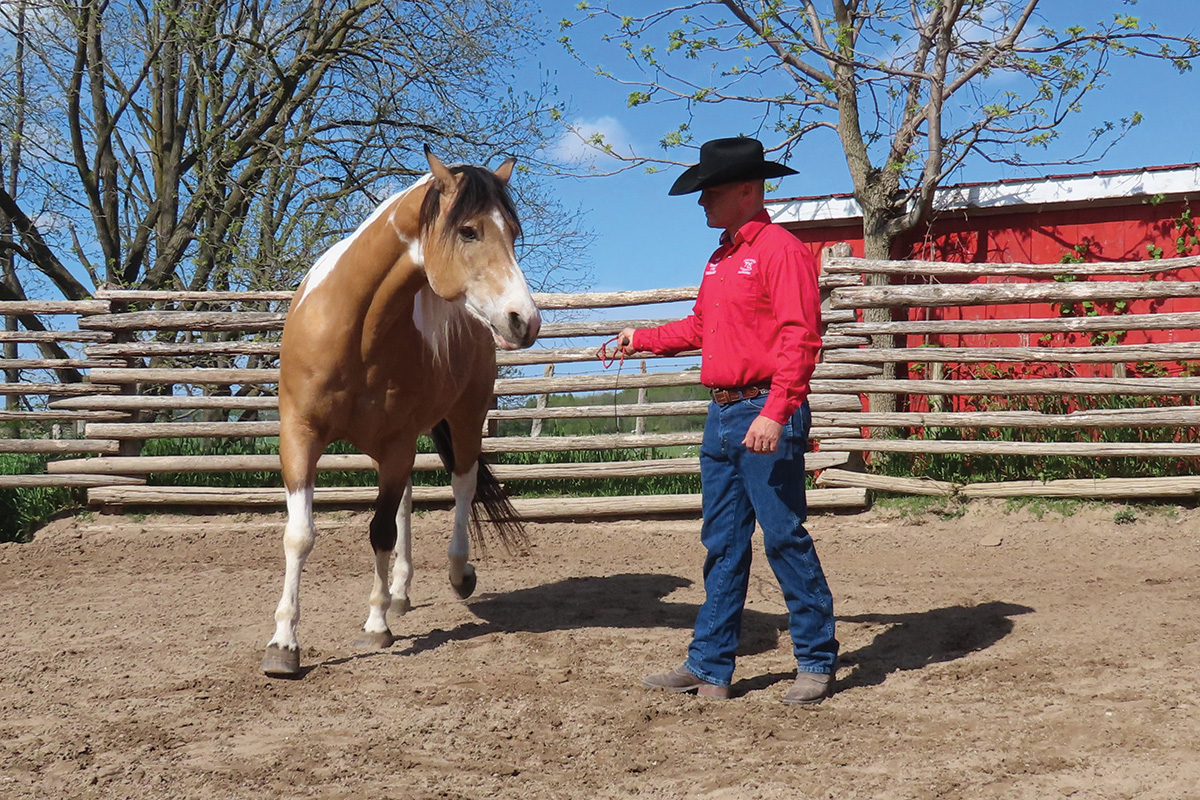
After the basics are well established, remove the halter and lead and ask your horse to circle you at liberty. Photo by Bronwyn Irwin
In some ways it becomes easier once the horse is loose because you don’t have to worry about getting tangled up in the lead rope. However, if you’re having any trouble, just put the halter and lead back on until the horse figures this exercise out.
You can practice this at different gaits, but I often find the trot is best because there will be enough energy without things getting too fast.
Liberty Circles
There are some misconceptions when it comes to horses circling at liberty; the main one is that a horse running around in a round pen without a halter on is not really a horse circling at liberty because the round pen is holding the horse in. It seems if the pen were bigger, then the horse would be farther away, so it’s not true liberty.
We always start in a pen, but you want to work toward the horse circling with a strong enough connection to you that in theory, he could be doing small circles around you in a 100-acre field.
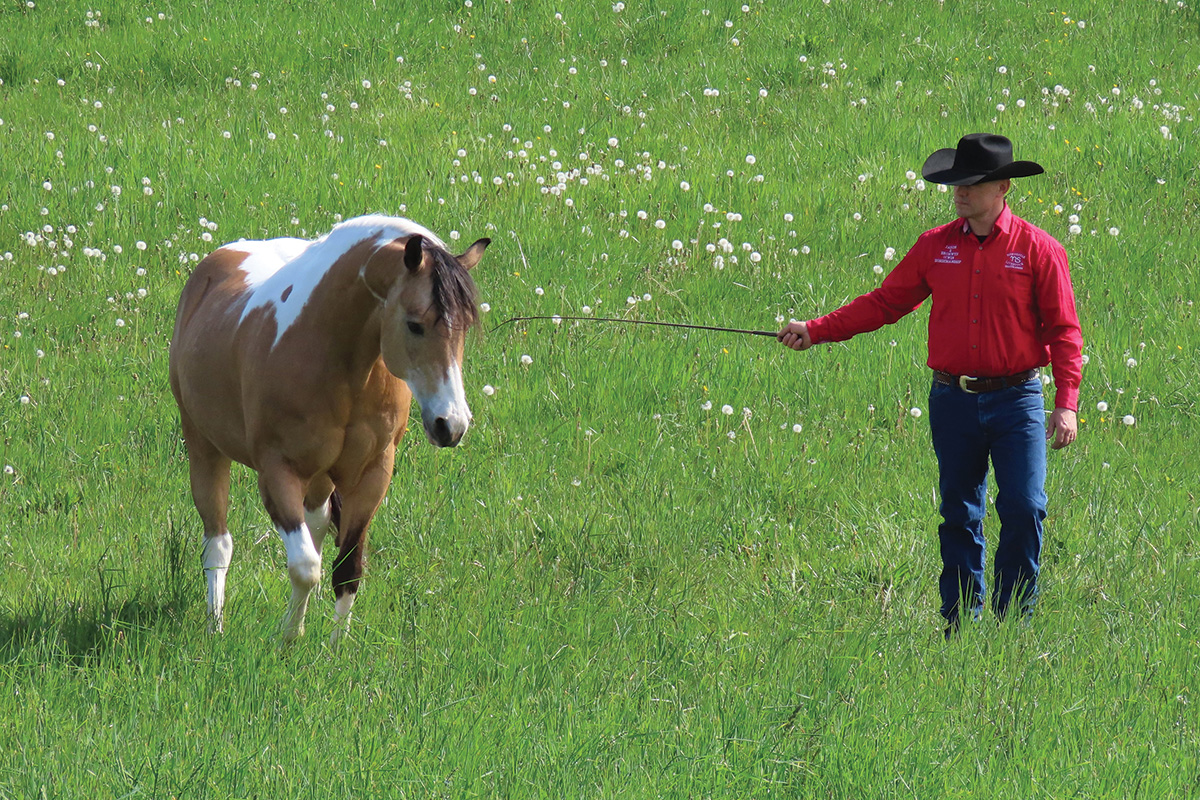
When your horse really understands liberty, it should be the connection that keeps the horse with you—not a fence. Photo by Bronwyn Irwin
The only tool you will need for this part is a whip (either a longe whip or buggy whip) or a training stick. Start by backing up to draw the horse to you.
When he comes to you, stop backing and use the whip to guide him around you as if you were longeing. However, only send the horse about half a circle around you and then back up again and call him to you.
Stop and pet the horse. Keep building off of this. Draw the horse to you, then have him start to circle a bit more, and then draw him back again.
What keeps the horse with you is the thought that he shouldn’t go far because at any second, you are going to call him back, and then he can stop and take a break. Your horse should look at being with you as his “happy place” for this training to work.

Call your horse to you often and give lots of rest breaks. Your horse must think that being with you is the greatest place in the world for liberty training to work. Photo by Bronwyn Irwin
Advancing to Next Steps
Build up to where your horse will circle a few times around you before you call him back. If you notice that he looks like he’s going to leave while doing a circle, call him back right away (before he leaves).
If the horse does leave, move him briskly around the perimeter of the pen once or twice, then call him back and repeat the exercise. He will likely learn quickly that it’s easier to do the small, slower circles around you than the bigger, faster ones around the full pen.
Practice on both sides at both the walk and trot. Eventually you can do liberty circles at the lope, but make sure the trot is nearly perfect first.
Once your horse will come to you and circle both ways, you have an excellent liberty training foundation on your horse with these basics. From here, the world of liberty and all its possibilities open up to you. You can add obstacles, work in different settings, work with more than one liberty horse at once—and the list goes on. Use your imagination and have fun with it!
Watch our webinar with Jason & Bronwyn Irwin.
This article about building on liberty training basics appeared in the August 2024 issue of Horse Illustrated magazine. Click here to subscribe!