It’s time. After years of boarding, you’re finally ready to buy property and keep your horse at home. Perhaps you’re considering moving to another state that offers more equine opportunities or an area where your horse-related business can grow. Buying horse property is not your typical home purchase. Whether you’re buying an established farm or just want enough acreage to keep a couple of horses, there are many factors to consider.
Any real estate agent can sell you property, but working with an agent who is active in the local equine industry will get you the knowledge and insight valuable to the area.
We spoke with agents and buyers in horse-centric regions in two different states to learn how buyers can find success when searching for the right property.
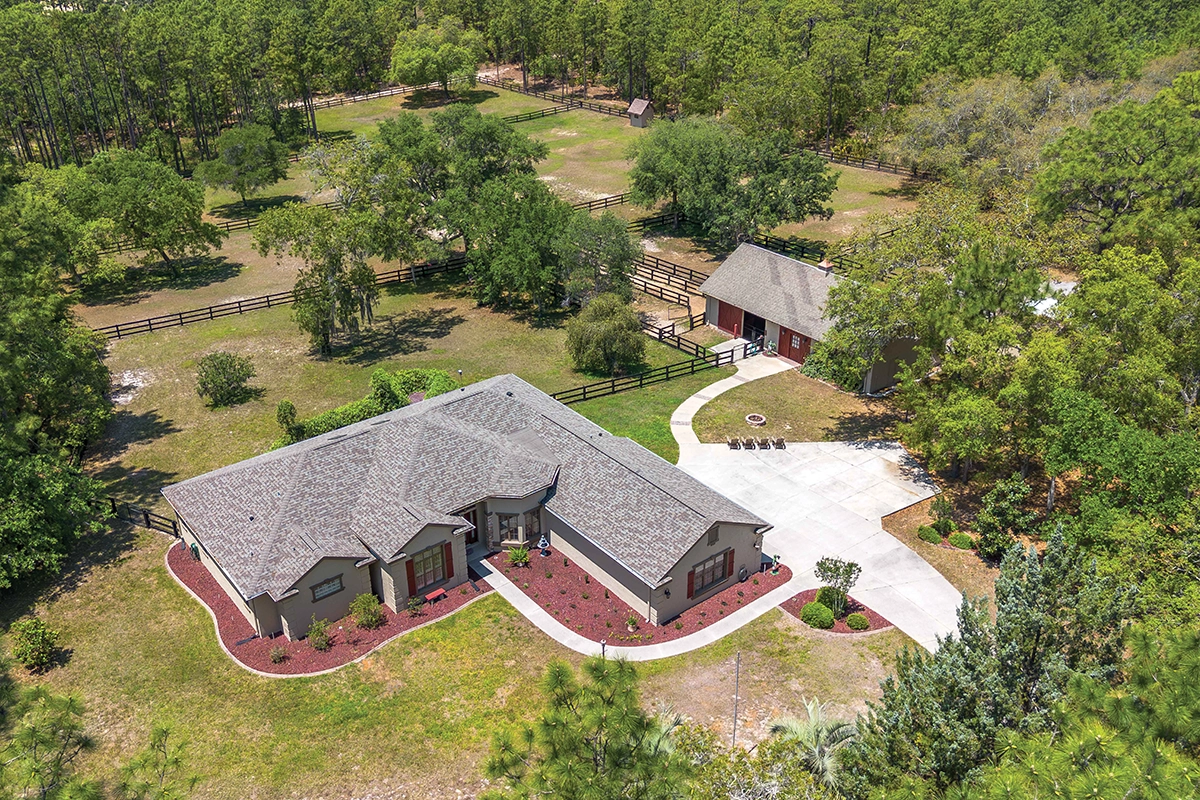
3428 N Bravo Drive, Beverly Hills, Fla., is a 5.5-acre property in an equestrian community with extensive bridle trails, featuring a 2,400-square-foot three-bedroom home and two-stall barn. Listed with Showcase Properties, it is currently listed at $945,000.
Locating an Equine Real Estate Agent
The best way to find an experienced equine real estate agent is a personal recommendation from horse people where you hope to move.
If you don’t know anyone in the area, it’s time to do some online research. Real estate websites like Zillow and Trulia are great when searching for “regular” homes, but you must look for agent profiles with experience in farms or horse property.
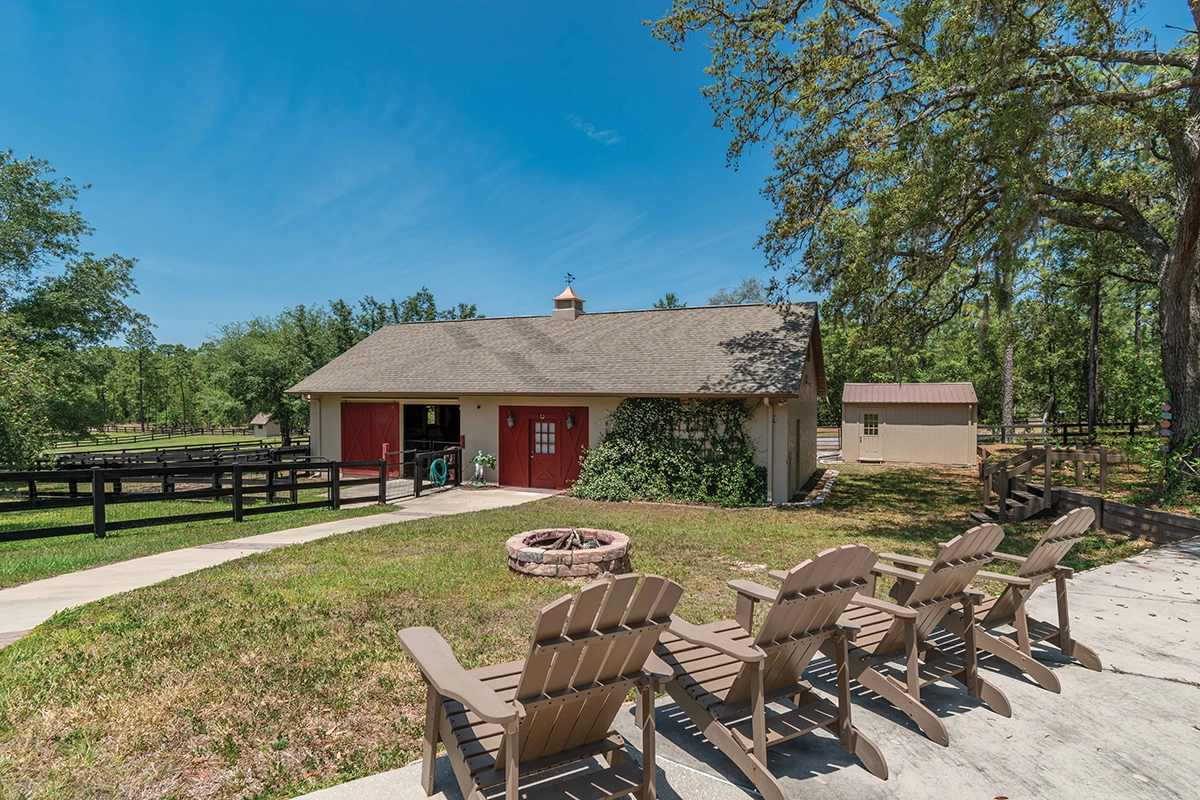
This Beverly Hills, Fla., property (same as shown above) has a picturesque firepit and seating area with a view of the barn.
You can also try typing “equine real estate agent,” “horse property realtor,” “equine realtor,” or “horse property real estate agent” into your favorite search engine; don’t forget to include the county and state. You can also search for an agent on sites like horseproperties.net/agents and topequestrianagents.com.
Once you’ve identified agents in your target area, call and ask a few questions, such as:
- How long have you been selling equine property?
- Do you specialize in certain areas/disciplines?
- What information do you need from me to help you find the most suitable properties?
“The best way to find an equine realtor is to call and talk to them before you even look at property,” says Rita Freels, a Texas real estate Realtor broker and agent since 1996, who sells ranches and horse property of all sizes. “You’ll be able to tell by talking to them if they know the equine industry, not just real estate.” Rita Freels Home & Ranch Realty is located in Stephenville, Texas, which prides itself on being the Rodeo Cowboy Capital of the World.
When moving with horses to a new area, you’ll need to establish connections with feed and tack shops, veterinarians and clinics, farriers, and more. Working with an equine real estate agent gives you an edge, as they can share contacts that non-equine agents wouldn’t know.
“Non-equine realtors don’t have knowledge of the horse itself and what’s required to make a horse happy and comfortable, or the industry contacts,” says Valerie Dailey, owner and broker of Showcase Properties of Central Florida, Inc. A state-licensed Realtor since 2005, Dailey is a Florida farm owner who has been active in the Thoroughbred industry since the early 1990s.
Provide Key Details
Budget is always the starting point, but details about your horse activities can significantly help an agent find properties that meet your needs.
Dailey and Freels ask would-be buyers a variety of questions about their horse activities, including:
- What is your total budget?
- What size of property/acreage are you looking for?
- What type of horses do you have and how many?
- What is your main discipline or equine activity?
- What are your “must-haves” for the horse facilities?
- How are your horses kept—mostly stalled or turned out?
- Will you build a barn if the property doesn’t have one?
- Is it critical to be in a specific area, or are you flexible?
- How important is it to be close to a certain venue, trainer, trailheads, etc.?
- Do you want to live in an equestrian community?
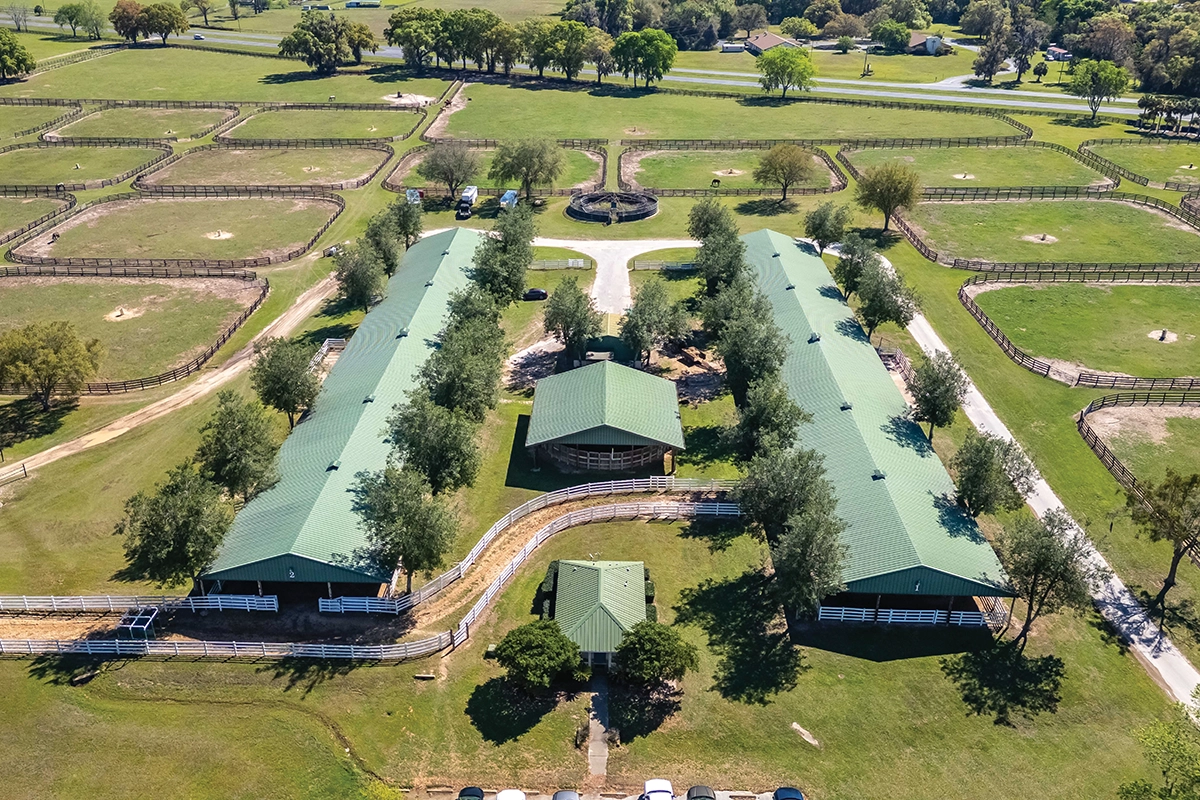
This 200-acre training center at 14140 N US Highway 301 in Citra, Fla., includes a 1,350-square-foot three-bedroom home, two 40-stall barns, three 20-stall shedrow barns, and a 7/8-mile galloping track. Represented by Beckie Cantrell and Valerie Dailey, it’s listed at $6,900,000.
Some buyers insist on a turn-key operation, while others can deal with a home that is smaller or older if they’re happy with the barn and horse area. Others are willing to buy raw land and build a home and horse facilities. Only you can decide what you will or won’t live without, so let the agent know.
It’s important to specify if you want to live in an equestrian community or just on land that allows you to have horses.
Dailey explains that although an equestrian community offers specific benefits, there are restrictions, including details about barn and fencing. In addition, some communities may not allow a business to operate from the property. If you intend to teach riding lessons, train outside horses, provide equine therapeutic work, or have some other type of business, you want to be sure this is allowed.
Practical Issues
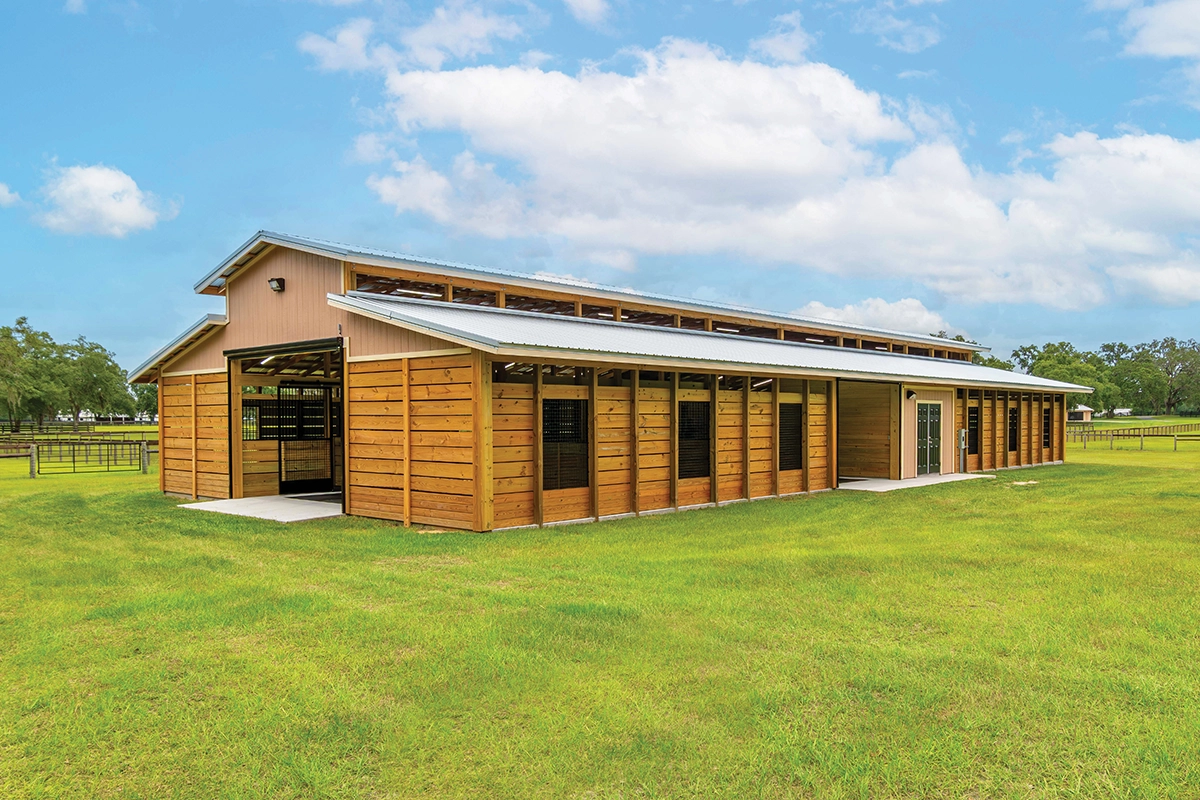
This horse property in Morriston, Fla., is now off-market but features a dream setup of green fields and an airy barn.
Many equine properties rely on private wells, which can raise questions for buyers accustomed to being on city water. In Florida and Texas, water rights are included with the property, but this isn’t the case in every state.
Depending on the region of the country, water isn’t always a given. Freels notes that in some areas of Texas, you’d have to put in such a deep well (700 to 900 feet) to reach water that the cost would be prohibitive—as much as $100,000. In other places, there simply isn’t any potable ground water to tap into.
“In Texas, you own the water under the ground you own, so this gives you water rights to capture the ground water under you,” says Freels. “But if there’s a named creek or river running on that property, this is considered different from water under the ground. You can’t divert it or put in a pump and use that water without state permission.”
As she explains, many states have restrictions on what a land owner can do with an existing body of water. Thinking of building a barn but concerned about the nearby pond overflowing? It may be against the law to make changes to that pond, even though it’s on your property.
Many horse owners opt to buy raw land so they can develop it and build to their specifications. If there are no utilities on the property you’re considering, ask the agent about electricity options. It may be simple to get connected to a regional utility, or you may have to pay extra for access.
For example, in parts of Texas if there’s not an agreeing neighbor with an electric pole nearby to tie into, you’d have to pay by the foot to have a pole installed on your property.
Unrealistic Expectations
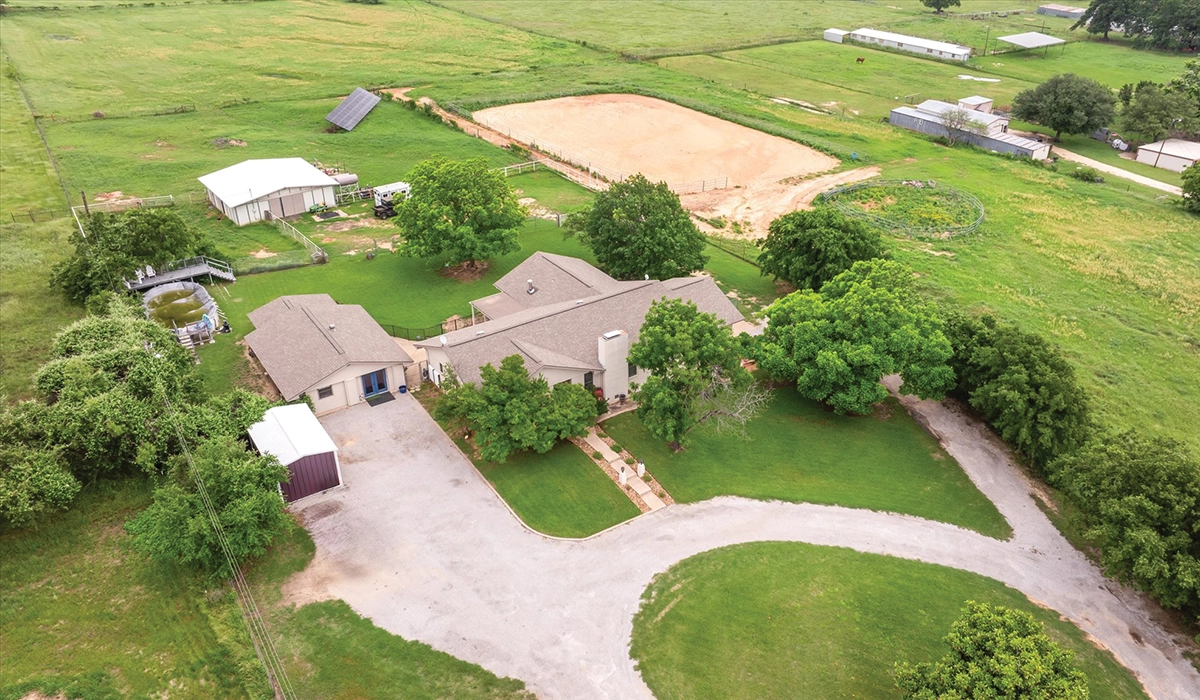
This 14-acre property at 441 CR 437, Stephenville, Texas, features a 3,100-square-foot four-bedroom home and four-stall barn, and is currently listed at $1,225,000.
Out-of-state buyers can have unrealistic expectations or be unaware of potential problems simply because they’re unfamiliar with the weather, soil, and vegetation where they’re moving.
For example, torrential rainfall is a fact of life in Florida. Areas with sandy soil drain well after heavy rains, but properties with gumbo clay hold water and stay wet much longer. Soil also plays a big role in pasture quality.
In addition to soil type, the design and layout of barns, turnout areas and pastures also impact how a property handles severe weather.
“In Texas, we can have a 40-degree weather swing in one day,” says Freels. “If you build a pole barn without any sides on the north and west here, there is no way you’ll keep your animals warm in cold weather. But they need the south and east sides open for the southerly summertime winds.”
Horse owners often move to Florida not knowing that barns don’t need to be closed up in the winter, or that barns facing south or west will be hotter in the summer than a barn facing east or north.
An equine agent can also tell you about natural weather dangers in the area and how horse owners prepare for them. For example, Freels recommends clients have a plan to evacuate horses in the event of a wildfire.
Tax Breaks
Many states offer agriculture exemptions on land used for legitimate agriculture endeavors, ranging from raising livestock to growing specialty crops. An agriculture exemption offers a large reduction in state property taxes, but the amount of acreage needed to qualify will vary from state to state. In Texas, it varies in each county.
A knowledgeable equine agent can explain this to a potential buyer, as well as share information about insurance.
Buyer Feedback
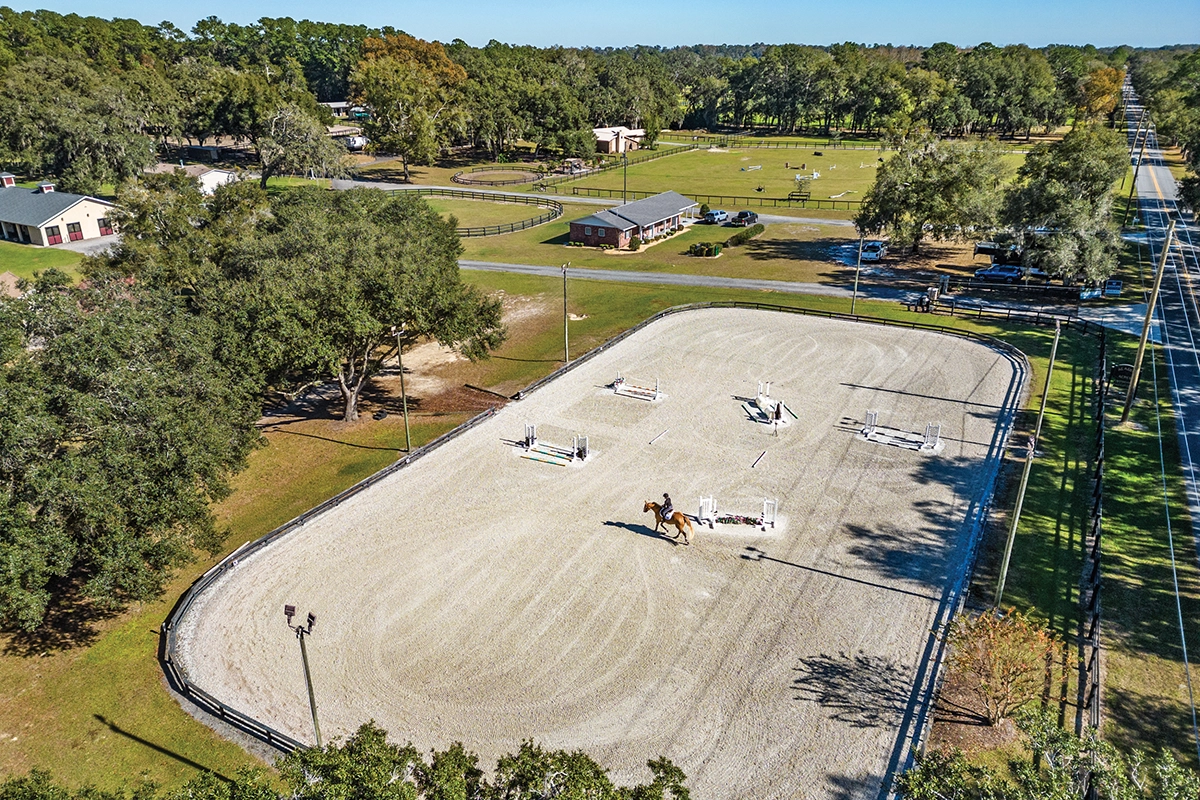
This 10-acre property Ocala, Fla., has a 13-stall barn, three homes, eight paddocks, a GGT arena, and is located a quarter-mile from the entrance to the World Equestrian Center. Represented by Liz Gray, it sold just before press time for $1,950,000.
In 2015, Holly Lippert left bitter winter weather behind when she moved to Texas from Michigan, where she had a boarding farm. A lifelong horsewoman, she is passionate about team roping.
She’s working with real estate agent Rita Freels to sell her current property and buy a different piece of horse property farther west in Texas.
Lippert says a big plus with using an equine real estate agent is that they understand soil integrity.
“There are some places where when the native grass is overgrazed, it doesn’t come back, and you’ll just have rock and sand,” says Lippert, adding that this is why properties in the same county can have such different prices.
Lippert has practical advice for horse owners shopping for property.
“Have an open mind when looking, because many are rough but still have a lot of potential,” she says.
Kevin Raber, trainer for Diamond K Horses in Jackson, Ohio, is looking to buy a second farm location in Ocala, Fla. The training business will move there during the fall and winter months and return to their Ohio farm for the summer.
“It wasn’t even a question for us to work with an equine realtor,” says Raber. “It was easy to choose Showcase Properties when we decided to buy, since I already had a connection with Samantha Dailey after I’d sold her a horse.
“We met with Valerie and Samantha and told them what we were looking for regarding acreage and how many stalls,” he continues. “A big arena is important, and we want multiple small paddock turnouts, not pastures. As a trainer, I deal with shipping all the time, so truck and trailer access is a big thing. Is the property easy to get in and out of? Can a shipper with a big rig get in? How close is it to an airport?”
Based on these specifications, the Daileys selected properties to show Raber.
“Their knowledge of the horse industry has been a huge help,” says Raber. “I’m down in Ocala a lot but don’t have a clue about the soil. Valerie and Samantha explained about footing and how some areas hold water after rain. They also explained how some parts of the county have better resale value.”
Your Journey to Buying Horse Property
Go ahead and browse those online real estate listings, but when you’re serious about finding your dream horse property, be sure to work with an experienced equine real estate agent. They can help you sort out the details, share valuable industry contacts, and guide you in making the best choice for you and your horses.
This article about buying horse property appeared in the September/October 2025 issue of Horse Illustrated magazine. Click here to subscribe!