
If you’re in the market for a new truck for towing, you may have considered going electric. Can electric trucks really replace gas-powered trucks when it comes to hauling?
We place impressive demands on our farm and towing vehicles, and we expect them to work as hard as we do. We fill up the truck bed with bags of feed, move hay, drive out to the pasture with a load of fence posts, and—probably dearest to the equestrian’s heart—we haul horse trailers.
For many decades, the only option for this type of work were the traditional gasoline or diesel-powered vehicles that we all grew up with. And these trucks are still in high demand today for towing horse trailers and performing general farm work.
But there’s a new option available as well: fully electric, battery-powered trucks, which are rapidly gaining popularity. Can they perform the same tasks? And can they haul our horse trailers with the same ability as a traditional truck?
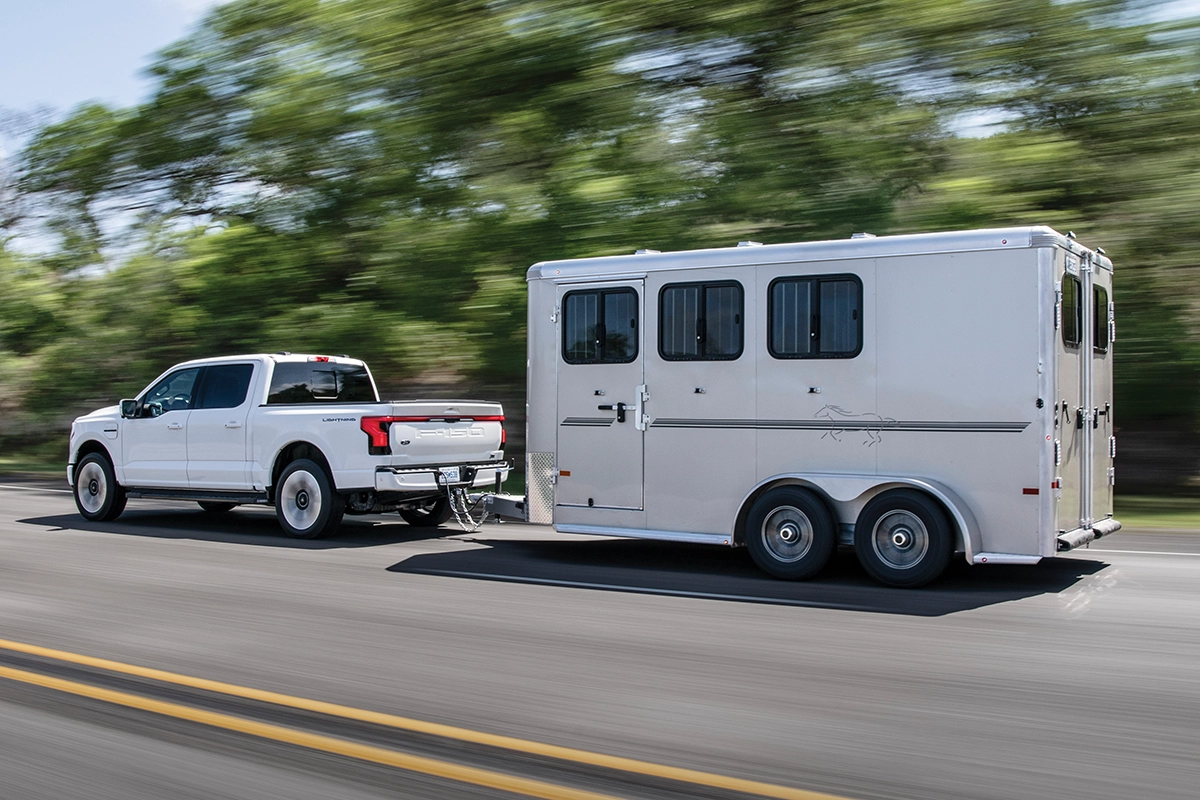
The Ford F-150 Lightning (Platinum edition shown) is the EV sibling to America’s bestselling vehicle.
Important Differences Between Electric Trucks and Traditional Trucks
At first glance, an electric truck looks pretty similar to a traditional truck; you’d be hard pressed to identify one on sight. (Except perhaps the Tesla Cybertruck, which was intentionally designed with a unique appearance.)
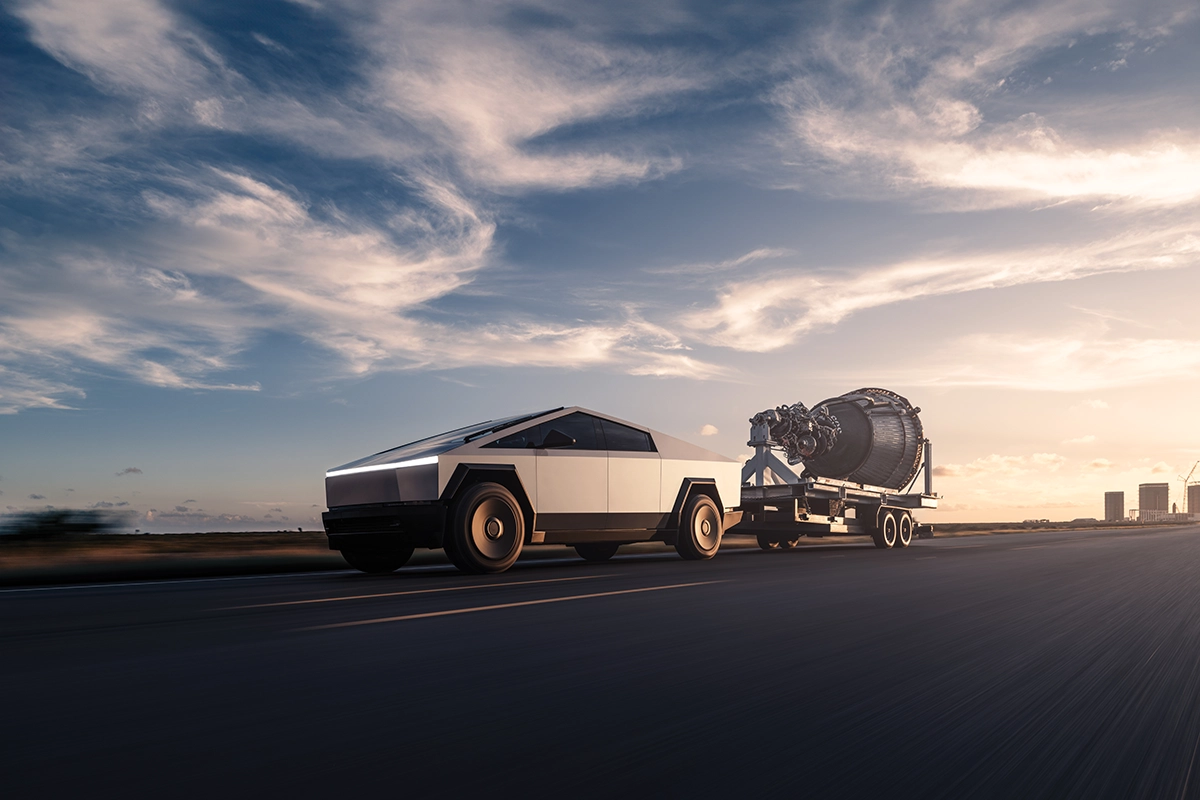
There’s no mistaking a Tesla Cybertruck on the road, but these trucks are also powerful towing vehicles.
Standard options you’d find in a modern gasoline or diesel vehicle will still be present in the electric version, though the interiors and dashboard look undoubtedly modern. The major difference is that electric trucks are powered by battery-driven electric motors, rather than fuel-powered internal combustion engines. There are some definite advantages to this design, as well as some negative trade-offs.
Provided it’s equipped with the right towing package, your EV truck shouldn’t have any trouble pulling a loaded horse trailer. But as with any towing situation, there are some caveats to watch out for.
You’ll need to estimate your trailer’s loaded weight: the gross trailer weight (GTW), and make sure that your electric truck has the towing package required for that load. Also, gooseneck hitches aren’t typically installed at the factory, so if you pull a gooseneck horse trailer, you’ll need to install one of these after purchase—and not every model will be capable of gooseneck pulling.
Quiet and Clean(ish)
Electric motors work by combining electrical current with magnets to produce movement. As a result, electric trucks are silent when idling.
They also produce no exhaust; you’ll often see this advertised as “no tailpipe emissions.” While it’s nice to not have the smell of exhaust as you work around your truck, the electricity used to recharge your truck’s battery likely came entirely or in part from fossils fuels, so these vehicles may not be as environmentally clean as you first imagine.
Wind and solar options are gaining ground in the U.S., but currently the majority of our electricity—including what’s powering your EV—comes from coal, natural gas, or nuclear sources. There are emissions somewhere, just not coming out of your truck. However, with an increase in home solar panels, you may be able to charge up cleaner if you have these on your rooftop.

The Rivian R1T is from a new automaker but has quickly gained popularity across the U.S.
Instant Torque
Have you ever noticed how your traditional truck has to rev up some RPMs before it begins to actually move a heavy trailer? Electric trucks have very strong and almost instant torque—so they instantly transfer power from the motor to the wheels.
This can be especially handy in heavy traffic, or when accelerating up an on-ramp. Electric trucks are quite effective at quickly getting your heavy rig up to highway speed.
And if you’ve ever tried to delicately back a heavy trailer into a precise location with a traditional vehicle, you know that feeling of having to press the accelerator quite hard to achieve the necessary RPMs to move—and then the truck and trailer move too quickly! Electric trucks with strong, fast torque can make this task a bit easier, too.
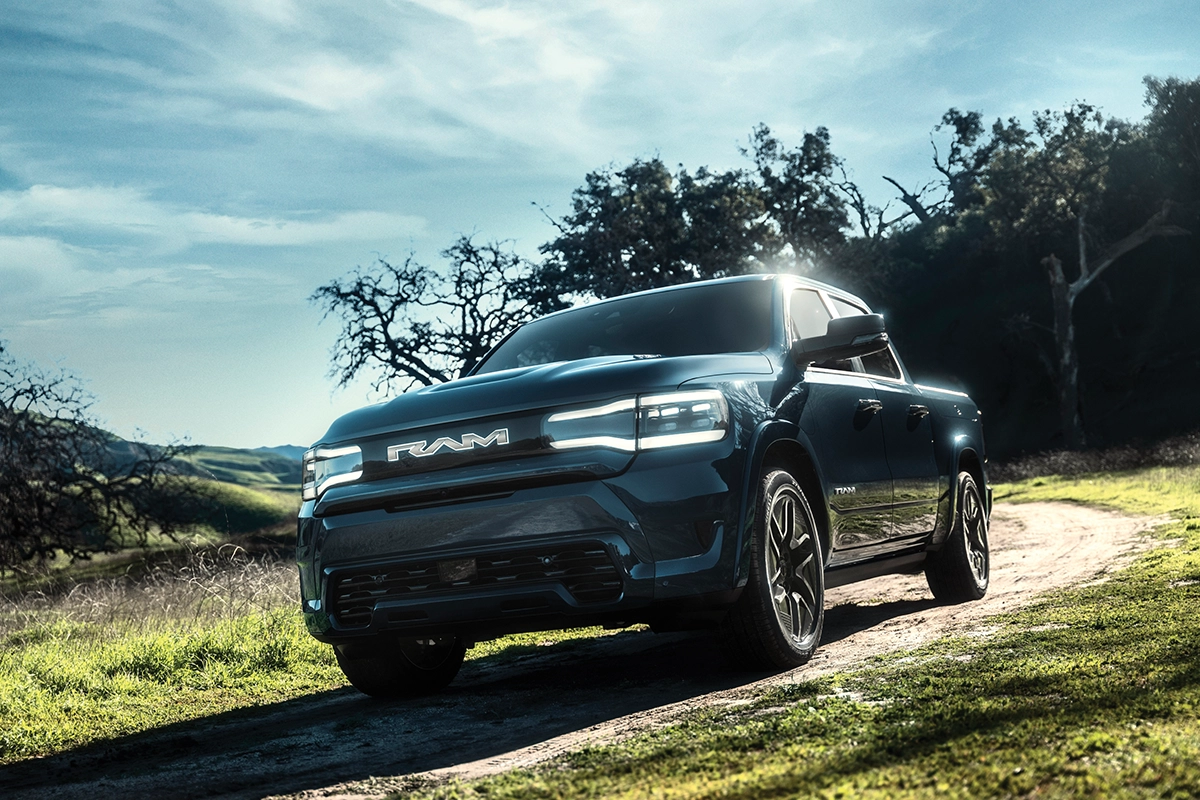
The 2025 Ram 1500 REV is the electric successor to the popular pickup brand.
Towing Range of Electric Trucks
Now for range. This is an aspect of electric vehicles that often worries potential buyers. It’s a rather inconvenient aspect of physics that towing a trailer significantly reduces the range of a vehicle; this is true for traditional trucks as well.
In general—and there are a huge number of variables that can change this number—you can expect your EV truck’s range-per-charge to be cut roughly in half when towing, and possibly more, to maybe 30 or 40 percent of normal range. The weight of the trailer obviously affects this number greatly, but so does the height of the trailer (which creates wind resistance), along with the air temperature (batteries don’t last as long in the cold).
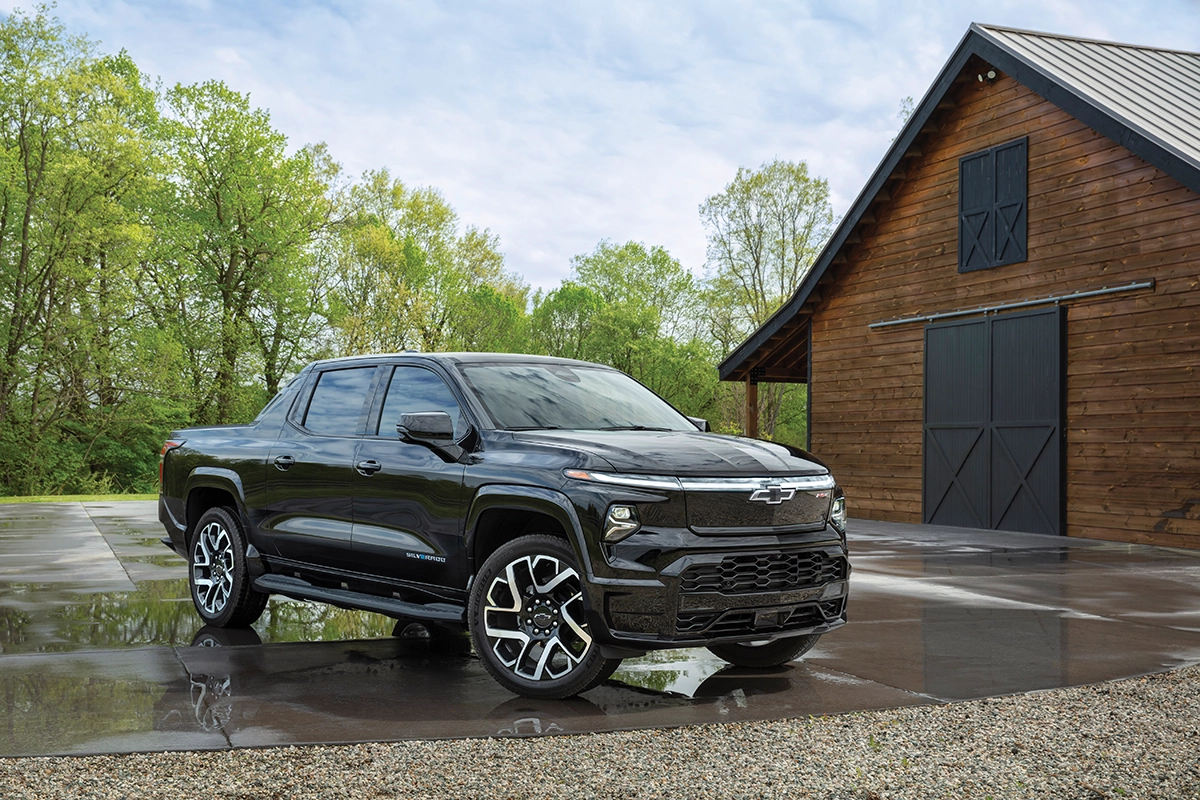
The Chevy Silverado EV means Chevy fans can go electric, too.
Also, if you’re heavily running the heat or A/C, you can expect to take a small hit on range because the batteries are pulling double duty by driving the truck and keeping the passengers comfy.
Range can be further affected by variables like the age and health of the battery, and especially by how fast you are traveling: interstate speeds of 75 mph drain the battery far faster than highway speeds of 55 mph.
One nice feature is that some electric trucks remember detailed data about your last trip with the trailer, and over time can create a custom profile for your rig, providing a better estimate of range each time you get behind the wheel. Some trucks constantly update their estimated range on the dashboard as they tow, compensating for the weight of the vehicle. These numbers can help give you confidence during your next trip, and aid in planning charging stops.
By the way, payloads in the bed of your electric truck don’t affect range much at all. So you can load up your feed bags, bedding, fence posts, tack, and put your electric truck to use as a farm vehicle without the range anxiety.
Is It Right for You?
Can an electric truck tow your horse trailer? Absolutely. If you don’t exceed their maximum towing capacity or recommended tongue weight, each of the trucks on our list (below) has the strength and horsepower to pull a horse trailer at full highway speed.
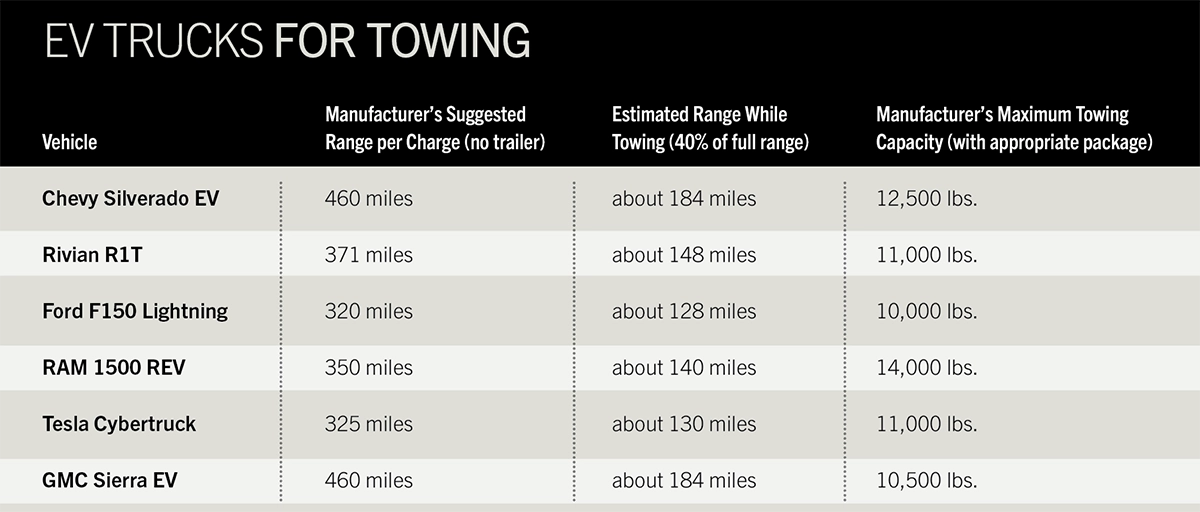
And with the excellent torque abilities of electric motors, some aspects of towing may be even easier. However, range remains a major issue, especially when towing through rural areas where fast-charging stations are further apart.
Electric trucks have a shorter range-per-charge than an equivalent gasoline or diesel truck does on a full tank of gas. And when they’re pulling a heavy load like your horse trailer, this range drops significantly, placing towing ranges typically down under 200 miles and even far less.
Furthermore, charging a battery to maximum—which you will need to do more often on a long trip—takes significantly longer than filling up a gas tank. Not all charging stations offer pull-through parking, so this can mean finding a place to unhook your horse trailer safely and then backing the vehicle into a fast-charging station—sometimes for as long as an hour.
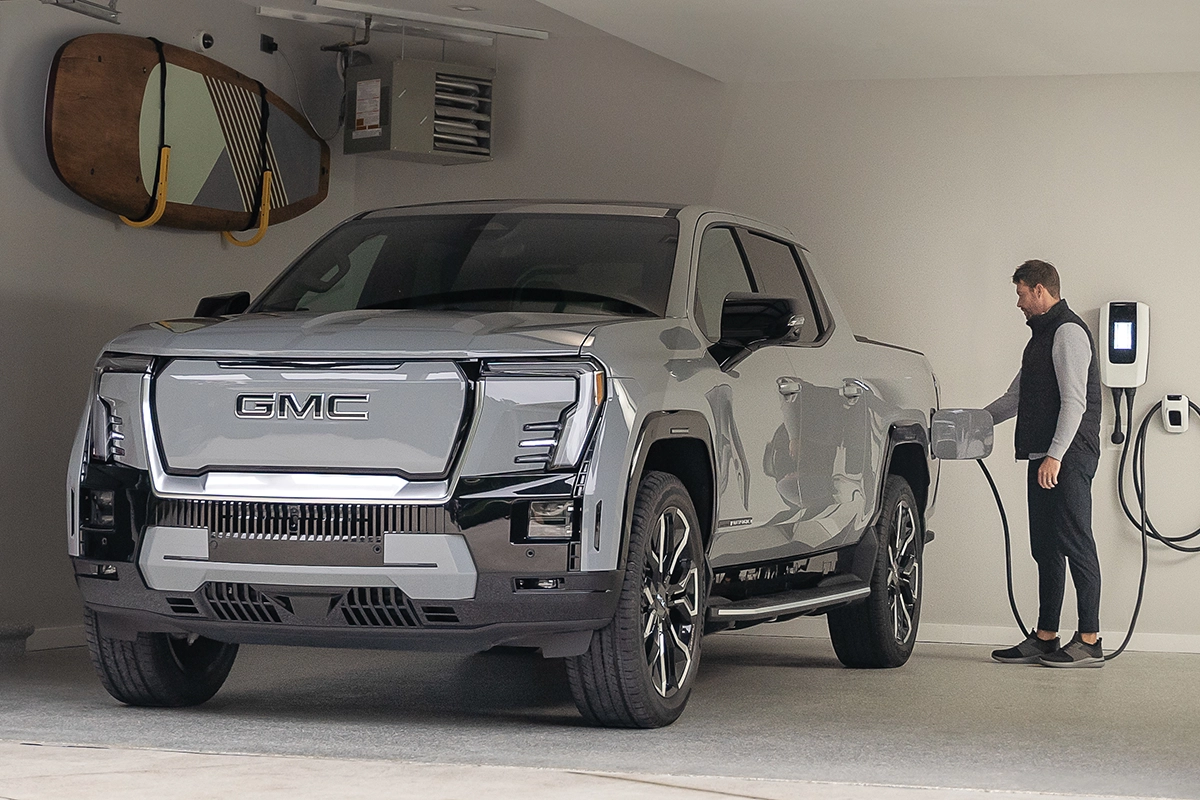
When you’re not on a long trip, you can do slower charging at home. (Shown: The GMC Sierra EV)
This can present a real challenge for horse owners, especially during hot summer months when many events take place. Indeed, it may be impractical to use an electric truck for horse transport on a long trip.
But for short trips, say of 50 miles one way, electric trucks can do the job with less inconvenience, making the round trip with range to spare in the tank (er, battery). If you’re traveling to a local barn or show, a nearby trailhead for a ride, or perhaps to a local equine veterinarian, you won’t need to stop to charge.
In these examples, an electric truck could provide an experience equal to or better than a traditional gas-powered truck. Think of electric trucks and traditional trucks as two different tools with different strengths and weaknesses, and then decide on the right tool for the task.
This article about hauling with electric trucks appeared in the May/June 2025 issue of Horse Illustrated magazine. Click here to subscribe!