0 ITEMS
  • My Account
  • Holiday Gift Guide
  • Podcast
  • Webinar
Subscribe Combo
Enable cache13
Home Horse Care Page 132

Horse Care

 Horse care is the most important aspect of ownership. The topics that Horse Illustrated has covered include: behavior, deworming, grooming, farriery, dentistry, adoption, welfare, charities within the industry, overall health (such as diseases and conditions), injuries, wound care, lameness, mare and foal care, nutrition, pest control, safety, seasonal management, senior care, vaccinations, and much more.To help your horse be healthy, you will want to work with an equine veterinarian, farrier, and equine dentist. In addition, there are alternative practitioners, such as equine chiropractors, physiotherapists, massage therapists, etc. Always review the qualifications of someone before you let them help you with your equine best friend.
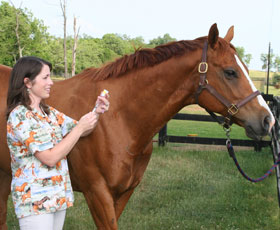
This image from the May/June 1981 issue of Horse Illustrated shows a vet administering anthelmintic drugs via nasogastric tube.Veterinary care for horses has progressed by leaps and bounds since the days when equines were working animals. Today's horses live...
One of the most devastating equine diseases is laminitis. With myriad causes, no fully reliable treatment and often a dismal prognosis in severe cases, laminitis is a dreaded diagnosis. A new collection of research published by the Equine Veterinary...
 Basic ChartDetailed ChartKeeping track of your horse's routine health care is one of the best steps to ensuring his lifelong wellness, but it can also be a challenge. Between deworming, hoof care, dentistry and veterinary visits, there's a lot...
Diet affects behavior. This makes sense. A well-fed horse is healthy. And a healthy horse feels good. Conversely, a poorly-nourished horse is suffering. A variation in hormone levels, for example, can have a temporary effect on how the horse...
A young horse out on pasture achieves many benefits. He learns how to move his gangly frame, becoming agile and coordinated as he frolics in open spaces, particularly when he has other young buddies to run with. While young...
You proudly survey your young horse as you consider sending him off for training to get started under saddle. He’s turning 3 years old, and you are eager to begin your working relationship with him. You know there are...
There is a vast array of options in the methods of processing and presentation of the various ingredients in equine feeds. Processing choices include grinding, steam rolling, flaking, micronizing, pelleting, boiling, chaffing, silaging, extruding, and expelling, and there is...
Q: My horse has the lumps on her back, the vet said they were protein bumps, what causes them, and how do I get rid of them? A: What you are describing are likely collagen deposits under your horse’s skin, which...
“For an adult horse with moderate activity, feed .75 to 1.0 lbs per 100 lbs of body weight.” These are the feeding instructions for a popular commercially fortified feed. If your horse weighs 1100 lbs (500 kg), you’ll need...
Edited Press ReleaseKeeping horse’s hooves in optimal condition is a hot topic among horse owners and enthusiasts. Theories and misinformation abound and are regular complications when contemplating hoof care. Vettec understands the need to provide better education on this...
0FansLike
0SubscribersSubscribe
We use cookies to help personalize content, tailor and measure ads, and provide a safer experience. By navigating the site, you agree to the use of cookies to collect information. Read our Cookie Policy.
OK