0 ITEMS
  • My Account
  • Holiday Gift Guide
  • Podcast
  • Webinar
Subscribe Combo
Enable cache13
Home Horse Care Page 133

Horse Care

 Horse care is the most important aspect of ownership. The topics that Horse Illustrated has covered include: behavior, deworming, grooming, farriery, dentistry, adoption, welfare, charities within the industry, overall health (such as diseases and conditions), injuries, wound care, lameness, mare and foal care, nutrition, pest control, safety, seasonal management, senior care, vaccinations, and much more.To help your horse be healthy, you will want to work with an equine veterinarian, farrier, and equine dentist. In addition, there are alternative practitioners, such as equine chiropractors, physiotherapists, massage therapists, etc. Always review the qualifications of someone before you let them help you with your equine best friend.
As if aging isn’t hard enough! Creaky joints, sagging backs, loose teeth, increased infections, poor digestion, and embarrassing gassiness -- just a few of the problems associated with getting older (for your horse, not you!). But what was once...
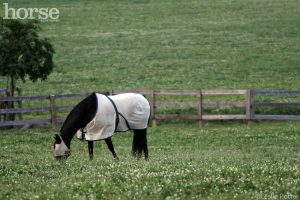
While pasture grazing may not be an option for overweight, insulin resistant horses during certain times of the day or seasons of the year, access to free-choice forage is still essential.Do you have an overweight horse? Chances are...
Q: What exactly are capped hocks and is there any treatment available? Will the swelling ever go down? A: A capped hock is an inflammatory swelling of the bursa, or protective synovial capsule that surrounds a joint, at the point...
One of the most common questions asked about feeding the performance horse is when to feed before a competition. Theoretically, feeding should be timed so that all of the nutrients from a meal have been digested, absorbed, and stored...
Laminitis is a painful inflammation of the tissue within the foot that connects the hoof wall to the coffin bone. It can cause extreme lameness and may require euthanasia. It most commonly occurs in the front hooves. In severe...

Kentucky Bluegrass

Kentucky Bluegrass Kentucky bluegrass is a cool-season grass (Poa pratensis) that grows best in spring and fall, and resists trampling and close grazing quite well. It is found in lawns and horse pastures across the nation due to its ability...
Joint Supplements Arthritis and degenerative joint disease are common problems in performance horses. They can often be managed with joint supplements that allow a horse to continue a useful athletic career. These can be administered topically, orally, intramuscularly, intravenously or...
Insulin Resistance When starches and sugars are consumed, the body releases insulin, a hormone that cues absorption and storage of sugar from the bloodstream. Overfeeding starch and sugars can make horses “insulin resistant,” meaning the body cannot absorb glucose properly...
hay horse stall

Hay for Horses

When purchasing hay for your horse, assess its freshness; it should not be dusty or smell moldy or musty. Moldy hay contributes to respiratory ailments in horses. The more mature the hay is when it’s harvested, the more stemmy...
grazing closeup

Grazing

Grazing Good-quality pasture is a wonderful source of energy, protein, fiber and vitamins. Horses enjoy grazing and are designed to move around, eating grass in a herd situation. In most areas, however, pasture space is limited and careful maintenance is...
0FansLike
0SubscribersSubscribe
We use cookies to help personalize content, tailor and measure ads, and provide a safer experience. By navigating the site, you agree to the use of cookies to collect information. Read our Cookie Policy.
OK