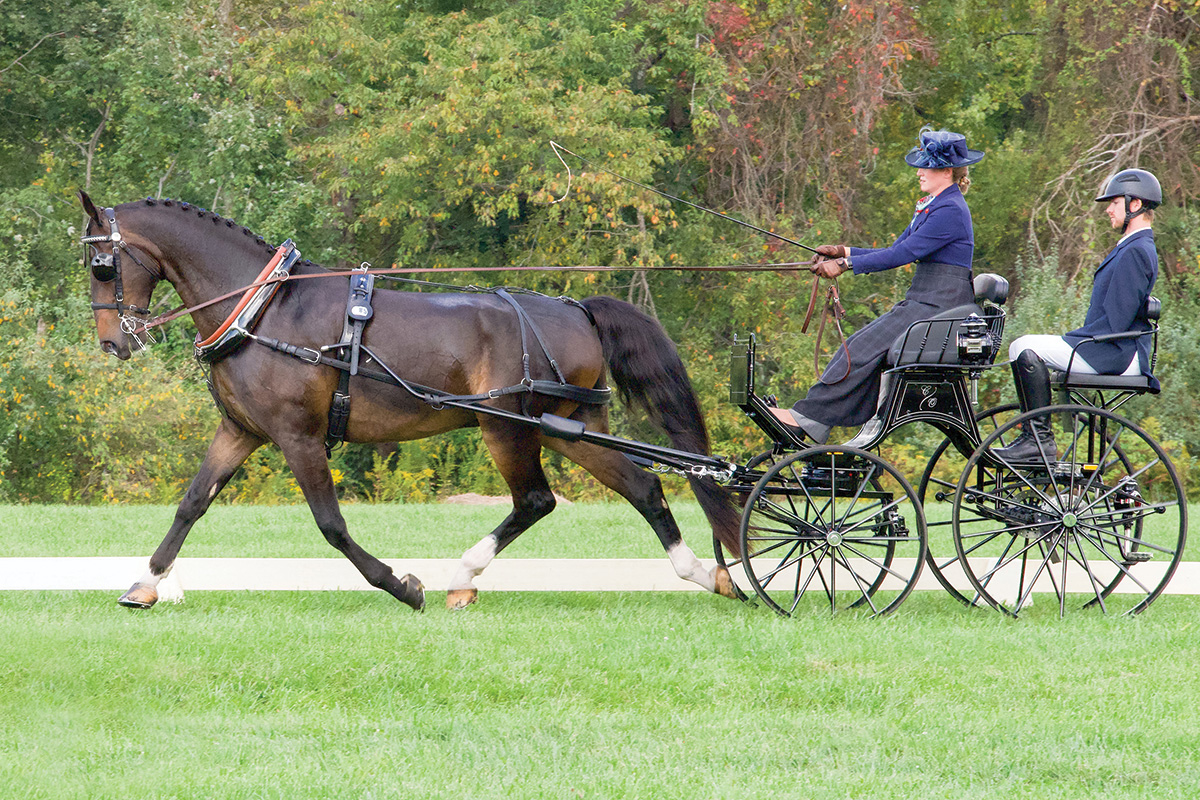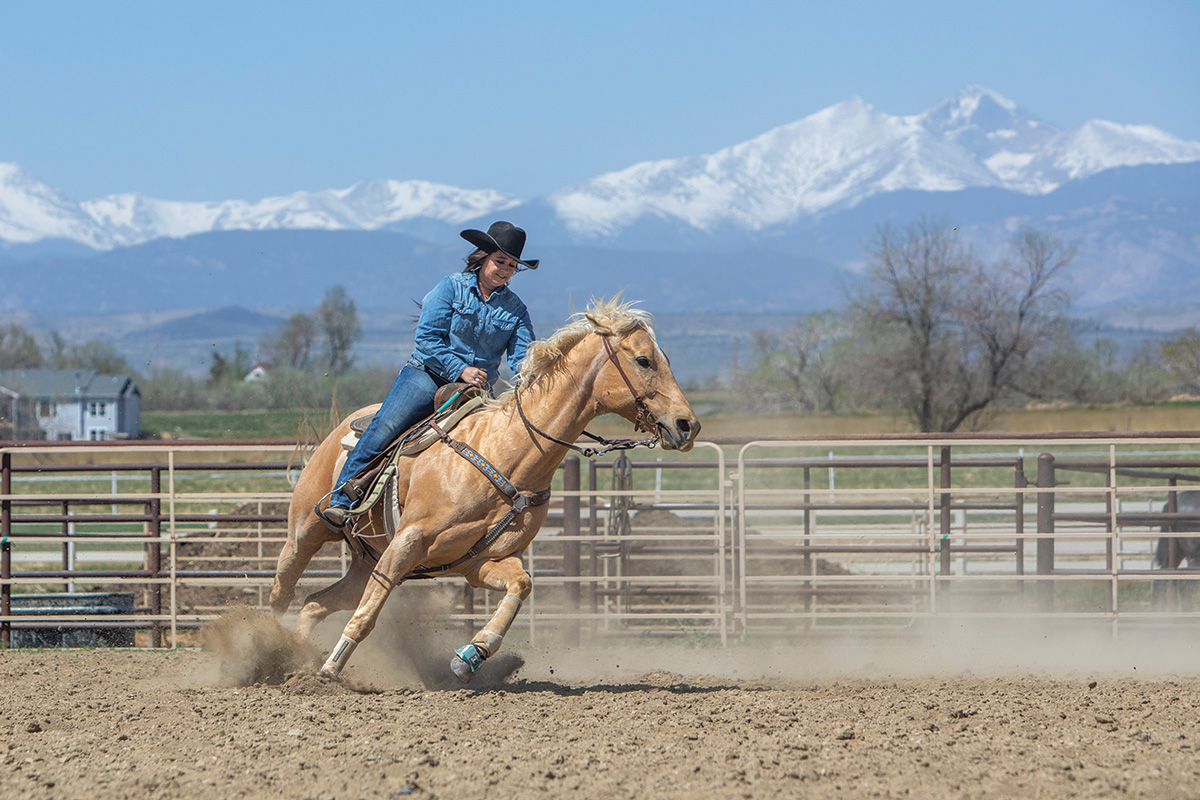
Whether adopting a horse from a local rescue or purchasing one from a reputable breeder, we can go beyond simply trying to determine if a particular horse possesses potential in our respective disciplines. With the Equine Challenge Assessment Tool (ECAT), we can endeavor to minimize safety concerns and maximize enjoyment by assessing the horse’s level of challenge to help determine appropriateness for the intended rider.
This article outlines the six equine characteristic criteria, of varying degrees of importance, that are used in the ECAT and can be considered as part of your decision-making process when assessing a new horse. While each horse is unique, there are common traits that can help in assessing all.
When considering a horse, in addition to seeking soundness, conformation and paces suitable for the intended purpose, there are characteristics that can be considered when matching mounts with riders. These criteria emphasize the level of challenge a particular equine trait may represent from a rider safety perspective.
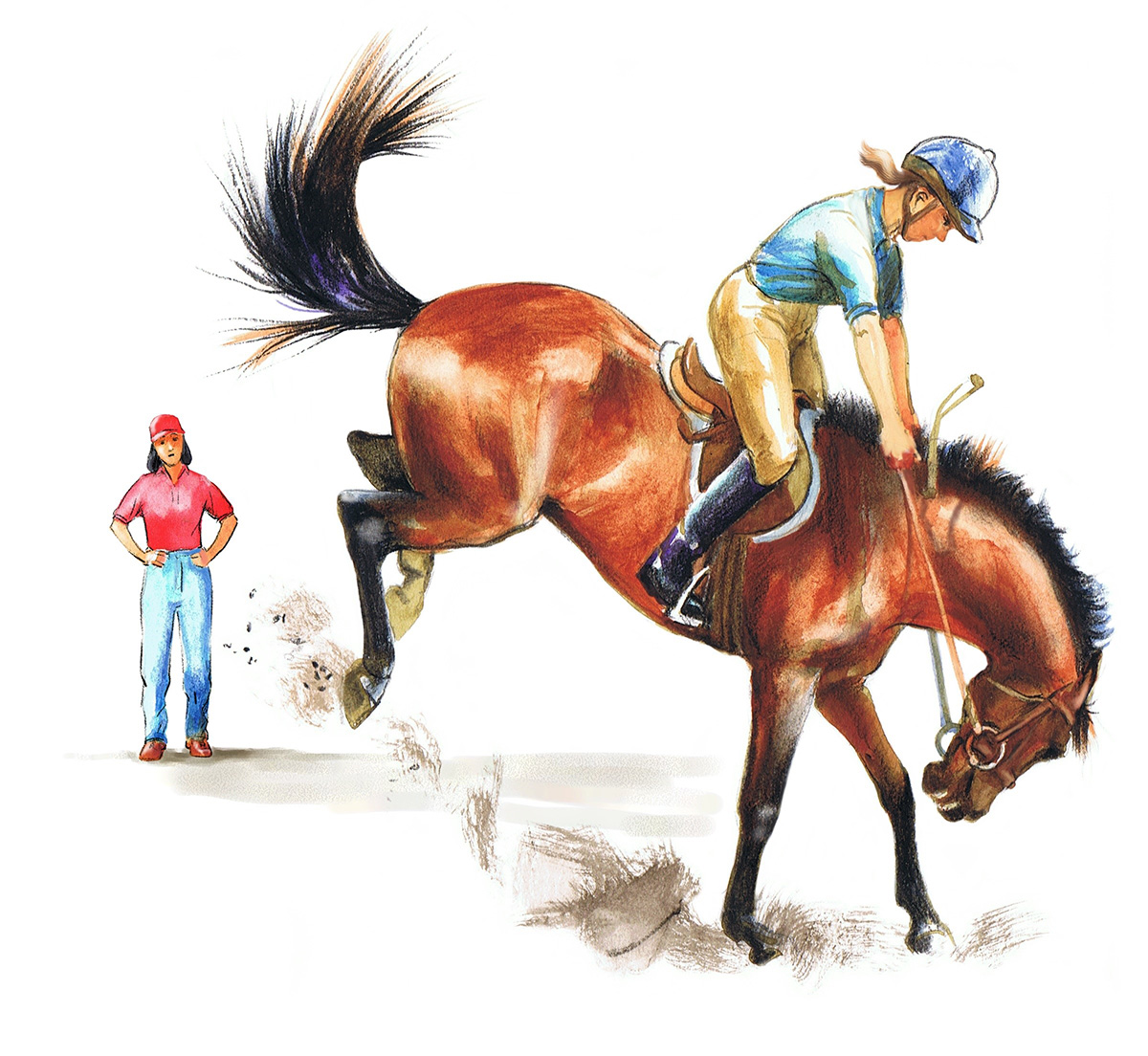
Illustration by Jean Abernethy
Level of Sensitivity
Sensitivity is extremely important to consider when selecting a horse. Sensitivity is both genetically inherent and experiential. Experiential sensitivity can be increased or decreased, according to ongoing handling as trainers sensitize and desensitize to specific stimuli. However, a genetically Highly Sensitive Horse (HSH) will always be that. While it is possible to increase tolerances for specific experiences and situations, the HSH will always present a greater challenge.
High sensitivity is far more than physical in nature, but it does include the physical. HSHs can present with a very low pain tolerance threshold but in fact, they feel pain more intensely.
In addition to physical sensitivity, the HSH has a heightened mental-emotional sensitivity. These horses are hyper-alert, making them aware of subtleties in their environment that others are not. This can lead to them being overstimulated and overwhelmed.
Beyond the heightened five senses, HSHs are quite intuitive. These horses are acutely aware of what the rider is feeling and are deeply affected by rider fear and stress.
HSHs do not do well with change. Change could be as simple as schooling in a new place or something even more benign. There are many techniques for helping HSHs succeed, but they are not well understood even by the best trainers.
The horse that is merely physically sensitive will prove more challenging for the novice rider, but the Highly Sensitive Horse should be considered significantly more challenging for all.
Temperament
Temperament is a very important consideration in assessing a horse. Horses are generally categorized as hot, warm or cold. Hotter horses, like Arabians and Thoroughbreds, tend to be more reactive with high energy. Colder horses, like drafts, are more laid-back and slower to react. Warmbloods aim to combine the athleticism and stamina of the hot horse with the more passive disposition of the cold horse.
Temperament is important, particularly when combined with other character traits. For instance, a hot horse with a strong fear trait will more easily exhibit flight responses and bolt in unfamiliar or stressful situations. If this hot horse is prevented from running off in that instant, explosive bucking or rearing is more likely than with the cold horse. A cold horse may buck or rear, but he is much more likely to give it up quickly as it takes too much energy. A cold horse with the same strong fear trait is more likely to stop and may even freeze, giving the rider an opportunity to dismount.
A hot horse should be considered more challenging and when combined with other challenging traits, the horse can be unsafe for less experienced riders.
Level of Fear
Fear is another very important consideration. Like sensitivity, fear can be inherent and experiential. For the experiential aspect, a horse may have been traumatized or made more fearful with improper handling.
While thoughtful handling can help even the genetically fearful horse build confidence, each time a new idea or challenge is introduced, the fearful part will likely emerge. For some horses, even moving a familiar fence to a different spot can be considered a new challenge.
The fearful horse should be considered more challenging.
Previous Experience and Training
Previous experience and training is important to consider. A horse that has successful experience in the intended discipline will be less challenging than one trained for a different purpose. For example, transitioning a racehorse or barrel racer, trained with explosive speed, into an easier-going hunter or dressage horse requires skill and time.
When the previous training and history of the horse is unknown, as often is the case in an auction, assume the horse will be challenging. Some horses have suffered abuse and trauma and will carry those wounds until a skilled and caring human can help them heal.
Retraining a horse into a different discipline or retraining a horse that suffered abuse and trauma can be considerably more challenging.
Dominance
Dominance is another important aspect to consider when selecting a horse. This is not just resource guarding. Horses are wired for a level of dominance. An alpha dominant’s large-and-in-charge way of going is not hard to spot in a herd.
The alpha dominant horse is more likely to attempt to assertively express his desires over that of the handler/rider. If the alpha dominant horse is also easily overwhelmed, as in the case of the HSH, he will more often offer resistance and try to take charge.
Other horses will have dominant qualities and take advantage of opportunities to move up the pecking order.
The dominant horse will likely be more challenging than the submissive horse.
Gender
Gender may be an important consideration. A stallion can be more animated and may often have another agenda, primarily the proximity of available mares. At the show or on the trail, it may be more challenging to get his undivided attention.
Mares go through hormonal cycles that can affect consistency. There are times during her cycle when she may be experiencing discomfort.
A gelding is most likely the best bet for a Steady Eddy.
Stallions and mares should be considered potentially more challenging than geldings.
Key Takeaway
This information is generalized and only intended to be a guideline when evaluating a horse to determine the probable level of challenge that horse will present to a rider. There are always exceptions. The best course of action, when looking for a horse, is to seek help from an equine professional and your equine veterinarian.
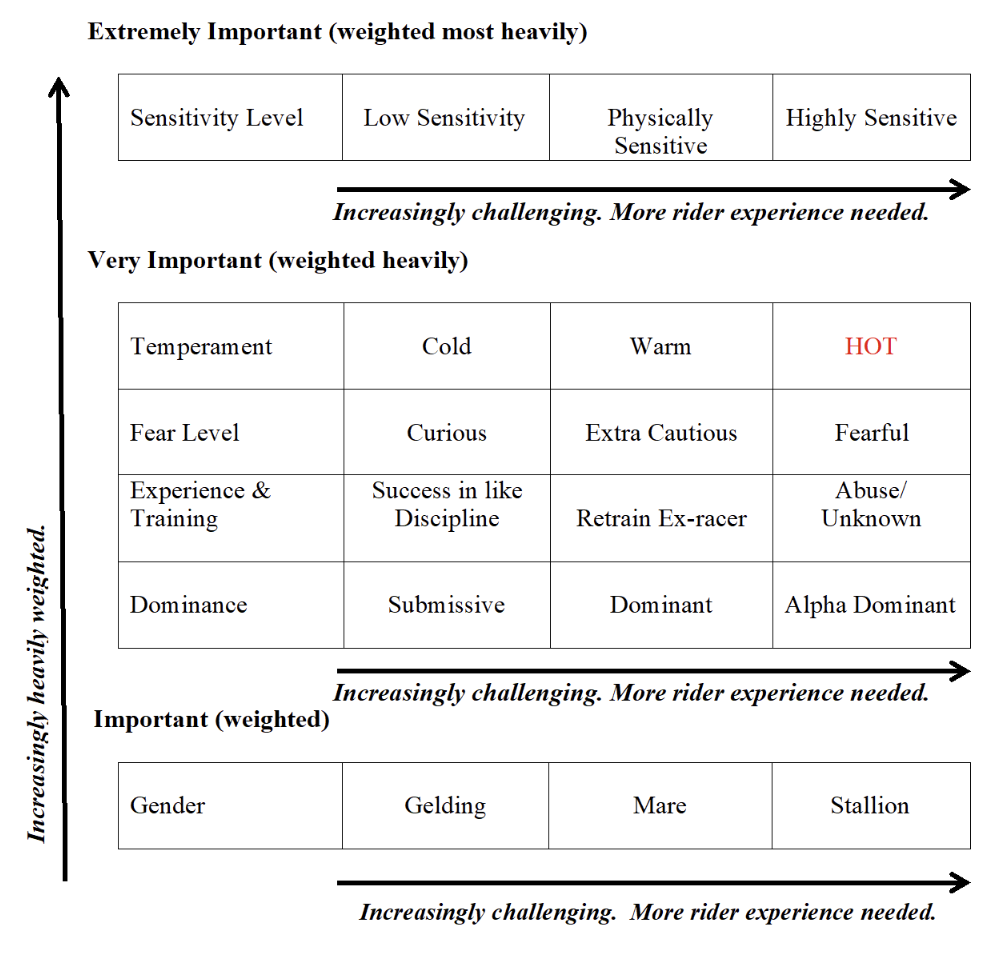
A single criterion may be enough to help you decide against owning a particular horse. However, when deciding in favor of a horse, the best analysis is done when considering the combined criteria.
Incorporating the identified criteria into your equine assessment and decision-making process could help you choose the right horse.
Try the online Equine Challenge Assessment Tool (ECAT) here.
This article about using the Equine Challenge Assessment Tool (ECAT) when choosing a horse is a web exclusive Horse Illustrated magazine. Click here to subscribe!