
Across the United States, urban sprawl historically nudges horses out of cities and suburbs. New stores and homes pop up where stables and fields once stood. However, in one neighborhood in Detroit, Mich., that trend is being reversed. Thanks to Detroit Horse Power, an innovative program that introduces horses to children, the city will soon welcome equines and expand opportunities for Detroit’s youth. And it all began as the dream of a first-year teacher.
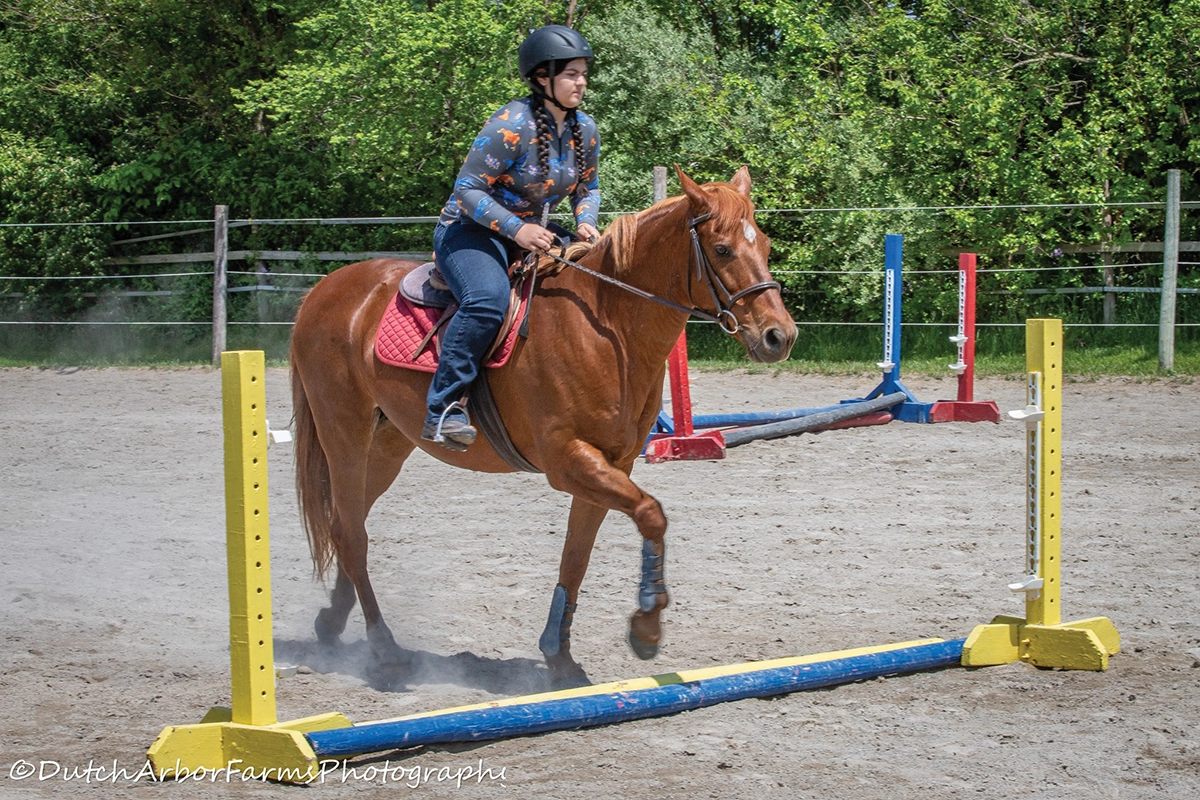
Photo by Dutch Arbor Farms Photography
Bringing Equestrian Vision to Detroit
In 2012, David Silver joined Teach for America, an organization that recruits equity-oriented leaders as teachers, placing them in under-resourced schools for a two-year commitment. Silver’s teaching assignment was at Burns Elementary/Middle School on the west side of Detroit, where he taught 4th and 5th grade.
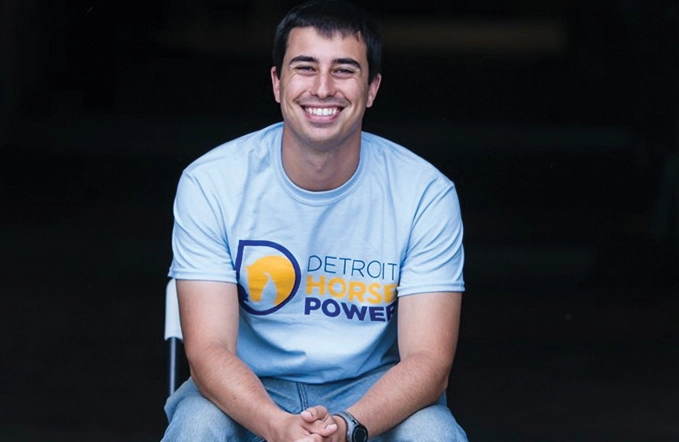
David Silver founded Detroit Horse Power to provide under-resourced youth a safe after-school program that uses horses to empower them. Photo courtesy Detroit Horse Power
The young educator from New York had never been to Michigan and didn’t know much about it. Once in his new city, Silver, who grew up in Pony Club and competed in eventing on an off-track Thoroughbred, noticed swaths of vacant land. He envisioned the open spaces making for nice paddocks or cross-country courses.
In the classroom, Silver set out to create a culture based on confidence, perseverance, and empathy—qualities key for overcoming adversity and finding success. As he taught, he was also learning about his new environment and its impact on students. Food insecurity, neighborhood violence and transportation challenges affected the community.
He thought about how his background riding and competing with horses influenced him to have confidence and learn to deal with setbacks and keep going. He knew spending time with horses would enrich and empower his students, just as it had him.
Silver wanted to create an after-school program to help students apply lessons from horses into everyday life. When his Teach for America term was over in 2014, he left the classroom and spent several months exploring the idea, seeking advice from mentors, and pitching the concept to community leaders.
Over time, a board of directors was formed, and Detroit Horse Power (DHP) was established as a 501(c)(3). For the last decade, the organization has provided under-resourced youth a safe and enriching space that furthers their future development, using horses as the medium.
Via a 15-passenger van, DHP has transported students in grades 6 through 12 to meet, groom, and ride horses at partner barns outside of the city. It also provides after-school snacks and dinner for students.
The Perks of Time with Horses
Foundational to DHP’s programs are the “PERCS” traits (a student-created acronym). It stands for Perseverance, Empathy, Responsible risk taking, Confidence, and Self-control.
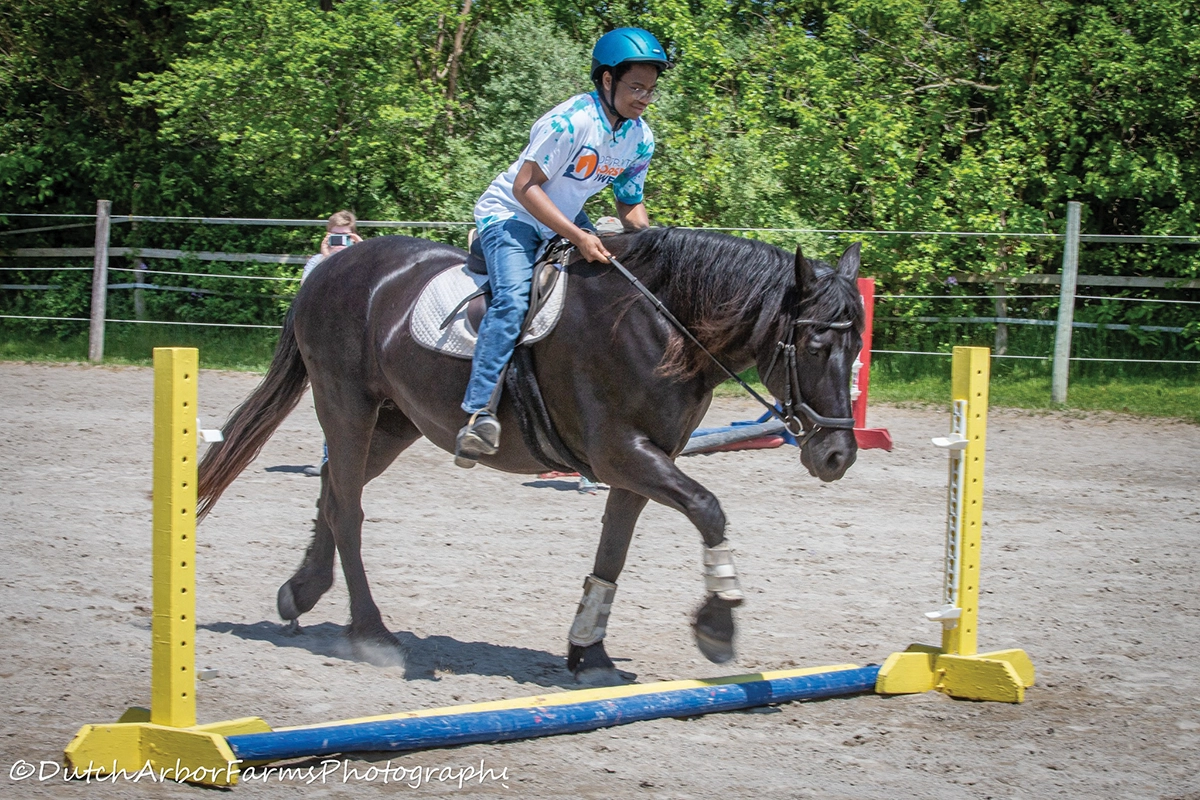
Foundational to DHP’s programs are the “PERCS” traits (Perseverance, Empathy, Responsible risk taking, Confidence, and Self-control). Photo by Dutch Arbor Farms Photography
DHP leaders and students alike use the language of PERCS when in the saddle or doing groundwork. For example, after students spend time at a partner barn, they will debrief in a circle, responding to prompts such as, “How were you using confidence in the saddle? What did that feel like? What subjects in school are you more confident in?”
“We do a lot of self-reflection and introspection in small group discussions,” says Silver. “We try to get them to harness confidence [at the barn] into the school setting, and give them a sense of empowerment. If you can control a 1,200-pound animal, why can’t you succeed on a math test?”
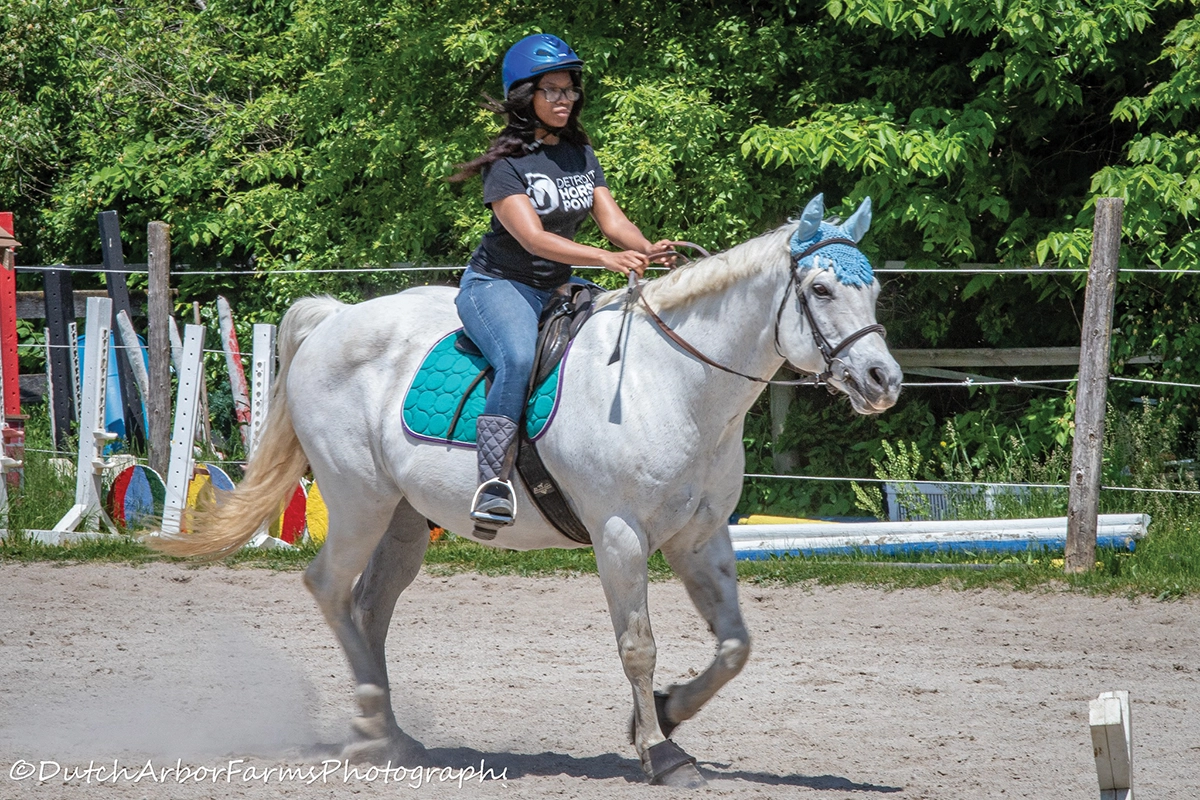
Photo by Dutch Arbor Farms Photography
Changing Lives
Xynese Frazier, a high school senior and member of DHP’s Youth Leadership Council, joined the program in 6th grade, when her mother first heard about it and thought it was worth trying. Xynese credits the program with boosting her self-confidence.
“I was very quiet around animals and people,” Xynese says. “I’ve gotten better interacting with so many different people. Also, I’ve developed perseverance. Some of the horses can be tricky and not in the mood. You can use that perseverance in your everyday life.”
She adds that her confidence in public speaking has grown, along with her self-control. She observes that having patience with animals can carry over into having patience with people. “When I’m in the saddle, I’m happy,” she says.
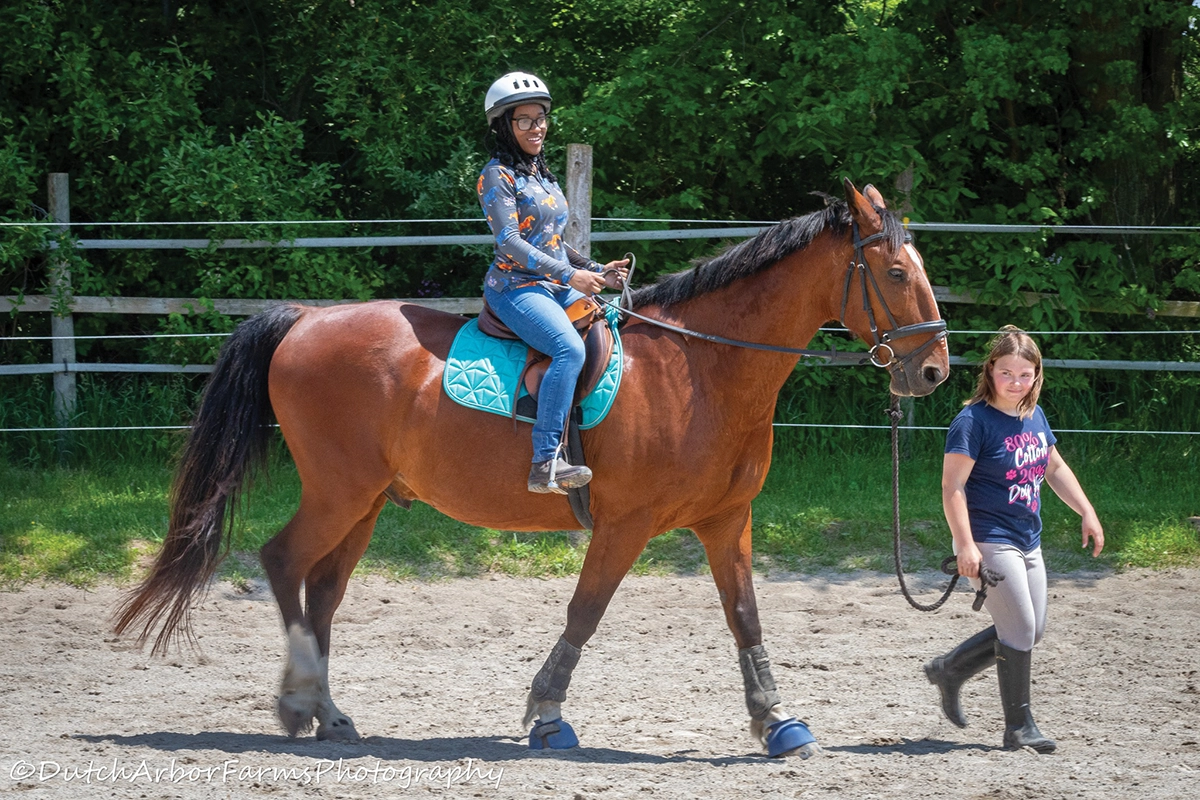
Xynese Frazier (riding), a high school senior and member of DHP’s Youth Leadership Council, credits the program with boosting her self-confidence. Photo by Dutch Arbor Farms Photography
Anika Frazier, Xynese’s mom, says her co-workers ask her about DHP, and there’s strong interest in the program.
“It’s a new experience for the youth, especially African American children, and it’s a good after-school activity where they learn how to ride and groom,” Anika says. “They’ve had a chance to see different parts of Michigan, and they got to attend the gala. It’s also a way for children to make new friends.”
Le’Airra Jones, who also served as a DHP Youth Leadership Council member, enrolled in a college program after graduating from Detroit’s top public high school. At the DHP gala, Le’Airra was honored with an Empathy Award. Le’Airra and her peers ran the 2024 summer horse camp.
“She knows the program inside and out, and it’s powerful for beginning riders to look up to her,” Silver says of the now college student, whom he met as a Burns school 1st grader.
Stable in the City
The benefits of kids and horses together have been life-changing, but two ongoing challenges since DHP’s inception have been transportation and access to partner barns.
Although grateful for the hospitality of partner barns who have welcomed students, the barns are often more than an hour’s van-ride away. By the time the students arrive, it doesn’t leave much time for grooming, riding, and all the other horse chores. It has been a struggle to build out a robust schedule, both due to cost and time. However, those challenges will soon become a thing of the past.
In October 2024, DHP broke ground on a vacant 14-acre property that had once been the site of the Paul Robeson School, a 100-year-old building destroyed by fire in 2011. The Detroit Public School system had no plan for the lot, and the superintendent wanted to work out an agreement so students could have access to horses. Plans are underway to construct the largest urban equestrian center in the United States, and the neighborhood is eager for its arrival.
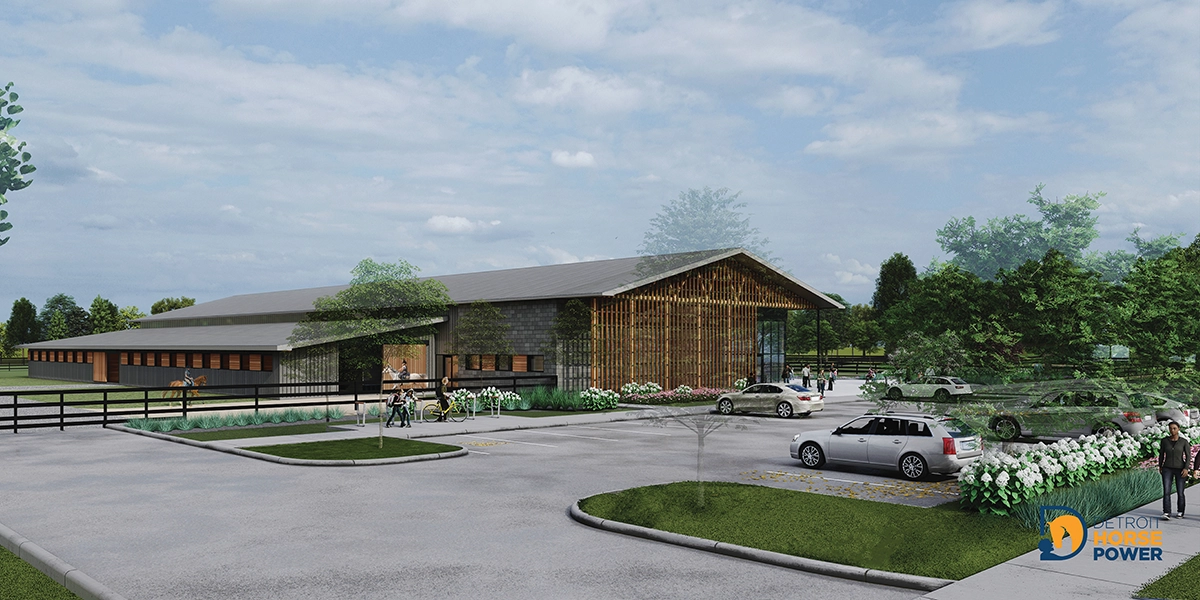
Plans are underway for DHP to build the largest urban equestrian center in the U.S., which broke ground in October of 2024. Photo courtesy Detroit Horse Power
“We want to radically scale access to horses,” Silver says.
The 17-stall barn will have an attached 75 x 160-foot indoor riding arena. There will be a classroom and community space in the barn. A half-mile bridle path will wind around the property’s perimeter and outdoor ring.
All neighbors—not just the young equestrians—can enjoy the new facility, which will host book club meetings and local art events.
“Making this a community asset is important,” Silver explains. “We want it to be a hub of community life.”
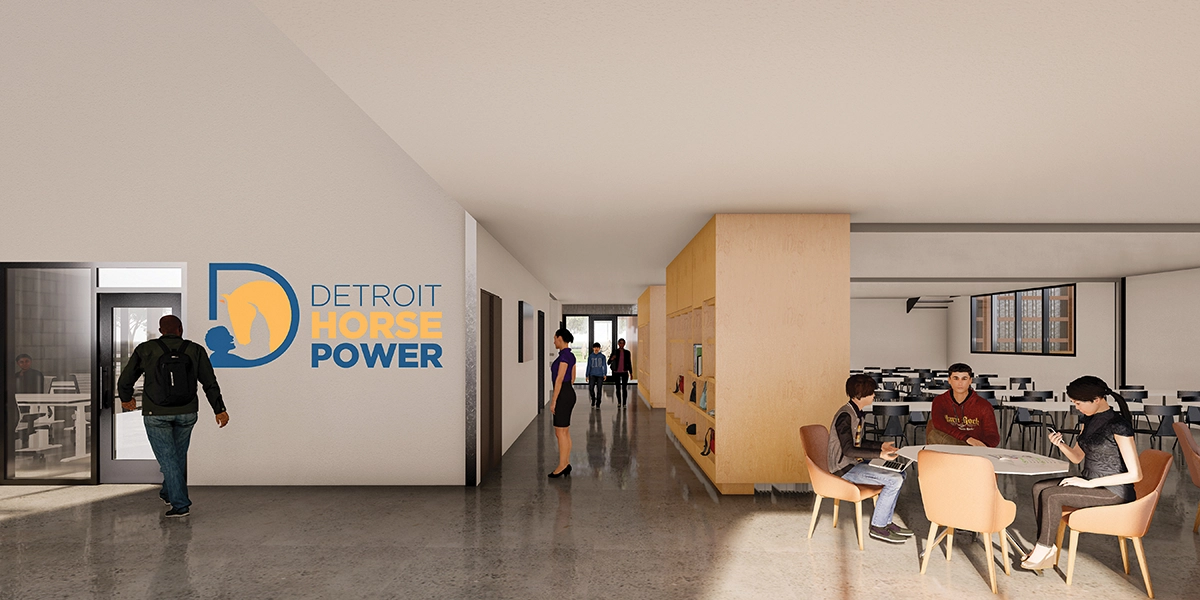
All neighbors—not just young equestrians—will be able to enjoy the new facility, which will host block club meetings and local art events. Photo courtesy Detroit Horse Power
Building a Coalition
DHP’s success didn’t happen overnight. It has been years in the making through countless conversations and cultivating relationships with government officials, building a diverse coalition of people who believe horses have something to offer to the community, and generous donations from the equestrian community.
As of the groundbreaking, DHP has secured $6.9 million in commitments to its capital campaign, and people have already offered horses for the program. Once the equestrian center is operational in 2026, horses will become new neighbors for a community ready to embrace them.
DHP’s Development Director, Ciara Ginyard, has deep roots in the city.
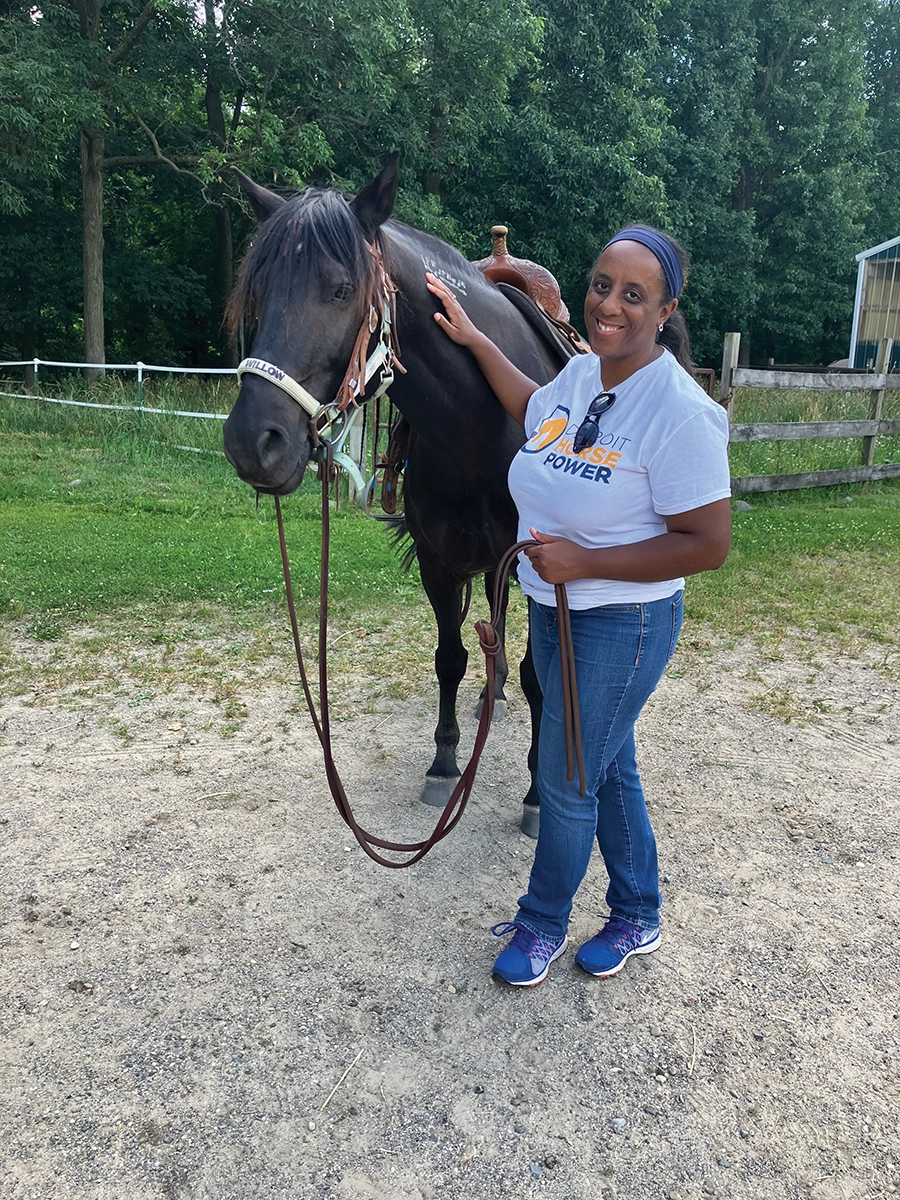
DHP Development Director Ciara Ginyard has equestrian roots in Detroit, with her grandparents having ridden horses at the state fair. Photo courtesy Ciara Ginyard
“My grandparents were here, my great-grandparents,” she says. “When I told my parents I was going to be working with Detroit Horse Power, they got really excited, and my aunts and uncles started sharing with me all these stories of horses in Detroit. My grandparents would ride horses at the state fair.
“What excites me is another generation will be reintroduced to horses,” adds Ginyard. “We know the power of horses: It’s phenomenal, it’s life-changing, and it’s long lasting.”
To learn more, visit the Detroit Horse Power website and follow on Facebook @dethorsepower and Instagram @detroithorsepower.
To hear Susan and Horse Illustrated editor Holly chat with Ciara Ginyard, check out episode 22 of HI’s podcast, Barn Banter.