Photo by Terri Cage/Adobe Stock
Draft Horse Hoof Care
Gentle Giants Draft Rescue is a 300-plus acre facility in Mt. Airy, Md., that rehabilitates and re-homes draft horses. They are currently home to more than 150 drafts. Executive Director and founder Christine Hajek says the most common problem seen in draft breeds is hoof neglect.
One misconception about drafts is that due to their size, they wear down their feet on their own. This is not true; as with other horse breeds, drafts require regular hoof trims. However, given their size, “Expect to pay more for the farrier,” she says.
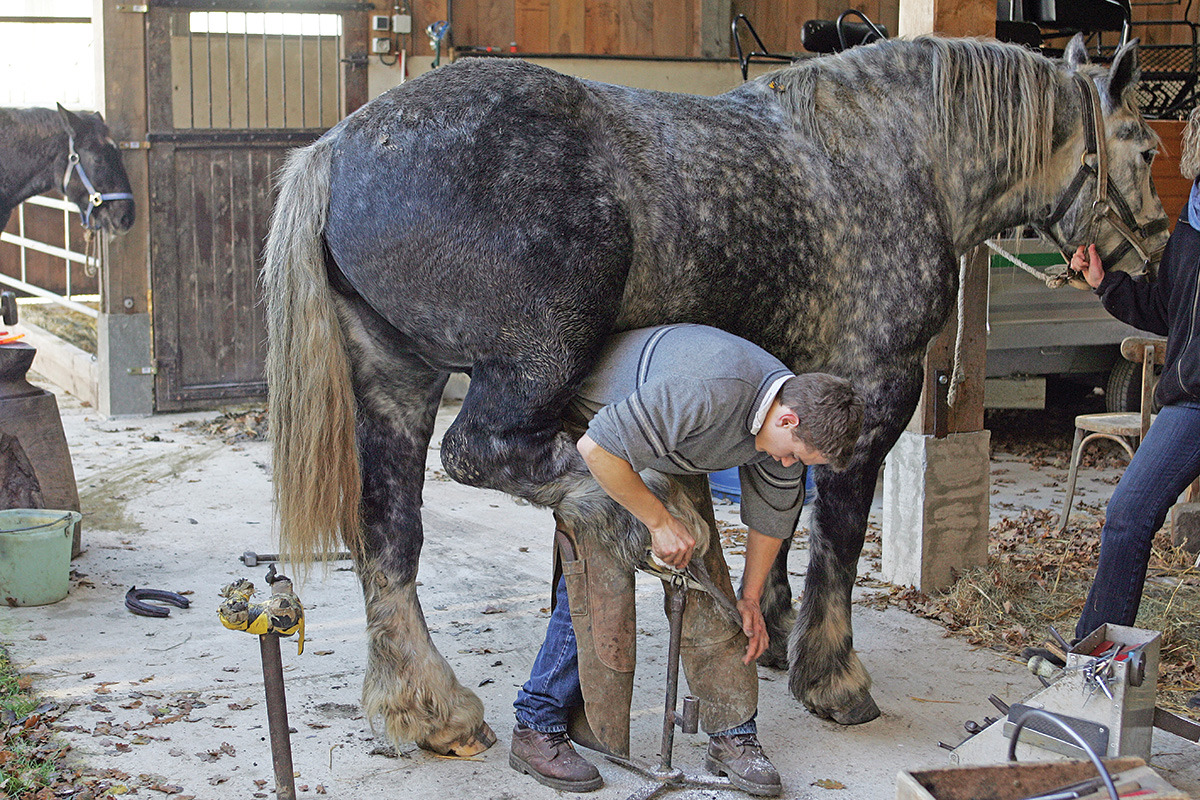
Be prepared that farrier costs for draft horses can be higher than with light breeds. Photo by slowmotiongli/Adobe Stock
Drafts can have a reputation for being stubborn about picking up and holding up their feet. This is in large part due to their background. Many drafts come from Amish and Mennonite farms, says Hajek. There, feet are trimmed in wooden restraints called stocks, so many drafts haven’t been taught to stand while having their feet held by a person.
However, this can be overcome by patient, consistent training. Staff at Gentle Giants use clicker training to accustom drafts to having their feet handled.
Skin Beneath the Feathers
Along with the beautiful feathers some draft breeds have comes extra work in keeping the skin underneath healthy. Long hair on the lower legs can create an environment that is ideal for bacteria and parasite proliferation. Many drafts that arrive at Gentle Giants have a skin condition called scratches, mite infestations, or both, says Hajek.
Scratches, also called mud fever, is a dermatitis of the pastern and heel. Overgrowth of microorganisms on the skin’s surface results in localized inflammation, causing these areas to appear greasy. The skin will be red, thickened, and scabby, and may be sensitive to touch.
Mange mites, specifically chorioptic mites (Chorioptes species), commonly take up residence along a draft horse’s lower legs. Infestations result in intense itching that can cause a horse to stomp and yank his foot away when held. Some owners may misinterpret this as a behavioral issue; however, when the underlying condition is treated, this issue resolves.
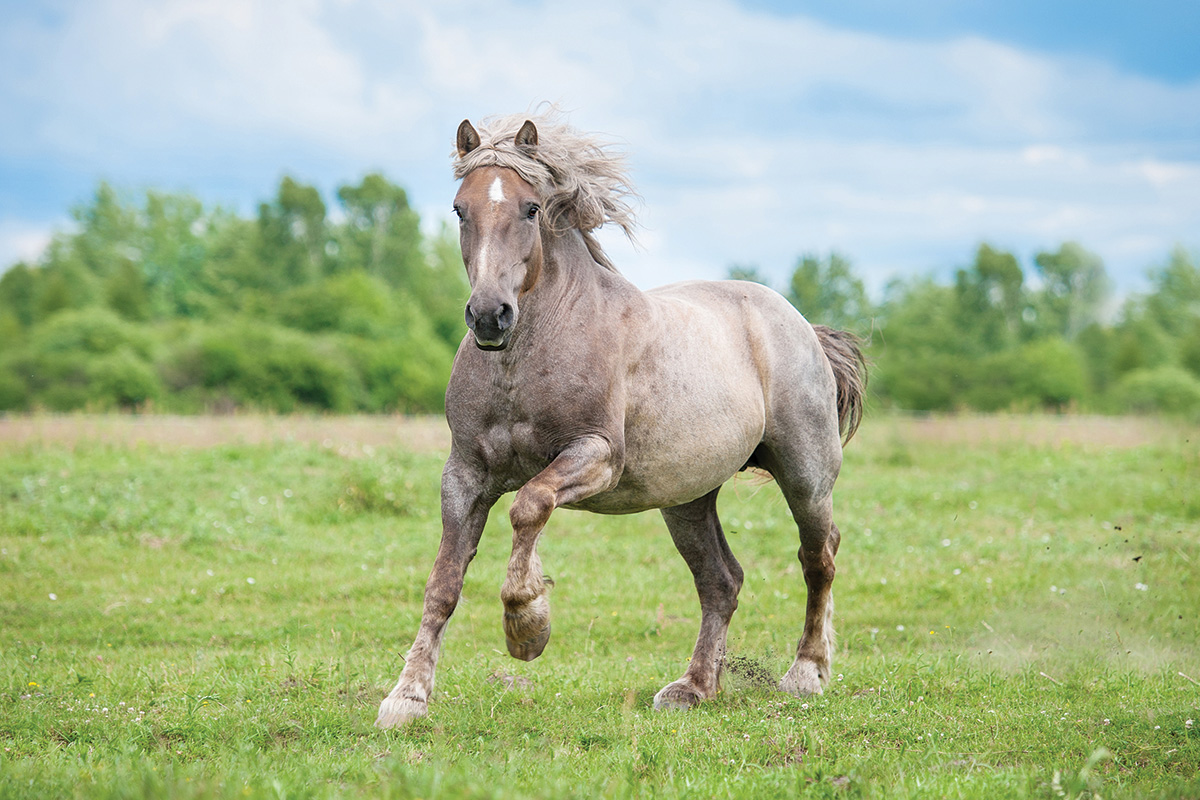
Photo by Rita Kochmarjova/Adobe Stock
Managing these skin conditions involves a delicate balance between moisture and dryness. Yes, those beautiful feathers will likely have to be shaved off (but they grow back!) in order to expose the mites and dry out any bacteria present. Initially, regular leg bathing will help fight these infections, followed by thorough drying.
Keeping the horse’s legs clean and dry then is key in keeping these skin issues at bay. Work with your veterinarian to determine the best shampoo for your draft and any other medications needed, such as an antiparasitic or antibiotic for severe infections.
Belgians, specifically, are at risk for a different type of condition in the legs called chronic progressive lymphedema, or CPL. Belgians with this condition develop swelling in their lower legs, which can lead to thickened skin and lesions. Not much is currently understood about this disease, but it is progressive and there is no treatment. Anyone interested in a Belgian should carefully inquire about the horse’s background and lineage, if known.
Feeding Fat
Most adult draft horses in little to light work and general good health are relatively easy keepers, meaning they can maintain a good body condition on quality forage, such as hay or pasture. In fact, if fed according to the guidelines on many feed bags based on body weight, owners may accidentally over-feed their draft, leading to obesity and associated metabolic issues, such as insulin resistance and laminitis.
Inappropriate diet is a common issue in many of the draft rescues rehabilitated at Gentle Giants.
“They were fed based on light breed horse guidelines,” Hajek explains.
When a draft horse does require a higher level of nutrition than what simple forage can provide, they may need more fat as opposed to the high starch seen in grain mixes.
“A lot of people don’t realize drafts may need a higher-fat diet,” says Hajek.
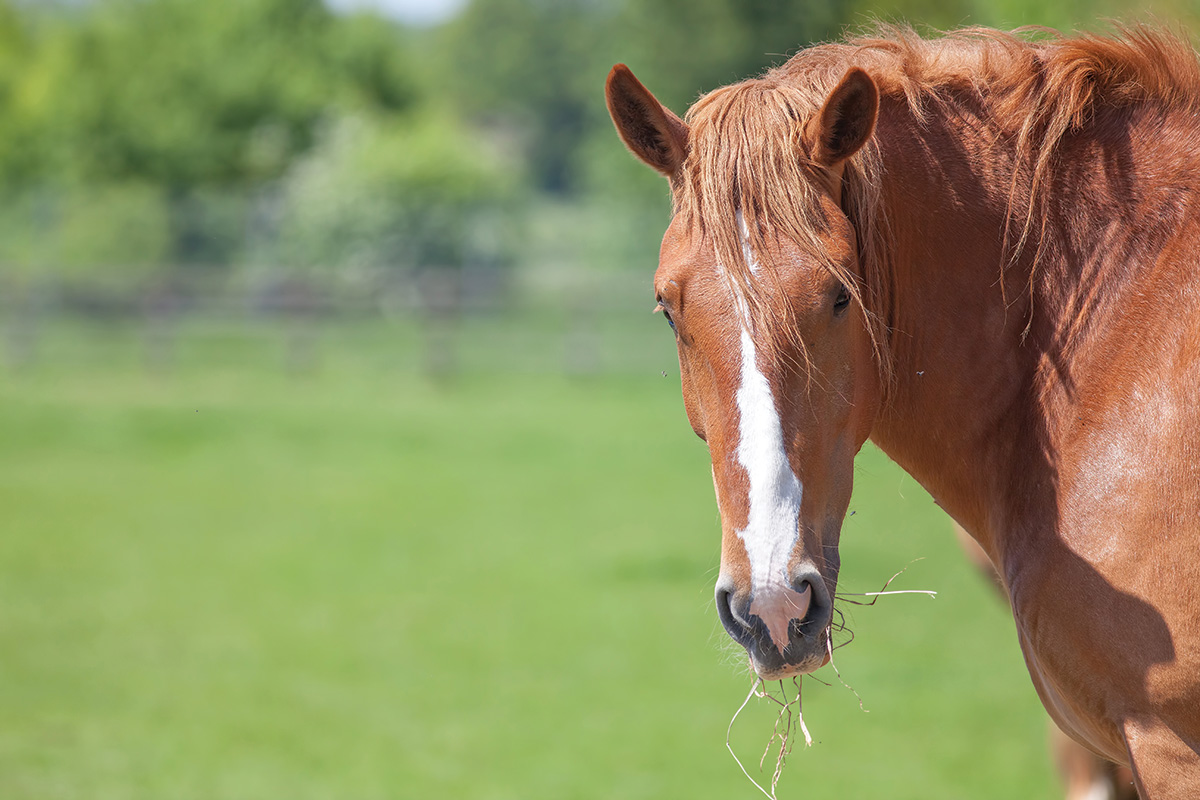
Most draft horses are easy keepers with good-quality forage, but look into a fat supplement instead of grain if extra calories are needed. Photo by Ian Dyball/Adobe Stock
If your draft horse requires a high-calorie concentrate in addition to good quality forage, work with your veterinarian or an equine nutritionist to ensure he is getting a balanced diet appropriate for his metabolic needs, age, and workload.
Possible PSSM
One serious nutrition issue common in draft horses is a metabolic disorder called equine polysaccharide storage myopathy (PSSM or EPSM). Horses with PSSM are unable to properly metabolize and store carbohydrates, which becomes an issue when a horse is fed a high-carbohydrate diet (such as grain) and then exercised.
Mild signs of PSSM include muscle weakness, twitches, and gait abnormalities, but severity of the condition varies, and can escalate to colic-like signs, refusal to move, severe muscle cramping, and kidney issues due to muscle cell death.
PSSM is diagnosed via bloodwork, muscle biopsy, and, more recently, genetic testing. While there is no cure, PSSM can be managed successfully by switching to a diet high in fat instead of carbohydrates and a consistent exercise regimen. Careful management should be overseen by a veterinarian.
Neurologic Conditions
Draft horses are also more prone to some neuromuscular disorders than can look like PSSM.
Shivers and stringhalt are two neurologic conditions that typically result in an abnormal gait, most notably in the hind legs. These conditions aren’t lethal, but they can make a horse reluctant to lift his feet for a farrier.
Some horses with shivers or stringhalt can still be ridden or driven. Severity and management of these conditions varies by horse.
Eye Health
Some breeds of drafts with wide white markings on their faces, such as Belgians, Clydesdales and Haflingers, are predisposed to a locally invasive type of cancer in the eye called squamous cell carcinoma (SCC).
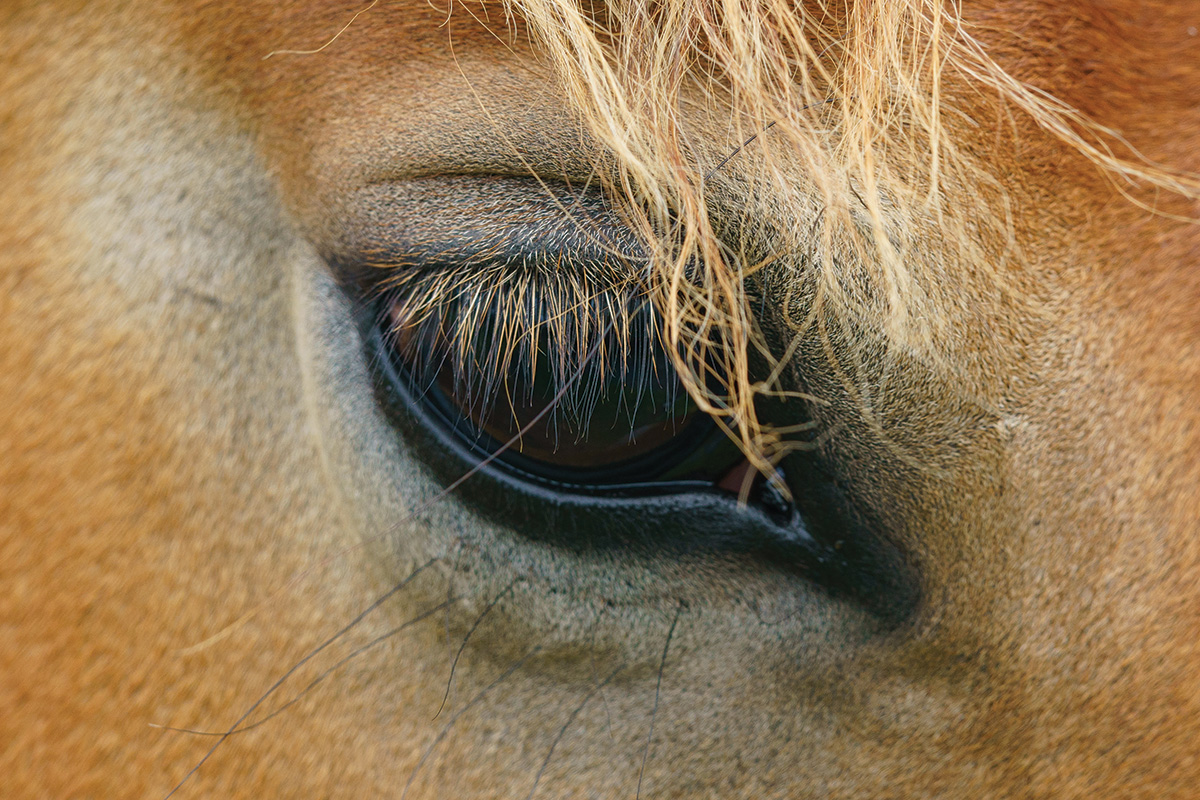
Belgians and other breeds with large white facial markings can be more prone to squamous cell carcinoma of the eye. Photo by Yury and Tanya/Adobe Stock
SCC can range in severity. A small lesion on the third eyelid can be relatively straightforward to remove. But in extreme cases, removal of the eye may be necessary, or possibly euthanasia if the underlying bone is involved.
Owners of Belgians and any breed with excessive white on the face should regularly monitor their horse’s eyes for any unusual coloration, irregularity, or signs of irritation. If something is abnormal, have your veterinarian conduct a closer examination. The earlier SCC is diagnosed, the better the prognosis.
Heat & Humidity
Due to their larger frames and associated musculature, draft horses can struggle to dissipate heat, which can lead to heat stress. When you add to this the challenges of keeping heavily feathered legs dry in humidity, it can be difficult to keep a draft breed comfortable in the summer.
For this reason, if you live in the southeastern United States, Hajek cautions against getting a draft. At the very least, she advises, avoid getting a draft horse from a northern climate and transporting him south, where he isn’t acclimated to the heat and humidity.
Key Takeaway
At the end of the day, a draft horse is still a horse, with the same training needs, personality quirks, and general care requirements.
“They train the same way [as a lighter breed],” says Hajek. “People tend to treat them like they’re different. The worst stereotype of drafts is that they’re dull and slow. That’s not the case at all.”
With proper care and consistent training, just like their smaller counterparts, draft horses make excellent mounts and companions. There’s just a bit more of them to love.
This article about draft horse health and care appeared in the November/December 2024 issue of Horse Illustrated magazine. Click here to subscribe!