Learn how a 14-point checklist called the Basic Behaviors Profile (BBP) is helping adoptable horses find homes.
Like dating, finding the right horse can be an extensive search to find The One. The quest will most likely involve endless scrolling and comparing online listings to find your potential match. If you’re looking into adopting a horse, you just might find some extra information in that profile to make the hunt a little easier.For example, your search to adopt a Steady Eddy could lead you to a listing for a horse named ARH Banana for Breakfast. While the palomino pinto gelding may have a silly sounding name for a senior gentleman, according to his online profile, he’s steady as they come, up to date on his vetting, an experienced trail horse, and a been-there, done-that kind of guy.
Checking Off the Boxes
How do you know? Anyone wanting further evidence can see he checks off a lot of boxes in the solid equine citizen department through the Basic Behaviors Profile (BBP) posted with his listing on myrighthorse.org.
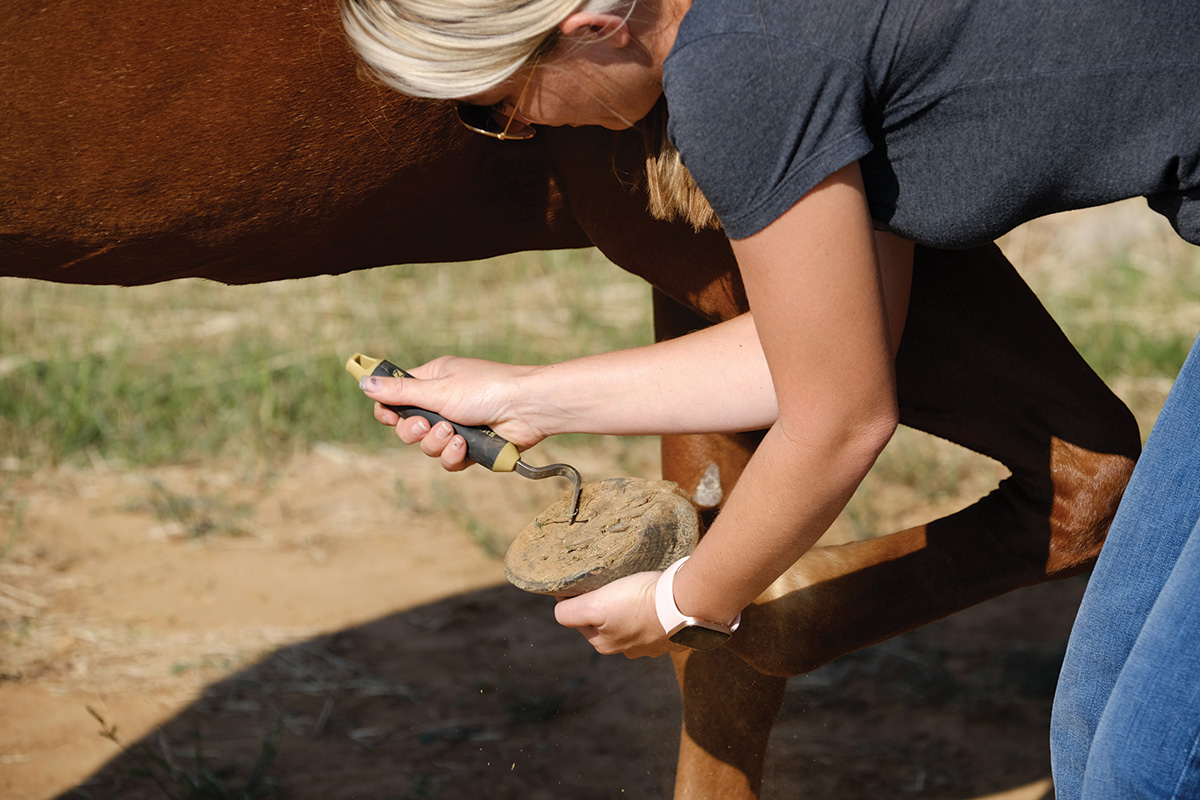
Thanks to this handy tool, potential adopters of this seasoned steed know that he has demonstrated that he can be approached in turnout, calmly haltered and led through a gate, allows his feet to be picked up, stands calmly tied and to be brushed, fly sprayed and blanketed, and various other behaviors on the 14-point checklist of common groundwork skills.
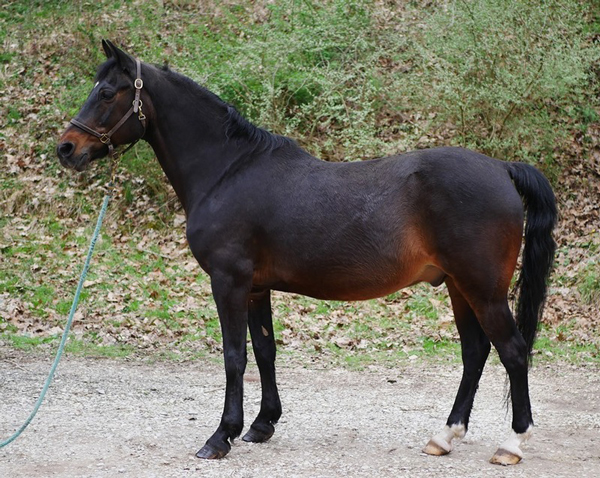
Ground-handling skills are essential for all horses, and the BBP provides a standardized way to assess how a horse responds to these requests. Photo by ccestep8/Adobe Stock
While it’s just one part of the information on a horse’s resume, and there will be more questions, conversations, and hopefully a meet-and-greet to assess a match, the BBP has proven helpful to streamline the evaluation process on both sides.
“The Basic Behaviors Profile has helped create a standardized evaluation process for adopters,” says Cailin Caldwell, ASPCA Right Horse Program Director. “When they visit myrighthorse.org, they can quickly see the skills each horse has and which ones they still need to work on, helping them better find their right horse. Many adopters appreciate the information and transparency the tool lends to the adoption experience.
“On the other side, the Basic Behaviors Profile helps adoption organizations more efficiently identify training opportunities and then leverage that information to make happy, adoptive matches for their horses. Many of our partners now use the tool regularly when bringing a new horse into their facility, which has made the training and evaluation process smoother for both their staff and adopters.”
Origins of the Basic Behaviors Profile
The BBP was created, designed and field-tested by a team of equine experts and behaviorists to help improve the adoption process for the ASPCA Right Horse Program. Since its introduction in 2018, it has been used by ASPCA Right Horse partner organizations and is available free online for anyone to use, including equine adoption organizations, trainers, and individual horse owners.
Knowing what a horse knows is useful information. No matter what type of horse you’re looking for, ground-handling skills are essential for all horses, and the BBP provides a standardized way to assess how a horse responds to these requests.
“The Basic Behaviors profile is a series of 14 tasks that are ideal for any equine to be able to complete throughout their life,” explains Kylie Solís-McGarity, equine behavior and training specialist at the ASPCA Equine Transition and Adoption Center (ETAC) in El Reno, Okla. “They’re things that are going to be able to support [the horse’s] health in the long term and his ability to be seen by a vet and farrier. In an adoption space, it’s a way for us to be able to look at his skillset and assess the training state on all of our equines.”
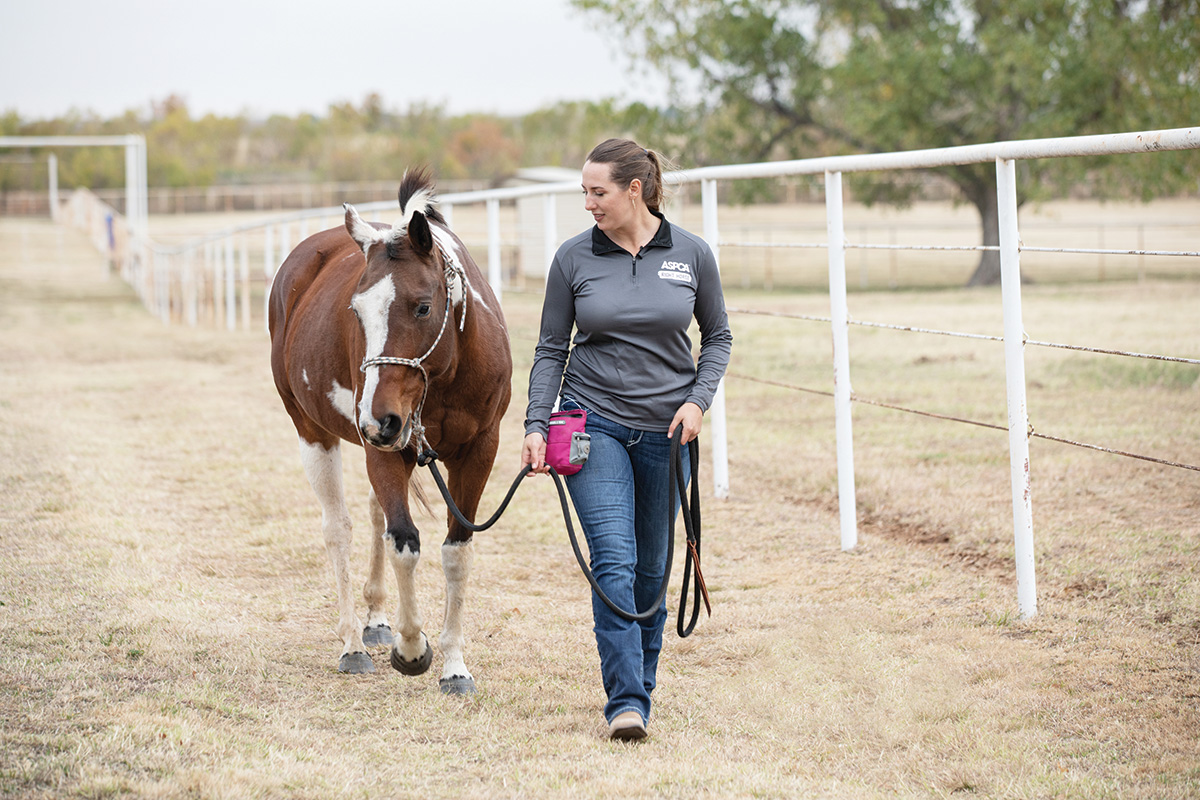
The ETAC has found significantly reduced length of stay because trainers prioritize working through the list on the Basic Behaviors Profile. Photo courtesy ASPCA
A Good Starting Point
The BBP isn’t a training method, nor does it promote any specific training technique. Instead, it’s an evaluation tool that helps assess ground manners and handling. For trainers, it serves as a useful starting point to form a training plan.
“A lot of horses come in with what I call ‘swiss cheese’ training,” says Solís-McGarity. “They know some things and they’ve got some holes in other places. This is a really great way to know where they need additional support in their training.”

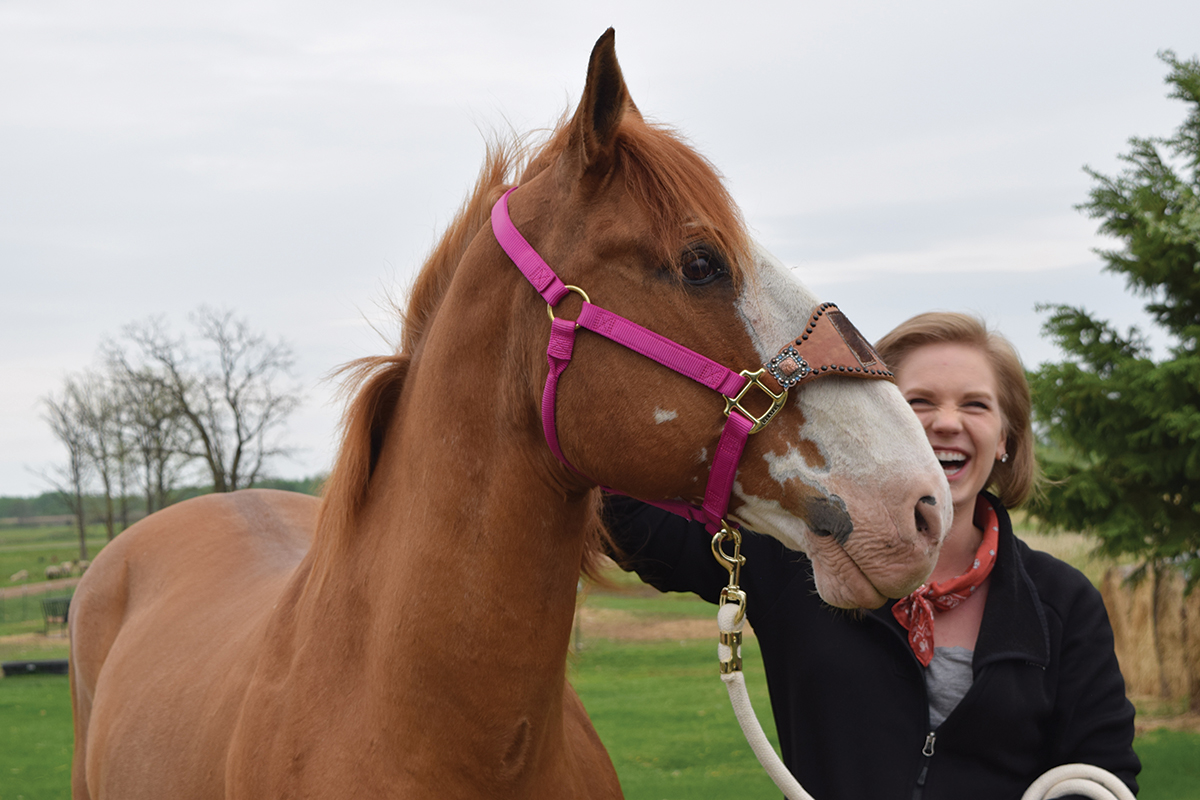
Learning about any holes in your horse’s training, such as trailer loading, could help in a situation like a vet emergency. Photo by Annabell Gsödl/Adobe Stock
Solís-McGarity holds a bachelor’s degree in equine science as well as a master’s in animal behavior and welfare from Colorado State University. She applies those skills at ETAC, where services reach over 100 horses annually; of those, about half will go through some sort of behavior or training work before rehoming.
By no means do these skills need to be completed before a horse can be adopted. Instead, Solís-McGarity notes that it’s a useful way to communicate clearly with an adopter and pass on information about a horse’s skills and knowledge.
The BBP is one of the first steps for horses coming into ETAC.
“We do this before a medical exam because we’re going to be looking at things like, can they be haltered?” she says. “Can they be led, can they stand tied, can they pick up their feet, are they able to receive oral medications? What are their reactions to these very common and low-type stressors? Once we do the behavioral profile, we can much more easily inform our vet as to expectations with medical handling as well.”
Solís-McGarity is very specific about not doing any training while she is doing the profile.
“It’s not a time to train a horse, but to take in information on whether he knows it or not and what his reactions are,” she says. “And then if he can’t complete a task, we just move on and will focus training efforts during a different time.”
Tracking Basic Behaviors Profile Score During Training
Once a horse starts full-time training, Solís-McGarity likes to complete the profile every two weeks to track his progress, and again when the horse is adopted, right before he leaves.
The BBP offers a numerical score of completed items on the list. It’s not pass/fail; items are simply noted as complete or incomplete. Solís-McGarity explains that a low BBP score isn’t a reflection of a horse’s trainability. Instead, it’s a helpful way to get the conversation started, gather more information, and get to know the horse.
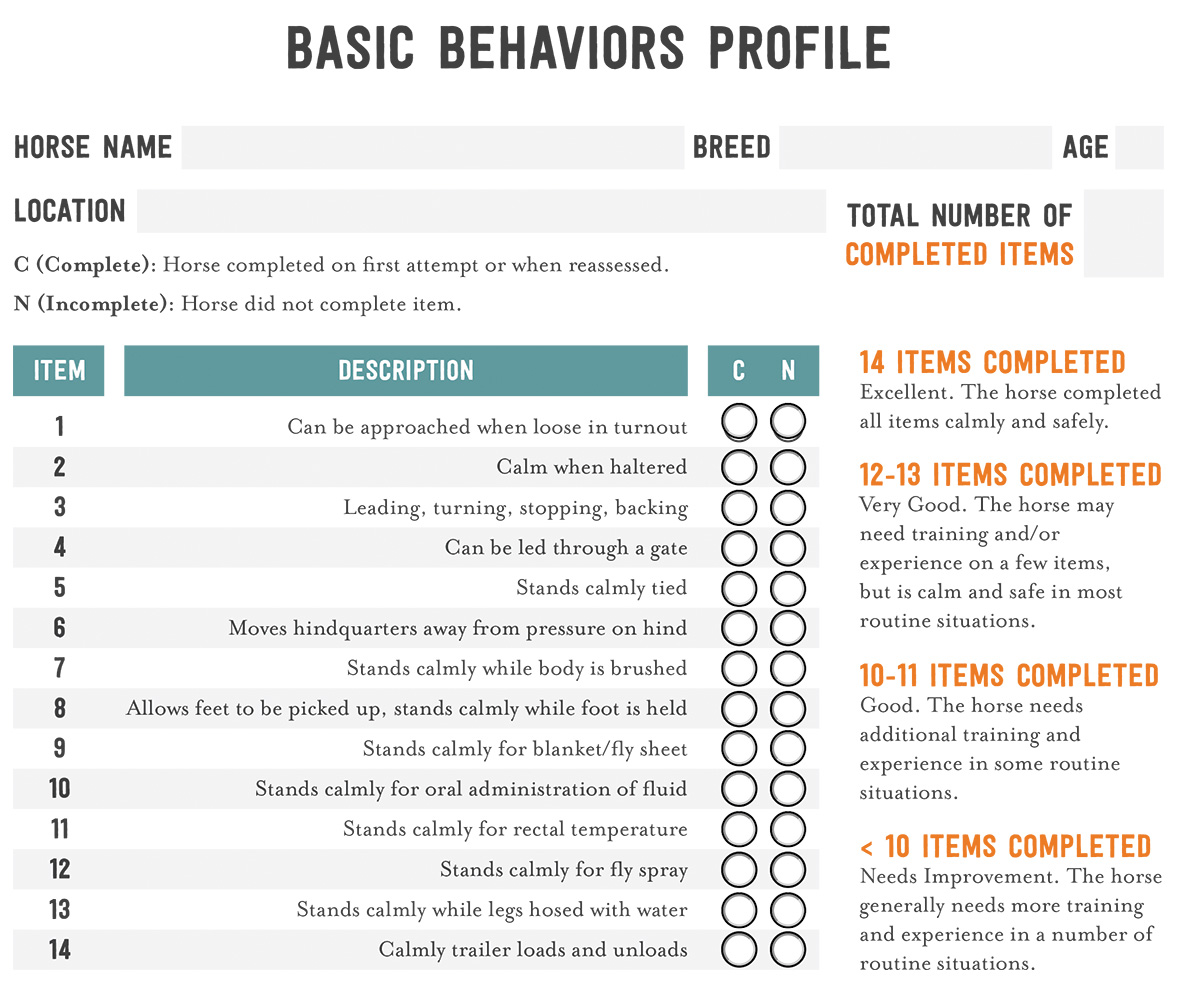
Each question has a detailed sheet, but the final page of the BBP provides for easy scoring.
“It’s a great way to start getting to know the challenges, good and bad, of each horse, because no horse is going to be perfect,” says Solís-McGarity. “Since it’s a complete/incomplete, the range of reasons why it’s incomplete could be very minimal, or it could be something that’s going to require a lot of work in the future.”
For example, if someone is looking for a great trail horse, the fact that he’s fussy about deworming may not be a big deal, while a skill like tying well is of higher importance.
Useful for Any Horse Owner
The BBP is also useful to try at home with your own horse for a variety of reasons. First and foremost, it creates a safety net.
“More than anything, all of us want our horses to have a secure and safe future,” says Solís-McGarity. “And if there ever comes a point where you have to rehome your horse, if you have gone through some of these skills and given the horse a really good foundation so he knows how to be a good citizen, it really helps him find wonderful, loving homes in the future.”
It’s also good to keep skills current to avoid getting into a tough spot, such as trailer loading for a vet emergency or evacuation during a natural disaster.
Especially with young horses, or if you have a lot of horses and it’s hard to get to them all, Solis-McGarity recommends adding the BBP to expand your tool kit outside of the normal “go out to the barn and ride” routine.
Reducing Time to Adoption
At ETAC, the proof is in the numbers, with a reduced length of stay—the time a horse spends at the facility from intake to adoption.
“It has significantly reduced length of stay for us because we have a goal of getting it completed, and we get tons of information on a horse from doing the profile right off the bat,” says Solís-McGarity. “And the more info we have, the more we can pass to adopters, and the faster we can get them into their right homes.”
It worked for Banana for Breakfast, who was quickly adopted.
The BBP is available at aspcarighthorse.org/basic-behaviors-profile. To browse listings of adoptable horses, including many with the Basic Behaviors Profile, visit myrighthorse.org, the ASPCA’s online adoption platform for equines.
This article about the Basic Behaviors Profile appeared in the September 2024 issue of Horse Illustrated magazine. Click here to subscribe!