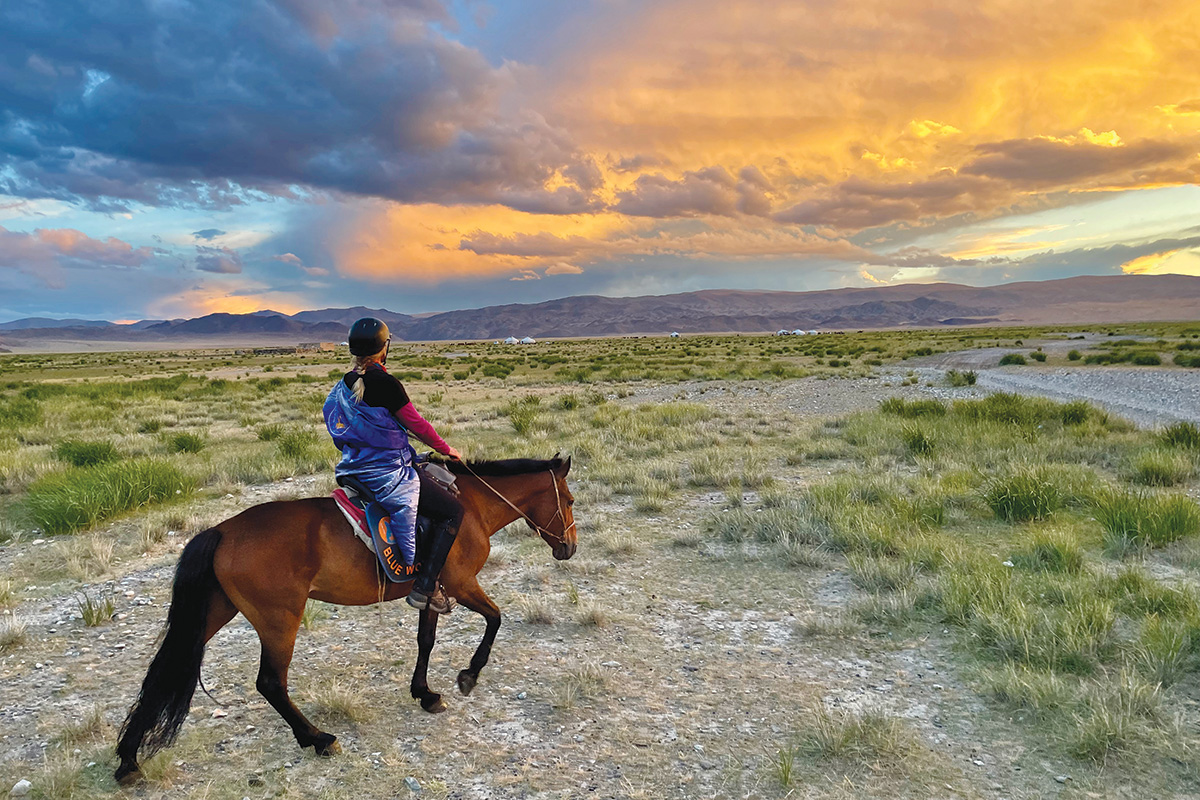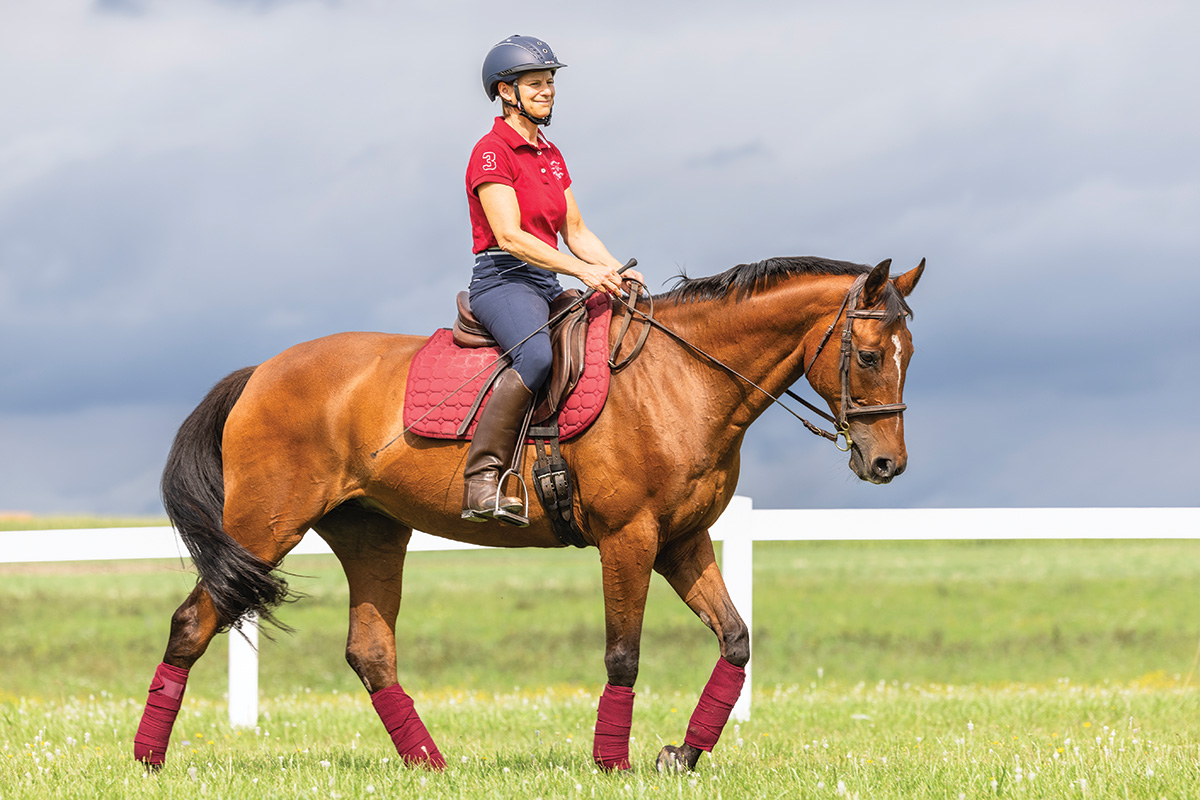
Find out what new horse adopters need to know from an equine adoption expert before adopting a horse for the first time.
One of the biggest misconceptions about adoptable horses is that they all come from a background of cruelty and neglect.
“That is not the case,” says Libby Hanon, equine adoption and marketing specialist at the ASPCA Equine Transition and Adoption Center (ETAC) in El Reno, Okla. As someone who is passionate about connecting people and horses through adoption, she has a special interest in learning about what holds people back from adopting horses through a rescue or shelter.
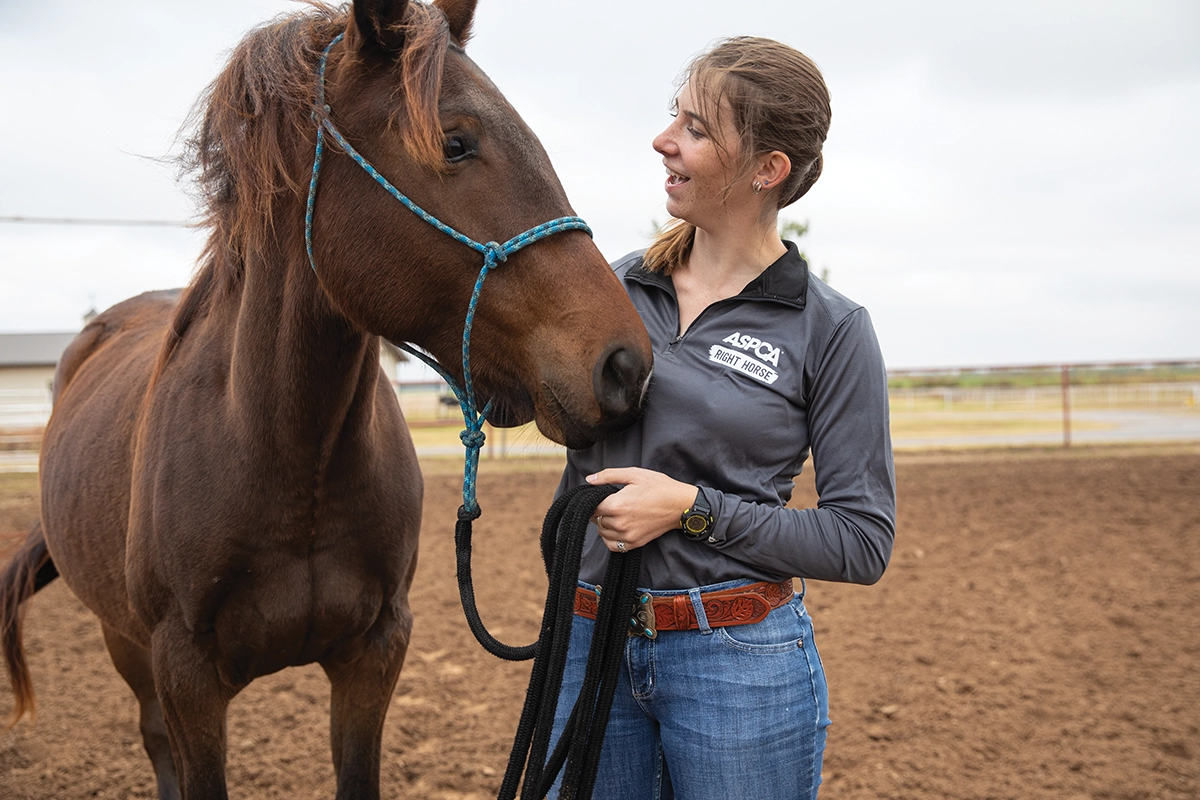
Many adoptable horses come from a background of great care, with full records and registration papers available. Photo courtesy ASPCA
Well-Cared-For Horses
While Hanon acknowledges that this assumption about neglect can sometimes be true, the ASPCA and ASPCA Right Horse Partners have wonderful, full populations of horses that have been well cared for their entire lives.
These well-cared-for horses can come from owners who have personally relinquished them. These situations represent horse owners who, although they can’t take care of their horses anymore, love them deeply and are looking at adoption to safely transition them into a new home.
Another example of adoptable horses fitting into this category is those from Thoroughbred aftercare organizations. Hanon says that while some of these off-track horses may need some rehabilitation, many are capable and ready to begin their second careers almost immediately.
However, if your goal is to help a horse from a tough background find a soft landing, there are rescued animals from cruelty and neglect cases seeking adoption, too.
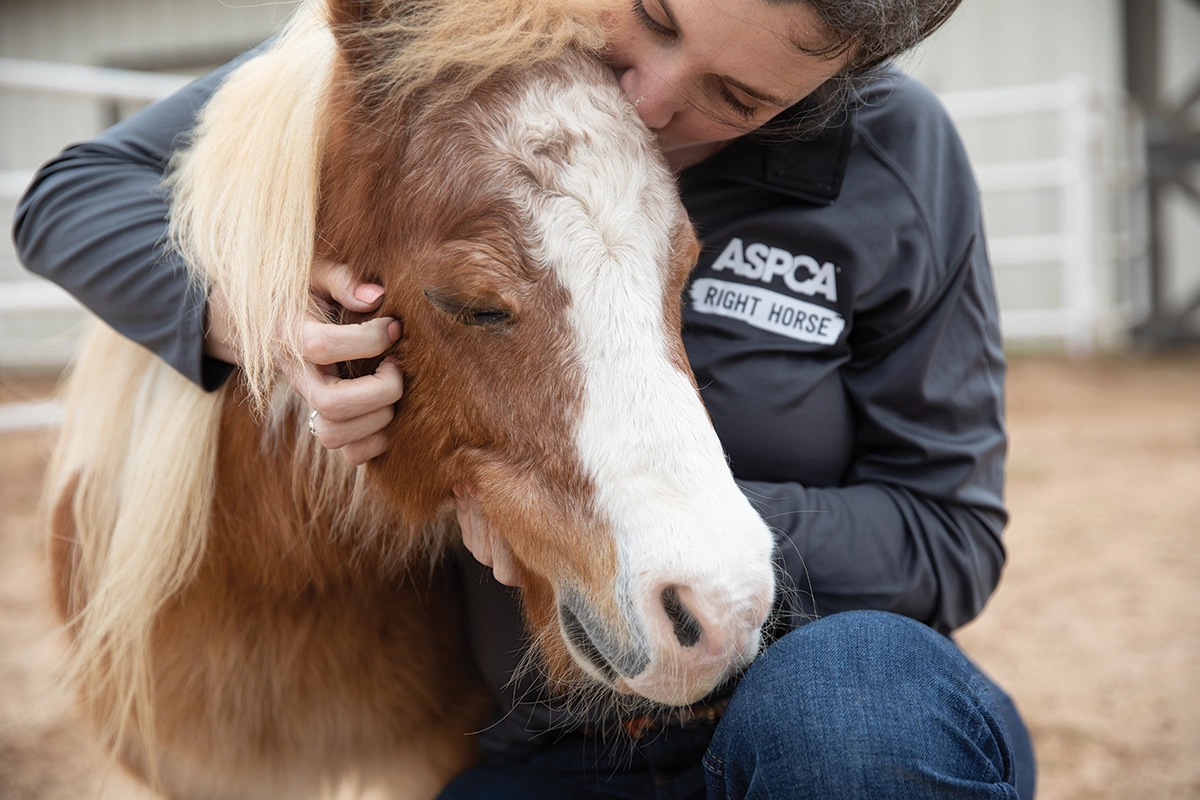
If your goal is to help a horse from a tough background to find a soft landing, there are rescued animals from cruelty and neglect cases seeking adoption, too. Photo courtesy ASPCA
Not Difficult or Expensive
The next biggest myth, Hanon says, is that adoption is a difficult process with many stipulations. While that may have been the case in the past, Hanon says that nowadays the adoption process is more conversational.
“I don’t know of a horse person in the world who doesn’t love to tell their horse stories and talk about the horses in their life,” she says. “[We just get] into a conversation with somebody, learning about them and getting rid of the red tape that makes the process harder than it needs to be.”
Another surprising myth, Hanon says, is that equine adoption is expensive. In reality, the average price of adoptable horses on myrighthorse.org is just $700, making adopting a horse more affordable than acquiring one via more traditional methods.
The last common myth is that all rescues retain ownership of adopted horses. Hanon shares that while processes do vary between ASPCA Right Horse Partners, they all transfer ownership to adopters.
Plenty of Horse Adoption Choices
Myths aside, whether you are a first-time adopter or have adopted several equines, there is no shortage of available horses on the myrighthorse.org website to choose from. Hanon says that at any given time, there are hundreds of available horses of every breed, color, age, and discipline.
“I love to tell people that here at the ETAC we might not have what you are looking for right now, but if you can be patient, we will get what you are looking for,” Hanon says. “Whether or not that horse comes into ETAC or we connect you with one of our partners, we can transport horses [to you].”
Hanon says that these horses are just as versatile and diverse as any other population of horses. In fact, adopted horses have gone on to earn Pinto and Western Dressage World Championships.
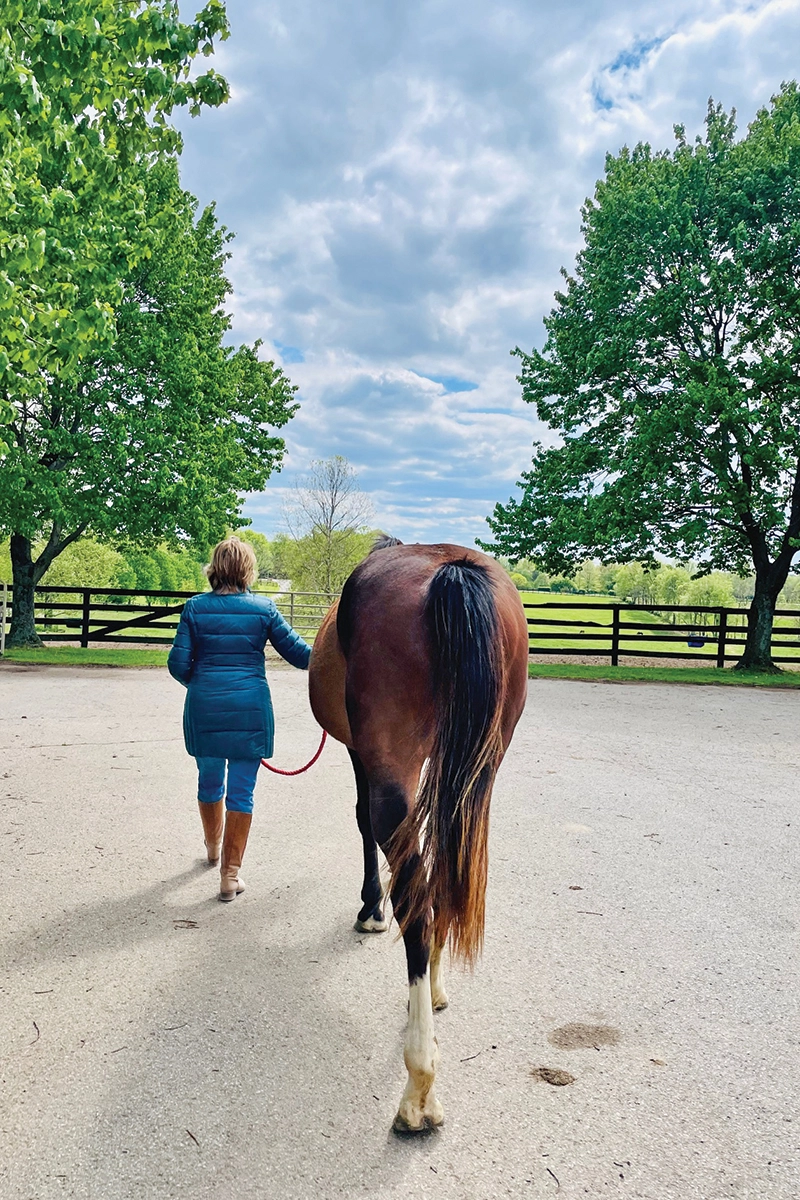
Who rescued whom? Neglected horses find their forever homes while also helping heal their adopters. Photo courtesy Carrie Wosicki
Lifetime Return Safety Net
First-time adopters will also be relieved to learn that not only is adoption often less expensive with more options to view in one place, but there are also many additional benefits.
If your circumstances change or for some reason the horse doesn’t end up being a good match, equines adopted through ASPCA Right Horse Partners have a lifetime safety net, meaning that they can be returned to any Partner at any time if you choose not to rehome the horse yourself.
Fortunately, thanks to skilled horse/adopter matchmaking and thorough veterinary and training evaluations, adopters benefit from
the transparency of ASPCA Right Horse Partners. What’s more, horses who come to the rescue via owner relinquishment often come with lifetime histories, and sometimes registration papers.
“We want these horses to go to a good home,” says Hanon. “We’re not just interested in sending them down the road.”
Transportation Stipends
If adoption is beginning to feel more like the right move for you, but you have concerns about transporting your potential adopted horse to his new home, the ASPCA’s Horse Adoption Express helps make the experience more affordable.
According to Hanon, the program offers up to a $500 stipend to transport a non-rideable companion horse any distance, or $500 toward long-distance transport of rideable horses (traveling at least 250 miles away).
Shopping In Person
Though online shopping may be fun for some, if you prefer shopping for your first adoptable horse in person, there are options available for you, too. The ASPCA Right Horse program has nearly 60 Partners around the country, ensuring one is likely local to you.
Hanon explains that in addition to visiting the horses at their home facilities, there are adoption events around the country where you can see adoptable horses firsthand. These include the Equine Affaire events in Ohio and Massachusetts, as well as the Thoroughbred Makeover in Lexington, Ky.
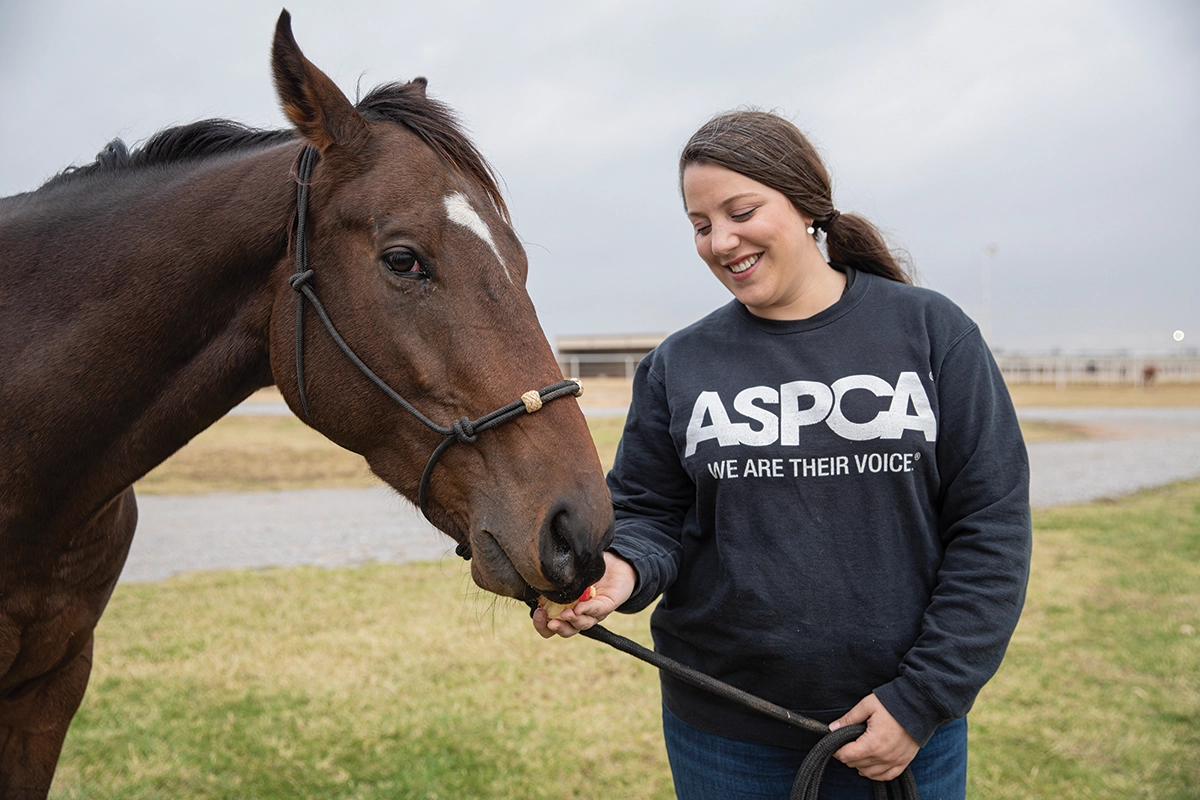
Thoroughbreds from aftercare organizations may need some rehabilitation, but many are capable and ready to begin their second careers almost immediately. Photo courtesy ASPCA
Taking the Plunge into Horse Adoption
If you are a first-time adopter with little to no horse experience, you may still have some lingering reservations about how to care for the horse you are considering adopting, but the ASPCA and their ASPCA Right Horse Partners are ready to help.
For those who will require a boarding facility, to ensure a good fit, Hanon advises a site visit and interview. Your questions, she says, should include asking about amenities, such as whether they have veterinary and farrier services, or if you will need to secure those. She also encourages asking about the feed and supplements they offer and if you can bring your own.
For those interested in keeping their adopted horse at home, Hanon says that information will be provided on such topics as the amount of space you’ll need, acceptable shelter, feed, water, pasture access, and putting together a veterinary and farrier health team.
Hanon emphasizes that nothing needs to be fancy, as serviceable is an acceptable option.
Horse Adoption is a Fun Process
The adoption process itself may just be the best part yet.
“Adopters can expect that we’re happy they’ve reached out and shown an interest in equine adoption,” Hanon says. “We’re going to have a great time getting to know each other.”
It’s this low-key approach and back-and-forth sharing of information that often leads to making perfect matches with adoptable horses.
Next, there is transparent information sharing about the horse being considered. Finally, if all goes well, the process ends with an adoption agreement that outlines expectations for both parties. Even after the adoption takes place, owners are encouraged to stay in touch for any needed support.
The Kentucky Equine Adoption CenterThe Kentucky Equine Adoption Center in Nicholasville, Ky., is a stellar example of an all-breed ASPCA Right Horse Partner that is working to make the transition into horse ownership easier for first-time adopters. “One thing we noticed several years ago was that there was an interest in adopting, but perhaps not the horsemanship and skills needed to care for a horse,” says Wosicki. Rather than turning potential adopters away, the organization instituted a program called Stable Foundations, an eight-week course for newcomers or those needing to brush up on their skills. It tackles such topics such as budgeting, feeding, ground-handling skills, and more. 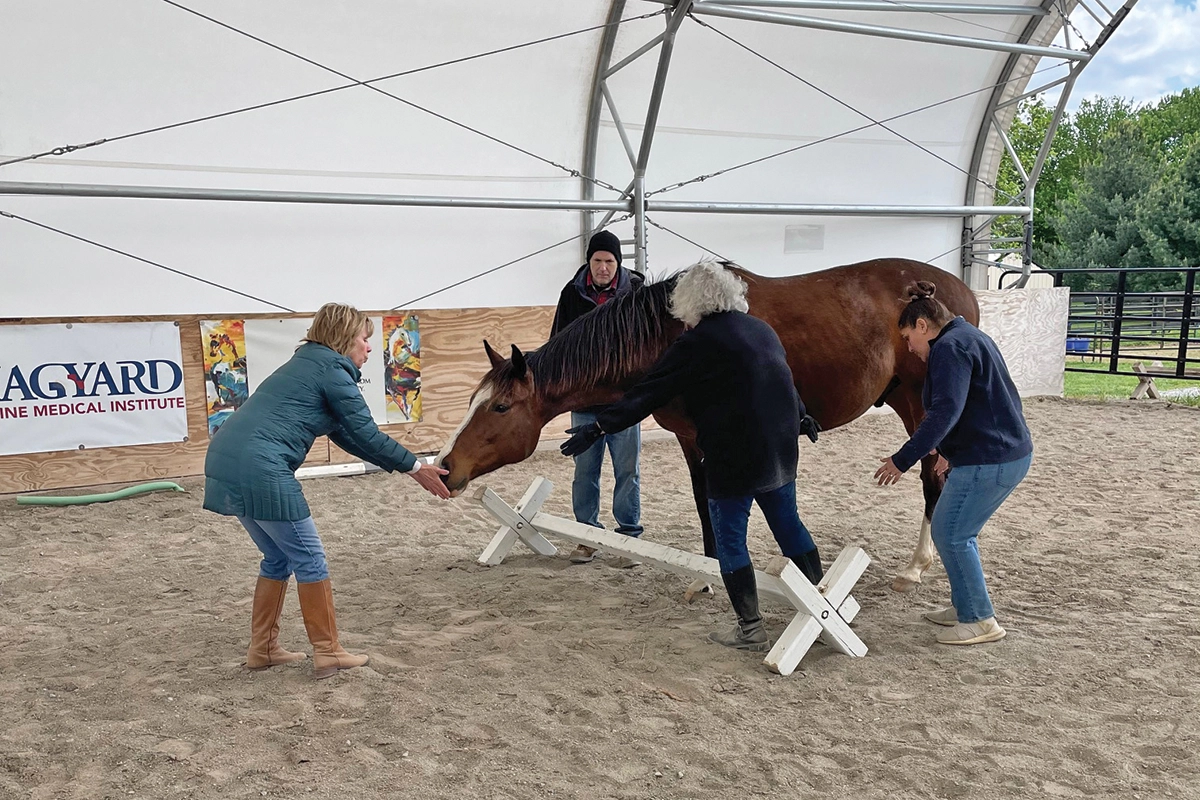 Patience is learned by both horses and humans in the Stable Foundations course. Photo courtesy Carrie Wosicki If, after the initial eight weeks, adoption still looks like the right fit, potential adopters take part in an additional four weeks of training. These extra steps, part of a capstone course, explore more in-depth areas such as blanketing, bathing, hoof packs, leg wraps, and trailer loading. During this time, the organization’s trainers work with the potential adopters to make sure that they are matched with a horse that fits their needs. So far, 10 horses have been successfully placed through this process, and Wosicki says that the program has also served to broaden the adoption pool in the community and beyond. 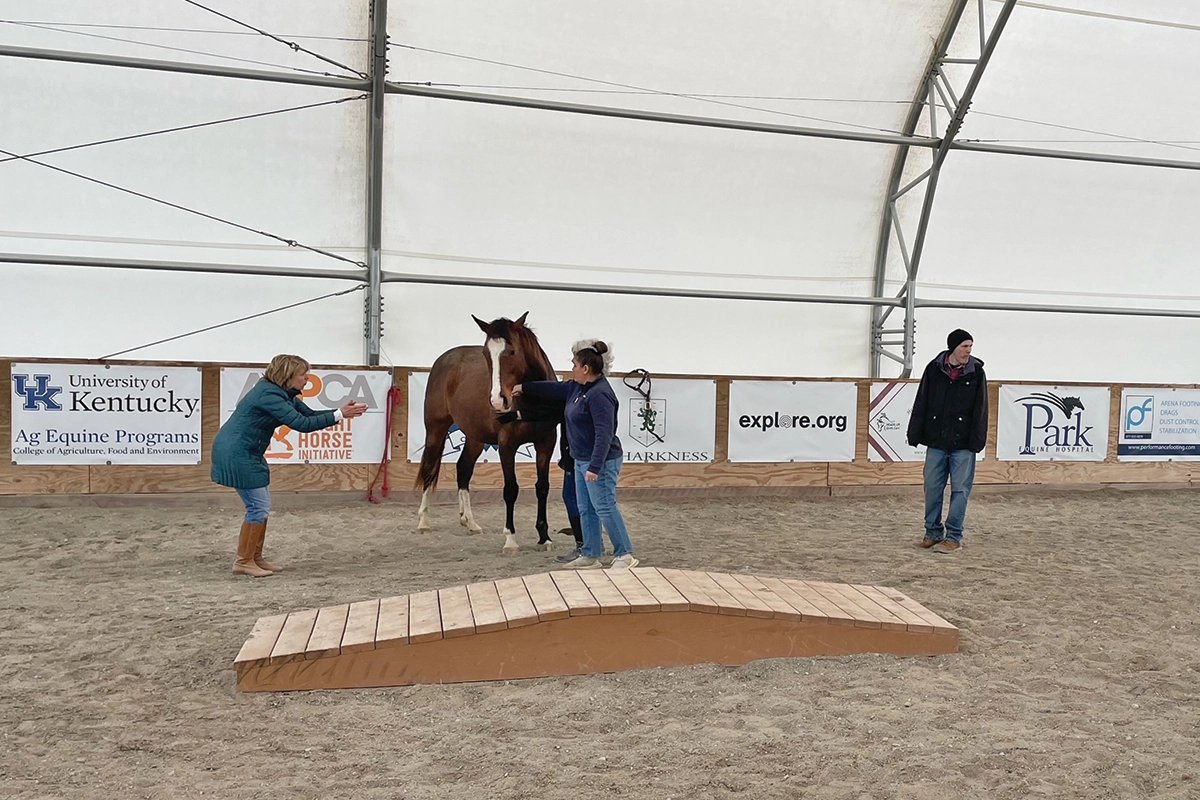 Students in Stable Foundations learn how to work with horses. The eight-week course is for newcomers or returning equestrians. Photo courtesy Carrie Wosicki
|
This article about first time horse adoption appeared in the January/February 2025 issue of Horse Illustrated magazine. Click here to subscribe!