Photo by Cavan for Adobe/Adobe Stock
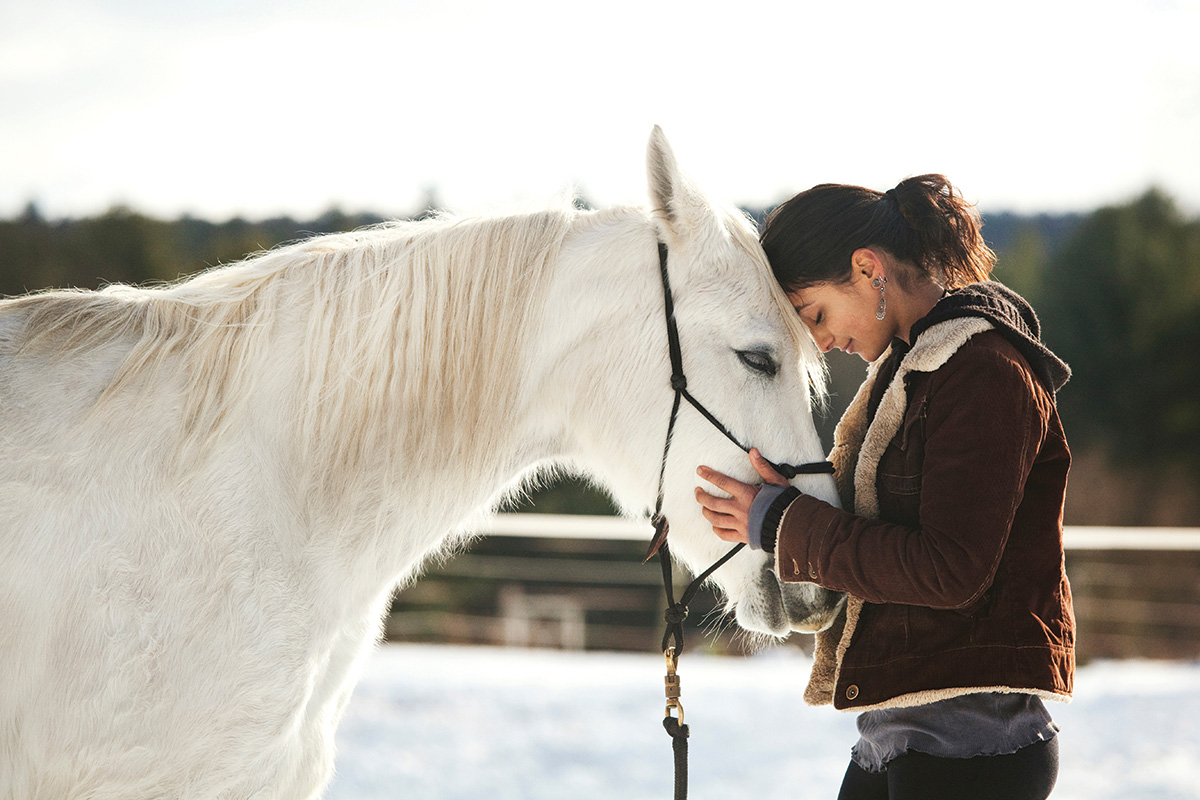
2022 Fort Worth Extreme Mustang Makeover Champion and horse trainer Camille White uses groundwork as a tool to help her learn more about a horse, and shares with us one of her favorite exercises.
Using Groundwork to Build Trust
In White’s experience, groundwork is an essential part of building trust with a horse. When on the ground, you have a good read of your horse’s facial expressions and can observe how he is carrying himself. She adds that it can be helpful to see a horse’s reaction to something from the ground before observing it from the saddle.
One of her favorite get-to-know-you groundwork activities is a longeing exercise that teaches the horse how to relax and involves both sensitizing and desensitizing components. White describes “sensitizing” as getting a horse sensitive to cues and teaching him how to move his body, while “desensitizing” is teaching a horse to accept new and scary things.
She explains that many of a horse’s opinions, personality, and coping mechanisms become apparent when he is moving, making this a great exercise to help you learn how your horse thinks and what things he prefers.
“It’s a lot harder for horses to hide what they’re thinking when they’re moving, as opposed to standing still,” says White.
When teaching the exercise, White says to be clear and consistent with your horse by communicating the same way every time. By doing this, he will learn what he can and can’t expect from you, and his trust in you will grow.
The Exercise
The following steps outline a two-part longeing exercise that White uses to get to know the horses she works with. To perform this exercise, you will need a rope halter, a 12-to-16-foot lead rope, and a flag.
Photos by Shoshana Rudski
Part One: Sensitizing
Step 1: Walk to the middle of the arena. Have your horse stand at the end of the lead rope, facing you. Hold the rope in the hand you will use to point in the direction you want him to go. Hold the flag in your other hand.
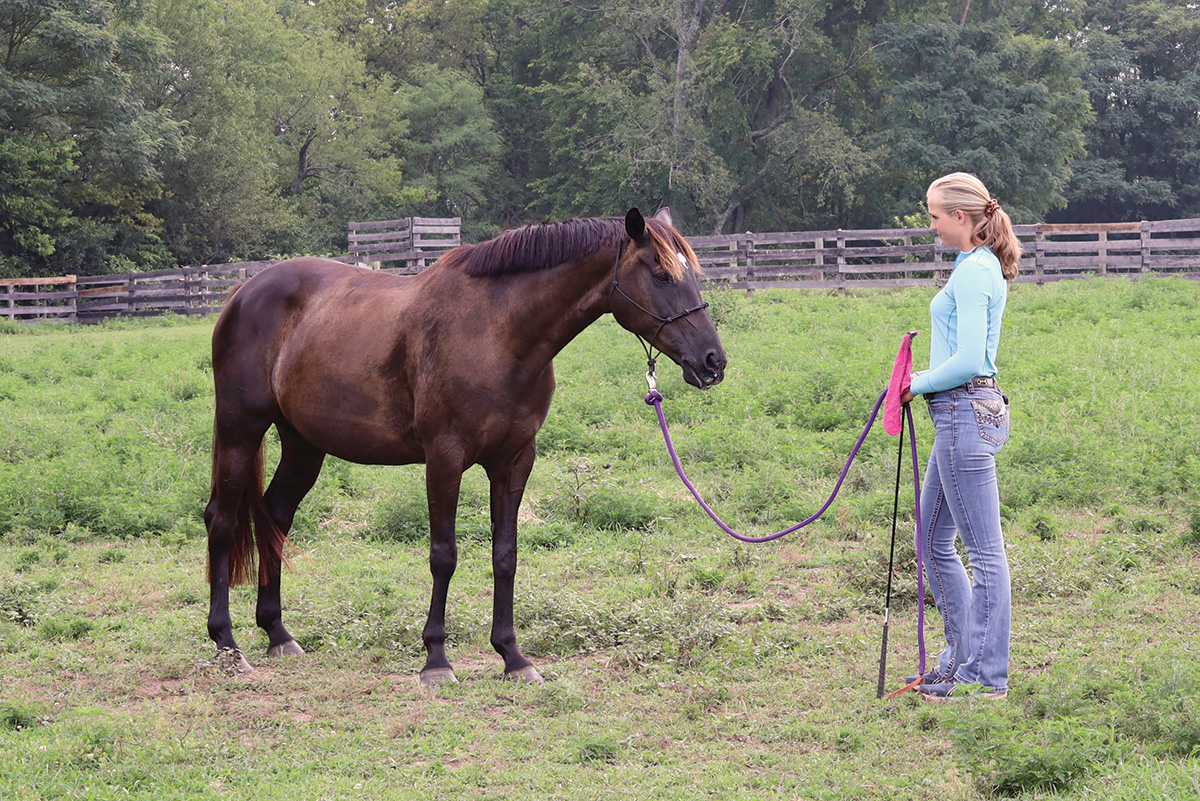
Step 1.
Step 2: Ask the horse to move by using your rope hand to point in the direction you want him to go. The horse should move his shoulders away from you and start to walk in a circle around you. Keep your feet planted. Once the horse moves in the direction you pointed, relax your rope hand to let him know he responded correctly.
Problem solving: If the horse doesn’t move after you point, increase the pressure of your ask by wiggling the flag toward his shoulder. If there is still no movement, tap his shoulder with increasing pressure until he moves in the direction you asked. If the horse moves in the wrong direction, keep applying steady pressure until he steps in the correct direction. Once he responds correctly, drop your flag hand and relax your rope hand.
Step 3: Allow the horse to keep moving forward. Once you ask him to walk in a circle around you, he should continue walking until asked to stop or given another command.
Problem solving: When learning the exercise, your horse may walk a few steps, then stop and face you. If this happens, repeat step 2 until he walks on the circle without stopping.
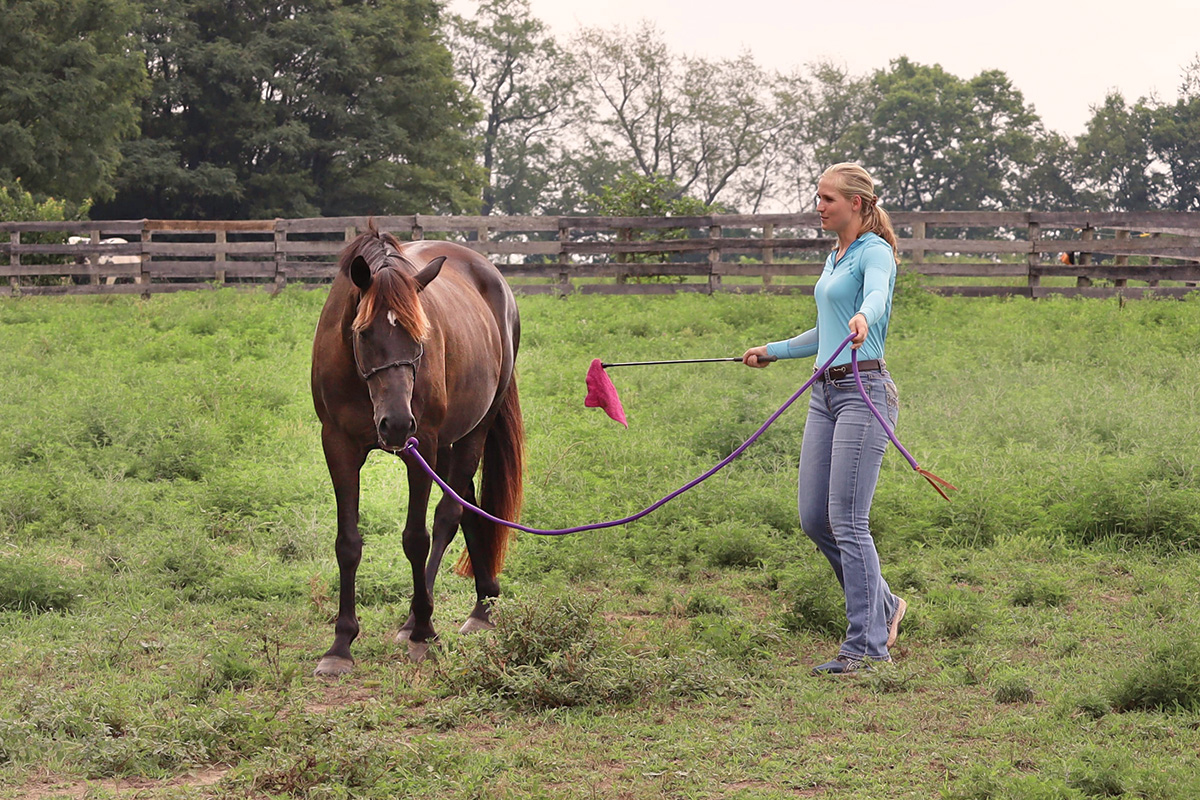
Steps 2 and 3.
Step 4: Ask the horse to stop. Once he understands step 3, teach him to stop by sliding your rope hand up the rope and taking one step toward the horse’s hindquarters. He should move his hindquarters away and turn to face you. In response, walk to the horse and rub his face to let him know he responded correctly.
Problem solving: If the horse doesn’t move away after you take a step toward him, take another step toward the hindquarters. Keep walking toward the hindquarters until he stops and turns to face you. White notes that you may need to step toward the hindquarters and wave the flag when first teaching this step.
Step 5: Repeat steps 2-4 in opposite direction.
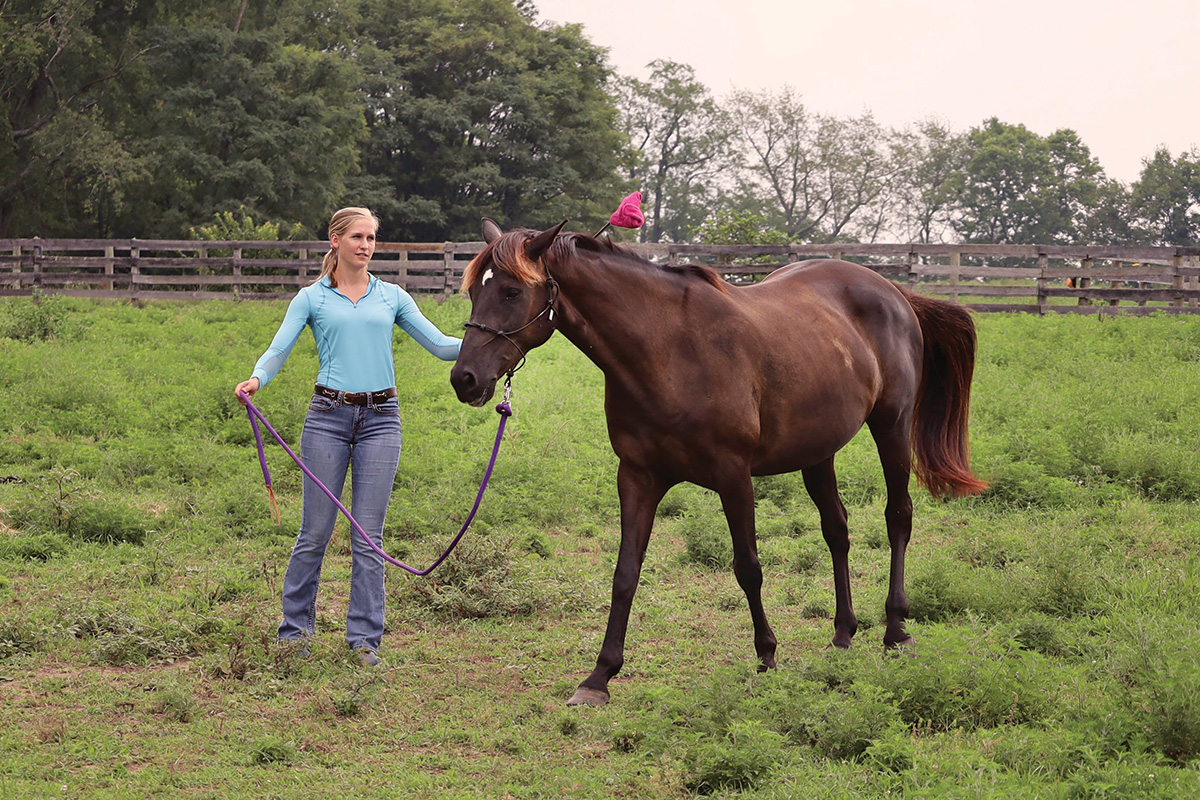
Step 5.
Part Two: Desensitizing
Once your horse understands how to complete part one going both directions, it’s time to introduce a final step to the exercise.
Step 6: Ask your horse to walk in a circle around you like you did for step 2. Then, reach out with the flag and gently rub his shoulder while the horse is walking. He should stay relaxed at the walk while the flag rubs his shoulder.
Problem solving: If your horse jumps or speeds up when the flag moves toward his shoulder, bring the flag back and keep it at the distance where he started to get nervous. Once he relaxes, take the flag away. Wait a bit, then re-introduce the flag and attempt to bring it closer than last time. Repeat this process and bring the flag closer each time you re-introduce it.
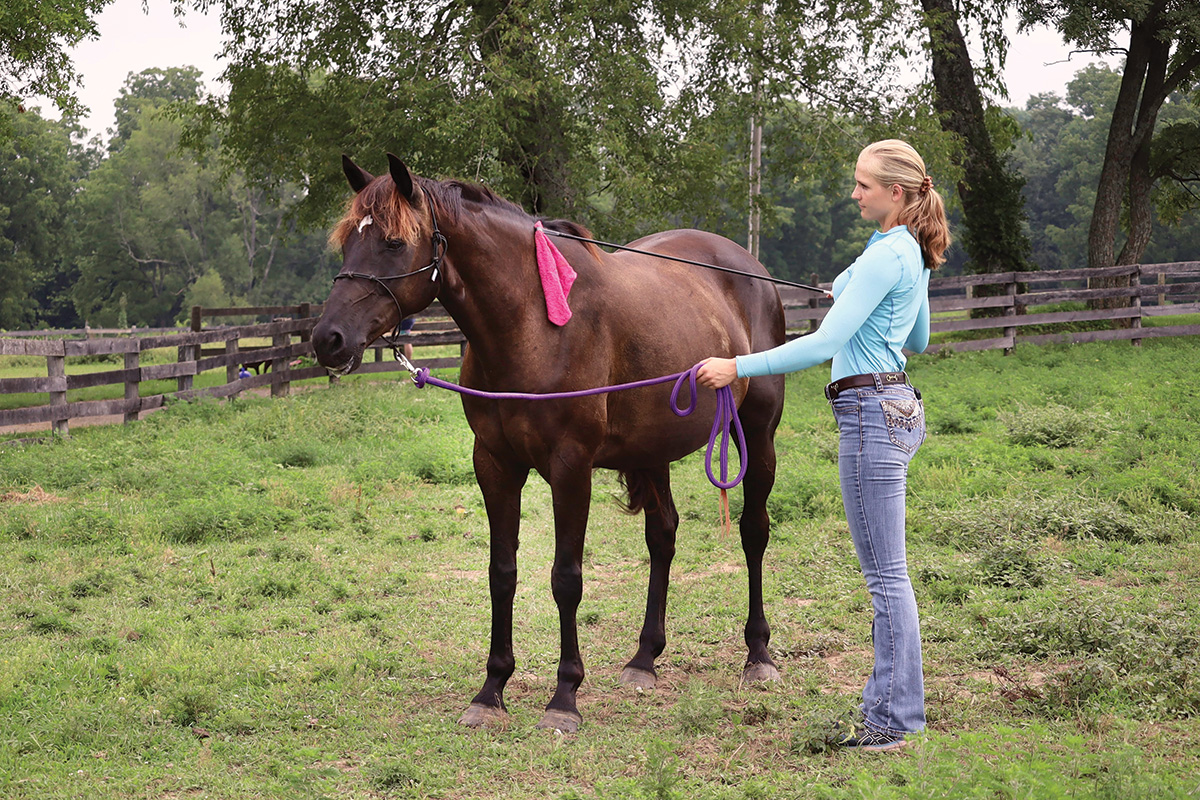
Step 6.
If your horse stops or freezes when the flag touches him, return to steps 2 and 3 before attempting to rub his shoulder with the flag again.
Getting to Know You
Humans don’t become experts on each other after one meeting, and neither do humans and horses. Getting to know a horse takes time and effort.
Whether your horse is a carrot cruncher that loves to cross creeks or a grain gobbler that prefers a slow stroll, groundwork can be a great tool to help you learn more about him.
This article about using groundwork exercises to get to know your horse appeared in the November/December 2024 issue of Horse Illustrated magazine. Click here to subscribe!