Percheron History
The Percheron developed in the Le Perche region in Normandy in 732 A.D. when Barb horses were left by marauding Moors after their defeat in the Battle of Tours. Massive Flemish horses were crossed with the Barbs to give the Percheron its substance. Arabian blood was also added.
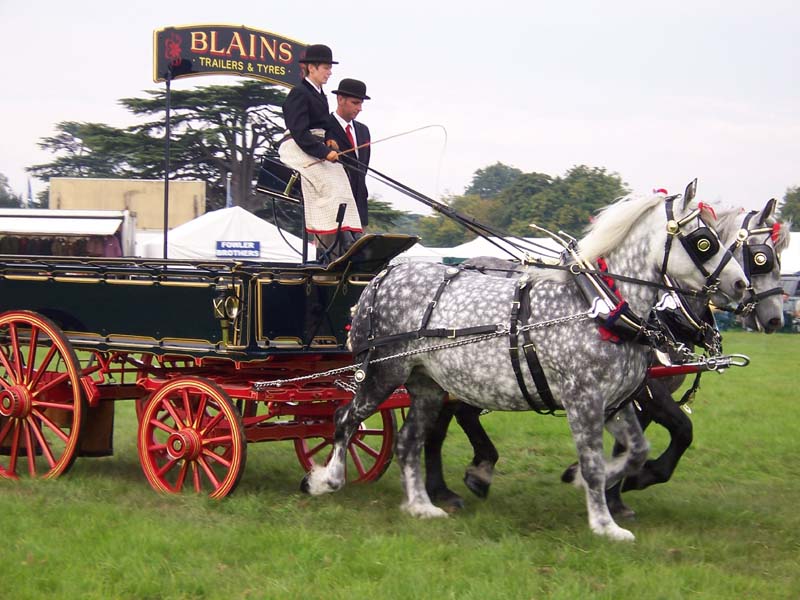
Pair of Percherons via Wikimedia Commons
In the 1800s, the French government began breeding Percherons for cavalry purposes at the famed La Pin National Stud in Le Haras du Pins in Normandy, which still exists today. Although work is what the heavy horses do best, they are valued riding horses and are beginning to make their mark in dressage. Percherons are crossed to other breeds, such as Thoroughbreds, warmbloods and Spanish breeds, to create sporthorses.
Percheron Characteristics:
Percherons range in height from 15 to 19 hands high. French Percherons are born black and turn gray by age 3. American and British Percherons are gray or black. Legs are without feathers. Percherons are said to be more energetic than other draft breeds. The French prized the horses as coach horses and called them Diligence horses (the French word for stagecoach). These horses had to pull a load quickly and with elegance, which is why Percherons also have the reputation as lovely movers.
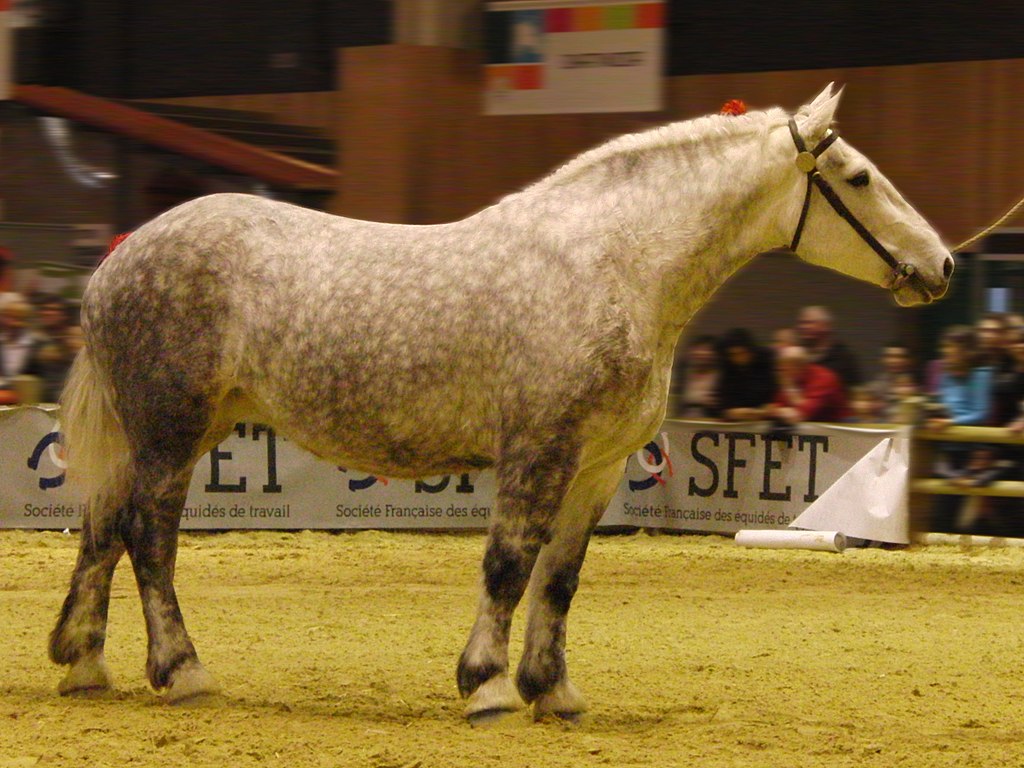
Eponimm CC BY-SA 3.0, via Wikimedia Commons
For more information
- Percheron Horse Association of America, www.percheronhorse.org
Further Reading: