
In our Ask the Vet column, Dr. Lydia Gray answers your horse-health questions at horseillustrated.com/AskTheVet. Got a question for Dr. Gray? Send it to hc-editor@i5publishing.com and use subject line “Ask the Vet.”
Q: I have an 18-year-old off-track Thoroughbred who lives on pasture. His weight is normally pretty steady, but as he ages, I worry about him dropping weight. The problem is, he grows a super thick winter coat, and I have trouble assessing his weight. What can I do to keep track of his weight when it’s difficult to see—or even feel—his body condition under all that hair?
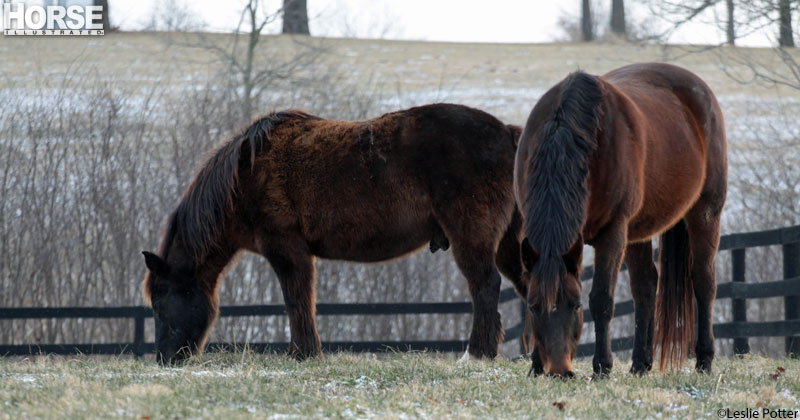
A: You are absolutely right to be concerned about an older horse, particularly of this breed, going into winter. On the one hand it’s a good thing that he has a “super thick winter coat,” but it does make your task of monitoring his body condition a bit more challenging.
There are three ways to keep track of his weight:
- Body condition scoring
- Using a weight tape
- Weighing on a scale
Unless you live close to a facility that has a scale – or something like a grain elevator where you can weigh your empty rig then weigh your rig with your horse in it – you’re going to have to become an expert in the first two techniques.
I recommend becoming very familiar with the Henneke Body Condition Scoring Scale on this horse and any others you have access to so that you become proficient at assessing the amount of fat cover in six key areas: along the neck, the withers, the loin, the ribs, behind the shoulder, and at the tailhead. The scale ranges from 1 = emaciated to 9 = obese with the ideal score for most horses being around 5. It’s important to feel the level of fat in each of these areas as well as to visualize it, so even though looks can be deceiving if a horse has a thick hair coat, by regularly putting your hands on his neck, his withers, his ribs, etc you’ll be able to do a pretty good job of judging how much fat cover is in each area.
It’s the same with a weight tape. Many companies provide tapes designed to go around the horse’s barrel and allow you to read out the weight in pounds. Find the one that works best for you and stick with it. While a thick hair coat could dramatically change the number you end up with, if you use the same tape in the same location with the same tension, any trend you pick up on is probably real. Personally I prefer the plastic weight tapes over the paper ones because they’re sturdier. They don’t flap around in the wind and scare horses or tear when you pull on them.
With either method – body condition scoring or weight taping – the key is consistency. By establishing a system for taking measurements and performing these measurements on a regular basis, you’ll pick up on weight loss (or gain!) pretty quickly. Then you can adjust your horse’s diet, blanketing, shelter, workload, or other variable to make sure he’s getting enough calories to maintain his weight while not losing calories keeping warm. Good luck!
Liked this article? Here are others you’ll love:
Horse Health in Winter