

Q: In the winter I usually pull the shoes off my horse and then come spring I put fronts on and then move back to shoes all the way around when summer approaches. I’ve heard this can be a bad thing. Is it really? And if it is, why?
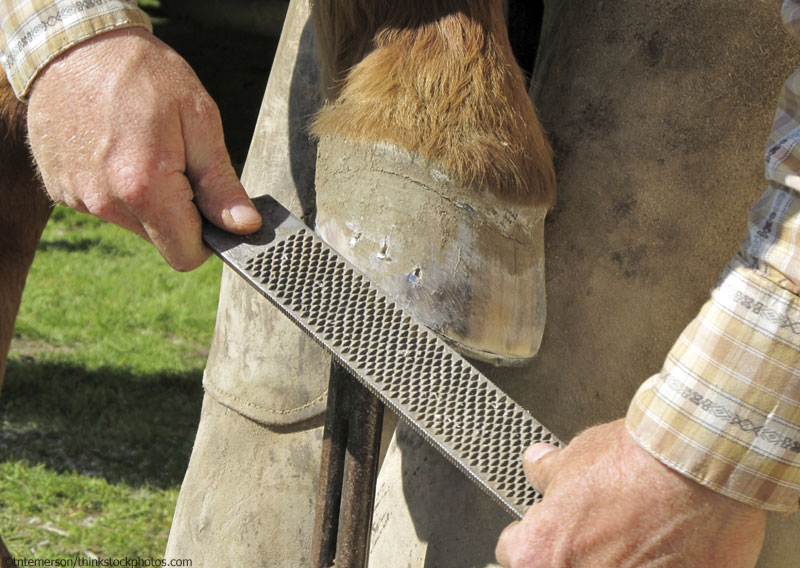
A: (A great question like this deserves an equally great answer, so I’ve “turfed” this to Danvers Child, CJF, the expert farrier who is SmartPak’s go-to guy for all things hoof-related!—Dr. Gray)
Each horse’s hoof care needs are unique and individual, so there is no generic protocol or program that one should follow when it comes to applying shoes. Basically, we shoe horses to protect their feet, to increase or decrease traction, or to alter or enhance a way of travel. If the horse’s needs do not require shoes for one of those three reasons, he can go on a maintenance program and remain “barefoot.”
In addition to the choice of whether shoes are necessary or not, we also choose whether to apply a half set or a full set of shoes. Because horses bear significantly more weight on their fronts, we often only need to provide additional protection for the front feet. As we increase usage and place more demands on the horse, it may become necessary to provide additional support or protection for the hinds.
As your question indicates, climate often influences our hoof care decisions. Many horses get a bit of a vacation during the harsh winter months, as we minimize their activity and work. As long as frozen, uneven ground doesn’t create difficult or harsh footing, this diminished usage can provide an opportunity for maintaining them through regular trimming while foregoing the expense of shoes.
As they go back into more regular activity in the spring, the increased workload may require that we protect their front feet. And, as we move to the more severe conditions associated with summer (e.g., hard ground, fly stomping, etc.), the hind feet often require protection as well.
— Danvers Child, CJF
Throughout 2014, Dr. Lydia Gray will be answering your horse-health questions at horseillustrated.com/AskTheVet. Got a question for Dr. Gray? Send it to hc-editor@i5publishing.com and use subject line “Ask the Vet.”