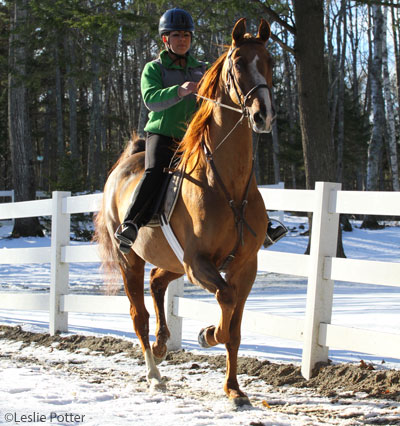
Although the thought of riding in the winter may not sound pleasant, there are many good reasons to maintain at least a baseline fitness throughout the season. Horses with osteoarthritis benefit greatly from a winter exercise routine. Restricted mobility in the winter can cause swelling in the lower limbs and extra stiffness in joints; even 15 minutes of walking each day can help maintain circulation and joint mobility.
When exercising your horse during cold weather, remember that warming up and cooling down is very important. A proper warmup helps increase blood circulation to muscles prior to performing demanding exercise and helps ensure ligaments and tendons are loosened up, thus helping prevent strains and sprains.
Allowing adequate cool-down time is the most important aspect of winter riding. Never put away a wet horse during cold weather; chills can develop quickly. To avoid chilling, be sure to walk your horse until his heart rate and respiration return to normal, and make sure his coat is dry before putting him away. Using a wool or fleece cooler will wick moisture and speed things along. Pay special attention to brushing away dried sweat before putting your horse up.
Cooling down can take quite a while if your horse has a thick coat, which is why many busy riders in the winter elect to clip their horses. One of the most useful clips is the trace clip, which removes hair along the underside of the neck, chest, belly, and flank where horses tend to sweat the most, while leaving the top of the horse and his legs untouched. Remember that clipped horses should be blanketed since clipping removes their natural insulation from the elements.
Read more:
Ask the Vet: Exercising Horses in Cold Weather
Back to Horse Health in Winter >>
This article originally appeared in the November 2014 issue of Horse Illustrated. Click here to subscribe!