
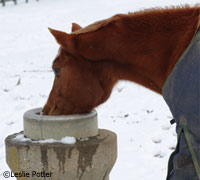
 With fall comes cold weather that can lead to higher incidence of impaction colic. The most common reasons for this serious health problem are lack of quality forage and not enough water in a horse’s diet. Too much indigestible bulk can lead to impaction, so as pastures turn brown and weedy supplementing a horse’s diet with hay becomes even more important. Beware, however, that poor-quality hay can lead to impaction colic as well, so buying quality forage is key. Also, don’t substitute grain for hay, as it doesn’t contain the proper nutrition and fiber content that horses need to stay healthy. If you choose a commercial feed to supplement hay, select a complete feed from a reputable manufacturer and feed it according to label directions.
Decreased water intake can also lead to impaction. Horses tend to drink less when the weather is cold, so when feed moves through the digestive system it’s more likely to cause a blockage because there isn’t sufficient water to process it.
Horses need clean water that is preferably between 45 and 65 degrees F. If you’re in an area where temperatures dip below freezing, install heaters in your horses’ watering systems to encourage them to drink more.
Along with feed and water, keep your horse’s plumbing running smoothly by providing plenty of exercise. Continuous stall confinement can contribute to impaction colic; horses that get moderate exercise and plenty of turnout are less likely to suffer system backups.
Further Reading
Colic Surgery Guide
Not everyone knows this..very smart!
Thanks for the information.