A safety vest can be an important safety tool for equestrians. Read along for advice from a professional vest fitter so that you can find the right one for you.
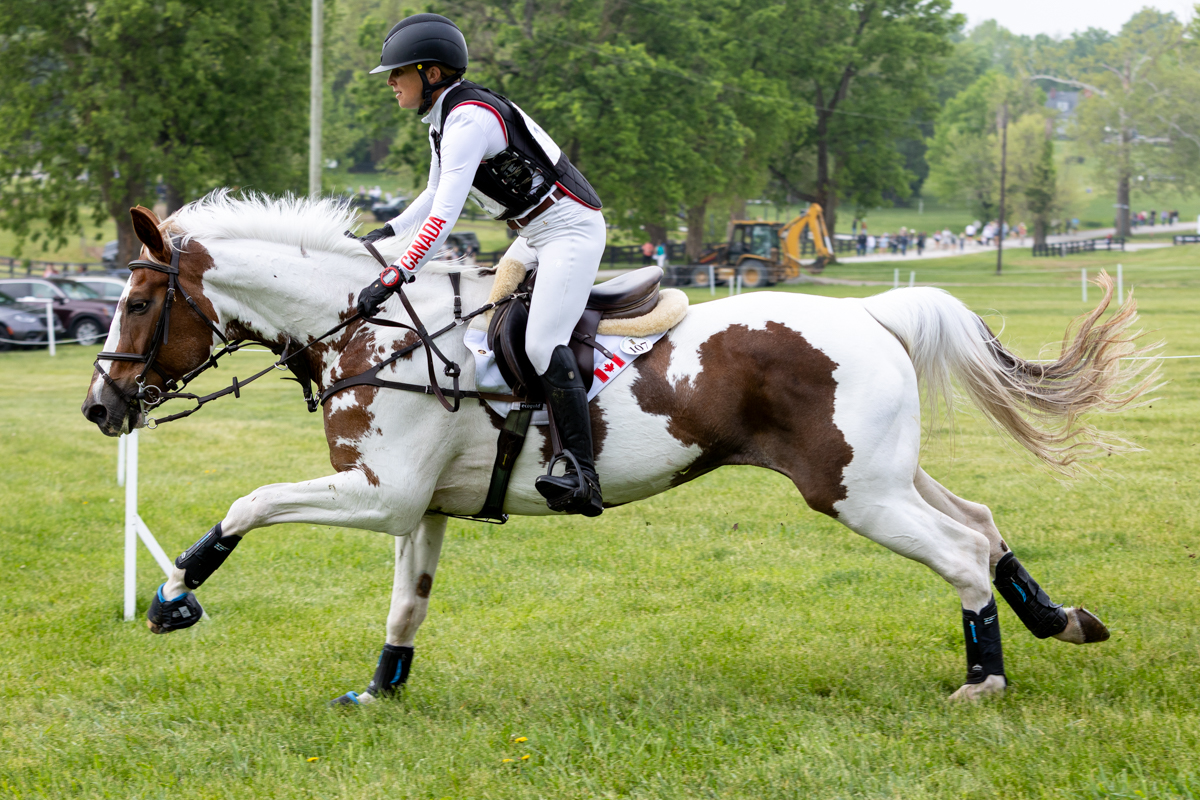
Photo by Mary Cage
Riding horses is euphoric, energizing, and exhilarating—soaring over a jump, galloping across an open field, performing a dressage freestyle, or savoring the sweetness of a trail ride on a sunny afternoon. Riding horses is also a heart-stopping, hair-raising, risky endeavor.
The Inherent Dangers of Equestrian Sports
As much as we don’t like to think about the potential consequences of strapping ourselves onto the back of a 1,200-pound flight animal that spooks at things real (that menacing butterfly that appeared out of nowhere or the mud puddle that clearly contains a shark) or things imagined (literally nothing… but it sure was scary!), here’s the truth: If we ride a horse, we will at some point fall off a horse. Or be thrown into a wall. Tossed over a fence. Bucked so high we reach the sky only to come back down to earth in a painful thud.
According to the article “Equestrian Related Injuries: A National Database Study” in Journal of the American Osteopathic Academy of Orthopedics (AOAO), between 2018 and 2022 “there were 4,760 reported equestrian-related emergency room visits. These incidents predominantly involved females (73.11%) with a median age of 31.” Of note, equestrian-related injuries “are predominantly related to sports events (i.e., eventing, hunting, and jumping)… The most common mechanism of injury was a horse-level event, such as a buck, fall, or being thrown.”
Of course, an injury can happen at any time when working with horses—whether in the saddle or from the ground. But having a deeper understanding of the inherent dangers and risks associated with active riding should influence a rider’s decision about wearing protective gear. Most barns and trainers will not even let a rider into the arena without a helmet. But what about safety vests?
Safety vests are advanced protective gear that are designed to shield the torso and upper body (chest, neck, spine, ribcage, and vital organs) from injuries when a rider falls off their horse. A safety vest is made from dense foam, tactical materials, ballistic nylon, or some combination of these elements. Safety vests are serious business; they have very specific testing regulations and are governed by three international safety standards. Airbag vests (AV) are a subcategory of safety vests and differ in a few ways. An airbag vest is attached to the saddle by a lanyard (after mounting). It is used in conjunction with a removable CO2 air cartridge which allows the entire vest to inflate in 0.2 seconds after a fall (the lanyard connecting the horse and rider is forcefully separated).
The choice to wear a safety vest may rest squarely on the rider, depending on where you live and which discipline you ride. If you currently wear a vest or are thinking of purchasing one, keep this in mind: A safety vest can’t do its job unless it fits you correctly.
Meet the Safety Vest Fitter
Kimberly Chick, a British Equestrian Trade Association (BETA) certified helmet and professional safety vest fitter and owner of Fair Hill Saddlery, is passionate about the use and proper fit of safety vests. “Everyone can and should wear a safety vest,” says Chick.
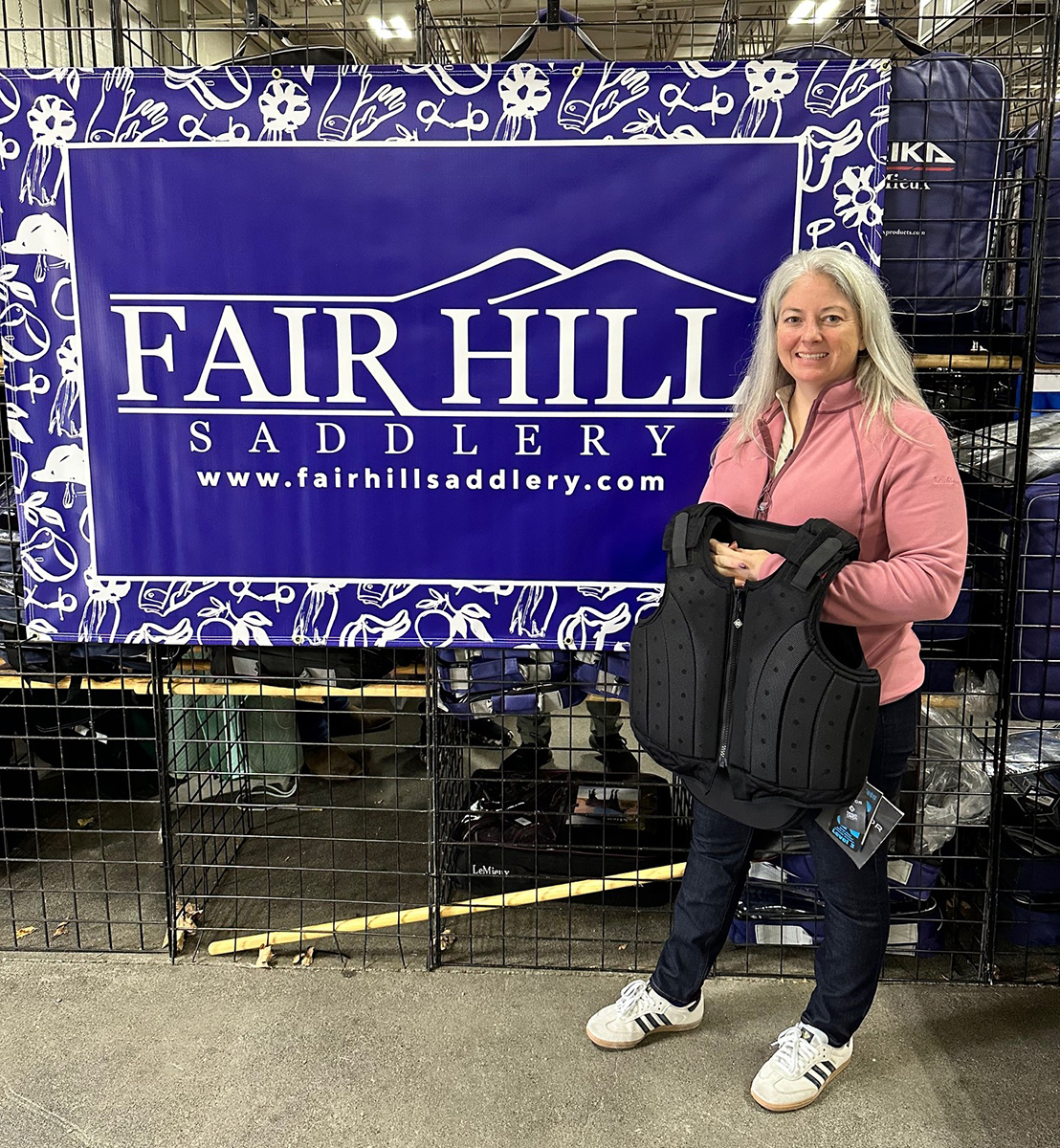
Kimberly Chick, a BETA-certified helmet and professional safety vest fitter and owner of Fair Hill Saddlery, offers professional vest fittings at Equine Affaire in Massachusetts. Photo by Julie Maddock
What should a first-time buyer consider when choosing a safety vest?
“When a customer comes into our store for a safety vest, I ask a lot of questions,” says Chick. “There’s a big difference between a 65-year-old trail rider and a 30-year-old eventer. We take all of that into consideration. There are body protection products to match every rider. Tell me what type of riding you do, and I can help you find the right vest, at the right budget, in the right size.”
As safety becomes more paramount in equestrian sport, more riders are considering safety vests.
“I think the old-school stigma of wearing a safety vest is changing,” says Chick. “You see more and more people wearing a vest or airbag vest, especially in certain disciplines. Just like we get in a car and put our seatbelt on, we should get on a horse with a helmet and vest on.”
Because body shapes vary, “it’s not a one-size-fits-all when it comes to safety vests,” explains Chick. Therefore, a vest should be properly fitted by a professional to ensure the ultimate return on your investment—protecting your body. “It’s not one simple measurement; I look at the proportion of where the person’s ribs end and where their pelvis starts. I think about their motion in the saddle. I want the vest to be long enough to protect the ribcage but not impede the pelvis from moving. A vest fitter must understand anatomy.”
And just like a helmet, if your safety vest is involved in a hard impact, it will need to be replaced. “Even if no fall is involved, a vest should be replaced every five years,” advises Chick. “Heat from our body, the sun, humidity, and the environment all contribute to the breakdown of the vest’s materials.”
Like all personal protective equipment, safety vests need to be maintained to prevent damage or failure. “A vest should never be submerged in water. Some vests have removable parts that can be washed, but generally, a vest should be spot-cleaned. Store your vest in a climate-controlled environment year-round. Heat is the biggest enemy of our safety equipment,” says Chick.
A safety vest is an investment, so you’ll want to spend your money wisely. “I will never recommend an uncertified vest. Check the label. You can find inexpensive equestrian vests online for $50, but they are not certified. There is no guarantee of what materials it contains or that it will protect you… Your body is worth the investment. And a good helmet and vest are still cheaper than a trip to the ER.”
Chick explains that the pricing for vests ranges from the least expensive certified vests in the $200 to $300 range up to over $1,000, depending on the brand and features, such as whether it is a back protector (offering spine protection only), body protector/safety vest, airbag vest, or combination vest.
“I get asked, ‘Is a vest comfortable to wear?’ The biggest thing to remember is that yes, there is some bulk, but that bulk equals safety—the space between your body and the object you are impacting. The thickness grabs the energy and disperses it,” explains Chick. “Over time, your body heat and the sun’s heat will soften the foam, settling the vest, and it will shape to your body. They become like a second skin.”
Chick recommends that you don’t share your vest or body protector with others because it will mold to your bustline, ribs, and body. Like slipping into a new pair of boots, wearing a vest takes a few rides before you become accustomed to the feeling of it.
How a Professional Safety Vest Fitter Measures a Rider
Proper fit begins with wearing the undergarments you would normally wear while riding, and then have an experienced fitter obtain three measurements: bust, back length, and over the shoulder. In addition, the type of saddle you ride in will factor into a precise fitting. For example, a dressage rider will need the back length measurement to be a bit shorter to ensure the vest doesn’t hit the saddle.
The back length measurement will need to be adjusted up or down depending upon the type of saddle you ride in. For example, when fitting a vest to a Western or dressage rider, Chick will adjust the back length up a bit higher so that the vest back does not interfere with the saddle. “A rider needs to be able to sit in the saddle comfortably and have freedom of movement in the pelvis, so the vest must be high enough so as not to interfere,” Chick explains. “I want people to feel one hundred percent confident in their purchase, so I put them in a saddle or have them bring in their current saddle during a safety vest fitting.”
Chick ensures the vest falls about an inch past the lowest rib, measuring on either side of the belly button. “Generally, when we fall, we tend to raise our arms. If the safety vest isn’t properly fitted, it can rise too high and not be able to protect the ribs,” Chick explains. “We don’t want the vest to uncover our ribcage; the ribs are the protective armor of our lungs, diaphragm, and heart.”
-
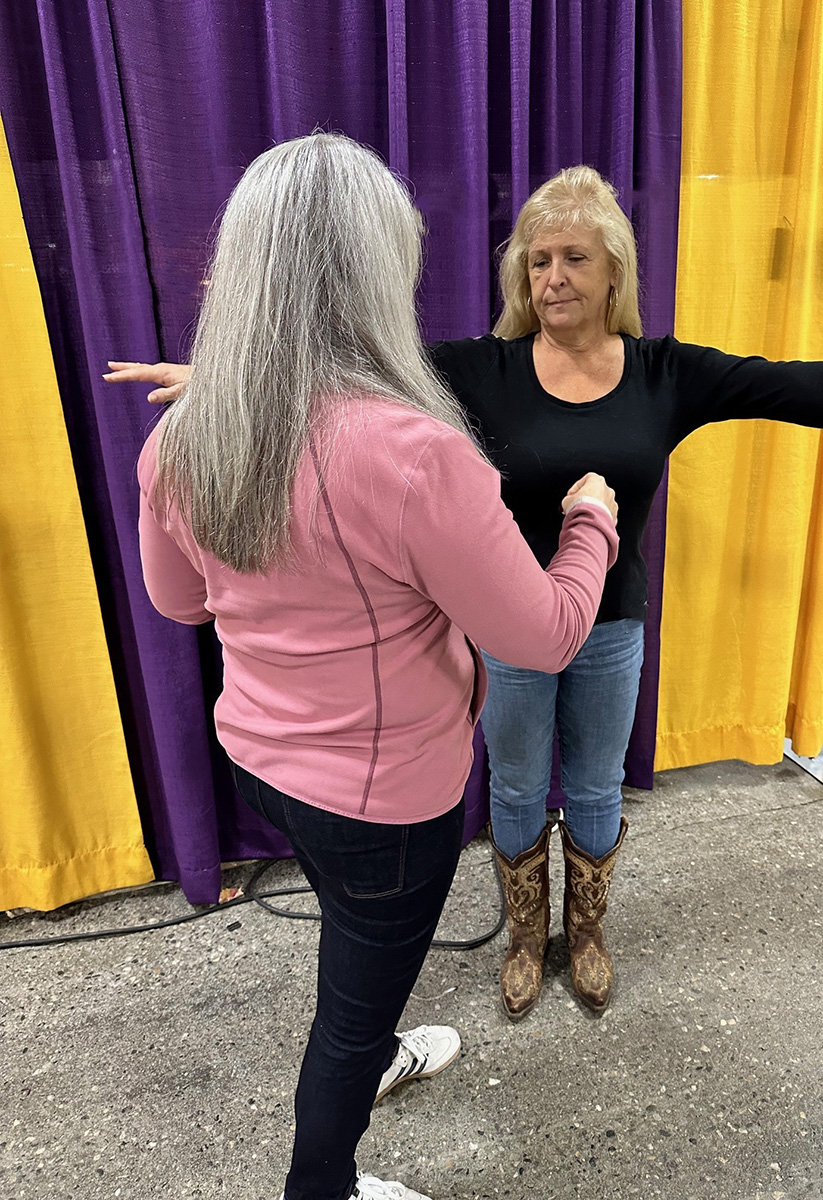
- Chick obtains three measurements for a proper safety vest fit: bust, back length, and over the shoulder. It’s important to wear the undergarments you would normally wear while riding when having a fitting. Photo by Julie Maddock
-
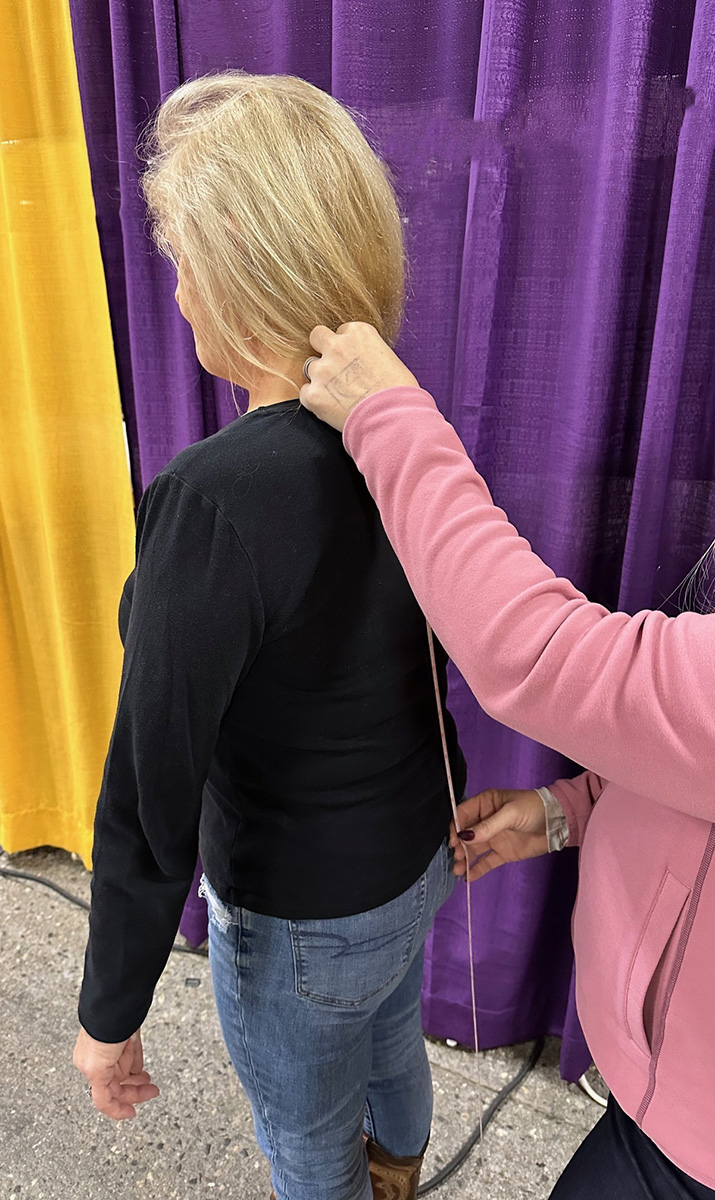
- Chick gets the back measurement. Photo by Julie Maddock
-
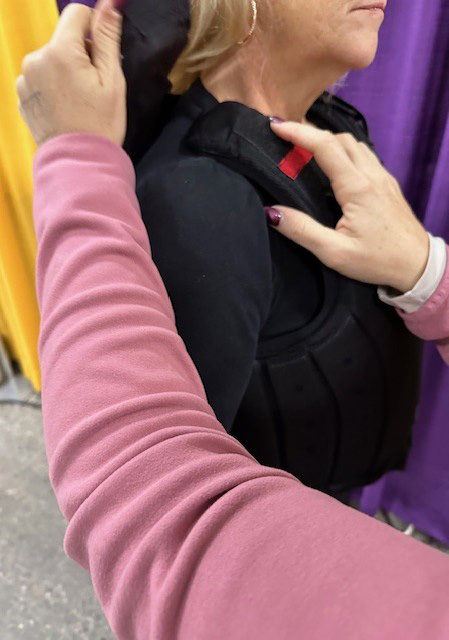
- Some vests have shoulder adjustment straps—a helpful feature that allows for a customized fit. When the vest is worn, the red lines indicate the “safety zone” and must be covered by the Velcro straps. When Chick puts a vest on a rider, she will adjust it as wide open as possible, then use the Velcro straps to find a secure fit. Photo by Julie Maddock
-
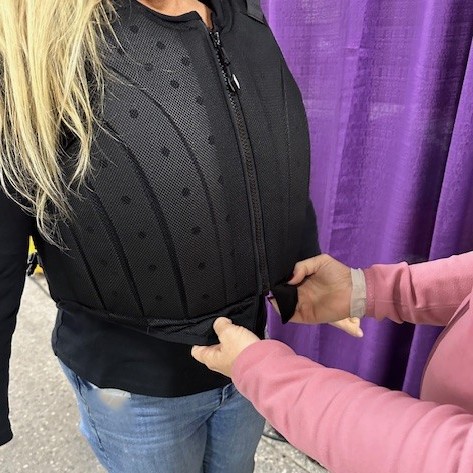
- Chick ensures the vest falls about an inch past the lowest rib, measuring on either side of the belly button. “Generally, when we fall, we tend to raise our arms. If the safety vest isn’t properly fitted, it can rise too high and not be able to protect the ribs,” Chick explains. “We don’t want the vest to uncover our ribcage; the ribs are the protective armor of our lungs, diaphragm, and heart.” Photo by Julie Maddock
-
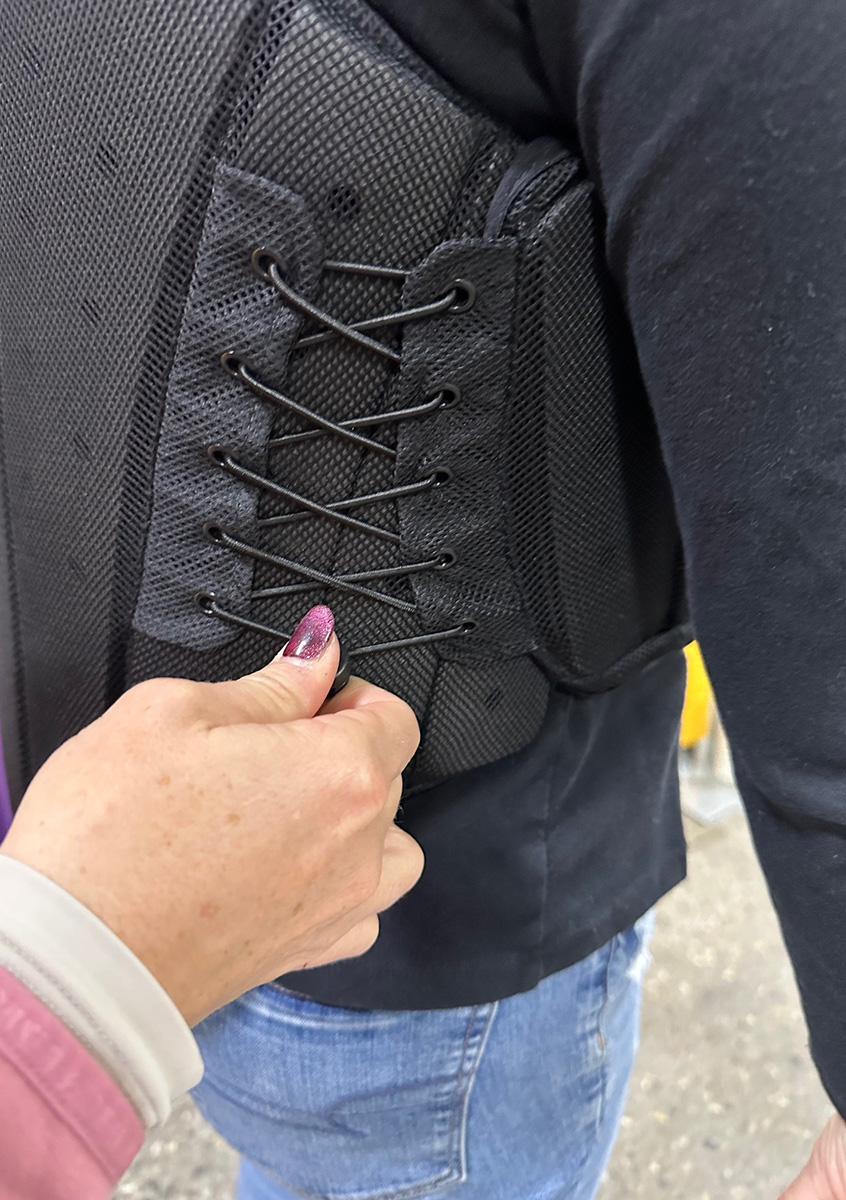
- Chick demonstrates how to adjust bungy side fastenings for a correct fit. Photo by Julie Maddock
At the end of a fitting, a rider may question if the body-hugging vest is too tight. “Try taking a deep breath. You want the vest as snug as you can tolerate, but not so tight that you can’t breathe deeply,” says Chick.
Most vests are unisex; there is one brand designed specifically for a woman’s body with contoured lines that help accommodate a bust. And every vest feels a bit different. Rather than choosing a vest based on how it looks or the price, “the most important consideration should be if the vest fits you correctly and provides the highest level of safety,” explains Chick.
Is Wearing One Right for You?
“I wear a vest on every ride,” says Chick. “My horse is 17.1, and he loves to play… and that’s a long way to fall off.”
Chick wishes every rider would consider wearing a safety vest, have it professionally fitted, and ultimately enjoy a safer ride. In addition to in-person fittings at Fair Hill Saddlery in Elkton, Md., Chick also offers fitting consultations via Zoom or at major equestrian events throughout the year, including Equine Affaire, Defender Kentucky Three-Day Event, Horse World Expo, and more. “It makes me happy to be a resource to help riders properly fit a vest and helmet.”
This article about safety vest fitting is a web exclusive for Horse Illustrated magazine. Click here to subscribe!