Navajo Nation extends 27,000 square miles across Arizona, New Mexico and Utah; it’s the largest Native American reservation in the United States—bigger than Massachusetts, New Hampshire and Vermont combined. But its horizon line and surrounding communities could not extend far enough to fit the big dreams and even bigger heart of author, cowboy, outdoor educator and urban Native son, Hugh Ta’neeszahnii Englehart.
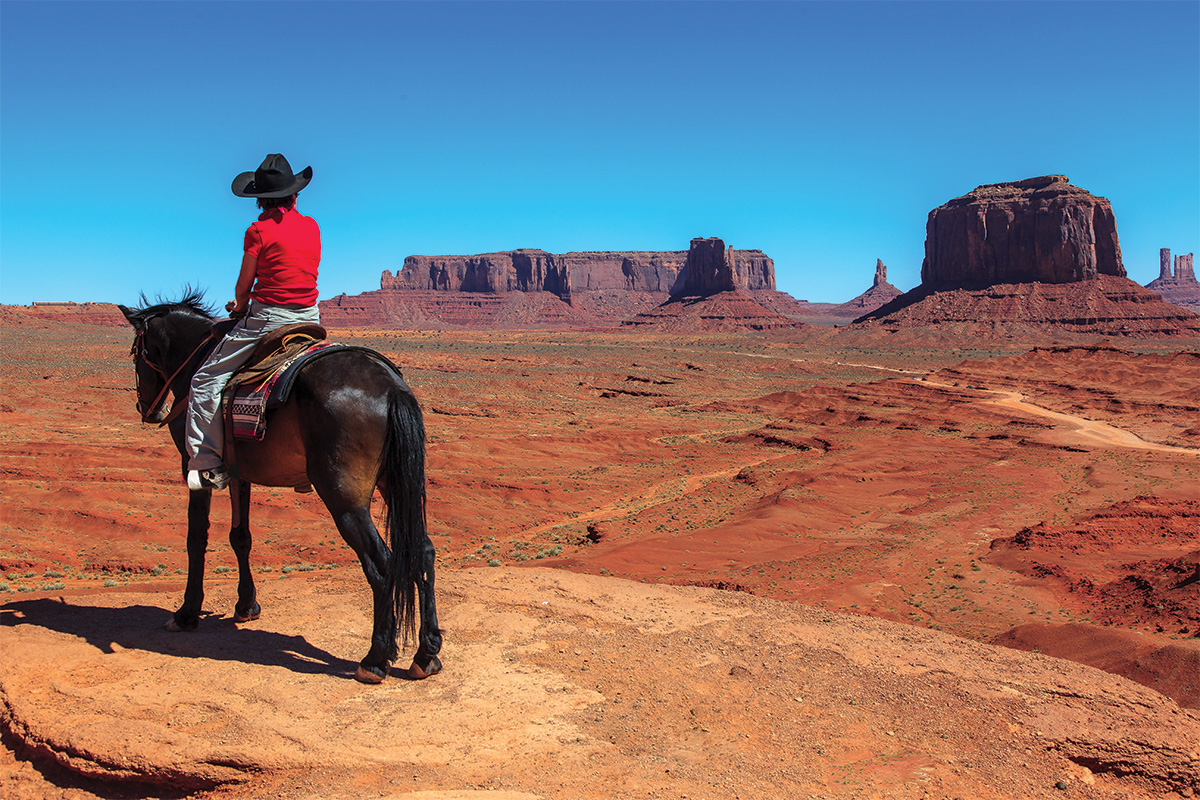
Photo by Feratay/Adobe Stock
“My Navajo clan name is Ta’neeszahnii,” he says. “The Navajo are maternal, meaning we take our grandmother’s last name.” He grew up inside Navajo Nation on a farm in Cedar Hill, but just outside the reservation where his uncles still keep a horse ranch and his “great auntie” farms the family homestead.
“The isolation of my family farm gave me an authentic, traditional Navajo childhood,” says Englehart, who saw natural beauty up close rather than through a television set. But what his family also saw was how poverty deprived and denied opportunities to the young people on the reservation.
“Which is why my Navajo moved off the reservation—to find work and move beyond the economic injustice my grandmother, mother and ancestors endured, and so I could tell my story.”
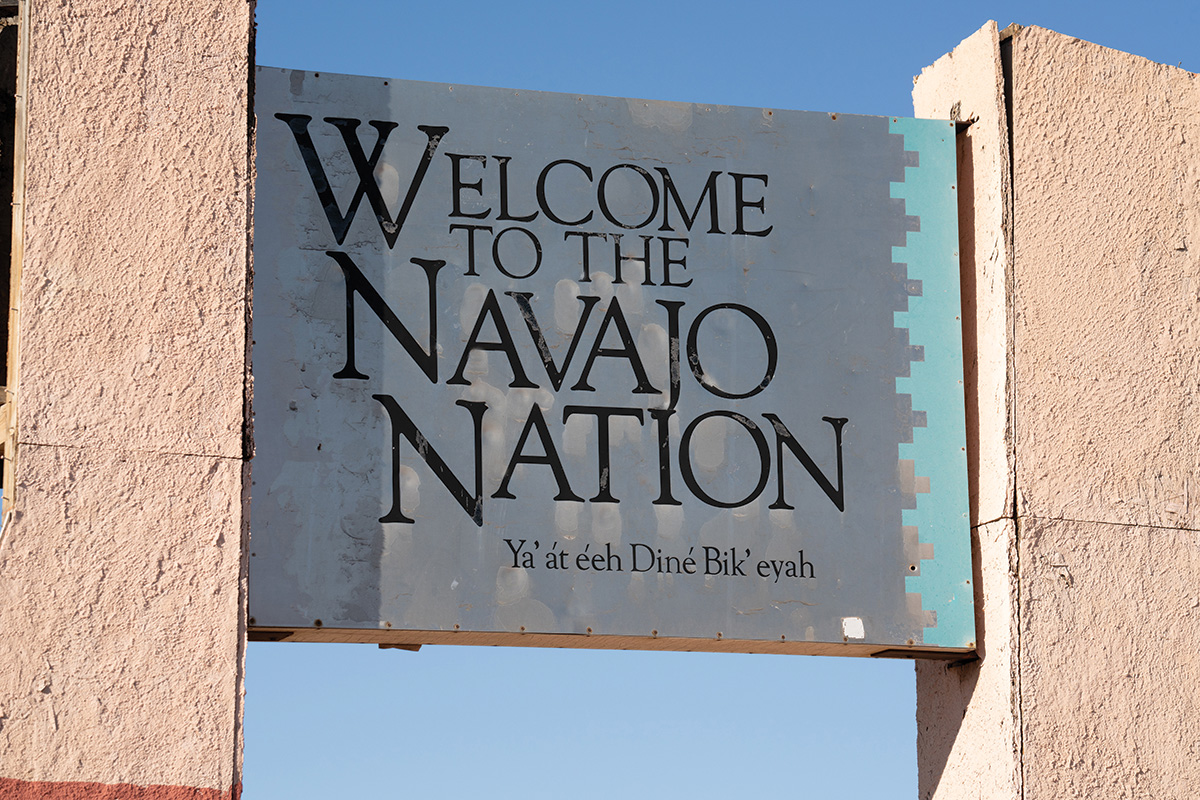
The isolation of his family farm gave Hugh a traditional Navajo childhood. Photo by Pabrady63/Adobe Stock
Experiential Learning
Now in his 30s, he lives in Los Angeles, Calif., where he works as an artist, horse rescuer and youth educator. A challenge course designer as well as horseman, he hopes to see experiential learning become as mainstream in the United States as it is in both Europe and the southwest Four Corners area where he grew up.
“In Denmark, empathy and outdoor education are mandatory. Navajo education,” he grins, “called it common sense.”
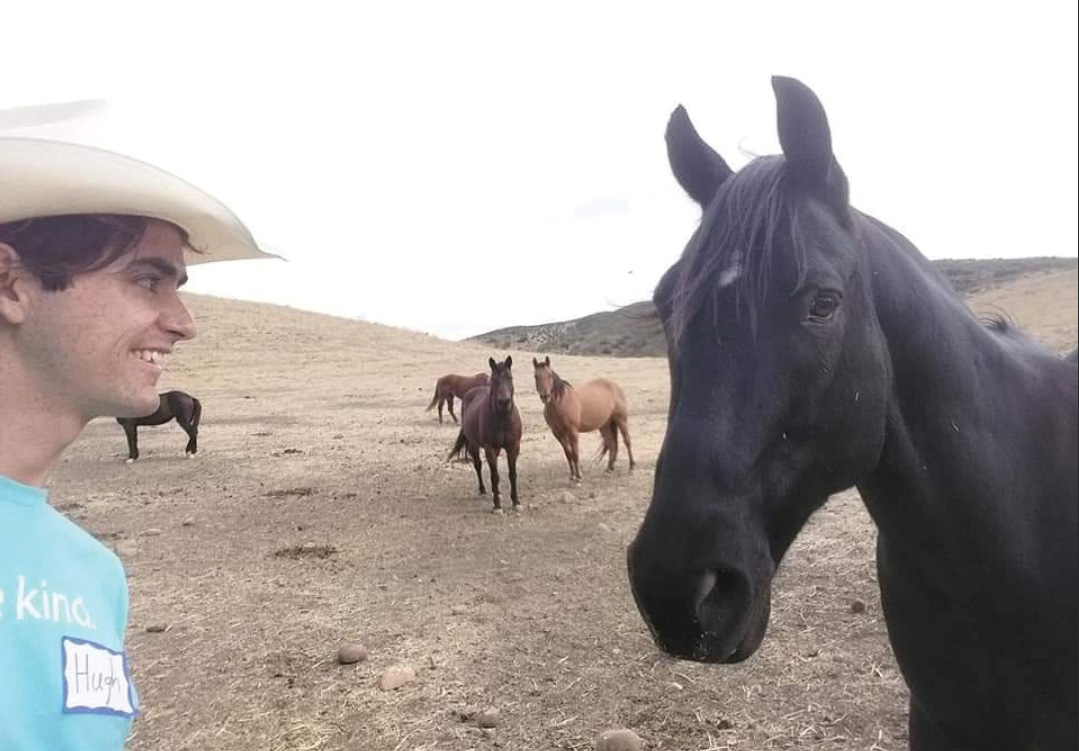
Hugh at American Jewish University facilitating experiential education. The University partners with the Wounded Warrior Project using horses to help veterans with PTSD. Photo by H.A. Eaglehart
Hollywood is all about putting on a good show, but when it comes to getting real, this passionate advocate for equine therapy says it’s all about the horses.
Earth Warriors
“I incorporate horses, summer camps, challenge courses, empathy, and my Navajo culture as a teacher,” says Englehart.
It has shaped him into a cowboy who is up for a challenge. One of the state’s top challenge course builders and inspectors, he is special consultant to the California State University-Northridge Outdoor and Recreation Department, home to the largest public-owned challenge course in Southern California, and directing manager for Griffith Park Boys Camp, operated by the City of Los Angeles Recreation and Parks Outdoor Education Department—the largest urban park in North America.
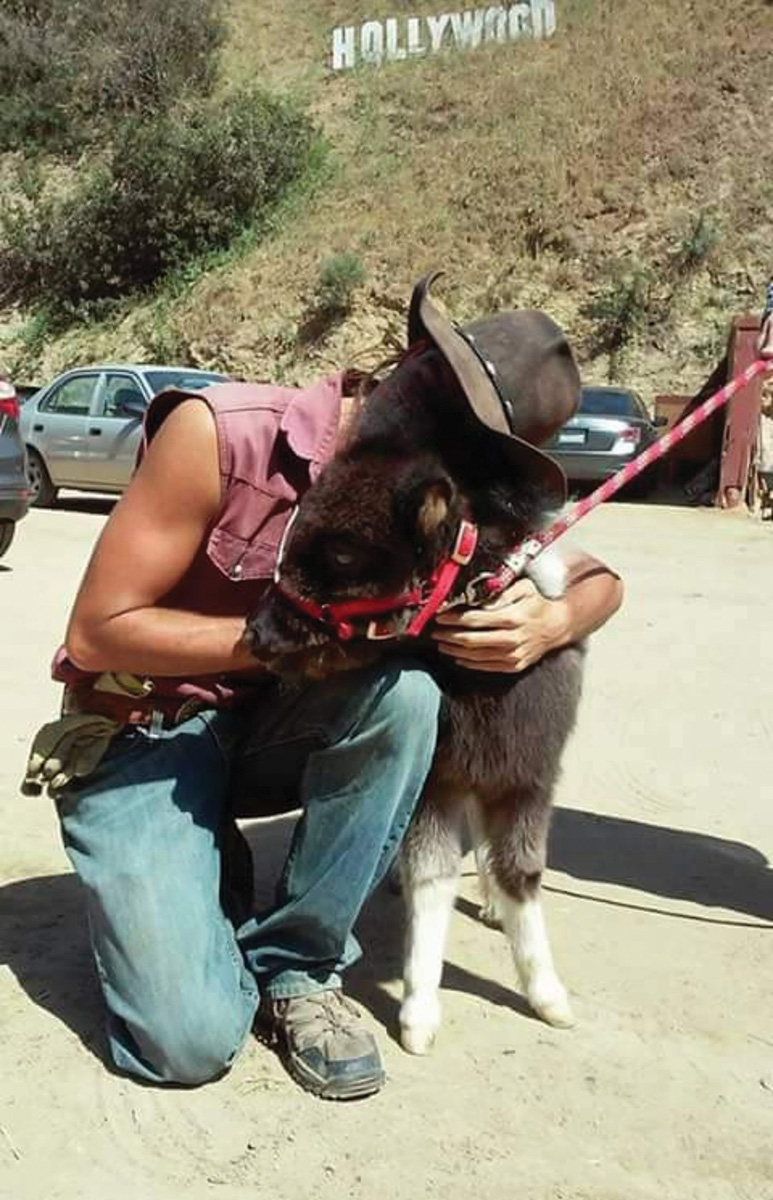
Hugh hugs a Mini named Squishy, whose career is doing TV commercials. Photo by H.A. Eaglehart
He’s carved a niche for himself in the challenge course industry just as it’s evolving to offer more fixed “wilderness type” team-building experiences than expedition-type settings.
The idea, he says, is to use empathy learning and positive memory making to foster a generation of leaders who “understand the importance of cherishing the planet while having the knowledge to become an Earth warrior.”
The Navajo, or in their language, the Diné, believe in two classes of beings. Citing Ray Baldwin Lewis for the Navajo Tourism Department, discovernavajo.com, these are the Holy People, who taught the Diné to live in harmony with Mother Earth and Father Sky; and the Earth People, who do everything they can to maintain that harmony and balance.
It doesn’t get much earthier than helping kids or horses find harmony and balance. The work Englehart does now had its genesis in leaving his home for Los Angeles and finding his way into wrangling and saving horses at a 4,000+ acre municipal park at the eastern end of the Santa Monica Mountains, home to the iconic the Hollywood sign.
“For me, Griffith Park is about so much more than horses, but horses are where my story begins.”
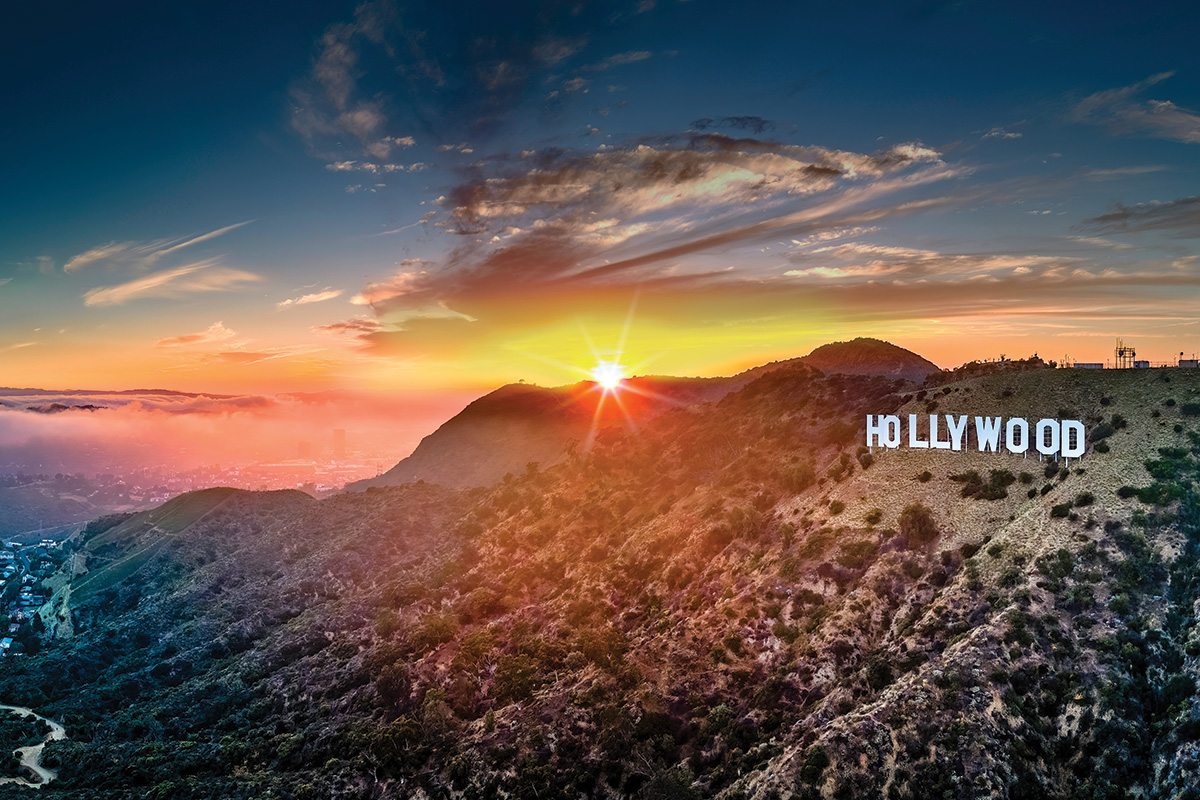
Photo by Larry Gibson/Adobe Stock
Flights & Totes
From Flora Vista, N.M., to Hollywood, Calif., Englehart has lived and breathed horses since he was “in nothing but a diaper and a Stetson” on his father’s lap astride the family horse, named Red.
“I’m not sure why horses give me flight in dreams,” he says. “Muscle memory? I do know that horses in my dreams signal a good night ahead. Horses give me flight in dreams or nightmares. Horses are why I love nightmares, which are never scary when I’m astride a horse. Nightmares are my chance at courageousness.
“One of the greatest horses I ever worked with was named Butters because he was the color of butter. Riding him felt as smooth as flying. Sometimes for fun we’d ride down to the Los Angeles River and race the trail parallel to the concrete canal system, the cool air blowing in our faces as I flew with Butters straight up to the moon over Glendale.”
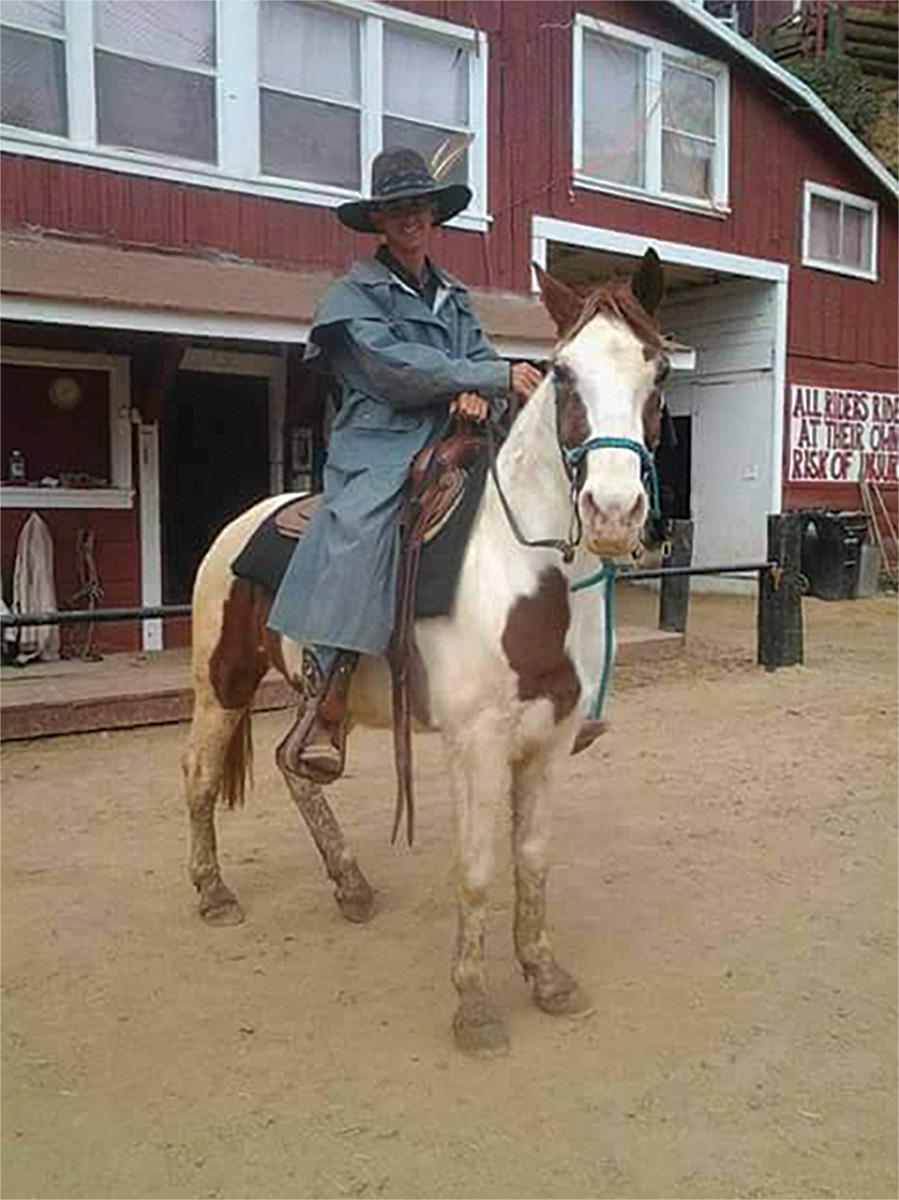
Hugh rides a mare named Elsa in front of the last hay barn in Los Angeles, built during the Great Depression, before going to wrangle horses in the rain. Photo by H.A. Eaglehart
Or unfurling the wings of his aunt’s 17-hand Thoroughbred, Tote Sack.
“He was all legs and one gait: rocket fast,” Englehart recalls. “The moment you got on, he took flight. Tote and I were closer than I ever got with [anyone] I knew at the time. The only soul to come close has been a Friesian mare named Allie. I’m certain Allie is Tote reincarnated!
“I remember the names of horses more than I do humans. I think that is partly because horse personalities are more memorable—they’re genuine and larger than life. Horses take up their full space, whereas humans hide too much for Navajo to ever fully trust.”
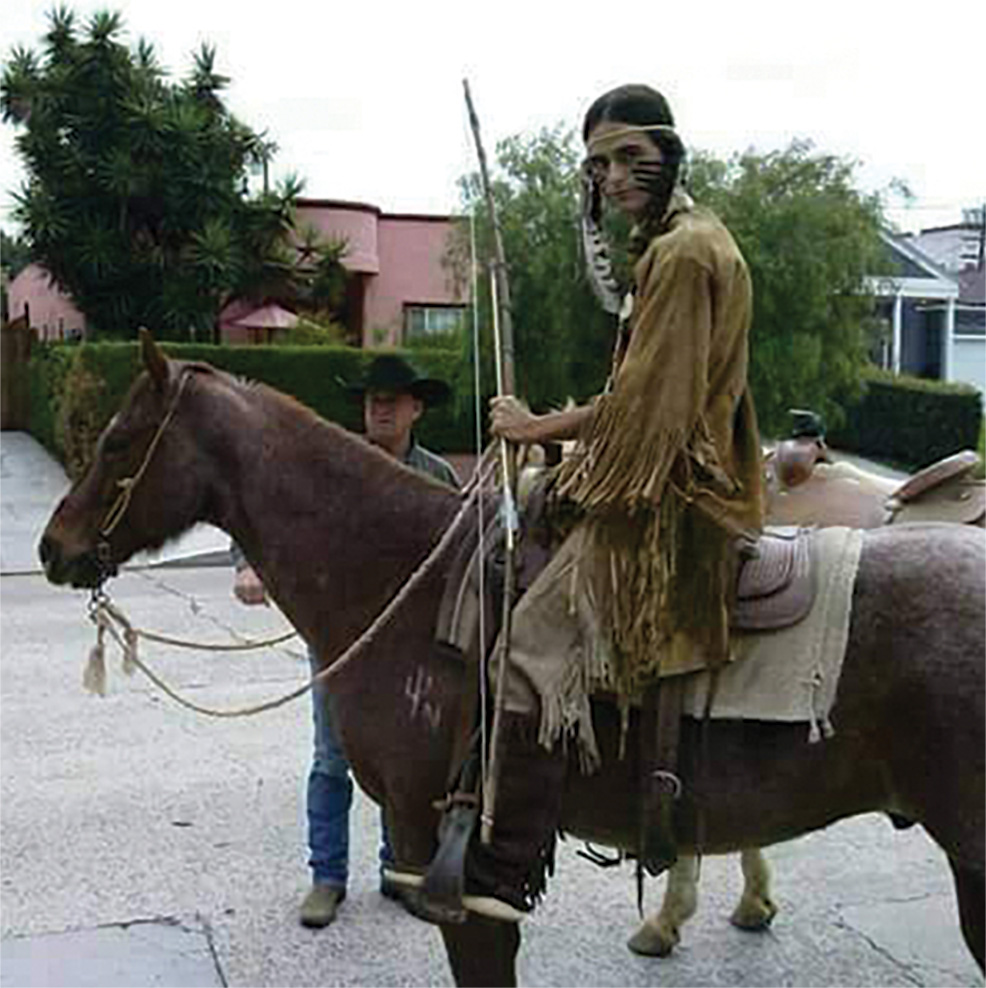
Hugh as stunt rider playing a Native American warrior at Raleigh Film Studios, across from Paramount Studios. Photo by H.A. Eaglehart
His inability to trust was the most traumatic part of being closeted as a teenager.
“I didn’t come out until I was 23 and completing my last semester of college,” he says. “There’s nothing special about my story, which is actually the saddest part.”
He recently released a book under his pen name, H.A. Eaglehart, called Urban Native: The Musings of a Queer Navajo Cowboy in Hollywood, about growing up Native and the lessons he has learned from life, nature, and horses along the way.
However, his story includes a leg up. A college degree in outdoor education led to a promotion from Ropes Director to Senior Supervisor for Griffith Park Boys Camp last April, and he’s paying it forward. His replacement, Hope Rogers, was his recommendation.
“Our campers are international, have heterosexual and openly [gay] parents, and are surrounded by the spiritually resurrecting qualities of Los Angeles’ most untouched natural habitat,” he says.
An Unspoken Language
For any teenager, self-identity is a daunting undertaking.
“Horses provide a powerfully positive influence in early human development,” says Englehart. “After teaching hundreds of kids from all six continents how to ride, I can say that horses possess an unspoken language that kids speak instinctively, naturally tapping into the ancient bond humankind shares with caballos.
“Horses often perceive children differently from adults,” he continues. “Horses tend to be less trusting of adults because adults are better at hiding emotion.”
Navajo horse sense is handy for experiential therapy facilitators because horses fine-tune their ability to interpret the emotions of predators.
“Horses live by herd mentality, becoming experts in reading body language,” says Englehart. “A herd can feed off of wrangler energy. Stressed out cowboys can literally trigger a stampede. Herding horses taught me in real time how, by relaxing, the positivity of my mood increased, which in turn affected the mood of the herd. Stampedes are dangerous, so it really pays off to be at peace in the world of horses.”
A Hopeful Perspective
He says that children in the programs he works with give him a more hopeful perspective about the world in general.
Sherri Lindsay, City of Los Angeles Senior Director of Griffith Park Boys Camp, says the feeling is mutual.
“Kids love him,” she says. “He sees life differently and connects to people in a different way. Hugh’s easygoing style and love for exploring have taken him from Navajo Nation to the wilds of Hollywood, and we are all better for it.”
Englehart strives to create environments where everyone can thrive as individuals free to pursue happiness within inclusive communities. In therapy or horsemanship, the way to fight fire is not with more fire, but with more harmony.
In Mustangs and in Life
“You will never ride a wild Mustang by getting it to come to terms with your version of reality,” he says, recalling how he discovered the new job of a once-wild Mustang that had come through a rescue where he volunteered as a trainer.
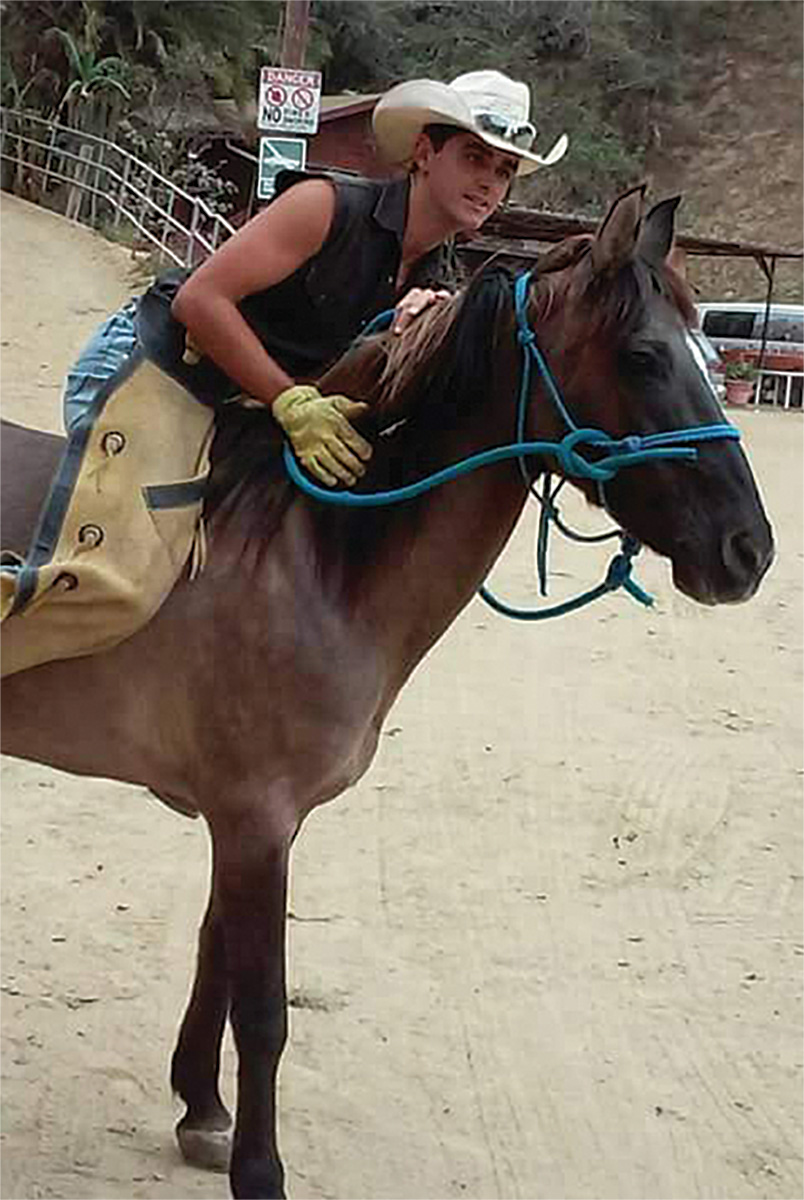
Hugh bareback on rescued Mustang named Lola, who has since been adopted and lives an amazing life in the Hollywood Hills. Photo by H.A. Eaglehart
“A Mustang rehabilitated by the federal government program is easy to spot by the freeze brand on its neck,” says Englehart. “I came across a photo of a firefighter in Oregon battling a wildfire and, looking at the markings on its neck, it was instantly obvious that the horse came from the same rescue where I once trained horses! These rehabilitated Mustangs are sometimes adopted by Hollywood stars (like Conan O’Brien), but many are used by border patrol and wildfire fighters, to carry equipment to the front lines where road access by vehicle is limited.
“My incentive as a Mustang trainer was never to be better than anyone else, but that photo solidified my desire to leave the world in a more harmonious state. How much more harmony can exist if wild horses and firefighters can join forces to battle the flames—literally or figuratively—in front of them?”
Englehart’s book, Urban Native, is published by Incunabula Media of Seattle, Wash., and is available at incunabulamedia.com.
This article about Hugh Ta’neeszahnii Englehart appeared in the August 2024 issue of Horse Illustrated magazine. Click here to subscribe!