Feeding time always seems like a rush. Hurry up and feed so you can continue with your barn time or head off to your kid’s ball game. But if you’re in too much of a rush, you may not have time to interact with your horse and solidify the respectful relationship you want later. It’s easy to be so rushed that you allow your horse to move into your space to grab food away—without having time to correct the newly allowed behavior.
Reason for Respect
Trainer Mike Brashear states that you’re training your horse every time you’re near him. While your horse may not be aggressive or mean, stepping into your space when he isn’t invited can lead to accidents.
Imagine walking into your horse’s pen to put hay in a slow feeder. Would your horse stand at a distance and only approach once you finish loading the feeder, or would he move forward into your space and steal a mouthful of hay as an appetizer?
If your horse is the type who would come to you and grab a snack, you may be in need of Brashear’s training tips so that your horse doesn’t accidentally munch your fingers, bump into you and cause a fall, or put you in a vulnerable position if multiple horses are in the feeding area.
“When you walk in the pen any other time, you want your horse to come to you,” he says. “Your horse learns that if he comes to you, he gets pets and gets loved on. So when you enter with hay, that’s what he’s going to do as well, unless you teach him something different. You may look at grabbing hay as disrespect, but the horse looks at it as, ‘This is what is allowed.’”
Ideally, Brashear says he wants his horses to wait. He works to put “wait” on his horses wherever and whenever possible so that they tune into his cues.
At feeding time, he wants horses to stand at a 3- to 6-foot distance and wait for him to set down and move away from the hay or grain. Brashear uses the following steps to teach a horse when he can come into your space (to get the food) and when he should respectfully keep his distance.
Teaching “Wait”
Make sure your horse has had his usual meal so that you aren’t training a hungry horse. Also make sure you have time to work with your horse without being rushed. Brashear suggests making this the groundwork that you do before you ride.
Outfit your horse with a rope halter and a 12-foot training lead attached to the halter with a knot. For now, leave the food in the barn. You’ll teach the cues without temptation present first. Only after your horse is doing well and obeying your request to stand and wait should you attempt it at feeding time.
“It’s always better to start with a connection with your horse so you have some control and can send him back out,” says Brashear.
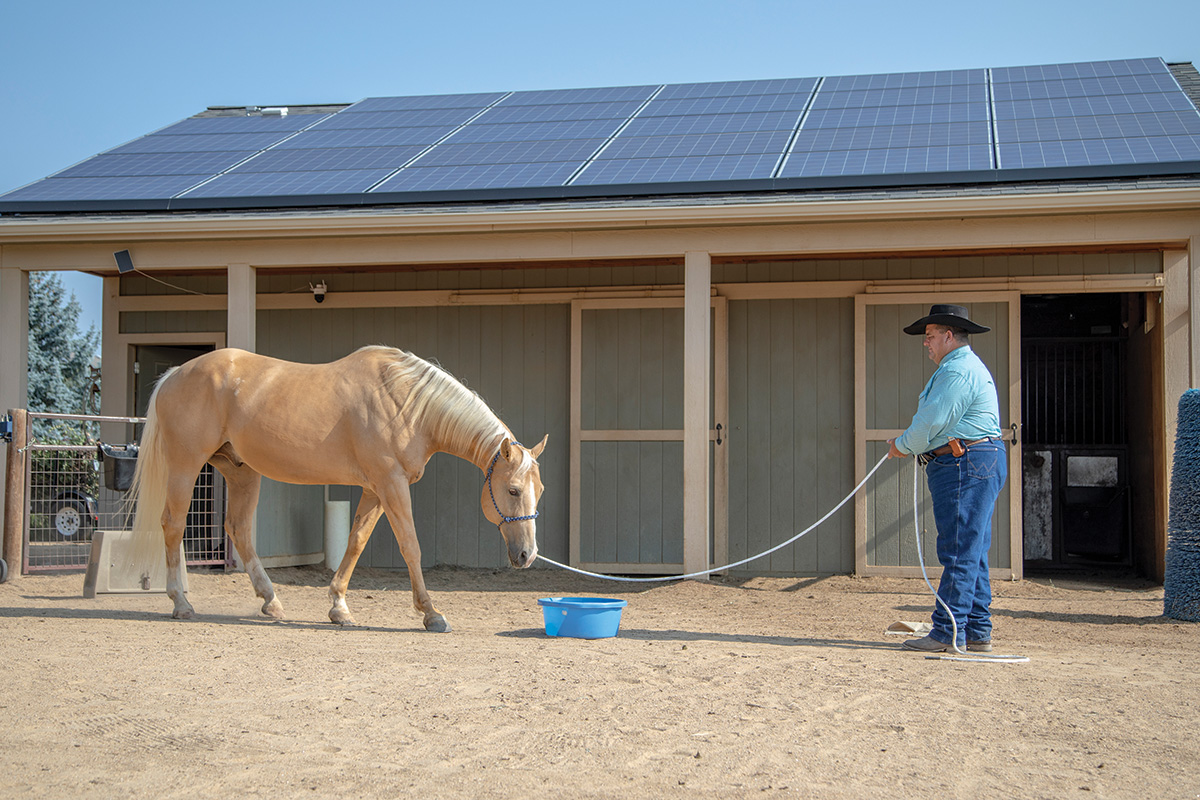
1. Start by facing your horse and stand about 3 feet in front of him. Mimic the distance you’d like to be from your horse when you feed him in his stall or paddock.
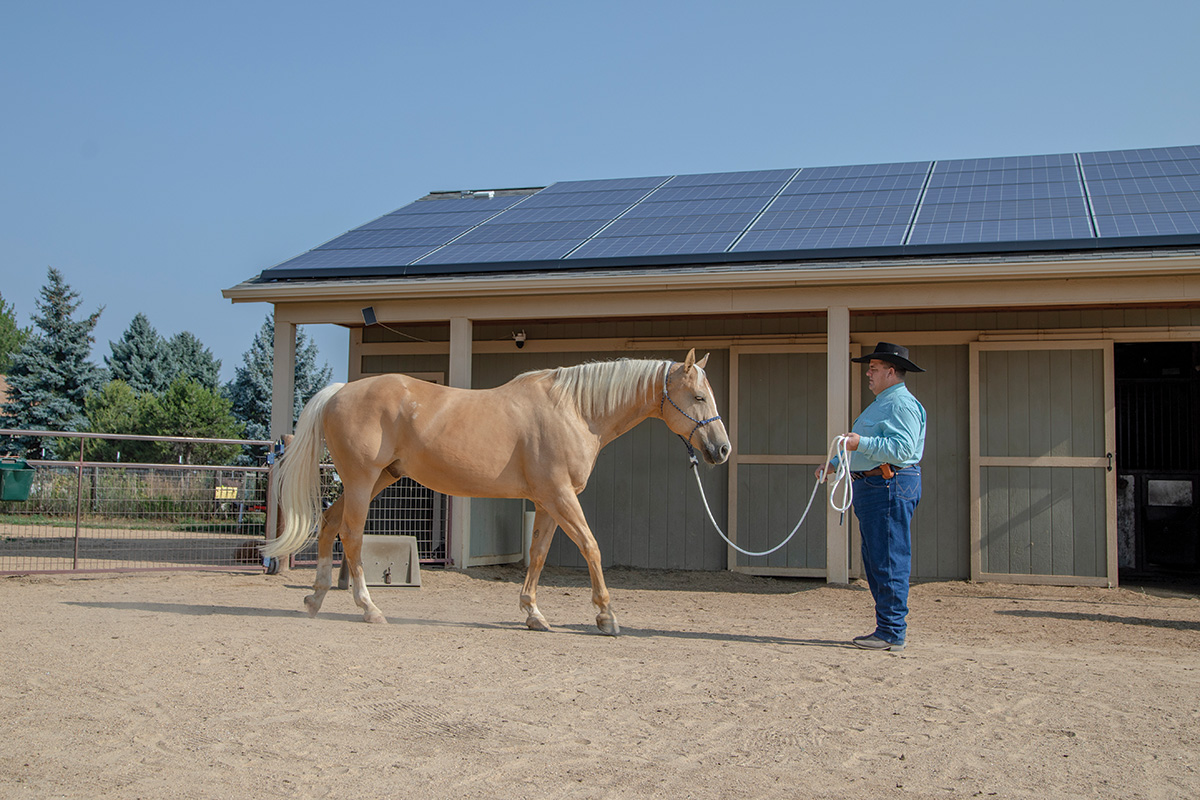
Begin without food present and stand about 3 feet in front of your horse. Photo by Heidi Nyland Melocco
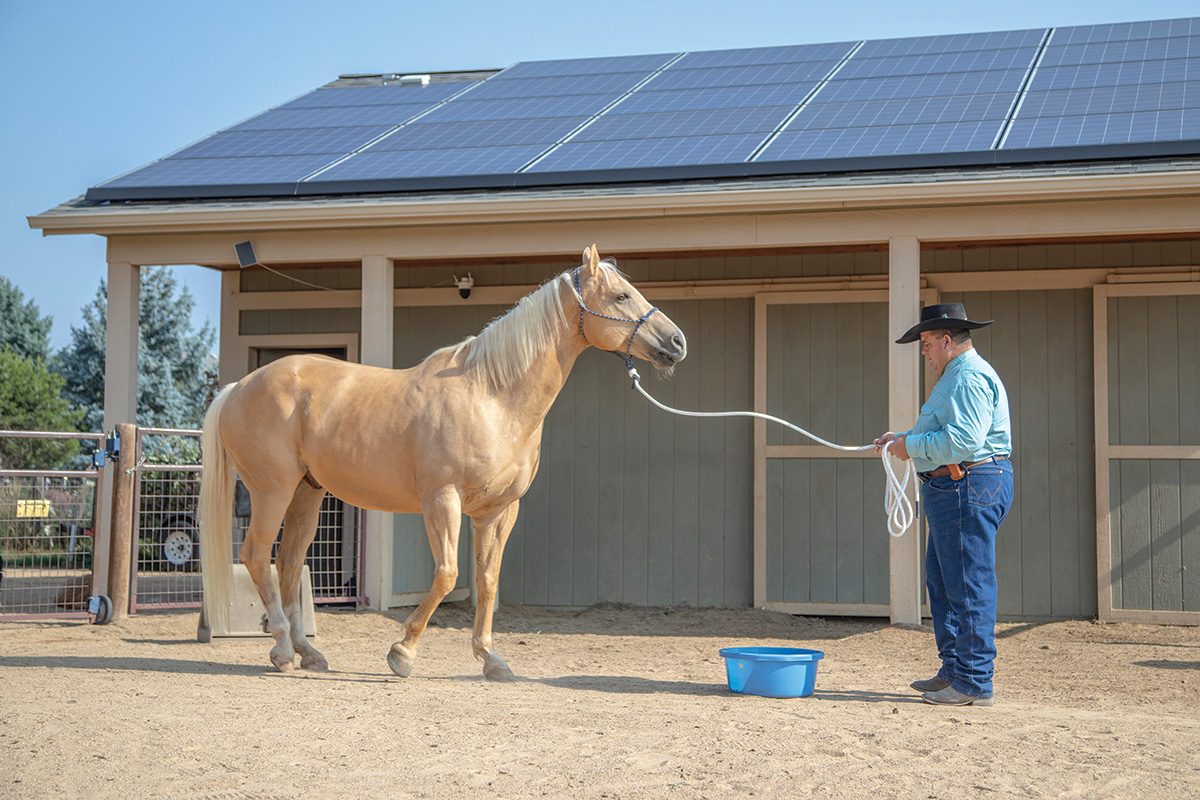
2. If your horse moves into your space, shake the lead rope to encourage him to step or rock back. If he doesn’t move, shake harder. Make sure to keep your feet in the same place. You don’t want to chase the horse away or act aggressively. Instead, you’re just teaching him to respond to the rope correction and stay in place as you asked.
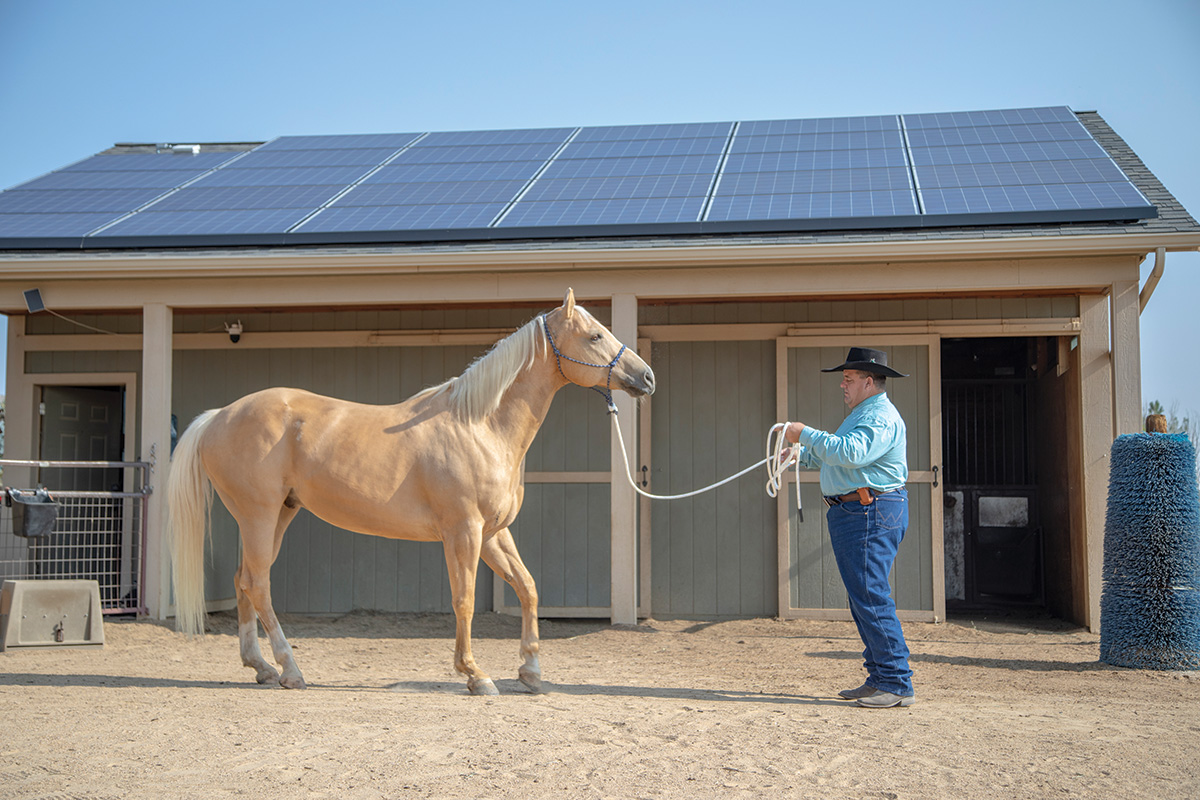
If your horse starts to step into your space, shake the lead rope and ask him to step back. Photo by Heidi Nyland Melocco
“I don’t want to walk to my horse or act mean,” says Brashear. “I want to teach him to wait. When the horse steps back, all my energy stops, and I stop moving the rope. That change of energy is the release.”
You may add a verbal cue of “get back” to remind your horse to stand still in a calm way. If your horse will stand still and not move into your space, back up and see if he will come into your space. Your moving back will invite the horse forward.
If you step forward, he should move accordingly, too. If you stop again, make sure that he will stand still. Practice this again. When you want your horse to move closer to you, step back (while still facing your horse) and take slack out of your lead rope.
As you work without feed present, think about how this same skill will work at feeding time. Think, “You can’t come up to this feeder until I’m back out of the stall door. If I turn my back and walk away, you can come up, but you can’t come up on me on your own accord.”
Add Feed
Next, set up the same scenario (standing in front of your horse and expecting him to stand respectfully), but have a pan of grain at your feet.
Brashear says that now it’s time to ask your horse to move in and out of your space on command while the food is present. First, ask your horse to stand 3 to 6 feet away from you and the feed. Allow him to wait for about 30 seconds.
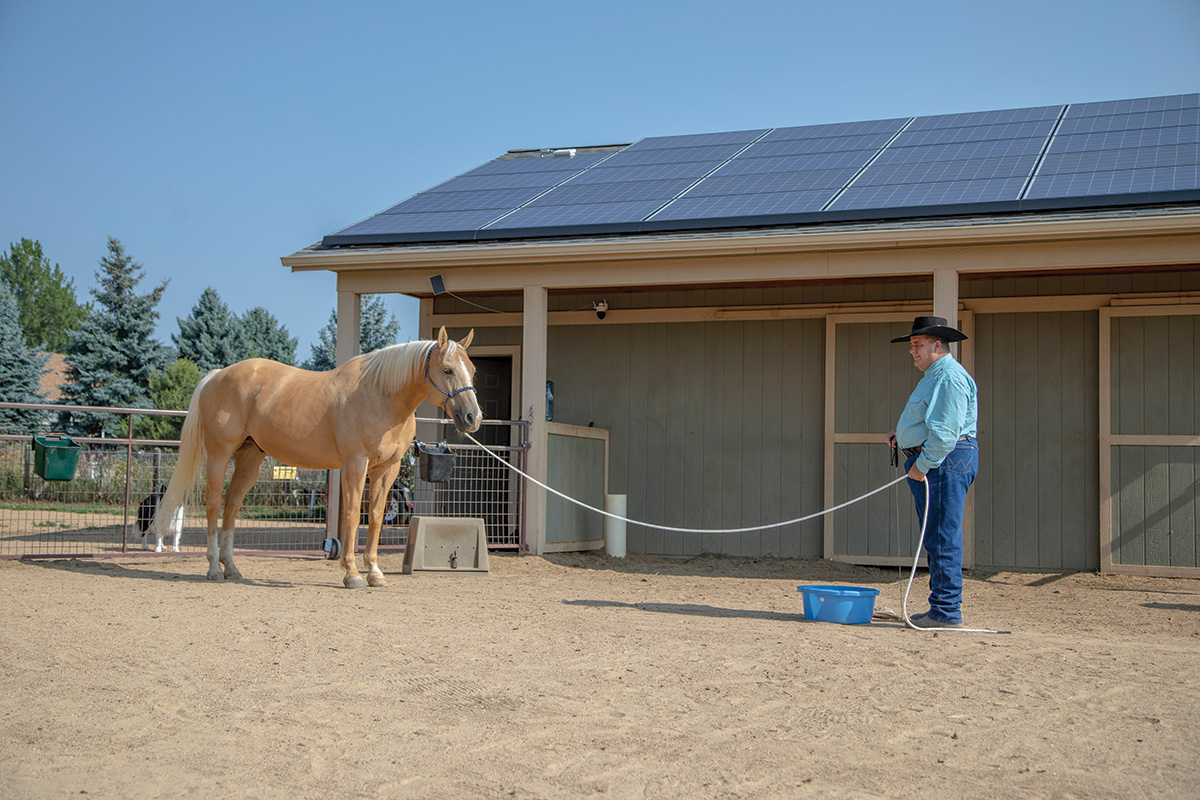
First, ask the horse to stand away from you and the feed for 30 seconds. Photo by Heidi Nyland Melocco
Ask your horse to come into your space by slumping your shoulders and stepping back. This change will invite your horse to move forward to get a bite from the feed pan.
Next, ask the horse to come forward and take a bite of feed. Photo by Heidi Nyland Melocco
“Horses will usually take one bite of grain, then lift up their heads to swallow,” he says. “Once your horse has taken a bite, ask him to step back and leave the feed again. Step forward and stand tall. Ask him to stand and wait until invited in again.”
After he lifts his head to swallow the feed, ask him to step back again. Photo by Heidi Nyland Melocco
Practice this over and over.
“Every bite of grain that my horse gets is dependent on me asking him to come into me,” says Brashear.
If your horse is responding well to your cues, practice again with a web halter. You want to know if your body language alone is enough to tell your horse to back up. With a “lighter” halter, you can tell if your horse is listening to your cues but still have some connection to him.
Finally, it’s time to test your horse without a halter. Work where you would feed your horse, but when he isn’t waiting for a meal. Take the halter off altogether and try the same setup.
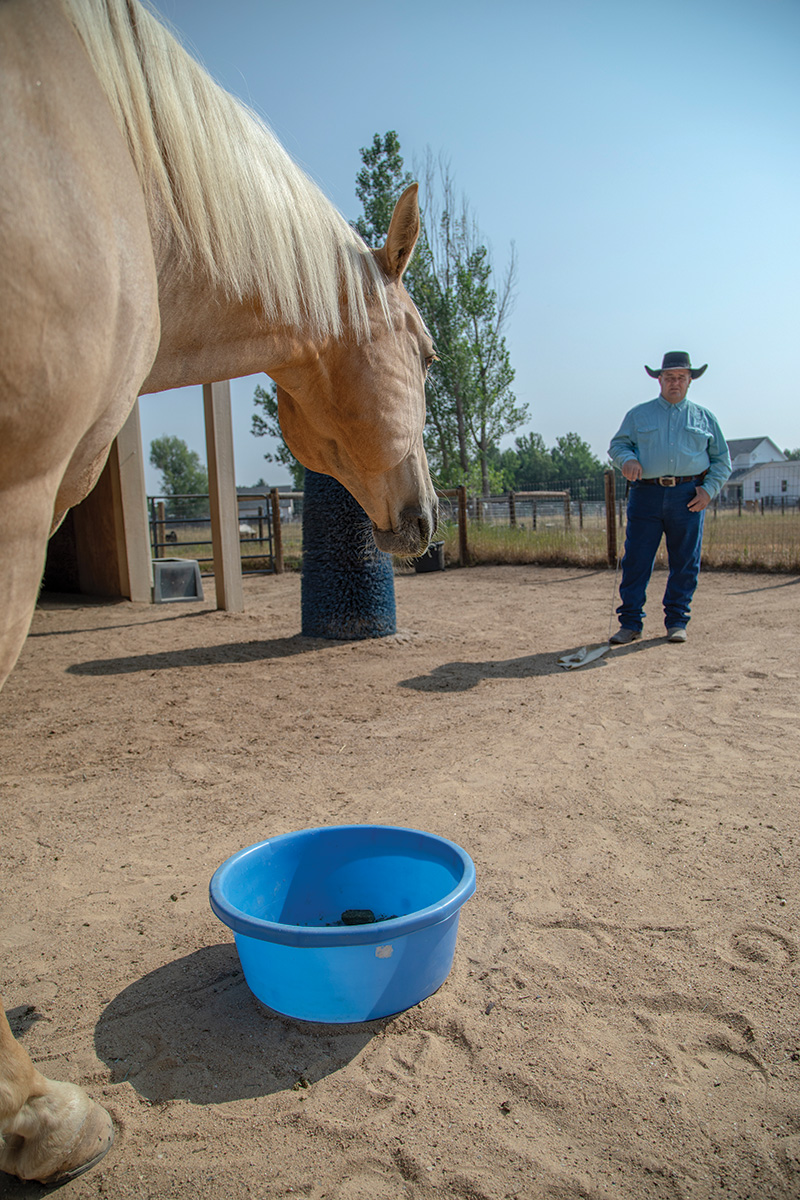
Once your horse has learned in a halter, you can progress to doing the exercise at liberty. Photo by Heidi Nyland Melocco
If your horse stands and waits, notice if he’s looking for your cues.
“If he looks like he’s wondering if he should move to the food or not, he’s watching you,” says Brashear. “Make him wait and stand for about 30 seconds. Then, step back and away and allow him to get the food. Your rocking back draws him to you and allows him to get to the grain.”
Keep in mind that you may have to move back to previous training steps if your horse isn’t listening without the halter. Ask him to move away again when he picks his head up. Step forward and increase the energy in your body, then move your hands up and away just like you would have while holding the lead.
If he doesn’t respond, increase your energy until you get a change—without yelling or appearing angry. If your horse won’t move away or listen, go back and work with the rope halter and lead.
At Feeding Time
After you have practiced sending your horse away from the grain during a practice session, it’s time to do the same work at feeding time. Make sure that you have time and aren’t in a rush.
When you walk into the pen, carry the hay to the feeder and make sure that you’re aware of your horse’s position. If your horse comes up to you and you’re focused on filling up the feeder, put the hay down and focus on the horse just as you did in the last “no-halter” training session. Put your arms up and calmly tell your horse “get back.”
When you remind your horse of the training you did with the halter, he should learn that you expect the same behavior any time you are near him—including at feeding time.
This article about improving a horse’s behavior at feeding time appeared in the October 2024 issue of Horse Illustrated magazine. Click here to subscribe!