Enter our 12 Days of Christmas Giveaways here!
0 ITEMS
  • My Account
  • Holiday Gift Guide
  • Podcast
  • Webinar
Subscribe Combo
Enable cache13
Home Blog Page 1052

Colic Surgery Guide

31

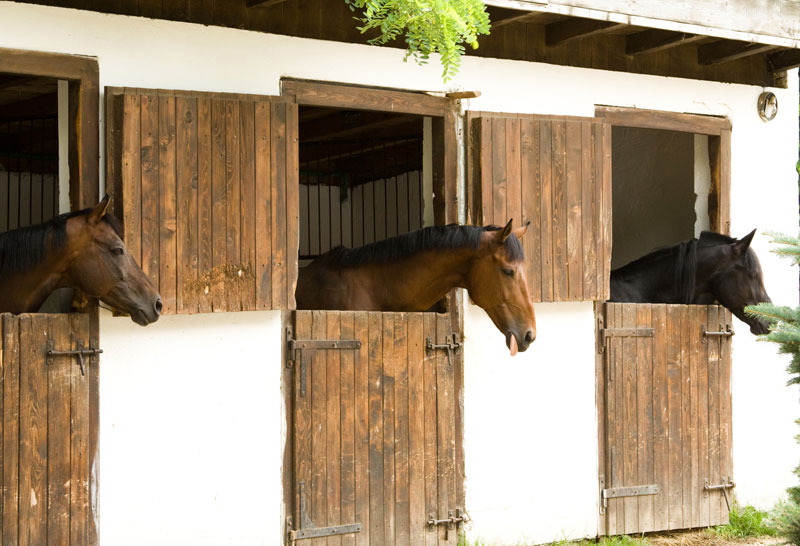
Horses in stalls

While colic episodes are cause for concern, most cases can be managed with non-surgical veterinary treatment: a shot for pain, a dose of mineral oil, a rectal exam, and the horse usually gets better. But then there are the other cases. Those horses that don’t get better with one or two or three shots for pain relief, that keep on lying down, pawing, trying to roll, kicking at their belly, looking at their sides, et cetera. This is the dreaded 10 percent that require surgery.

Classic Colic

The large intestine of the horse is designed to digest forage. It’s composed of a very large cecum, which can be compared to our appendix, and a large and small colon. Gas or spasmodic colics occur when the cecum and large colon become distended with gas. The gas distention overstretches the intestinal wall, making the intestine very painful and unable to contract in a nice wave-like motion that moves gas along and out. Instead the intestine spasms, allowing gas to stay and creating a cycle of more and more distention. In these cases horses will often paw violently, pace, lie down and kick at their bellies. Walking will sometimes help get the intestines moving again and push the gas out; if not, then Banamine and Xylazine for pain relief, along with rectal massage and nasogastric tubing (a tube passed up the nose and down into the stomach, which allows the veterinarian to administer mineral oil with a stomach pump) usually fixes these colics.

Impaction colic is similar to gas colic: The intestine becomes distended and stops moving properly. But instead of gas, food material fills the intestine and gets stuck (impacted). These types of colics can be very painful but often the horse is not as violent. A rectal exam by a veterinarian, which may include pulling out manure, helps provide some relief. Also, a nasogastric tubing with mineral oil helps soften and lubricate the manure so it can pass.

Spotting Surgical Colic

Surgical colics are much different. In most cases there is an immediate difference in the horse’s eye that most surgeons recognize immediately. These horses don’t respond to pain medications, and the nasogastric tubing and rectal exam provide little, if any, relief. The pain is constant and can be severe or subdued, but not completely relieved with painkillers. In very obvious cases, the horses are throwing themselves down with pain, rolling and won’t get up, even with drugs on board. The onset of clinical signs is usually rapid, and the pain typically increases quickly. Getting into the trailer and to the nearest equine hospital, before the intestines become too damaged and the horse becomes too overcome with pain, is critical.

The causes of surgical colics vary, but the common denominator is a blockage of the intestines that can’t resolve without opening up the horse’s abdomen and fixing the problem.

A Colic Surgery Candidate

Surgical colics have very high heart rates, often above 60 beats per minute and can be over a 100 bpm. The respiration rate is usually elevated, and fever (101.5 degrees F and above) is sometimes present. These horses usually show signs of pain, such as pawing or trying to lie down. They typically have no gut sounds, and their gums are an abnormal color. The gums can range from cyanotic to bright red. Cyanosis is a grayish-blue color that indicates decreased oxygen supply. Bright red gums indicate toxins in the blood that are causing the blood to clot and slug in the small capillaries. A variant of red gums is a toxin line—a red line in the gums over the teeth—that is usually the first sign of toxin absorption

Surgical Colics

Colon torsion or “twisted gut” is one of the most common, and most dramatic, types of surgical colics. The large colon is separated into sections folded into left and right, upper and lower quadrants. The left quadrants are not attached to the body wall; these parts of the large colon are free moving in the abdomen and can twist 180 to 360 degrees causing a complete blockage. Not only is gas and food material trapped inside the twisted gut, but blood supply is cut off, causing damage or death to the intestine. As the gut dies, toxins are released into the body, causing severe illness or even death. For some horses, pain medication helps keep them quiet for approximately an hour. But some horses are so painful that the drugs seem to help very little.

Strangulating lipomas and epiploic foramen entrapment are situations where blood supply to the small intestine is completely cut off and the intestine dies. When a lipoma (fatty tumor) develops, it is connected to the intestines by a thin strand of tissue. This strand of tissue acts like a string and the lipoma acts like a weight, wrapping around a section of small intestine then tightening and cutting off the intestine completely.

Epiploic foramen entrapments occur when a section of small intestine falls into the epiploic foramen—a triangular window created by the body wall, the liver and the vena cava (large abdominal vein carrying blood back to the heart). The trapped small intestine gets irritated from the partial obstruction and swells, getting heavier and pulling more intestine through the window, eventually causing complete strangulation of the small intestine.

Both of these types of colic are very painful; the intestines die from lack of blood supplyand toxins are released into the body. Horses with these types of colic are very sick. Often it’s difficult to get them to stay up, and they are minimally responsive to pain medications.

Enteroliths, commonly called intestinal stones, can cause colic and need to be removed surgically. These stones develop inside the large intestine and can get so big that they either irritate the colon or get stuck within the colon, potentially cutting off circulation to the intestine. Without proper circulation, the area of intestine around the stone dies and then ruptures, releasing intestinal contents into the abdomen and a massive amount of toxins into the body, which causes death.

The above are by far the most dramatic cases, but there are also mild to moderate displacements of the large colon, adhesions, scar tissue constrictions, parasite migration, blood clots and more, that can create a surgical colic.

Surgical Status

Time is of the essence in a situation where intestines are dying, so the sooner the horse gets to surgery, the better his chances of survival. A vet’s rule of thumb is that if a horse has to be medicated more than three times within a one- to two-hour period, he should be sent to a surgical facility for evaluation.

Some horses are so painful on presentation at the hospital that there is no question surgery is needed, but others may have varying degrees of symptoms so more diagnostic tests are performed.

The two most widely used tests done at the hospital, invaluable for determining the surgical status of a colic, are the abdominal tap and the abdominal ultrasound. The abdominal tap involves obtaining a sample of peritoneal fluid (the fluid that surrounds the abdominal organs) to check for elevated protein and white cells. Normally peritoneal fluid is a clear amber color, but in very sick horses it can become cloudy, red-tinged, or in the case of a ruptured intestine, the fluid appears green with food particles within.

Abdominal ultrasound allows the surgeon to evaluate the small and large intestines. The ultrasound can also help determine the motility of the gut by actually looking at the intestines move.

If an intestinal stone is suspected, then abdominal radiographs (X-rays of the belly) are done. Since the possibility of rupture is always present, if an intestinal stone is seen on abdominal radiographs, surgery is always warranted, even if the horse is pain free.

The call to go to surgery is usually determined quickly once all of the above factors are put together. For the horses that are not as obvious, often there is a period of monitoring at the hospital to see if the clinical signs resolve or worsen. If a horse doesn’t appear painful but has abnormal ultrasound or abdominal tap findings, surgery is usually recommended in order to help save the intestine from further damage. There are some horses that may not be good surgical candidates and are better served by humane euthanasia, such as those that have suffered for days and have consequently experienced significant damage. Horses severely compromised by diseases such as laminitis, liver disease, kidney disease or Cushing’s disease, might not be surgical candidates either. But even Cushing’s horses can do well if they are somewhat stable before surgery.

On the Table

At many of the hospitals there are observation rooms where you can watch your horse’s surgery. The surgery itself involves fully anesthetizing the horse, getting him onto a surgery table, then opening up the abdomen. Once the horse is completely anesthetized and laid down, a tracheal tube is passed through the mouth and into the lungs to get the horse on gas anesthesia and oxygen. The horse is then moved onto the table by shackling the lower legs and lifting him with a winch. The horse is on his back and is secured to the table by the shackles. His belly is shaved and scrubbed to meet surgical standards. The surgeons prepare themselves by scrubbing their hands and dressing in full surgical gowns and gloves. Colic surgery in the horse is treated with the same standards as human surgery.

These horses can be very sick, and the anesthesia can be very dangerous for them. Some horses stop breathing or have other complications. Special equipment is used to constantly monitor blood pressure, heart rates, respiration rates and blood gas levels, so appropriate measures can be taken to treat problems as they arise. If the blood pressure drops too low, long-term damage to the kidneys and brain, or even death, can occur.

The surgery itself consists initially of making an incision into the abdomen down the midline of the horse’s belly. The surgeon then reaches in to find the problem: Twisted large left quadrants of the colon are untwisted; a displaced large colon is put back into the right spot; in the case of problems with the small intestine, the dead or damaged gut is cut out and the good intestine reconnected back together; intestinal stones are removed or severe impactions extracted. During surgery the large left quadrants of the colon are usually pulled out of the abdomen and emptied by making a small incision at the pelvic flexure (a section of the large intestine ), and the contents dumped into a bucket.

During the operation, the surgeon can estimate how the horse will do afterward depending on the problem and the state of the intestines. Sometimes the damage is so extensive that the surgeon may recommend euthanasia while the horse is still on the table or will warn the owners that the post-surgery prognosis is not good. Other times the surgeon will see minimal damage, and the prognosis is favorable.

If colic is caught early, surgery can be performed in time to save the intestines and minimize complications. But complications can occur and may start as early as recovery. After surgery the horse is allowed to wake up, but is encouraged to stay down until he is more coherent and stable to support standing. Very rarely a horse will get up too soon and hurt himself falling, sometimes even breaking bones. Other times the surgery fails to resolve the pain, and the horse begins to colic again. Sometimes this pain can be resolved with medical management, sometimes not and another surgery is needed.

Recovery

The first 72 hours after surgery are the most critical. This is when the intestines are trying to reorganize themselves from being manipulated, cut open, et cetera. As a result the intestines sometimes stop moving, which is very painful for the horse. Also, if the circulation to the intestines was cut off for too long, the lining of the intestines sometimes reacts by becoming inflamed, or dies, resulting in severe diarrhea. If the horse had intestine cut out, the site of reattachment may fail, causing either another blockage or rupture at the site. After surgery the horse’s immune system is compromised from stress, and infection is a concern. Laminitis, although rare, may also occur.

After the first 72 hours, other long-term complications can set in. Scar tissue formation, adhesions and intestinal constriction may decrease the motility of the intestines and cause more colics. Persistent diarrhea from salmonella infections, microflora imbalance or inflammation of the lining of the colon, is a possibility. Horses may become hard keepers and require additional supplements to maintain. Hernias or infections along the incision line on the belly are also possible.

With the improved surgical techniques and experienced surgeons we have today, a great majority of horses get to go home after colic surgery and make a full recovery. Typically horses need 90 days to recover after colic surgery. The first 30 days are stall rest and hand walking, which allow the intestines and the incision line to strengthen up. The following 30 days are light turnouts in small paddocks or sun pens. The final 30 days are light exercise under saddle, mostly walking or easy trotting.

Difficult Decisions

Once a horse has had colic surgery, the chances of colicking again vary and depend mostly on the type of colic surgery and the extent of damage that occurred. Colon torsion and small intestinal resections (sections cut out and reconnected) have the highest rate of colic recurrence requiring surgery. Some horses appear more prone to colon torsion and displacements; for these horses the colon is actually tacked down to the abdominal wall. In the case of small intestinal resections, the area of reattachment can be an area of food blockage due to poor flow through the connection site. Typically these horses tend to colic again one to two years after surgery. Horses that have intestinal stones removed can form new stones; this regrowth takesyears, usually four to seven.

When in the moment, trying to decide to do surgery can be very difficult but should be decided as soon as possible. Survival is based on the speed of getting the horse to the surgery table and who’s doing the surgery. Waiting to see if the horse gets better increases the risk of the surgery failing. Often financial constraints limit our ability to give this option to our horses. For this reason, I strongly recommend all horses getting surgical/medical insurance. This allows freedom of judgement based on medical facts only.

For more information on colic:

When should you call the vet for a colicky horse? Read more >>
Colic prevention tips. Read more >>


This article originally appeared in the March 2005 issue of Horse Illustrated. Click here to subscribe.
Coat Color Enhancers

11

Starlets, super models and high school prom queens aren’t the only ones savvy to the proper application of make-up these days. Have you noticed the wide array of spray-on color enhancers for horses that are available at major tack stores? That’s right: If your horse is blessed with a set of white stockings, now you can make his legs sparkle with a dose of white powder spritzed from a spray can.

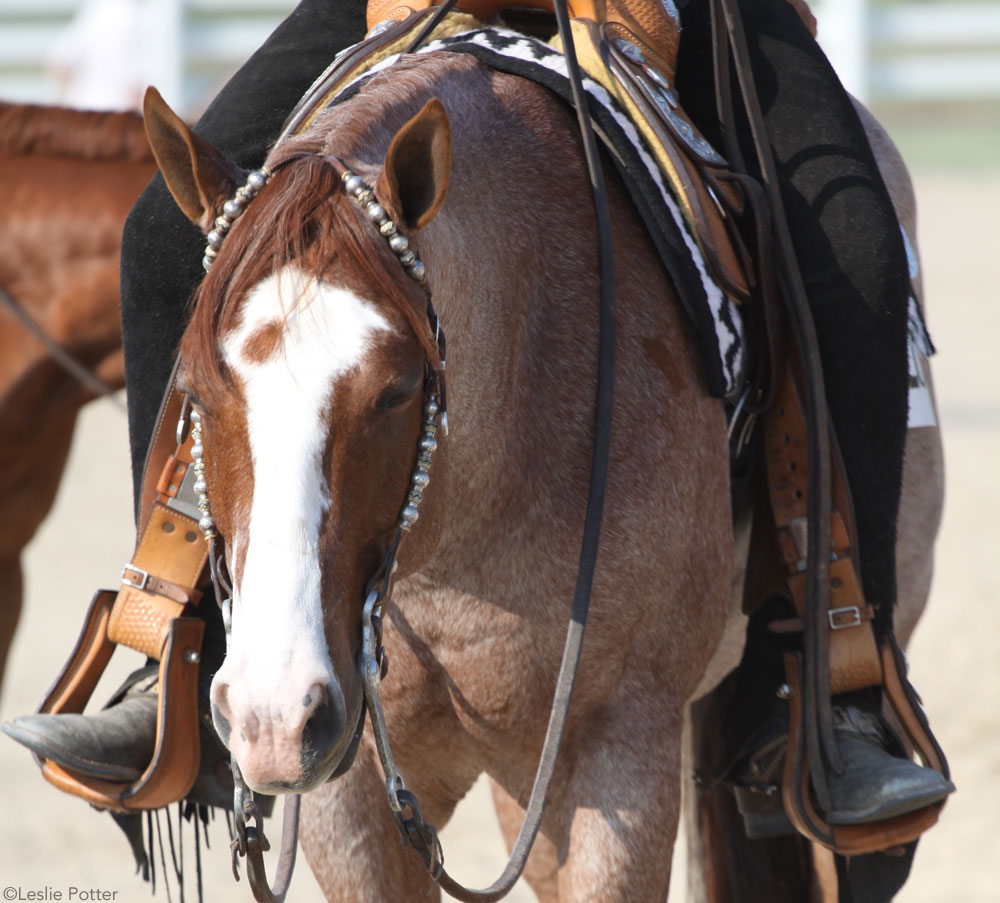
Roan western show horse

But it doesn’t stop there. Colors include two shades of sorrel red, black and gray. While practical use dictates that a horse with a temporary blemish could benefit from a spot paint job before entering the show ring, some show horses are subjected to makeovers as part of their preparation. Paints, for example, sometimes have their contrasting patches of colors highlighted by, well, a temporary paint job.

Don’t worry, though. These spray-on colors are as harmless as kindergarten water colors. They are easily removed with a damp brush or a shower. (While most show organizations permit color enhancement, it’s always a good idea to check your show rules before using a product.)

Winter Weather Can Mean Wet, Soft Hooves

6

Hoof pick
If your horse cannot avoid living in damp footing during the wintertime, he may be prone to thrush and abscesses in his feet. The thrush is due to the constant moisture combined with frequent contact with manure. Abscesses result because the sole of the hoof becomes soft thanks to the exposure to moisture. A step on a sharp stone or a tiny piece of gravel that works its way into a small crack in the sole or hoof wall can result in a painful abscess.

To help prevent these problems, try to keep your horse’s living quarters as dry as possible. Your horse should, at the very least, have a dry shelter where he can seek refuge. Wood shavings and other products on the market help to soak up rain water; straw has far less absorption qualities.

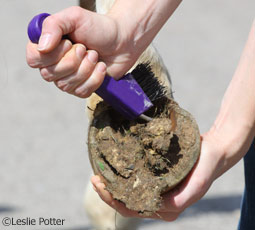
Make sure you clean out your horse’s feet daily. If necessary, after using the hoofpick, use a stiff body brush to sweep away any remaining debris. Next, add a hoof hardener to the soles, avoiding the frog. Thrush remedies, however, can be applied to the frog, particularly to the cleft of the frog and the comasure areas (valleys on either side of the frog) where thrush likes to reside. If you have any questions regarding your horse’s hoof care during the wet winter weather, be sure to consult with your farrier and your veterinarian.

Further Reading
Mud-Related Health Problems

Better Pole Bending

6

Pole Bending
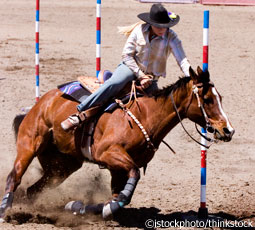
Aside from barrel racing, pole bending is the most popular speed event in America. Throughout show season, at local competitions, gymkhanas and breed shows, you’ll find the top riders dashing through a set of six poles so fast it’s hard to tell they’re weaving. But this skill doesn’t come easily—it takes the right horse, rider, practice and training. Here, American Paint Horse Association 2004 Open Pole Bending Champion Kim Zeamer of Quarryville, Pa., and her trainers Terry and Peg Helder of Wrightsville, Pa., share their knowledge to help you achieve a winning run.

The Fun of the Run

Kim, now 28, met her current trainers Terry and Peg when she was 9. However, she didn’t discover pole bending until she was in her early 20s and began showing A Splash of Hobby or “Niki,” an American Paint Horse who was only 14.1 hands and “did not fit into the current trends of the pleasure industry,” as Kim explains. After competing in equitation, horsemanship, trail and reining classes to give the mare a solid foundation, Kim decided to try pole bending. Pole bending soon became Niki and Kim’s specialty, and a year later they went on to win the World Championship in Novice Amateur Pole Bending, and Reserve World Champion in Open Pole Bending and Amateur Pole Bending at the 1999 APHA World Show.

“I enjoy pole bending because it is so challenging—to negotiate 12 turns of perfection is an adrenaline rush,” Kim says. “Your horse has to be listening 100 percent, because all it takes is one wrong step and you find a knocked down pole. The pattern itself is also a challenge as a rider; the motion of the horse can make it so easy to go off balance or lose a stirrup, or any of the other things that can go wrong. I actually had a rein flip over Niki’s head at the World Show when we came around the last end pole, so I had to run her full speed at the chute with the reins on one side of her neck. Talk about an adrenaline rush! But those are the instances where you need to have your horse be your partner and know you can trust him.”

Kim won the 2004 title on another one of her American Paint Horses, a junior horse named Designed in Lace, affectionately called “Desiree.”

The Right Horse

Terry and Peg Helder of Evergreen Farm specialize in Paint Horses and have been training all-around horses for 30 years. They show at regional and national Paint shows, National Barrel Horse Association shows and reining shows, and have a long list of World, national, versatility, youth, open, Congress and futurity wins to their credit.

When sizing up a pole bending prospect, Peg looks for an agile horse with a good shoulder for sweeping through the poles easily. “The hocks should be close to the ground, so the horse can make quick turns on the ends. We also look for a horse that is smooth muscled; the ones that are heavily muscled have a little more trouble getting through the pattern with ease. One of the most important attributes is heart—they can have less physical ability but still get a lot done if they are willing individuals.”

Mistakes to Avoid

Terry, Peg and Kim have witnessed, and no doubt experienced, their fair share of mistakes. Often, in the heat of a run, riders are not even aware of what they’re doing wrong, just that their times are slower than they’d like. Here are some common mistakes to avoid. Think about them when you’re riding, and perhaps have a friend video your runs to see if you’re encountering any of these trouble spots.

“One of the most common mistakes is not having your horse supple enough and not responding to leg pressure,” Peg says.

Kim agrees, “So often I see people running arcs either to the first pole or coming home. Straight lines are a big time reducer. Geometry will tell you that it’s faster to run a straight line then a wide arc.”

Turning the end poles is another common area for costly mistakes. There are two standard ways to run a pole pattern—straight poles, where you begin weaving the first pole you pass, weave up, turn the final pole and weave back; or Quarter Horse poles, where you run beside the poles, turn the sixth pole, weave down, turn the bottom pole and weave back up, finishing by running down the opposite side of the poles and straight home (see diagram, right). Most stock horse shows use the Quarter Horse pole pattern as Kim does. “I consider the first end pole the ‘make it or break it’ pole,” she says. “If you can get your horse to run full speed and come around the end pole quickly and begin the pattern, you tend to get the rhythm you need for a great pattern. Any bobbles or wide turns on the end pole often mean a choppy pattern or penalties. It’s hard to get the strides between the rest of the pattern if you are off on the first turn.”

“High hands are also a big problem,” Peg says. “You will lose control of your horse’s shoulders with hands that are too high.” Your hands should stay below your belly button, and Peg recommends using a ground person to remind you when they creep too high.

Practice Makes Perfect

Kim, Terry and Peg share their advice and favorite exercises to help you achieve a successful pole bending partnership, with a horse that’s responsive to your leg and doesn’t waste time on wide arcs or loops.

Reverse Arcs

Practicing reverse arcs will help loosen up the horse’s shoulder. “To do a reverse arc, make a circle, and instead of having the horse bending to the inside, tilt his head to the outside of the circle, and push his shoulders slightly to the inside with your outside leg,” Peg says. Smaller circles are more difficult, so start with medium-sized circles, approximately 60 feet, at the walk, and perform them for only short periods of time. When the horse can do this with no resistance, move to a smaller circle, approximately 30 feet, but never so small that he loses his forward motion. “Move up to the next gait when it becomes a relaxed maneuver at the previous gait. Don’t expect immediate results—these exercises take time to be performed correctly by horse as well as rider,” Peg says.

Leg Yields

“Leg yields can also help make the horse more responsive to leg pressure,” Peg says. “Going diagonally across the arena from left to right for example, tilt the horse’s nose slightly to the left and push with your left leg to move right.” Close the outside rein as if you were making a fist to help keep the horse straight. At first just go a short distance, then let the horse move straight before asking again. As with the reverse arc, leg yields should be performed at the walk until the horse has mastered the maneuver. Peg cautions that leg yields become particularly difficult at the canter. “If the horse is not relaxed at the gait you are doing, you may have to go back to a slower gait to make it correct before moving up. His feet should be crossing over front and back, resembling a sidepass but moving forward.” Once your horse can leg yield at all gaits, his pole pattern will be much smoother because he’ll move quickly and easily away from your leg pressure.

Good Equitation

Good equitation is essential to a winning run. “Staying over the center of the horse is very important to keep both of you balanced,” Peg says. Avoid leaning forward, as it makes it harder for your horse to stay balanced and is dangerous for both of you if he trips. Keeping your legs under you in proper position is also important for cueing the horse correctly and keeping him off the poles.

Peg adds that Kim’s early showing experience in pleasure, equitation and hunter under saddle helped her become a correct rider.

Going Light on the Patterns

You’re unlikely to make a winning pole horse by practicing the patterns over and over. “I don’t overwork my horses on the pattern, especially once they are comfortable with it,” Kim says. “In the beginning of a horse’s training, we often walk and jog the pattern a lot before increasing speed. Practice until your horse is comfortable and understands his job.” Once this is accomplished, you can back off the pattern work and instead focus on basic elements such as leg yields.

Peg says not overworking the patterns has been especially important with Kim’s new horse Desiree. “It takes a lot of work to keep her quiet—a lot of circles, leg yields, slow patterns and trail riding. Kim does very little running of fast patterns at home with this horse, and that is what helps keep her from getting sour.”

Mind Power

Pole bending is an intense event, and it can be difficult for horse and rider to stay focused and avoid getting overly excited or stressed. “Probably the biggest challenge is mental,” Kim says. “Everyone, of course, always wants a clean run, but that doesn’t happen. So you can’t get too hard on yourself if you have a bad pattern. The biggest thing for me is knowing that people expect me to perform perfectly after having won five World titles. But horses have their own minds, and, just like people, they are never perfect.”

For safety and enjoyment, the horse’s mental outlook at a show is also extremely important. Anyone who’s watched speed events has witnessed the horse that’s so excited he can’t keep his feet on the ground. “It is very important to have your horse under control and listening,” Peg says. “If he’s not listening outside before running, he can’t be expected to listen inside during competition.”

To avoid a dangerous in-gate situation, Peg practices the following with each of her speed horses. “We walk up to the gate and stand quietly in between runs.” In addition, when it’s time for a run, Peg and Terry expect their horses to turn around and roll back into the pattern. “By running a horse straight into the ring all the time, it becomes increasingly difficult to stay under control,” Peg says.

“The main thing in my mind is to be a partner to your horse,” Kim says. “I think the most successful riders are those who are a true team with their horses. Spend time with him on and off the ground and establish a relationship. You are trusting this animal with your safety when you are running full speed, and you want good communication.”

Further Reading
Rating Your Run
Controlling the Barrel Horse

Micaela Myers enjoyed running poles as a youth with her Quarter Ponies and is now a freelance writer in California.


This article originally appeared in the February 2005 issue of Horse Illustrated. Click here to subscribe.
Nutrition and Supplements Article Index – 2004

0

It’s all here—an index of the articles you read, loved and even those you may have missed—at your fingertips for quick and easy reference.


The month and page number are listed; columns and departments contain the following abbreviations:


(AI) -At Issue


(VF) -Vet Files


Nutrition and Supplements


Beet It, T. McAllister, April:120


Gauge Your Horse’s Need for Feed, S. Christie, August:68


Herbal Essences, M. King, May:102


Food for Thought (VF), July:32


In Good Flesh (VF), January:32


Supplement Sales to Stay In Iowa (HW), February:14


Watchdog or Attacker? (Nutraceuticals) (AI), M. King, January:36


Back to Index

Leasing a Horse or Pony

0

Think that you’re ready for a horse, but have to convince your parents? Leasing a horse might be the way to go! When you lease a horse, you are basically renting him. People usually lease out their horses if they do not have the time or money for them. Leases are beneficial for both the owner and the leaser-it will give you the experience of having a horse without owning him outright, and it will give the owner more time and money.

First off, you have to know where to look to find a horse to lease! Check your local papers. There are ads (especially on Sundays) in the livestock section that will say if anyone has horses for lease. If there is a phone number listed, have your parents call and ask details about the horse or pony. Be sure that you discuss potential ponies with your trainer as well. She may be able to rule out some ponies without you even having to see them-a big timesaver for your parents!

You can also look in your local tackshops. There is usually a board with people’s business cards and horses for sale/lease somewhere in the shop. Also, ask your trainer if she know of any ponies for lease. Most likely, she knows a lot of people and can start asking around. Finally, tell your friends! Once you get the word out that you are looking for a horse, people will start calling you with potential ponies.

When leasing a horse, you need to keep in mind some of the same things you would if you were buying a horse. When you go to ride the pony for the first time, make sure that your trainer or another knowledgeable horse person is with you.  Ask to see the owner ride him first so you can see how the pony is for her. Be honest about your riding ability. If the horse you are looking at is an off-the-track Thoroughbred and you have only ridden a school pony, realize that this horse may not be the one for you. There are plenty of horses out there; you don’t have to love the first one you see!

Make sure that the horse you are looking to lease is schooled in the areas you want to ride. You don’t need a show-quality hunter if you only want to trail ride. Alternately, you’re not looking for a horse trained only to barrel race if you want her to be a dressage horse. Try to ride the horse you want to lease more than once. You want a real idea of how the horse acts before you decide you want to lease him!

Realize that you, and your parents, will be responsible for the pony. You will have to feed him, provide his vet care, pay for his worming, shots and shoes or trims. If the horse gets hurt, it will most likely be up to you to pay for his medical needs. Understand that this can be a large expense. Ask the owner for an average of how much this will cost a month. Then you’ll have a better idea of whether or not you and your parents can afford it.

You might be able to half lease a horse at a barn, maybe even from your trainer. In a half-lease, you may be responsible for only a portion of the pony’s care. The tradeoff is that you may only be able to ride on certain days of the week. The pony would have lessons or be ridden by his owner on the other days. Some leases, especially from training barns, require that you take lessons, which may be an additional expense. Make sure you ask before agreeing to a lease.

Both you and your parents need to sign a formal lease agreement if you decide to lease the pony. A handshake is not enough! The lease needs to answer certain questions, such as:

 * Are you the only one looking after the horse, or are there other people involved?
 * How many times a week are you allowed to ride?
 * Are you able to take the pony away from the barn, such as to trail ride or to show?
 * Are you able to move the pony to live in a new location, such as in your own barn at
    home?
 * Does the horse come with his own tack, boots and blankets, or are you expected to 
    provide them?
 * How long does the lease last?
 * What aspects of the horses’ health are you responsible to pay for?
 * Are you required to take lessons with this pony?
 * Is the pony insured?
 * If the horse is registered, do you have to put him in your name?
 * Is either party allowed to terminate the lease early?
 * What would happen if the pony got injured and you couldn’t ride him for a long time?

Leasing a horse is a great way to try horse ownership without all the responsibility. It is a true test to see if you have the time and dedication to own one all by yourself. If you can prove to your parents that you have the determination, you’ll be one step closer to convincing them you’re ready to own a horse all your own!

Fixing Falling In

15

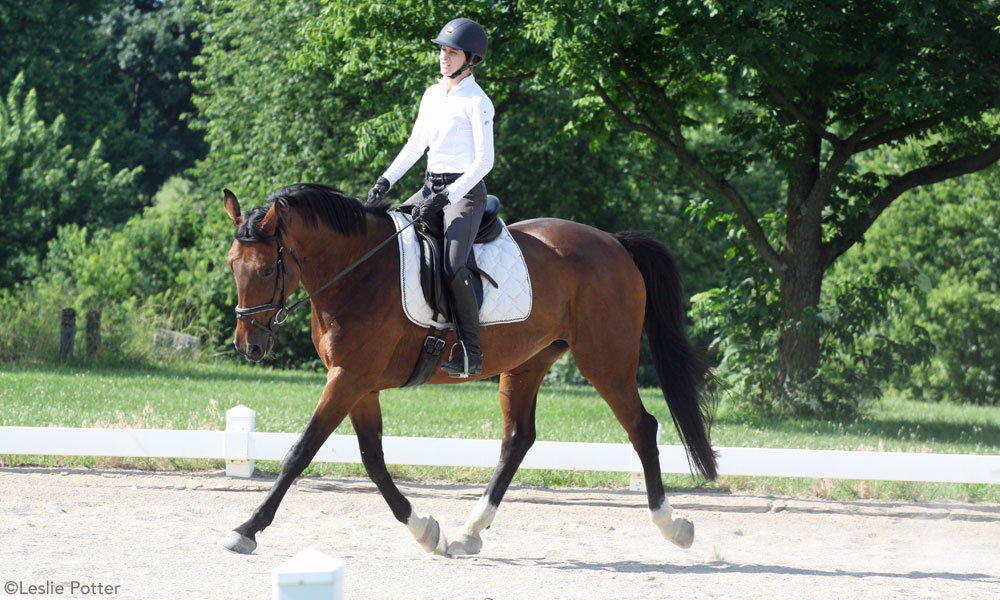
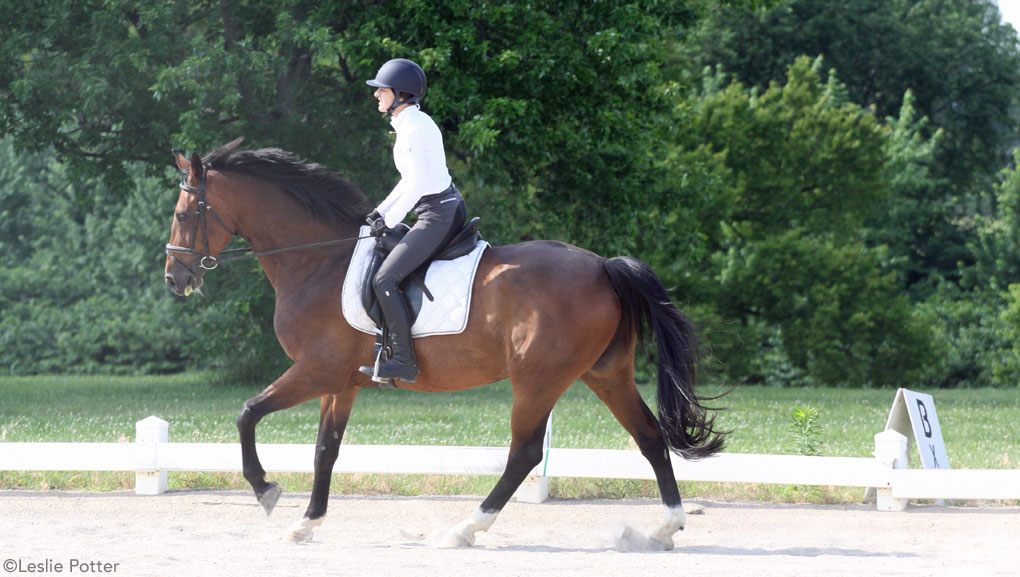
Circle too small, horse falling off the rail, rider cutting corner, horse weaving down the centerline … Do these judge’s comments seem familiar? They do to many riders; and like many riders I’ve had them on my own score sheet once or twice, in the past. At first I thought I just needed to spend some time working on my geometry in a proper dressage arena with letters and markers, and perhaps a traffic cone or two. While it was valiant of me to take responsibility for the problem, the real root of the cause lay not in my inability to form a simple circle, but with a glaring hole in my horse’s basic training. I’ve grouped the above judge’s comments together because they are all symptoms of the same cause. This is an affliction an old friend of mine used to call a “gravity storm,” which in quasi-technical terms is actually a lapse in balance known as falling in.

Dressage Schooling


Falling in is a confusing thing for a rider. There you are, moving along in a seemingly straight line until you try to form a pattern, and it just doesn’t work out. That darn horse has other ideas for a shape and ends up making Ds, eggs or even grandiose semi-10-meter circles. “What a dork,” you think as you wrestle him (with your reins and thumping kicks) back onto the pattern. For the most part these crude aids work, and the horse returns to the chosen shape. Unfortunately, you’re doing the work now. When a rider uses the reins (“rein riding,” as some people call it) to hold the horse on the pattern, it lets the horse balance on the rider’s hands.

To find out if this is the case, ride a circle, then momentarily loosen your reins (or even hold them in the proper position) and see what happens. If your horse holds himself up and continues to track around the pattern, you’re on the right path. If he falls in, you’ve got to go back to the drawing board and address the issue of balance. If you don’t, you and your horse will have difficulty advancing because balance affects just about everything you do, including collection, riding patterns, transitions and even jumping fences, particularly intricate combinations.

How do you fix these gravity storms? First of all, as we’ve just discovered, you have to understand that you can’t do the job for your horse. So how have you been enabling your horse’s balance problems? Could it be any of the following?

Horse and Rider Error: I Don’t Mind if You Don’t

Adaptation is a common theme with every horse and rider who’ve been exclusive partners for a long time, and you might not realize that you’ve both grown accustomed to each other’s bad habits. You’ve helped balance your horse on turns, circles and patterns for a long time because … well, that’s just theway you’ve always done it. Because of this, your horse may not respond to correct aids, which may prove difficult when you’re trying to learn a new way.

This homespun approach on a correctly trained horse may not work very well. Therefore, it’s a good idea to ride a well-schooled horse whenever you can. The experienced horse won’t support your mistake. Once you’ve learned the correct way, you’ll be able to understand where your own horse’s weak points are and stop covering up for him.

Rider Error: Modified Rein Position

Remember when you were first learning to ride, and your instructor held your hands in the correct position? Like my instructor, she may have even suggested that you imagine holding two ice cream cones. Look at how you’re holding the reins now. You may be surprised to find that you’ve developed a habit of holding your reins in a cockeyed fashion. The inside rein may be pushed against the horse’s neck in an attempt to “neck rein” him out onto the circle. Or worse, you’ve started crossing your hand over his neck to “super neck rein” him out to the circle. Or maybe you’ve learned to drag the horse out with your outside rein, and now you’ve got one hand that is permanently parked a foot away from his neck.

Put your hands back in the right position: each one a couple of inches away from the horses neck—equally. If you’re on a circle, flex the horse’s head to the inside with a slight squeeze of the inside rein.

Note: It is true that you can open the outside rein to encourage the horse back out, but use this method sparingly as it can become a crutch for the horse to lean on later. Make sure you do it with a supporting inside leg (see “Inside Leg to Outside Rein” below). If you aren’t sure, have a knowledgeable friend or instructor show you how.

Rider Error: Skipping the Fundamental Aid—Inside Leg to Outside Rein

The incorrect or lack of use of the inside leg to outside hand aid is a common issue for many riders. This aid is extremely important for many reasons. It helps balance or re-balance a horse, and it is used during lateral work and while straightening the horse. It’s examined in the early stages of dressage tests, when the rider is asked to give the inside rein on the circle. The judge wants to see that the horse can maintain his balance without his rider holding him there with the inside rein; he remains on the circle because of the rider’s correct use of the inside leg to outside rein aid.

It doesn’t really matter which comes first, the leg aid or the rein aid, but suffice to say that one is always followed immediately behind the other: a light squeeze of the inside leg and then a slight squeeze on the outside rein (or vice versa). The aid lasts momentarily (enough time to say “elephant”) and is repeated if needed. Riders go wrong when they forget to use one or the other. If you use only your leg, the horse will think you want him to go forward and respond with speed; if you only use your rein, your horse will think you want to slow down and will respond in kind. The two work together to use the horse’s energy, generated by your leg and directed by your hand, to balance the horse. In simpler terms, the outside rein prevents the horse from falling out, and the inside leg prevents him from falling in. The two together balance the horse.

You have to admit that thumping kicks, snatching reins and awkward hand positions have no place in good equitation. Crude aids can never be acceptable riding methods, no matter what your horse is doing. Promise yourself to ride correctly, no matter what happens. And here’s a tip-off: You know something has gone wrong if you have to ride incorrectly or modify your position to correct your horse.

Now that you’ve signed the contract not to prop your horse up anymore, be warned: Without your help, your horse is going to have to find his own way in the world and figure out how to balance himself and to strengthen unused muscles. It’s going to look a whole lot worse before it looks better.

Dressage Schooling


Regaining a Balanced Ride

Step One: Begin by asking your horse to trot on a 20-meter circle. Make sure your bending aids are correct (inside leg just at the girth, outside leg just behind the girth, shoulders turned toward the inside of the circle, slight flexion with the inside rein and a steady contact on the outside rein) and maintain a steady tempo (speed). Keep your eyes up and try to ride a correct circle that starts and finishes at the same point. Set cones out if you need help in positioning your circle.

As you feel your horse duck off the line, don’t change your aids; instead, let your horse fall in, even if he spirals into a very small circle. If your horse is accustomed to you holding him up, he won’t try to balance himself. He’ll wait for you to come to the rescue. Don’t do it. Instead, let him continue to fall in. Now begin asking him to move out on the circle by using your inside leg to outside rein. Ask softly and wait for him to respond. Tiny circles are hard work, and very soon he’ll listen to your aids and take himself out on the circle. Whatever you do, don’t change your position or way of aiding, and try to keep looking up and thinking about making a proper circle. Your eyes will help with your own balance, which in turn helps encourage your horse to move out on the proper line.

Step Two: When you feel your horse begin to make his circle larger, pat his neck with your inside hand. You should be able to ride a circle with little or no inside rein at all, which will prove your horse is in balance.

Part of the Process

Quick Step: In extreme circumstances you may find that your horse loses his balance so badly that he speeds up as he circles. You can impose your tempo on the horse by accentuating your posting trot. Land a little bit deeper in the saddle, and gently half-halt until he brings his haunches underneath himself and slows down. Your horse may also discover that it is very difficult to rush on a circle and will slow down of his own accord.

Baby Steps: Falling in is a normal development in a young horse. As he’s learning to balance himself and his rider at the same time, he’ll struggle to stay on a steady line. The key is to let him learn to hold himself up and not give him a “nose wheel” (i.e. your reins) to prop himself up on. It takes patience, skill and the ability to look the other way when a young horse is learning to balance. Think of when a young child learns to color a picture. As coloring outside the lines is part of the child’s learning curve so is a horse’s awkward attempts to balance his rider.

Moving On: Once your horse is balancing himself on the circle, begin to ride straight ahead. You may find that your horse isn’t able to maintain that same balance on the straightaways and falls in once more. As he begins to fall in, make a small 15- to 10-meter circle and then gently apply your inside leg to outside rein aid. This may take a few revolutions but keep up with it. Once you feel that your horse is balancing on his own, apply a stronger outside rein and move back on the straight line. Repeat as you feel your horse falling in. This exercise has the added value of strengthening the inside hind leg, which will help the horse increase his ability to balance in more difficult shapes and patterns, such as serpentines. Once your horse gets strong enough he will be able to handle straight lines and bending lines, and be able to move smoothly from one to the other. Keep the faith with these exercises. Your horse’s problems with balance have probably been an issue for a while, and it will take a few sessions until he’s able to sort himself out.

The Feeling of Balance

Think back to when you were a kid and did the old “look ma no hands” on your bicycle. You knew it was safe to let go when your bike felt perfectly balanced. Your horse will feel similar. An unbalanced horse will feel as though he’s tilting in or slanted toward the circle. You’ll also feel as though he’s leaning against your inside leg, and his ribcage will feel very heavy and unyielding. He’ll also feel heavy on one rein or the other.

You can even check for balance and copy the “look ma no hands” by giving one or both of the reins forward in a slight downward stretch. If your horse stays in the same tempo and remains on the same line, he’s in balance. 

This article first appeared in the December 2004 issue of Horse Illustrated. Click Here to subscribe.

The Vaquero Way

9

Vaquero silhouette

“The Vaquero method of training is a beautiful song,” explains Sheila Varian, “sung with the softness and beauty of the rhythm of the horse. It’s about the total harmony and togetherness of horse and rider.”

Based on centuries-old traditions, the Vaquero method takes a horse from hackamore through the two rein and finally into the spade bit, producing a finely tuned working horse and partner. Its emphasis has always been on the resulting equine athlete’s quality rather than on how quickly the goal is reached.

Worth the Time

Today, when there’s so much pressure to accomplish things as quickly as possible, why do horse people still invest the time to fully train a bridle horse?

“For me, the end result is like choosing between driving a Model A Ford or a Rolls Royce,” says Sheila. She has been training spade bit horses, and a variety of other disciplines, at her Varian Arabians ranch and breeding center in California for more than 50 years.

“Given the option, I’d prefer to drive to town in a Rolls Royce. That’s the difference in riding a typical horse versus a trained spade bit horse,” she says. The spade bit is designed for highly trained horses ridden by experts who can communicate nearly imperceptible cues. This level of training takes years to accomplish. “When you have spent the amount of time needed to put the horse in a spade bit, he’s really something special. You’ve also both developed a partnership and mutual respect. It’s hard to describe the incredible feeling of riding a horse that’s truly one with you.”

Besides, she adds, “There’s nothing more fun, I mean nothing, than to ride a really responsive horse on cattle through rugged country.”

The Spade: Form and Function

“Some people think that the spade is a cruel bit, and it can be—as any bit can be in the wrong hands. However, you won’t be able to put a horse in a spade bit if he’s afraid of his mouth. He just won’t take it,” says trainer Sheila Varian.

There are many elements to a well-made spade bit. “Because of the bit’s design, it gives a lot of information to the horse. I prefer the spoon to lay over a little and not be straight up, so the horse can keep his head in a natural position and the spade will lay on his tongue and not touch the roof of his mouth,” says Sheila. “I also like a loose jaw and shorter shanks, and the mouth and shanks are best made of sweet iron.

“The cricket, which keeps the horse’s mouth freshened and the saliva running, needs to make a soothing sound and have a good music to it.” She adds, “Many spade bits made today are of stainless steel and they’re too heavy. They’re too much bit in my opinion.”

Spade bits are used with rein chains for a couple of reasons. “Rein chains keep the Vaquero’s handmade rawhide romal reins out of the water when the horse is drinking,” explains Sheila. “Plus, the rein chains carry just a little weight, so when you pick up the reins, they signal to the horse before there’s contact that a change is coming.”

According to Linda Paich, curator and owner of The Museum of the Cowboy in Solvang, Calif., each different style of spade bit cheek and mouth was named for the area in which it was first used, such as the Santa Barbara, Santa Ana, Santa Ynez and Las Cruces cheek styles.

The Vaquero Way

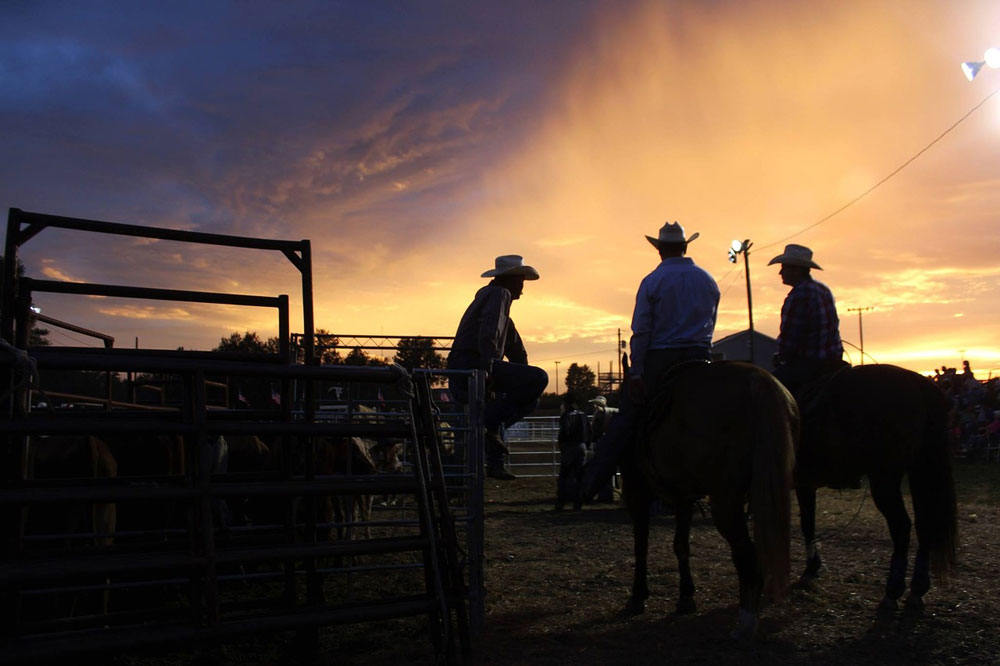
Originally from Mexico, the Vaqueros brought their horsemanship traditions to the vast California cattle ranches during the late 1700s.

With no strict deadline for finishing a horse, the Vaqueros prided themselves on investing the time necessary to train a ranch horse that was light in the bridle, maneuverable with only tiny signals from the reins to the bit, as well as agile, smart and responsible. “The spade bit ranch horses of yesterday and today are expected to do their jobs effectively and get their riders safely across rough country,” says Sheila.

Vaquero Training with a Modern Touch

Sheila Varian, one of the world’s most well-respected and successful Arabian breeders and trainers, learned the traditions and intricacies of training a spade bit horse when she was a child growing up in California.

Over the years, she has refined her approach to fit today’s better-bred horses. “I’ve learned to get softer and softer with my training,” says Sheila. “The Vaquero way is a long-term training approach, but it’s not [traditionally] a soft training approach. With today’s softer horses, the rougher methods they used back then are not necessarily as productive. If I don’t frighten a horse from the beginning, the better and easier the training is. I’ve done those old ways, and in truth, for me it works better to not be so harsh.”

She adds, “I hear people use the phrase ‘taking things slowly.’ Well, I call it taking things easily, meaning being easy on the horse both mentally and physically. The easy way is often the quickest way to train a horse. I still ask a lot of my horses, but I don’t do things that frighten them or make them defensive. I’ve found that this approach to training goes a lot quicker in the long run because I don’t then have to go back and fix something that concerned the horse.

“All good horses, like smart children, need good instruction, but they don’t need harsh instruction.”

Some of the harsh old-style Vaquero methods included “doubling” a horse by pulling his head sharply to turn him, tying his head to his tail so that he would give to the hackamore or sometimes leveraging the hackamore in such a way that the horse’s face was raw and bloody at the end of the day.

“In the old days, they worked horses a lot harder and more harshly than we do now. We don’t colt break any more like we used to, and that’s because of Tom Dorrance,” says Sheila. “Tom is the one who really changed that whole procedure. He’s the one who came in and taught the ranch hands to soften up.”

Renowned natural horseman Tom Dorrance first visited the Varian ranch back in the early 1960s. He traveled to a circuit of working ranches, teaching and trying new things, yet never asked for money.“He loved the horses; that’s what made all the difference.”

The Importance of Riding Out

One key element of Vaquero training is that it must be done outside over varied terrain. “To make one of these horses, you can’t ride in an arena, and you also can’t ride down a trail,” explains Sheila. “I figure God put lots of bushes, trees, ledges and creeks on this earth for me to train my horse around.”

Phases of the Vaquero Method

While these are the basic steps in training a bridle horse up to the spade bit, it’s important to remember that the years it takes and the feel one needs to develop can’t be summed up in a brief article. It’s a lifelong adventure—one that epitomizes the words “feel” and “unity” when it comes to horses.

Early Work

Since cattle are an intrinsic part of the ranch horse’s life, “the sooner you can start moving cattle around, the better,” says Sheila. “Often, I’ll put the horses in a corral with cattle so that they can get used to them.”

Sheila starts her horses under saddle at age 3. “I don’t like starting them any younger because they’re truly not physically ready to do hard work yet,” she says. “Plus, the more time the youngster has out in large fields and pastures, the better it is for him physically and mentally.”

Sheila’s horses receive some gentle groundwork and general desensitizing by flopping soft pads and other items on their bodies before they go under saddle.

“I don’t ground drive them per se, but I do get them used to turning, bending and stopping. When they are comfortable with this, then I’ll get on.”

She adds, “Hobble breaking is an important element of the Vaquero method, but I choose to do it a little later so that they aren’t frightened by it.”

The Snaffle

Traditionally the Vaquero method starts a young horse in a hackamore, but Sheila starts her horses in a snaffle. “I don’t want to ‘skin a horse’s jaw up,’ which is what they call it when a horse’s face is rubbed with a stiff or rough hackamore, or if you have to exert a lot of pressure or turn them hard,” she says.

Sheila also believes that the signals from a snaffle are clearer for an uneducated horse to understand. “A snaffle is a direct pull and a hackamore is an indirect pull. For example, with a hackamore, when you pick up the left rein, the pressure goes on the right side of the jaw. It’s confusing to a horse because he’s being pulled with your left hand, but the pressure is on the right side.”

The Hackamore

After the horse is going well in the snaffle Sheila switches back and forth from a soft Ernie Morris hackamore to the snaffle until the horse is completely comfortable and working well in the hackamore. “It takes some time for the horse to understand the cues of the hackamore. The best way is by riding out around natural obstacles.”

She also transitions from a heavier to a lighter hackamore, and will switch back and forth as necessary. “If a horse starts running through a hackamore he’s afraid of it, so you go to something lighter. It’s the same with a bit. If a horse is running through a bit, it’s often because he’s afraid of it, and you must go softer. Less is more in that respect.”

How much time does it take to get the horse working well in the hackamore? “It depends on how much time you can ride out, and most people can’t do that every single day unless they live on a ranch. It can take a year or two, but it just takes whatever amount of time it takes.”

The Two Rein

When a horse is consistent in the hackamore and knows his job, it’s time to begin the two rein, which consists of a smaller 3/8-inch bosal that is worn under a bridle with a half-breed or low-port bit. Both bosal and bit have a set of reins attached, hence the term “two rein.”

However, Sheila starts by using just a single rein attached to the bosal. “I use the mecate (mane hair) reins on the bosal, and I take the reins off the bit. It might take a day, or it might take a week, but I wait for the horse to not be fussing with the bit or bouncing the bit around in his mouth. When he’s quiet, I add the rawhide reins to the bit. I then have two reins in my hands—reins to the bosal and reins to the bit.

“With a horse in the two rein, I now go to a smaller bosal,” she says. “The difference between a hackamore and a bosal is size. The hackamore is what you ride the horse with, while a bosal is used in the two rein. It’s a smaller diameter and fits underneath the bridle.”

Because Sheila has helped the horse learn to be soft and supple in the hackamore, when he’s started in the bridle he’s already prepared to be soft and supple in that as well.

The young horse is ridden another year or more in the two rein. “It’s just a very slow, gentle process of at first using more bosal rein while the horse simply carries the bridle. Then, as the horse begins to balance to the bit, I gradually pick up the bridle rein and slowly transition to it.”

The Spade

When the horse is about 7 or 8 and completely comfortable, working well in the two rein and working only from the bit, it’s time to step up to the spade bit as the final stanza of the Vaquero’s song. At this stage, the horse could be left in the half-breed or low-port bit, but in the hands of an expert rider the spade will add that extra degree of polish to the finished bridle horse.

Now the process begins again with the two rein using the smaller bosal and the spade bit. This transition continues until the horse is comfortable in the spade.

In the hands of a competent rider and in the mouth of an educated horse, the spade bit is a delicate tool of communication, not an implement of force. “With a spade, the horse has to have the confidence in you that you won’t hurt him. You’ll never pull the horse around with it or yank on his mouth,” says Sheila. “He’s got to be comfortable in the spade, or else he’s not a spade bit horse.”

By this time, the horse has been ridden for about four to five years. “He’s developed, by your good hands, a natural headset and a good way of going,” says Sheila.

However, the conformation of some horses precludes them from wearing a spade bit, no matter how well trained they have become over the years. “A horse needs a natural curvature of the neck and a neck that’s not set too low from the chest. For example, some lines of American Quarter Horses today cannot carry a spade because their necks are too low set.

“When the horse is totally finished, and ‘straight up in the spade’ as we call it, I normally don’t go back to a snaffle or hackamore. I may drop back to a half breed if the day’s work looks to be more than my horse is ready for. Eventually, though, once he’s really comfortable in the spade, that’s where he stays.”

The Vaquero Method Carries On

“This method of training takes a lot of time,” says Sheila, “but for me that’s the joy of it. I’m not trying to please anyone but me, and I’m not up against an artificial deadline to finish a horse by a certain date. I’m doing it for me and for the partnership with my horse.”

All the steps leading up to the horse carrying the spade bit are essential to reach this stage. “It’s not a journey to be taken lightly, but no horse training should be taken lightly.”

Sheila adds, “Usually, when someone has trained a horse up to a spade bit, that horse is one they keep. The bond, mutual trust and commitment they’ve created together are enormous.”

Meet the Expert

Sheila Varian’s spade bit experience dates back to the 1950s when she trained her first spade bit horse, Farlotta, a purebred Arabian mare, who was unbeaten in western pleasure classes. Next she trained the Arabian mare Ronteza to the spade bit, and they won the Open Stock Horse class at the Cow Palace in 1961. Today, the accomplishment would be akin to winning an open national title in the reining or working cow horse show world. At just 23 years old, Sheila went up against older, seasoned professional men and became the first amateur and first female to win this title—and on a handy Arabian mare amidst a sea of stock breed horses.

Since then, she has continued to breed and train Arabians with great athletic abilities, wonderful dispositions and classic good looks. Her horses have succeeded in all major disciplines. Varian Arabians has about 150 head of horses on its central California ranch, and it celebrated its 50th Golden Jubilee in August.

Sheila was also honored with an induction into the Cowgirl Hall of Fame in 2003.

Visit www.varianarabians.com for more information.

This article first appeared in the December 2004 issue of Horse Illustrated. Click Here to subscribe.

Stop Spooking!

0

Does your favorite horse jump 10 feet in the air every time he spots a plastic bag fluttering in the wind or some trash on the ground? Spooky horses can be a handful, so we’ve got some tips to help you out.


1. Say hello to Nervous Ned—the pony that’s frightened of his own shadow! He sees scary monsters lurking behind every hedge and thinks that a feed sack is going to bite him.

Most of the time he’s looking around, waiting for something to shy at. Then he snorts and jumps away from the scary object, leaving you a quivering wreck!

Some horses are naturally timid-it’s a natural equine instinct to want to get away from something he thinks is dangerous. But if a horse shies frequently, it might be caused by other reasons, for example:

  • High spirits caused but too much energy-giving food and not enough work
  • Bad eyesight—maybe the veterinarian needs to check his eyes. Are cataracts obstructing his vision?
    Quick Tip
    Set up some spooky obstacles in your arena or field at home. Practice walking by them until your horse is “spook-proof.”
     
  • A nervous rider who is making the horse tense

Don’t forget, even the most levelheaded characters shy sometimes, so always be prepared. Keep a firm hold on the reins at all times and stay alert to things going on around you.

2. When your horse shies at something, your first instinct is to turn his had to the scary object, trying to pull him back to it. Turn his head slightly away from the frightening thing and use your leg that is farthest away from the object and push your horse’s hindquarters back towards it. See if you can get him to walk by the object several times and then continue on your ride.

3. If your horse is really upset and seems genuinely scared, don’t lose your temper or smack him. This will only make him more excited. Talk to him calmly and urge him forward. If it’s safe to do so, let him take a good look at the object. If he wants to put his head down and sniff it, let him. Keep a firm hold on the reins in case he wheels around and tries to run off.

4. If he really won’t go near the object, hop off and lead him over to it. Let him have a good look and a sniff if he wants. Rustle it with your foot several times to show him that it won’t bite him!

When your horse has calmed down, walk away slowly. Don’t let him rush off at top speed.

5. If you are riding with a friend on an experienced, calm horse, follow him by the scary thing several times. If your horse is extra nervous, it’s a good idea to trail ride with a calm equine companion until your horse is more settled on the trail.

6. If you spot something that might make your horse shy, stay calm. Relax and take some deep breaths and look past the spooky object. Don’t get tense and hang tightly on the reins.

Keep a soft contact and use your legs quietly on his sides to ride him forward. Give him a pat once he’s passed the scary monster to let him know how brave he is!

Horses and Mud

0

Young Rider Magazine LogoIf it rains where you live, you probably have experienced muddy conditions at your barn. Obviously, squishing through deep mud in your muck boots is no fun, but did you know that mud could cause problems for your favorite horse? Let’s take a look at mud and how it affects the horses at your barn.

Mud fever

Mud fever is a painful skin inflammation caused by a nasty microorganism that thrives on damp horse coats. This organism causes scabs and hair loss. Mud fever is very common in horses that spend a lot of time outdoors standing in wet or muddy condition. It usually shows up around the pastern and heel area on a horse.

If your horse gets mud fever, you must do your best to keep his legs dry for a while so they can heal. Hose off the mud and treat the area with an anti-bacterial shampoo or iodine-based scrub. Then dry the area with a clean towel. Most importantly, your horse must spend some time inside a stable or in a dry pen until the sores heal.

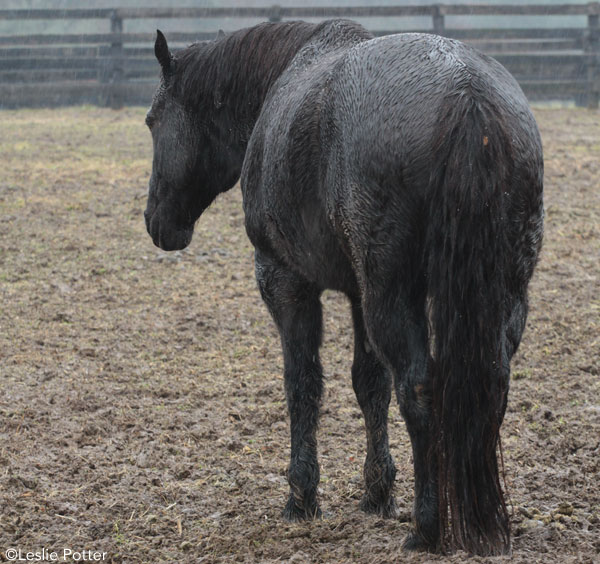
Horse in the mud

Poor riding surface

Riding in deep, sticky mud isn’t a great idea and you should try to avoid it. Deep mud can twist delicate equine legs and possibly damage leg tendons and ligaments. Rain can turn even the best arena into a muddy swamp. If your barn’s arena gets really deep and sticky when it rains, give your horse the day off. If you must ride, stick to slower speeds so you don’t strain your horse’s legs.

A horse is more likely to overreach (strike his front heel with his hind hoof) when being ridden in mud, so put rubber overreach boots on him if you really must ride him in bad conditions. Overreach or bell boots will also help to keep his shoes on.

Eventers, people who jump their horses over cross-country fences, often use studs (caulks) on muddy days. These are small pointy pieces of metal that screw into specially drilled holes in a horse’s shoe. They help the horse’s shoes grip the ground so he can stay balanced when jumping and so he doesn’t slip around so much on the mud. It takes some practice to screw in studs, so don’t try them for the first time at a show.

Pulled shoes

Deep, sticky mud can pull off horseshoes, even if they’ve been put on properly. Mud just seems to suck off the shoes. If it gets really muddy in the winter in your area, you might consider pulling your horses shoes for the winter. If you don’t ride him and he has fairly good feet, you probably don’t need them.

If you want to keep the shoes on, ask your farrier to put toe clips on them. Toe clips are two triangular shaped clips that help to keep the shoes in place.

If you notice that your horse has lost a shoe, it’s a good idea to go look for it out in the field. You don’t want your horse or one of his pasture pals to step on it and have a nail puncture his hoof. Plus you can save some money because your farrier will probably be able to use the same shoe, rather than put a new one (which will cost you extra money) on him.

Caring for muddy legs

If you’ve ridden in muddy conditions, it’s essential that you hose off your horse’s legs and dry them with a clean towel.

If it’s really cold and you don’t want to hose him, put him in a stall for a while until the mud on his legs dries and you can brush it off with a dandy brush.

Always pick out your horse’s hooves after riding in mud. Sharp rocks can get stuck in muddy hooves, and rocks can cause stone bruises and abscesses.

Muddy fields and pens

You probably can’t do much about the mud in your barn’s fields, that’s the owner’s responsibility. But if your horse lives in a small pen, you should shovel out wet patches and replace them with dry bedding. There are lots of absorbent beddings around. Look for them at your local feed or tack shop.

This article originally appeared in the November/December 2004 issue of Young Rider magazine. Click here to subscribe!

0FansLike
0SubscribersSubscribe
We use cookies to help personalize content, tailor and measure ads, and provide a safer experience. By navigating the site, you agree to the use of cookies to collect information. Read our Cookie Policy.
OK