Ranch horse trail classes show off the skills a horse must have to work anywhere around the ranch, including across bridges. In American Quarter Horse Association ranch shows, bridges are optional, but they are common in show patterns.
Trainer Nancy Nemmers says horses are often worried when they first approach a bridge obstacle because of the sound it makes as they step up. The bridge can also be a challenge for horses because they must approach slowly with precise foot placement. If you don’t have a bridge to practice on at home, consider building one or find a local trainer’s course where you can practice. You don’t want your horse to experience the hollow-sounding bridge for the first time at a horse show.
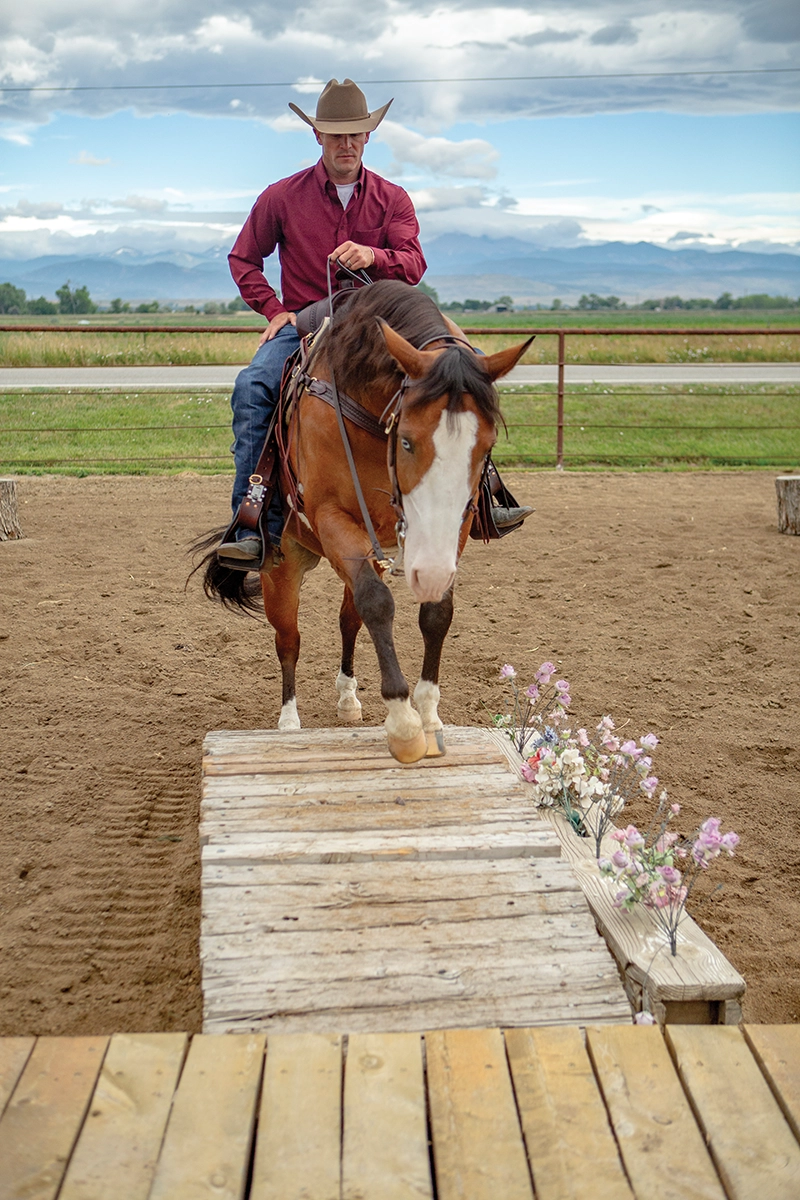
Photo by Heidi Nyland Melocco
Nemmers makes sure to practice the bridge every time she rides. She coaches her students to take on the bridge first from the ground, then from the saddle. Once the bridge is an easy obstacle on its own, she makes sure to change the approach. In shows, there may be different obstacles right before the bridge that make the step-up more challenging. Here, Nemmers will guide you through her bridge-working progression so your horse will be familiar with the bridge and ready for any approach.
“The bridges we see in the ranch trail classes are flat and usually 4 inches off the ground,” Nemmers says. “The hollow sound under that short bridge can be worrisome to some horses at the start, so it’s important to practice regularly with a bridge that’s well-built and sturdy.”
The Set Up
For AQHA ranch trail classes, the bridge must be at least 3 feet wide and 6 feet long so a horse can safely negotiate it at a walk. Nemmers suggests having a bridge that isn’t steep when you’re first introducing a horse to the obstacle.
“Of course, you don’t want anybody falling through or stumbling to step up too high,” she says. “The bridge in a show could have brush around it, or you may see poles nearby. There may be poles placed at angles before you step onto the bridge. Whether it’s decorated or not, the importance of a safe and sturdy bridge is key.”
First Steps
If your horse is well-trained to ride but hasn’t stepped on a bridge before, use caution as you make your first approach.
Nemmers says that each horse is different. Some horses will step over effortlessly on the first request, while others take time to overcome their fear when stepping up or hearing the hollow bridge sound.
If you’re uncertain of your horse’s prior experiences, consider leading him up to a bridge while haltered to see his response. If your horse seems calm, you may choose to ride up to the bridge to gauge his reaction. Nemmers says to choose what’s best for your horse and your own confidence.
“Most horses are going to look at it, stop, and put their nose down to sniff it; when they do something like that, that’s when you encourage them to take that first step over the bridge,” Nemmers says.
If a horse continually resists going over the bridge, Nemmers dismounts and introduces the obstacle from the ground with the horse haltered.
“Usually that works pretty well,” she says. “I’ll walk over it with him and after two or three times you can get back on and have him walk right up to it and go over it. If a horse is really resisting, I might take him over the short side first, so he doesn’t have to go so far. Build his confidence.”
Encouraging Position
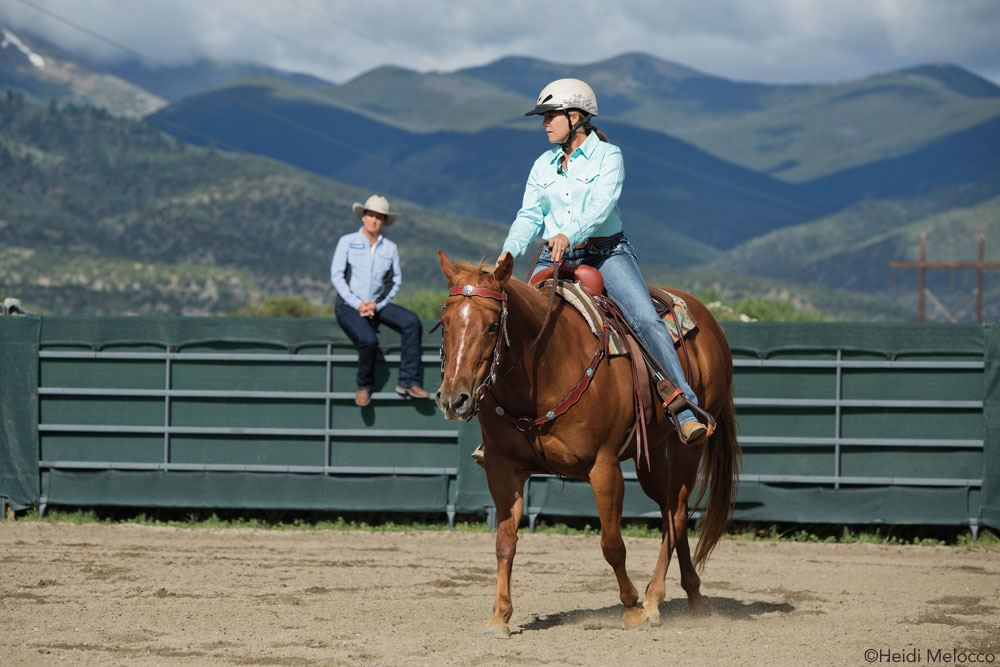
When you’re ready to ride over the bridge, make sure to have an encouraging body position. Nemmers says that means to ride with a slightly forward body position and your reining hand up and slightly forward. She wants to have contact with the bridle but allow the horse to move forward without resistance.
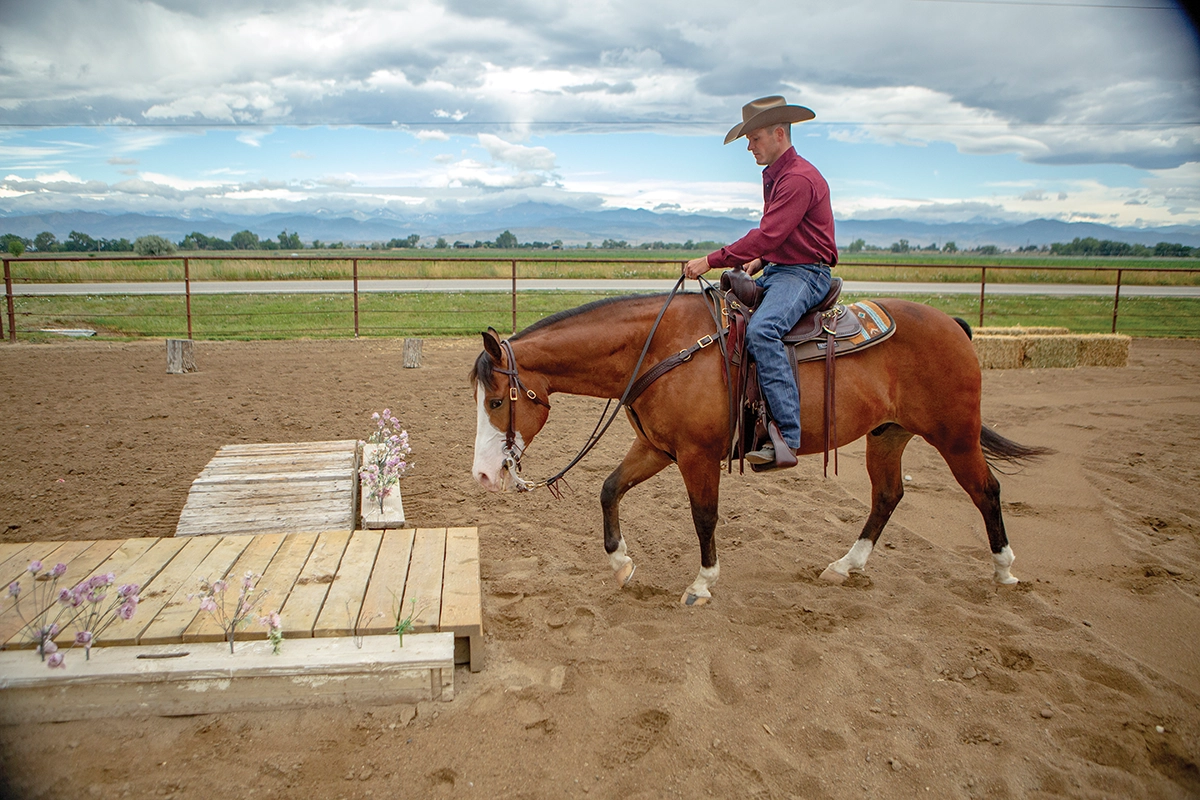
When you’re ready to ride over the bridge, make sure to have an encouraging body position. Ride with a slightly forward body position and your reining hand up and slightly forward. Photo by Heidi Nyland Melocco
Make sure to use your whole body in your approach. Nemmers says she pulses with both legs to encourage the horse to move on without stopping.
If your horse won’t move onto the bridge, back up a few steps and ask him to move forward again.
“I don’t want my horse to think that I’m letting him leave and get his way,” she says. “If I walk up to the bridge and a horse stops and I can tell he’s thinking, ‘I’m not doing it,’ I might let him sit there for 10 seconds to look at it and smell it and then ask and encourage him to go forward again. If he still doesn’t step up, I’ll back up 10 steps and ask him to go forward again. It may take 10 tries. It’s not always going to be instant. Finally, that horse will decide that this is not a bad thing, and he’s going to trust you.”
Show Ready
Nemmers says that once your horse will willingly cross the bridge, it’s time to add in some obstacles before and after the bridge crossing.
“At shows, I’ve seen a diamond pattern with poles set up just before the bridge,” she says. “You have to walk over those first and then go straight into the bridge approach. The horse must always be looking forward between obstacles and know where his feet are.”
When you’re in a show, judges will watch for your horse’s continual forward motion.
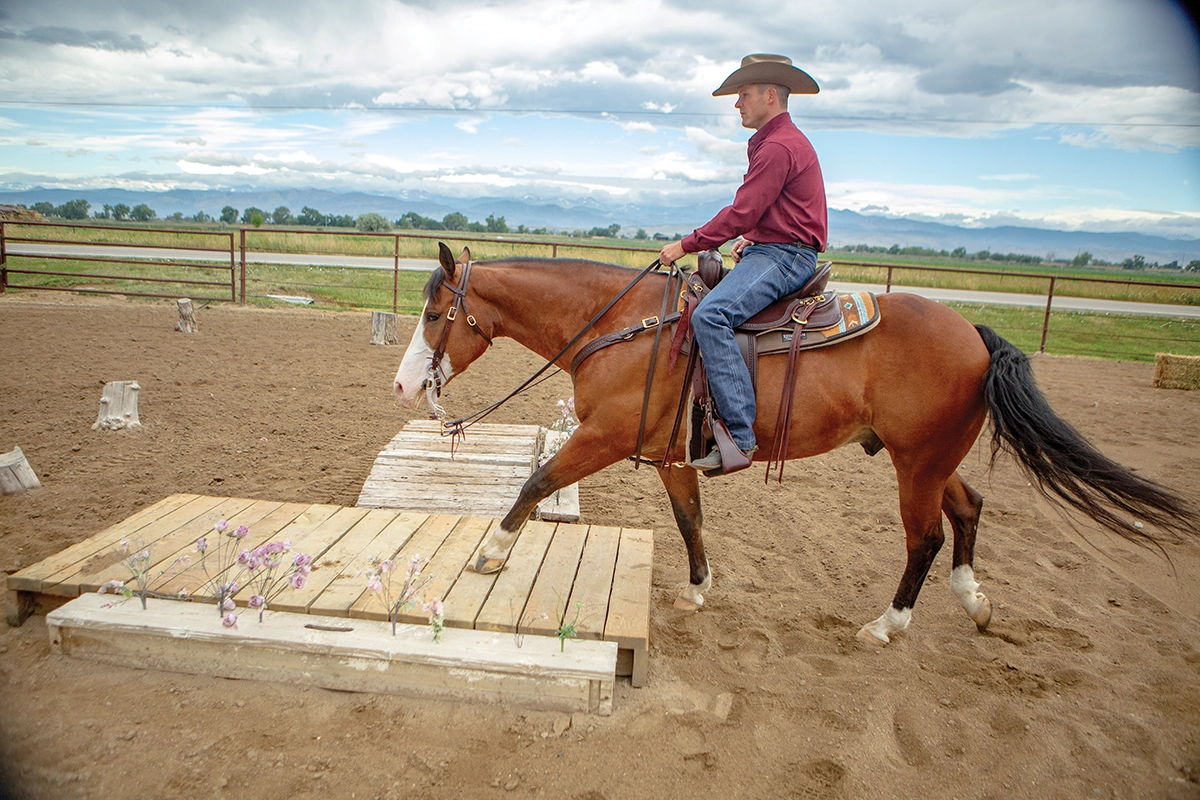
The judge will be looking for continual forward motion. Photo by Heidi Nyland Melocco
“The judge will want to see the horse looking forward and having his ears forward to show he’s interested and paying attention,” she explains.
Your horse will lose points if he doesn’t maintain a straight direction over the bridge, stops without a command, or steps off the side.
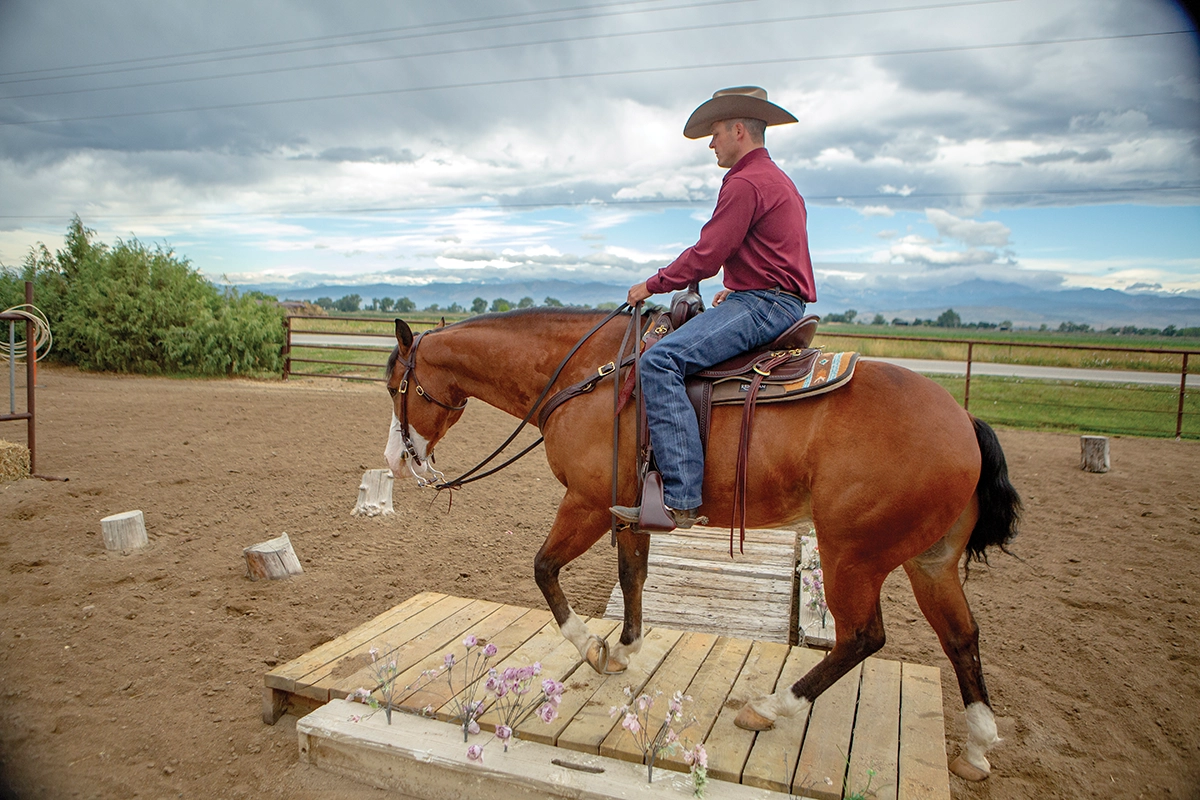
Stay straight and don’t let your horse step off the side of the bridge. Photo by Heidi Nyland Melocco
Keep it Up
Nemmers says she practices the bridge obstacle each time she rides a horse at her home trail course. She likes to mix it up, putting the bridge in different parts of her practice routine so that she seldom goes in the same order.
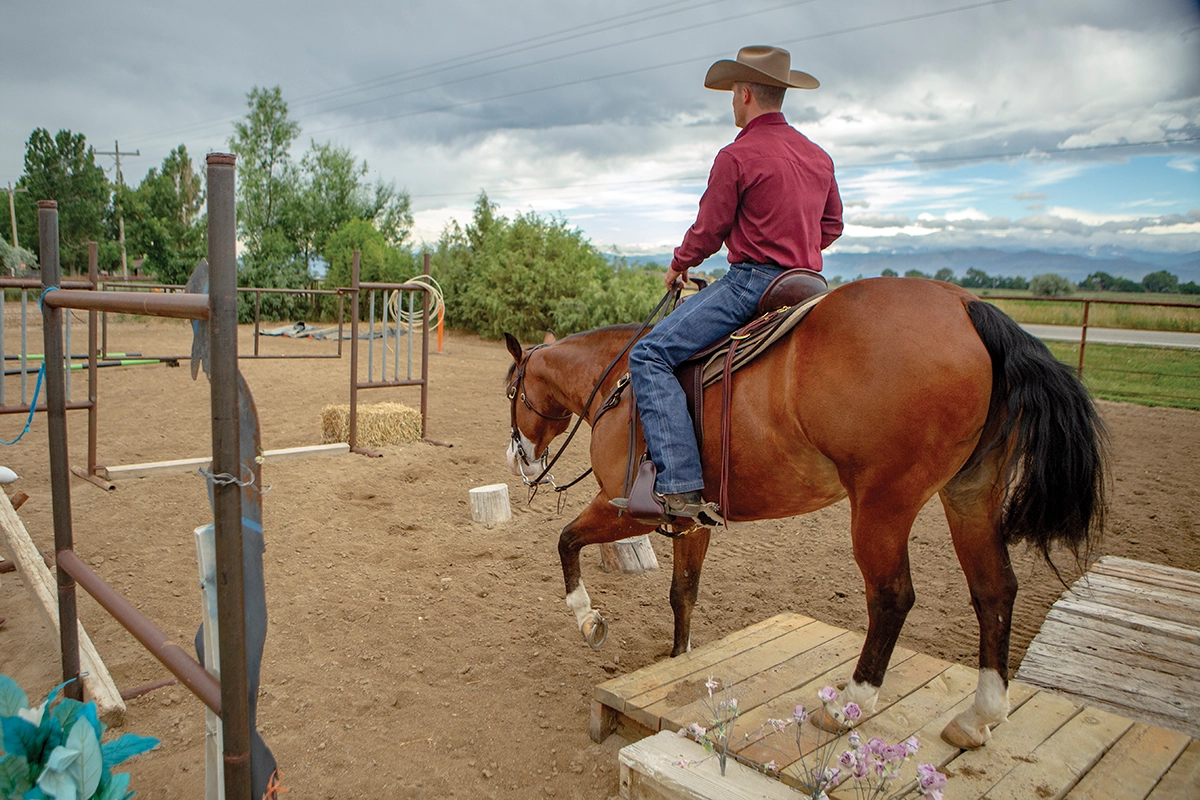
At a show, there will be other obstacles right before and after the bridge to test your horse. Photo by Heidi Nyland Melocco
“I’ll go over the bridge a couple of times during each practice,” she says. “If the horse is willing and does it correctly, I move on to something else. If we need to spend extra time, I take the time and do the progression of work. We have 15 trail obstacles in our trail arena, and I don’t keep them in any order. I make sure to do a totally different pattern every single day.”
Mix it up and you’ll find the obstacle at a show will be easy to cross.
This article about the bridge obstacle in the ranch horse trail class appeared in the July/August 2025 issue of Horse Illustrated magazine. Click here to subscribe!