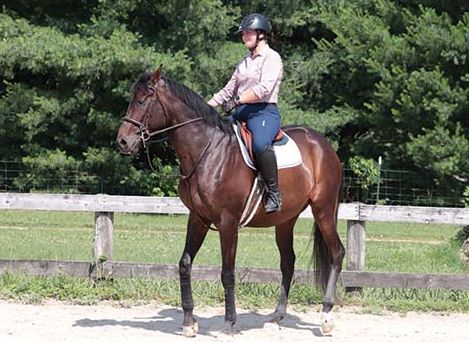
Solange Ellis’s motto is simple: Ride more. Fall less.
And every day she’s helping riders—from beginner to advanced, trail rider to rodeo competitor to Mongol Derby endurance rider—to do just that. Ellis created Stable Riding, a non-breed, non-discipline-specific training business, free of the crossties of traditional riding instruction. According to Ellis, she has always specialized in “real-world riding.”
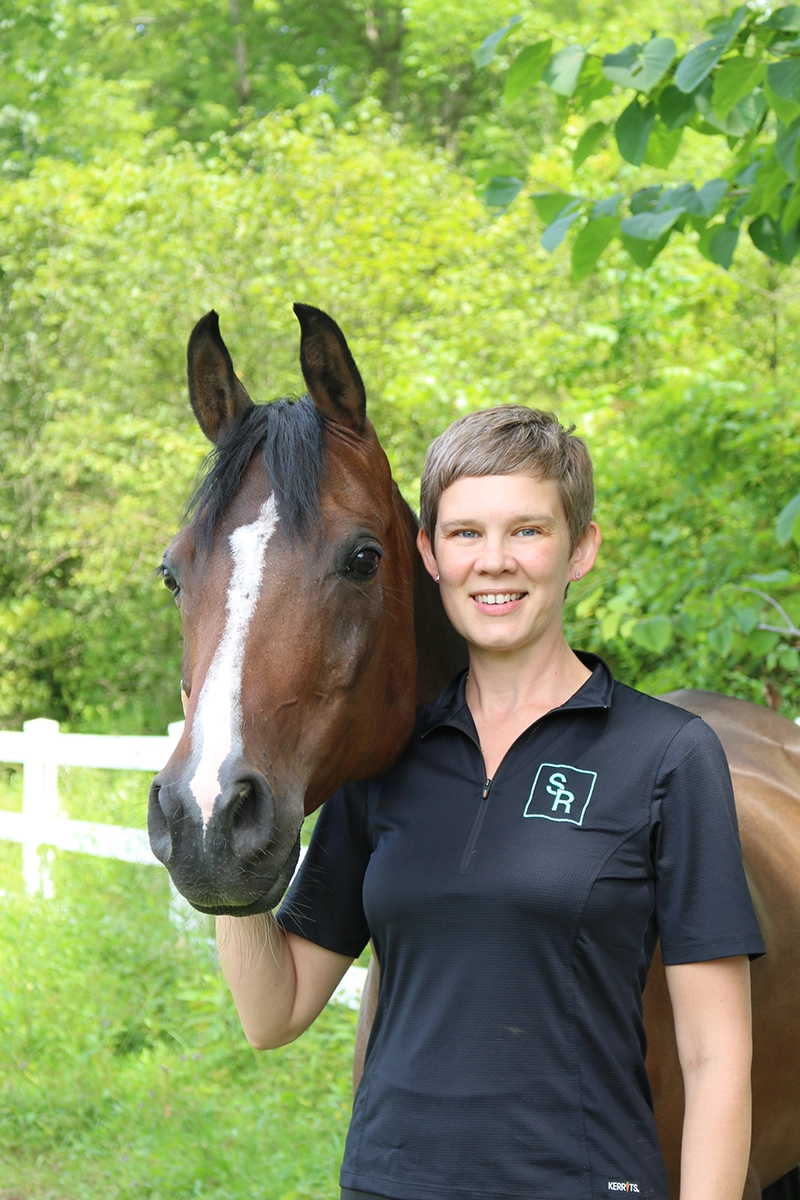
Solange Ellis, creator of Stable Riding. Photo by Aurora Burgy
“How you ride in the show ring, is not how you ride in the real world,” Ellis says. “Many riders are only given the tools to ride well in a show setting. But riding in a real-world situation in your show position is like cleaning stalls in a cocktail dress.”
Ellis wants every rider to feel stable, confident, and safe in any situation that arises.
“When I say I teach all riders, I mean all riders—every age, gender, body type, skill level, and discipline,” Ellis says. “My goal is to guide a rider’s body mechanically to the place where it is most stable, so they feel confident and comfortable, and the horse travels in the best possible way. Riding should not hurt; what brings you joy should never cause you pain.”
A Love for Horses
A pony ride at the circus at the age of 5 triggered Ellis’s love of horses. “I knew instantly that horses were for me,” Ellis says. She’s been riding ever since, including western, saddle seat equitation, hunter, jumper, and dressage. “I rode all the disciplines, which I think helped inform my system of training.” She began foxhunting over 20 years ago and has ridden all over the world, from Ireland to Egypt.
Ellis dropped out of school at age 15 to start her own business breaking horses and teaching lessons. Her name and unique style of real-world training quickly circulated among riders from every background, and her business took off. She trained her first pair of Mongol Derby riders in 2014, created her one-of-a-kind training lab in 2021, and formally launched Stable Riding in 2023, based at her farm in Hinckley, Ohio.
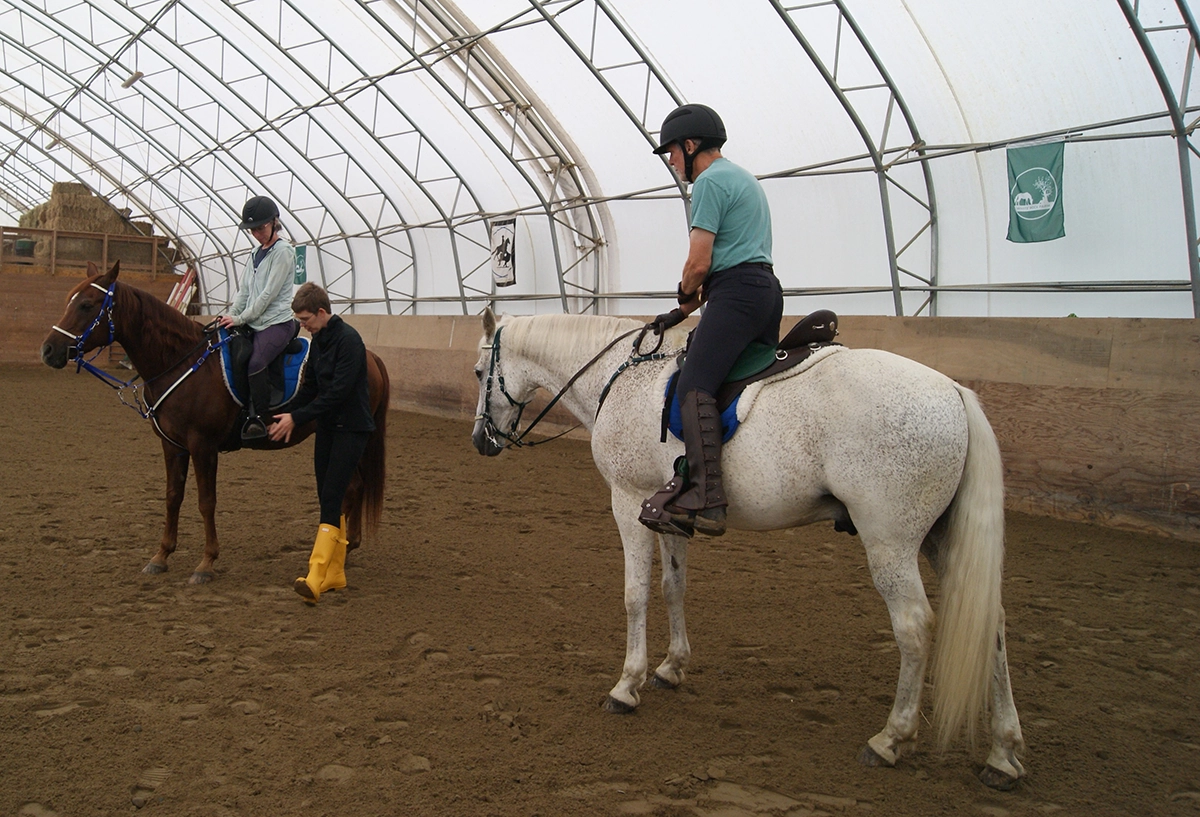
Ellis teaches stable riding skills to endurance riders at a clinic in Maine. Photo by Julie Maddock
Ellis currently owns 11 horses, including ponies, Arabians, Quarter Horses, draft crosses, a Percheron, a Thoroughbred, and a Dutch Harness Cross. “I own all my school horses,” Ellis says. “I want to offer my students a wide variety of motions, sizes, and head carriages because this approach is most beneficial for their education. Most trainers pick horses that will compete and show well; I choose horses that educate well. And my students always have positive feedback from their home trainer because they go back happy and more stable in their independent seat mobility.”
What Riders Learn from Stable Riding
“Here’s the real secret: I teach everybody the exact same thing,” Ellis says. “The physics of a human skeleton on a moving animal is the same for a dressage rider, hunter rider, or a cowboy mounted-shooter rider. It looks different to your eyeballs, but each rider encounters the exact same gaits—walk, trot, canter. Strip away everything else and you’re left with the interaction between horse and rider—and it’s all the same.”
The majority of her students start at the LAB, which offers a private learning environment where riders can learn, train, and experiment. Riders often start on an Equicizer, graduate to one of Ellis’s school horses, and then continue their education in concert with their own horse to address specific areas of concern.
“The idea for the LAB came from the first few rider intensives I taught to the Mongol Derby riders,” Ellis explains. “I knew that a dedicated space with specialized tools such as Equicizers and a Mighty Bucky Extreme would tremendously improve how well I could teach a rider to feel a concept in their own body. The LAB has become the heart of the Stable Riding System.”
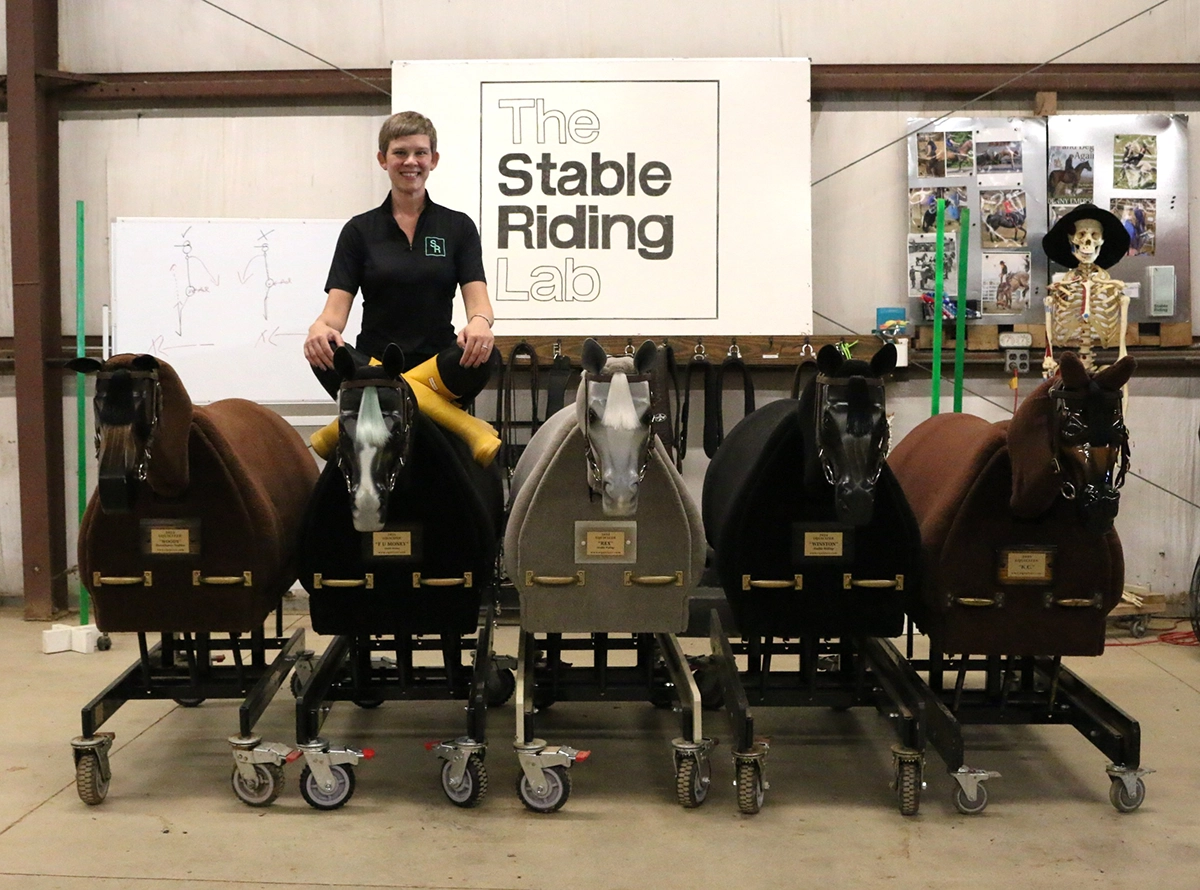
Ellis with her herd of Equicizers. Photo by Aurora Burgy
When riders can focus on the mechanics of riding—without the complexity of a 1,200-pound horse beneath them—they develop better body awareness, grasping the concept of hyper-specific body motions necessary to ride with a deep, stable seat.
Ellis’s intensive Stable Riding sessions are game-changers for endurance riders. “Traditional riding instruction is simply not designed for endurance riding,” Ellis says. “By prioritizing skeletal alignment, I help riders to ride for long distances with less fatigue and pain. When a rider is tired or experiencing discomfort, this affects their position, which affects the horse. A rider’s position is part of the horse’s care plan.”
Ellis sees Stable Riding as an option for riders of all kinds of backgrounds.
“I believe all riders—including those with physical limitations—can be stable,” Ellis says. “Specifically, riders with complex riding histories and riders with complex body histories. When I say complex riding history, I mean that rider who has been riding for years—on different horses, with many instructors and trainers. They’ve read tons of books, attended multiple clinics, yet still feel less confident.”
These riders often label themselves as cautious or even terrified.
“I have never met an anxious or fearful rider who passed my Stability Check,” Ellis says. “If I were in a physically unstable position and strapped to the back of a moving flight animal, I’d be freaked out too! But eighty percent of the rider’s fear begins to dissipate when they realize they can—and will—stay on the horse’s back.”
And nervous riders aren’t as clear or empathetic in their aids. So, in helping riders, Ellis is always helping their horses.
Even a rider with a complex body history—joint replacements, varying degrees of scoliosis, body-altering injuries or disease—can benefit greatly from the Stable Riding System with modifications to their body position and tack. “They can keep doing what they love without pain and with maximum stability,” Ellis says. “They are my Fabergé Egg Riders—riders who I really need not to drop! The physical cost of a fall for them is much greater than for the average rider.”
Ellis helps every rider to find a riding position that allows them to achieve their goals
“When I do so, I feel a sense of completion, satisfaction, and physical relief in my chest,” she says.
Ellis and her clients know she’s discovered something pretty special. But it’s always nice when the horse industry gives you a nod of respect. Ellis attended Equine Affaire in Columbus, Ohio in 2024 for the first time—and even won the coveted Best Booth Award. Ellis credits her dedicated team for the booth’s success: “I was happy to win for me; I was really happy to win for them.”
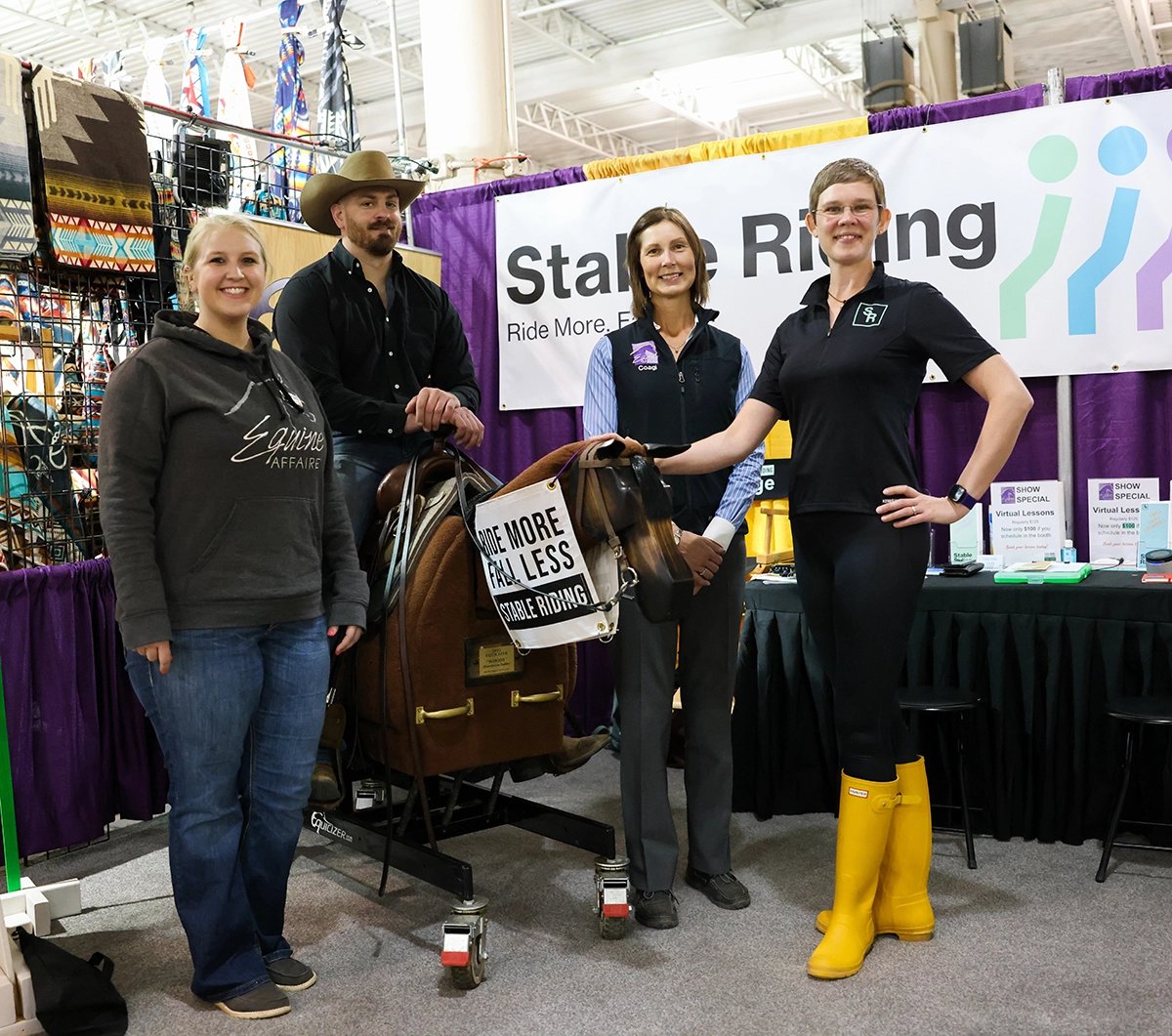
Recipients of the Equine Affaire Ohio 2024 Best Booth Award. Photo by Winslow Photography, LLC
Whether in-person clinics or Zoom consultations, Ellis ensures every session is customized to a rider’s specific needs. She travels to clinics from coast to coast and loves meeting riders from all over the U.S. And for those riders who want a deep-dive into stable riding, Elllis offers single- or three-day, six-hour intensive training sessions based at the LAB in Ohio.
“When I see a rider succeed, I get up and cheer! It’s a great feeling—I never get tired of it,” Ellis says.
To learn more about Solange Ellis’s Stable Riding System, host her at your barn for a clinic, or check out the LAB’s specialized learning tools, visit stableriding.us. You can also check out our podcast with Ellis by listening to Barn Banter Episode 34.
This article about Solange Ellis is a web exclusive for Horse Illustrated magazine. Click here to subscribe!