Whether temporarily or permanently living in a stall, try these strategies to banish stall boredom and keep your horse stimulated.
A classy bay gelding stares out of his stall. He stamps his feet, then pricks his ears when he sees anyone walk by. Normally by this time of day, he’d be working under saddle or kicking up his heels in the pasture, but today he’s been sidelined due to a minor injury. Now he is getting frustrated and anxious. He might be thinking, “What happened here? Where did everyone go? What am I missing? I’m bored, bored, bored!”
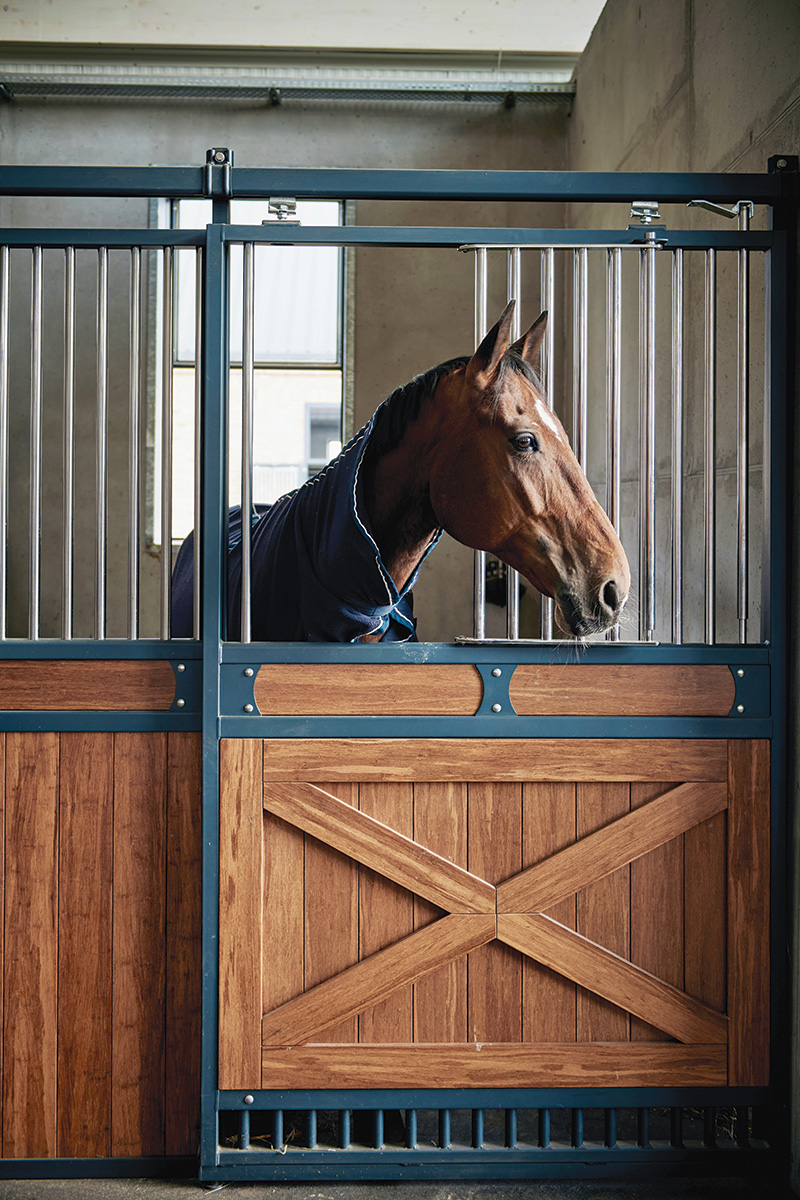
Photo by PhotoLifestyle/Adobe Stock
By nature, horses are nomadic herd animals. In the wild, they’re almost always on the move together—grazing and walking, grazing and walking—with short periods of rest in between.
Yet domesticated horses are often stalled, at the very least a few hours each day. They spend even more time in a stall when an injury dictates rest, or in show-circuit situations where turnout may be limited. While in most cases more time outside makes for a happier, healthier horse, there are times when keeping them in is unavoidable.
The challenge is safely maintaining and entertaining a stalled horse to support his mental and physical well-being. This breaks down into four categories: creating a calm environment; adjusting nutrition to meet his current needs; fighting dehydration; and planning activities for the horse to combat boredom.
Think Like A Horse
Carefully think through what your horse needs and wants to be happy, then try to provide that within the confines of a stall. Food, water and attention are top of the list. If the horse is injured or recovering from surgery, then of course medication and physical therapy are probably on the itinerary too. Providing all of these things interspersed throughout the day will help break up the monotony.
“Don’t use a human’s thought process as perception for a horse,” advises Kirsten Johnson, founder and owner of Kentucky Equine Sports Medicine and Rehabilitation Center (KESMARC) in Versailles, Ky. “Think like a horse. They like to eat. They like their humans—some of them like their humans more than others. Give them a quiet, comfortable environment where they are getting the needed nutrition and grooming.”
Stall Placement & Set Up
Johnson says a horse relegated to stall rest for healing should be moved to a quieter part of the barn; a change of venue to a rehab barn may be an even better idea. She stresses that it’s important for humans working with horses on stall rest to maintain a calm, low-key demeanor, too. Be mindful of any factors that may disrupt the peace.
“Avoid exposing the horse in full stall rest to over-stimulating situations, including other horses being turned out or ridden,” she says. “A horse on stall rest gets very anxious when he thinks he’s been left behind or isn’t doing his normal riding activity. Sometimes the worst place for a stall-bound horse is in a training barn, or whatever his normal setting is.”
One of her pet peeves is a stall with little or no bedding.
“If a horse has to be in a stall, then give him a proper bed, and make it nice and cushy,” she says. “In most cases, I prefer shavings over straw because there are fewer allergens in it. I find the cleanest, most dust-free shavings I can. But if the horse has severe allergies, then shredded paper is best. I use straw for horses with open wounds. If I have a horse with a fracture, then I want the bedding banked around the sides of the stall.”
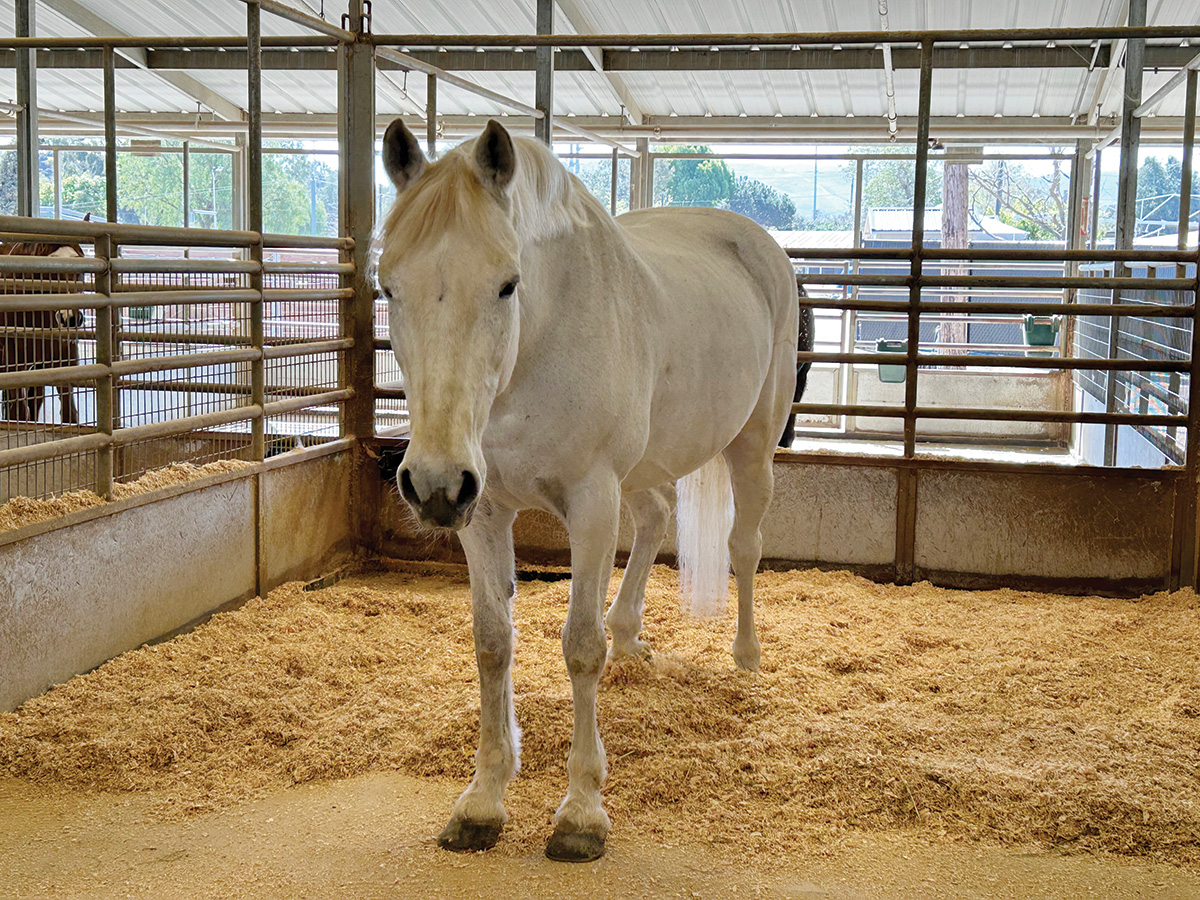
A nice bed of fluffy shavings away from stressors such as an arena where horses are being ridden helps maintain a calm, low-key demeanor. Photo by Holly Caccamise
Though it may be tempting to introduce a companion animal for the horse on stall rest, Johnson advises against that, citing experiences where it backfired. It might be OK if the horse already has an animal buddy living with him, but don’t add a new animal to the mix.
Feeding Strategies
“Feed smaller meals more frequently” headlines the advice from Tania Cubitt, Ph.D., an equine nutrition consultant based out of Virginia for Performance Horse Nutrition. These are words to live by not only for horses on stall rest, but for any horse. This helps prevent an unhealthy overload on the horse’s digestive system and offers a good distraction to reduce boredom.
Cubitt specializes in feeding strategies for special-needs horses. She says the mantra “forage first” is important. Feed a palatable, dust-free, and mold-free hay suited for the horse’s age and body condition, then augment that with concentrate (equine-specific bagged grain, fat/fiber feed, or ration balancer), depending on the individual horse’s requirements.
“Provide plenty of forage and make it available all the time to mimic grazing,” she says. “Feed hay first to slow down the rate of intake of grain.”
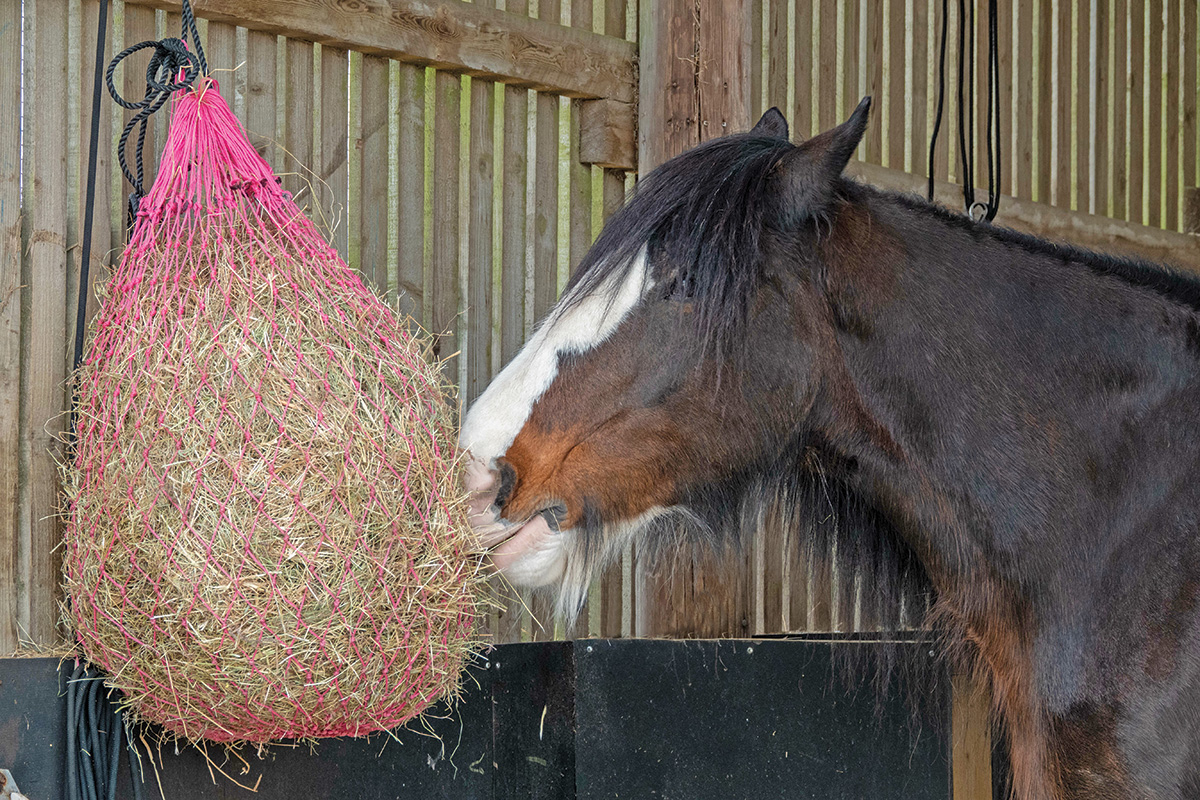
Having forage to snack on all day helps replicate grazing and keeps the stall-bound horse busy. Photo by Penny/Adobe Stock
Cubitt says that many people don’t realize that an injured horse has similar nutritional needs to those of a horse in light work because he needs to rebuild his body. Therefore it may not be correct to cut out all concentrates in the stall-bound horse’s diet, although starches and sugars should be replaced by fats and fiber to reduce excitability.
She also recommends the following:
◆ Instead of the full portion of grain that the horse might receive when in work, pelleted ration balancers, which meet protein, vitamin and mineral requirements, may be fed along with hay to a horse on layup.
◆ Feeding treats is fine, but “everything in moderation.” She recommends forage-based or forage-only horse treats for idle horses. And, yes, the occasional carrot is fine too.
◆ Use slow feeders for hay and grain to reduce intake rate. Cubitt prefers the those that rest on the ground rather than hanging ones.
Hydration
Monitoring water intake of horses on stall rest is critical. They may back off on water consumption since their activity level is lower; this can result in dehydration and increase the risk of colic, among other serious ailments.
Cubitt advises giving wet feed, if tolerated by the horse, to increase hydration, and says feeding soaked beet pulp is one good way to do this. Johnson agrees and is a big proponent of soaking hay before feeding, too.
Activities & Hand-Walking
There are many options for in-stall activities to break up the long hours for a horse on layup. Grooming sessions are great bonding time for horse and handler and contribute to the horse’s overall health and relaxation.
You can also try carrot stretches, clicker training and other exercises. Hide treats around the stall. See if the horse responds well to soothing music. Get creative, but also keep safety and maintaining a calm environment in mind.
Johnson says not many rehabbing horses need complete stall rest for the duration of their healing, so if the horse is cleared for hand-walking around the barn or arena, that will help beat the boredom. Just know the horse and be prepared so hand-walking remains as safe as possible for horse and human.
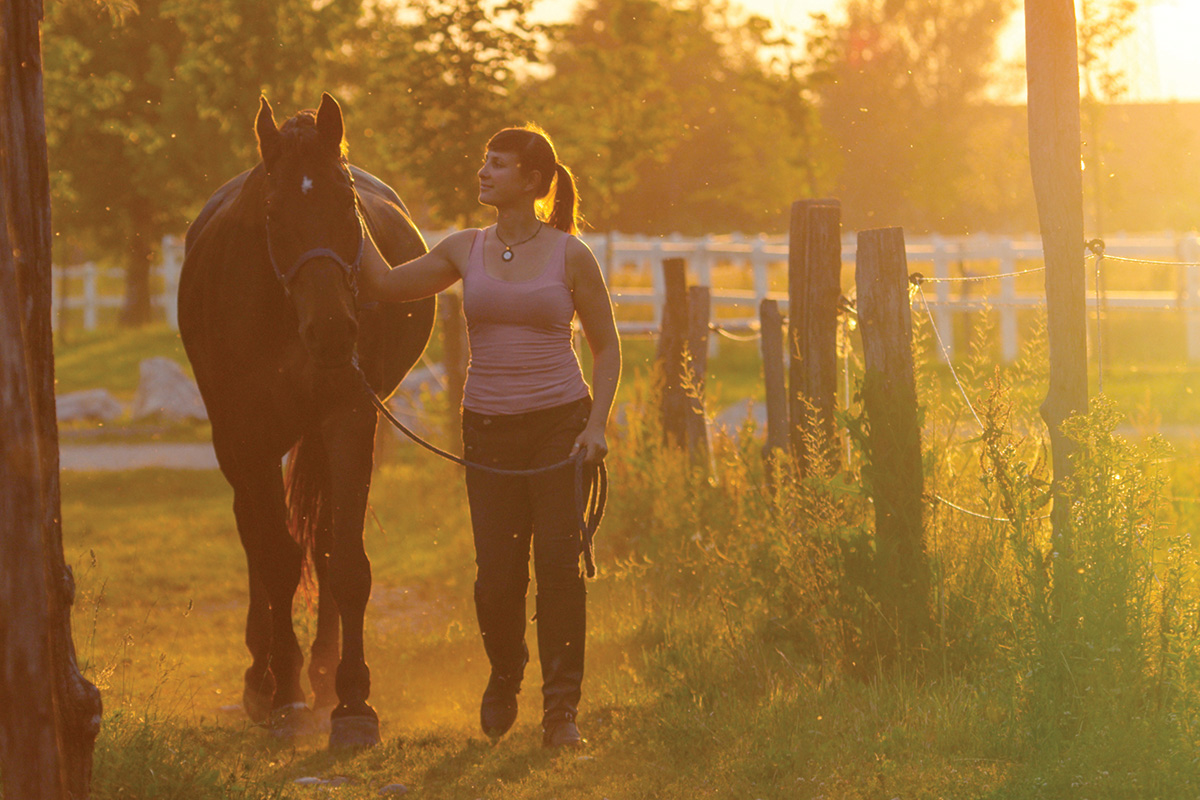
If the vet has cleared your horse for hand-walking and it’s safe to do so, this will help with rehab as well as alleviating boredom. Photo by PhotoLifestyle/Adobe Stock
Stall Toys & Treat Dispensers
A wide variety of fun horse treat dispensers and stall toys are available, not only for rehabbing horses; they can be great time-fillers for any horse in a stall or paddock.
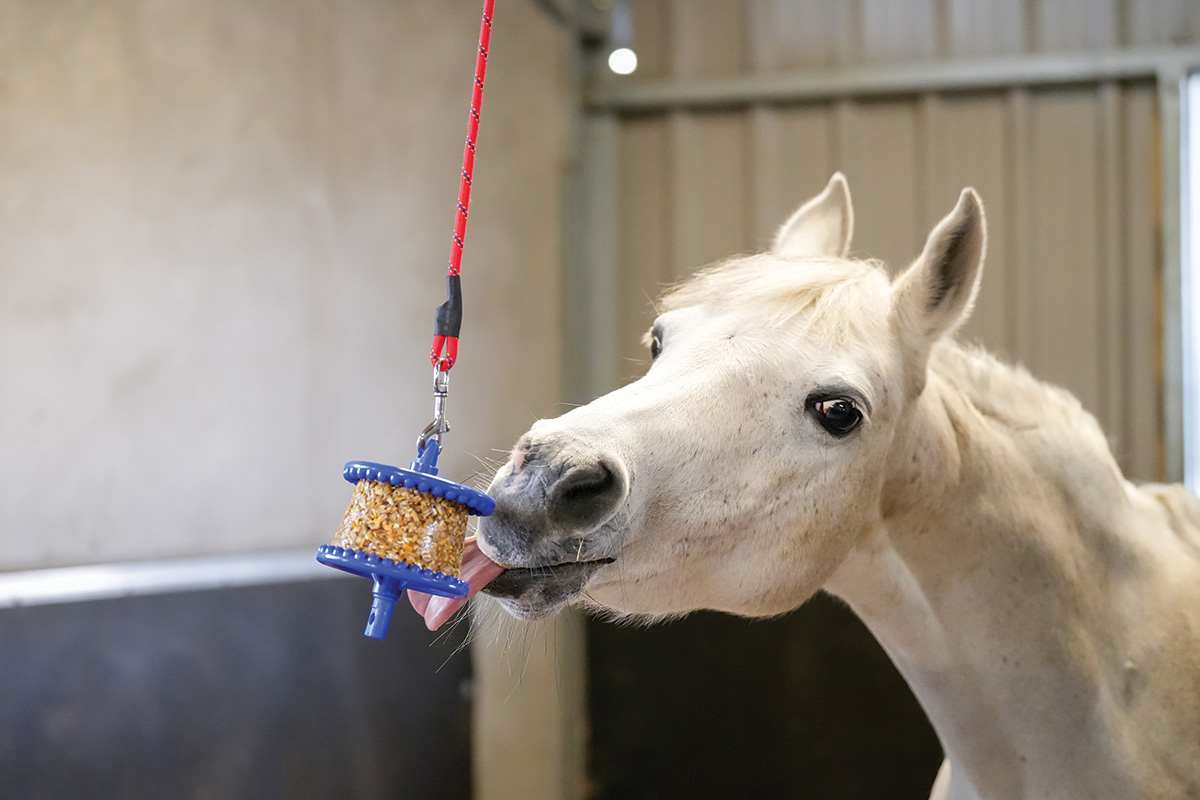
Hanging toys and treats offer a time-consuming challenge. Just make sure they can’t be pinned against a wall! Photo courtesy Likit
There are stall balls and tug toys for the horse to grab and bounce around, hanging toys to nose and swing, rolling balls and puzzle boxes with holes that dispense treats as the horse moves the toy, hanging lickable treat dispensers and entertaining “lollypops” for horses. There are also scratch pads to mount on stall walls that allow horses to reach their itchy spots.
Recent studies in the United Kingdom1 and the U.S.2 included the use of some stall toys and treat dispensers. Both reported a reduction in stereotypical behaviors (also called barn vices, which researchers now believe are initiated by stress) in the studied horses.
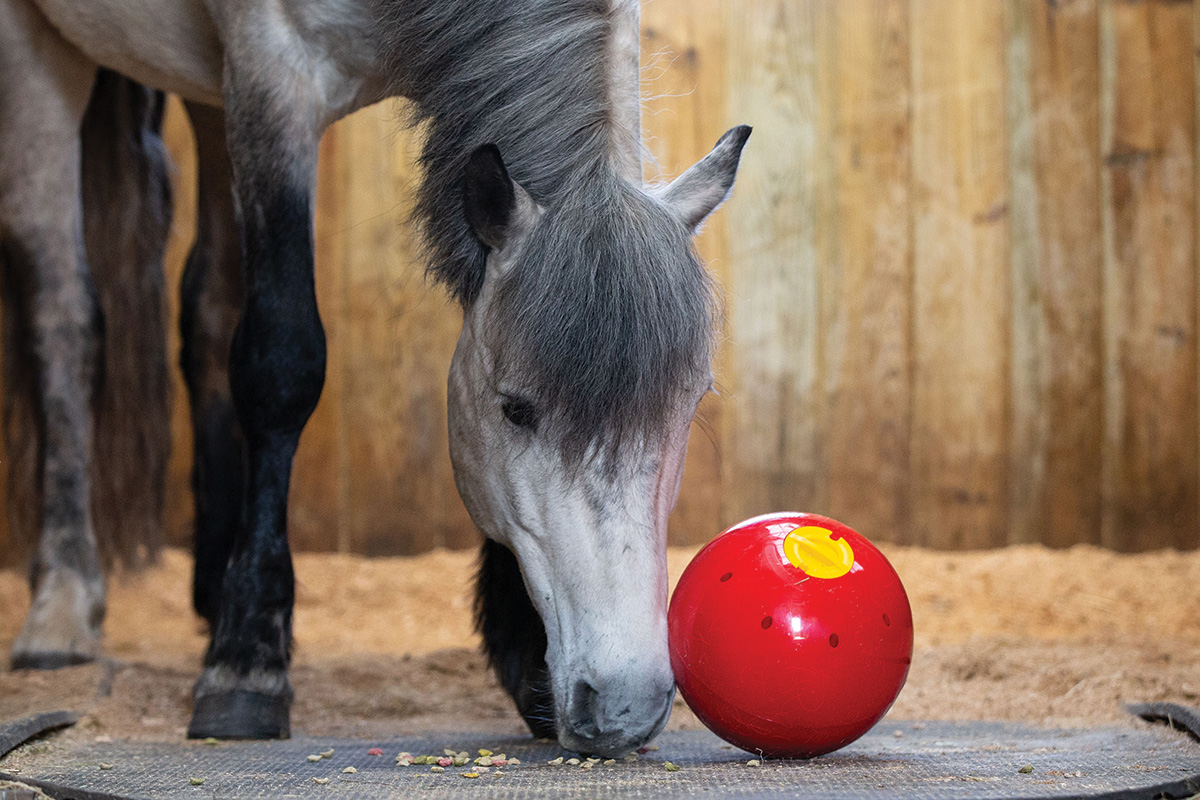
Rolling pellet dispensers like the Snak-a-Ball give horses a mentally and physically stimulating task during stall time. Photo courtesy Likit
Regardless of the enrichment items you choose, make sure that the toy and any mounting hardware are sturdy enough to withstand abuse from an overenthusiastic equine. Johnson cautions that some horses may overdo it with toys, annihilating the object and possibly injuring themselves in the fray, so read all directions and be cautious when introducing new playthings.
Treatment & Physiotherapy
Make sure to include an injured horse’s entire care team during the rehab process. Consult veterinarians, physiotherapists, farriers and nutritionists, as well as grooms and trainers, to create a plan. Prescribed veterinary treatment, massage, and other physiotherapy modalities will help heal the horse while also occupying its mind.
Even with a well thought-out plan to break up the boredom, Johnson says some horses on stall rest may need herbal quieting remedies or long-term sedation for their own safety if they become overly exuberant. Don’t be shy about speaking with a veterinarian if these options are necessary.
About the Experts Tania Cubitt, Ph.D. Tania A. Cubitt, Ph.D., is an equine nutrition consultant with Performance Horse Nutrition who specializes in feeding broodmares and senior horses as well as those afflicted with gastric ulcers, metabolic syndrome, and developmental orthopedic disease. 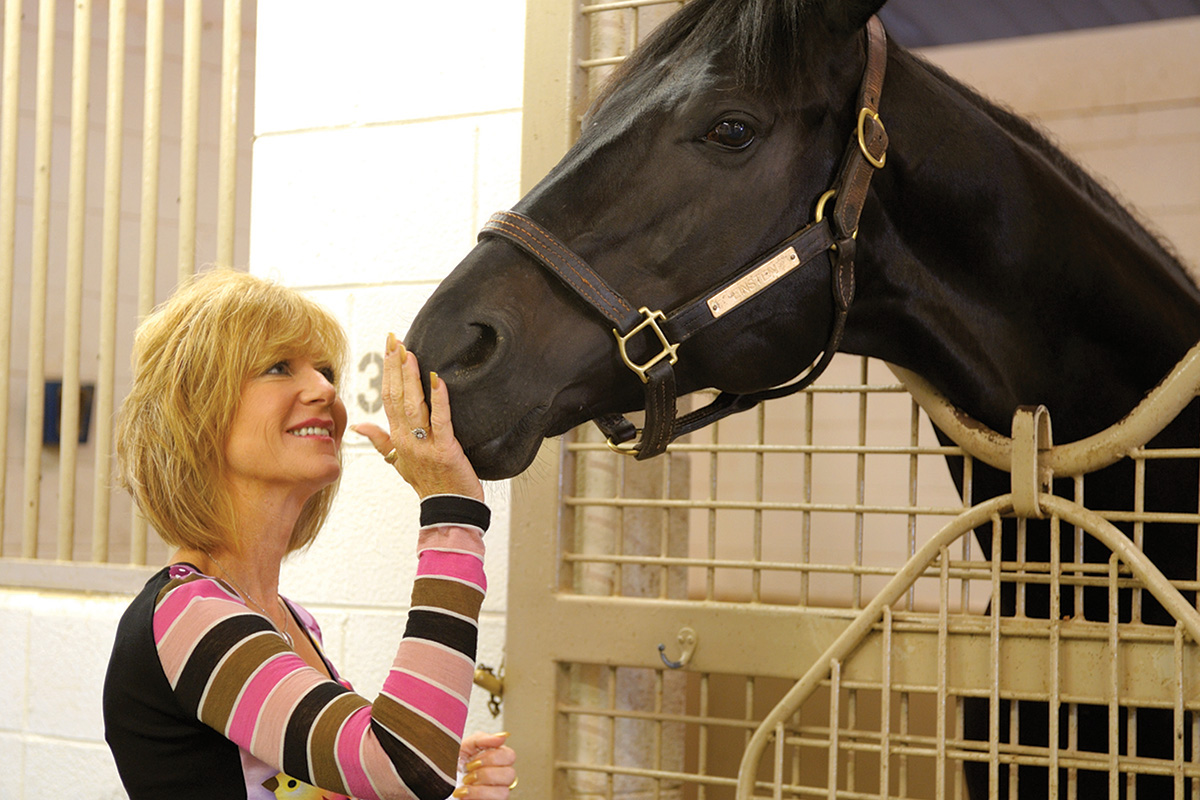 Kirsten Johnson Kirsten Johnson is the founder and owner of Kentucky Equine Sports Medicine and Rehabilitation Center (KESMARC) in Versailles, Ky. KESMARC offers a wide variety of treatment options, including a hyperbaric oxygen chamber, a swimming pool, cold therapy, pulsed electromagnetic field (PEMF), Theraplate, and more. |
1 “The effect of a stable toy, ‘The Boredom Breaker,’ on the behaviour and welfare of stabled horses”; Ball, M.; School of Veterinary Science, University of Bristol
2 “Effects of environmental factors on cribbing activity by horses”; Whishera, L. et al.; 2011; Applied Animal Behavior Science
This article about solutions for stall boredom appeared in the September 2024 issue of Horse Illustrated magazine. Click here to subscribe!