We all know that maintaining the physical capabilities needed for riding becomes more challenging as we age. Age-related muscle loss, reduced flexibility, and longer recovery times have an impact on overall wellbeing and performance in the saddle. For senior equestrians, targeted strength training is the game-changer that helps improve endurance, balance, injury prevention, body awareness and connection with your horse.
You might be thinking, “Strength training can have that much impact on my riding?”
Yes! Incorporating exercises that maintain and build strength, improve mobility, and enhance stability can counteract the march of time. Riding is one of the few sports that you can do forever, allowing you to continue enjoying your passion with confidence, safety and vitality.
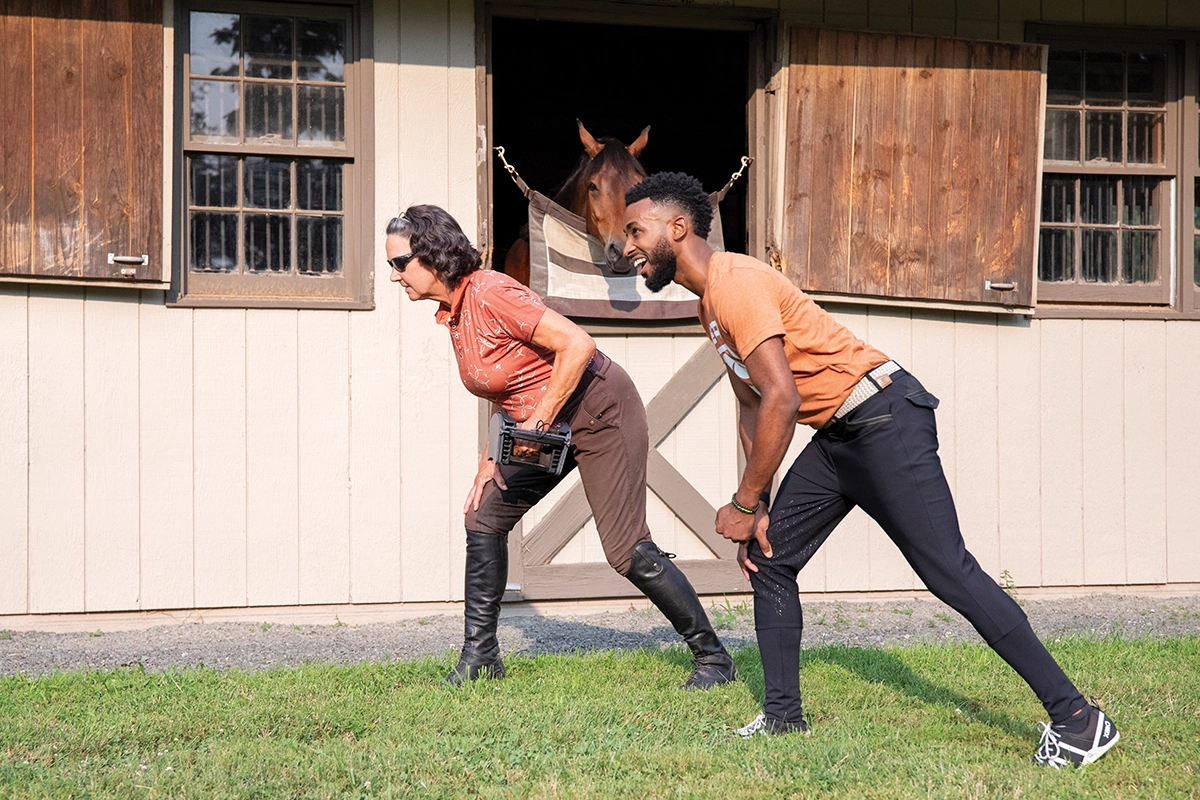
Bent-over dumbbell rows help improve strength and endurance in the saddle, as Ifa Simmonds and the model demonstrate. Photo by Jamie Isaacs Photography
Age-Related Muscle Decline
If you’re over 50, the natural decline in muscle strength is roughly 1.5 to 3 percent annually. This decline affects stability, suppleness, strength, and stamina around the barn, as well as in the saddle. Strength training, such as bodyweight movements and especially weightlifting, plays a vital role in mitigating this muscle loss. This training stimulates muscle protein synthesis, which helps you enhance muscle growth and maintenance.
For riders, muscle loss leads to reduced balance, slower reaction times, and greater difficulty maintaining good posture in the saddle. Strength training helps to maintain core strength and stability, both essential for staying balanced during transitions, turns, and unexpected movements from the horse.
Routine strength training has not only helped my clients preserve muscle health, but also promotes a higher quality of life and longevity in the saddle.
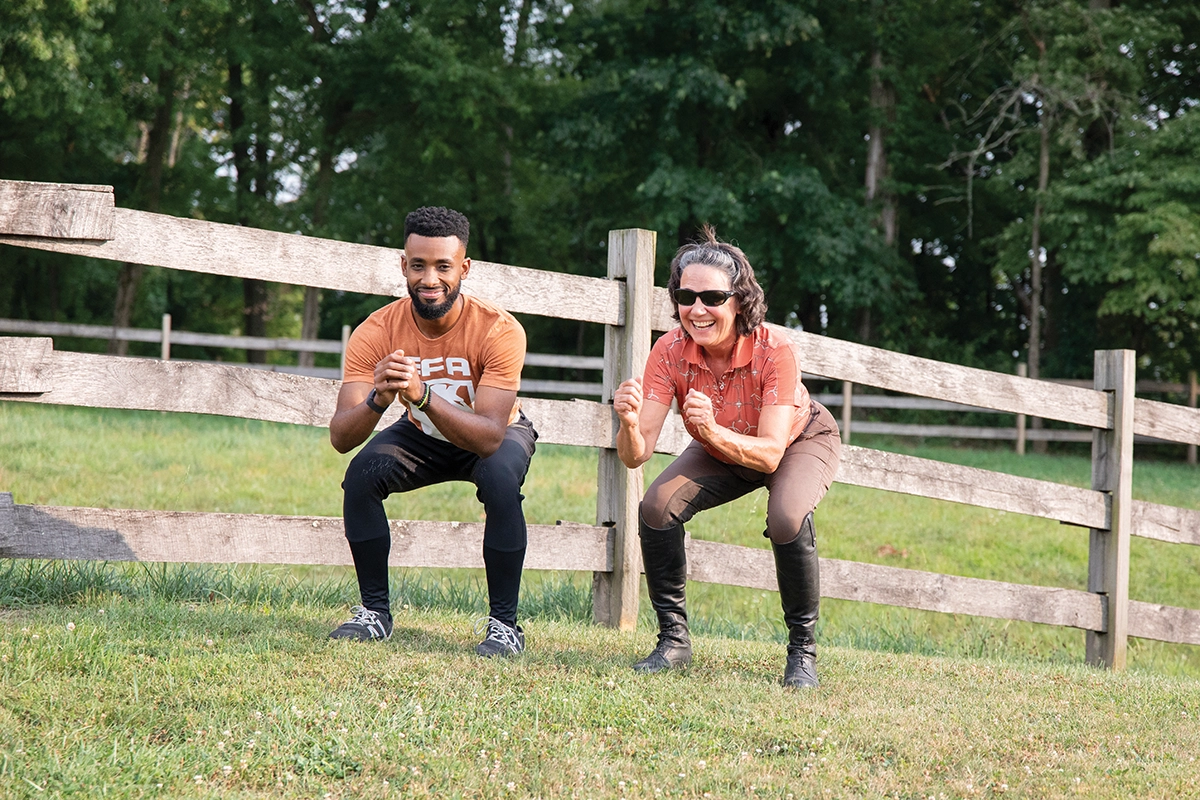
Bodyweight exercises like squats are ideal for building foundational strength and require no equipment. Photo by Jamie Isaacs Photography
Performance & Injury Risk
Riding places unique physical demands on your body. Core strength, leg endurance, and back stability are critical to maintaining proper alignment and posture while communicating effectively with your horse. When you’re weak in these areas, it leads to compensatory patterns, increasing the risk of overuse injuries and discomfort.
Stronger muscles help to reduce the strain on joints, tendons, and ligaments during rides. This is particularly important for mature riders, who may experience joint discomfort or back pain. Strengthening the lower body also improves your ability to absorb the horse’s movements without compromising balance, especially during activities like posting or sitting deeper in the canter.
Strength training can also improve grip strength, essential for holding reins and giving precise control without excessive tension. Combined with flexibility training, strength work enhances overall coordination, helping you feel more secure and harmonious with your horse.
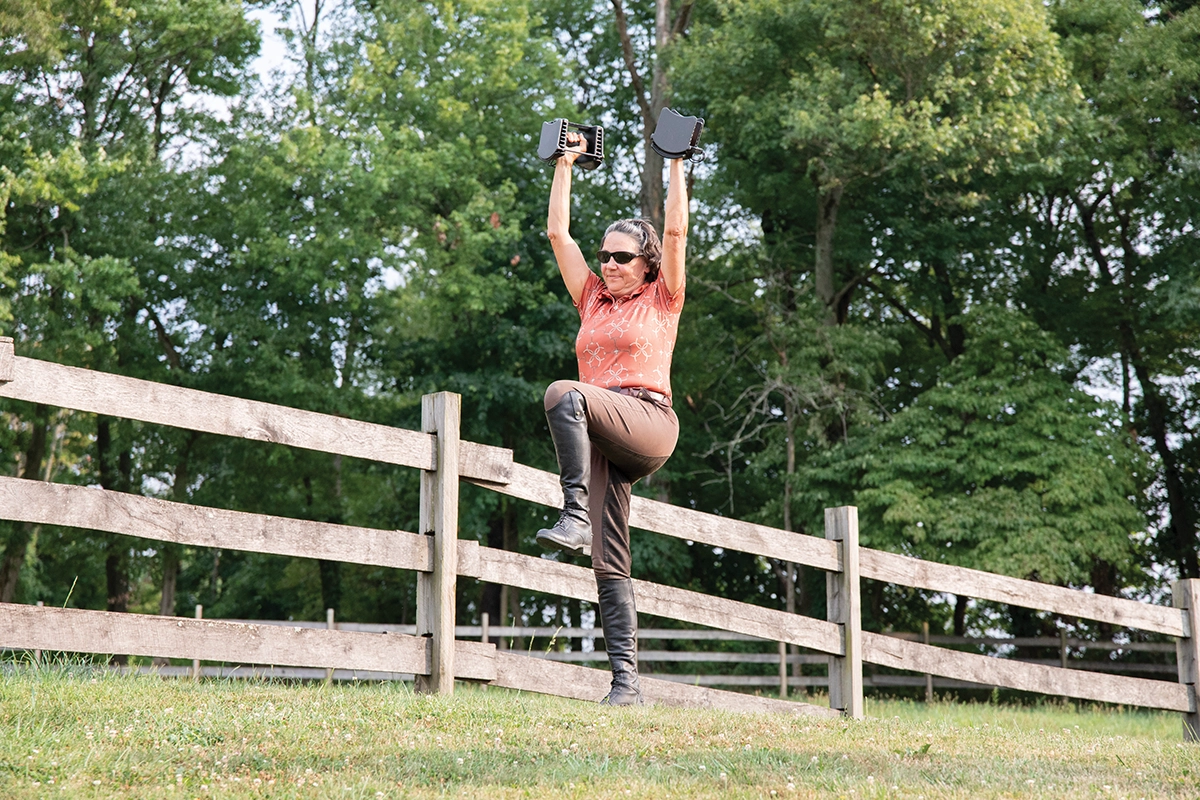
Exercises like the marching press help develop the endurance, coordination, and stability used in the saddle. Photo by Jamie Isaacs Photography
Flexibility & Balance
Stability and suppleness are foundational to effective riding. Tight muscles with a limited range of motion negatively impact the horse’s way of going, often leading to stiffness or a lack of fluidity in the horse’s stride. Flexibility is just like the other things—if you don’t continue to practice it, you’re liable to lose it. Incorporating exercises like dynamic stretching, Pilates, or yoga can improve your suppleness and overall comfort while riding.
The center of gravity in an older rider is slightly different than in younger riders. To be centered and properly positioned in the saddle, it’s important to practice joint stability and balance exercises.
Simple exercises like standing on a balance pad, single-leg stands, balance pod balance, and stability ball exercises can improve proprioception (your awareness of body position). These exercises enhance reflexes, which are essential for quick adjustments in challenging situations like spooks or sharp turns.
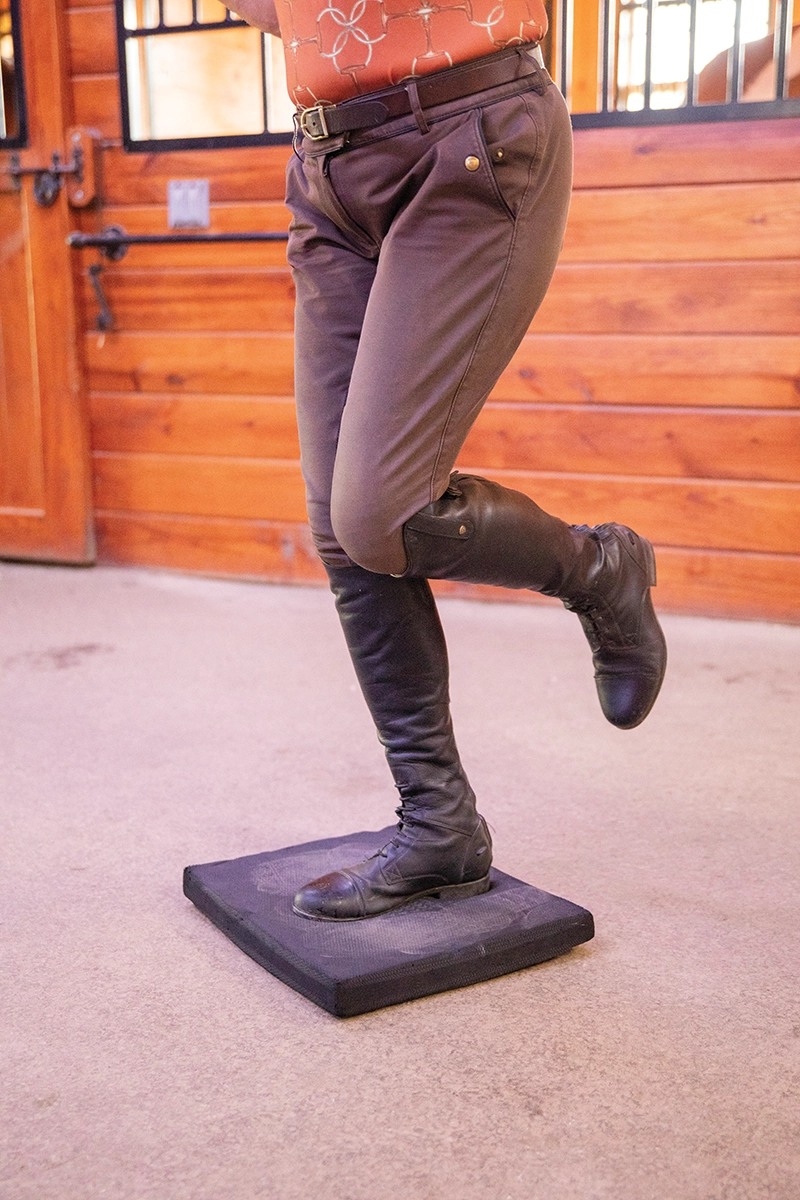
Single-leg stands on a balance pad or balance pods increase proprioception and enhance reflexes, great for riding a spook or sharp turn. Photo by Jamie Isaacs Photography
Hormonal & Recovery Benefits of Strength Training
As riders age, the natural production of hormones like estrogen, testosterone and human growth hormone declines, which typically means greater loss of muscle mass and slower recovery times. Strength training stimulates the release of these hormones, promoting muscle repair, bone density, and overall vitality. This is especially important for equestrians who want to maintain their riding fitness over the long term.
Older riders may notice recovery from rides or training sessions takes longer than it used to. Training improves both physical resilience and enhances recovery rates, allowing you to get back in the saddle quicker with less soreness.
Recommended Strength Training Exercises
1. Bodyweight
Simple yet effective, bodyweight exercises like squats, lunges, and push-ups strengthen key muscles used in riding. These exercises are ideal for building foundational strength and require no equipment, making them accessible to everyone.
2. Resistance Bands
Resistance bands are an excellent tool that don’t place undue stress on your joints. You can do the same dumbbell exercises with bands instead.
3. Dumbbells
Light dumbbells or kettlebells can gradually build strength in the upper body, particularly in the arms and shoulders. Exercises like overhead presses and bent-over rows help develop the endurance needed for rein control and proper riding posture.
4. Stability Exercises
Incorporating dynamic balance-focused exercises, such as the marching press, enhances coordination and stability.
5. Low-Impact Cardio
Adding low-impact cardio like swimming, walking, or cycling complements your strength training by maintaining cardiovascular fitness without over-stressing joints.
Taking It Slow
For anyone just getting started, it’s important to ease into strength training. Starting with light resistance and focusing on proper form minimizes the risk of injury. Gradually increasing the intensity by adding more reps, resistance, or weight gives your body time to adapt and grow stronger over time.
Listening to your body is equally important. If an exercise feels uncomfortable or causes pain, adjust the movement or reach out for help. Recovery is also key—allow ample time for rest between training sessions, especially after a tough or long ride.
Strength training will not only enhance your physical performance, but your mental confidence as well, allowing you to feel more in control and capable both on and off the horse. Investing in your health and fitness is an investment in your riding journey.
Find more fitness tips at ifafit.com.
This article about strength training for senior equestrians appeared in the March/April 2025 issue of Horse Illustrated magazine. Click here to subscribe!