For thousands of years, horses have carried mankind on their backs. They were the main source of transportation, primarily used to move goods, carry personal belongings, transport farm crops, or move troops during wars. If horses were not being ridden, they pulled chariots, carts, carriages, wagons, and even sleighs. How did we go from horses transporting us to modern-day trailers designed to transport horses in the greatest comfort possible?
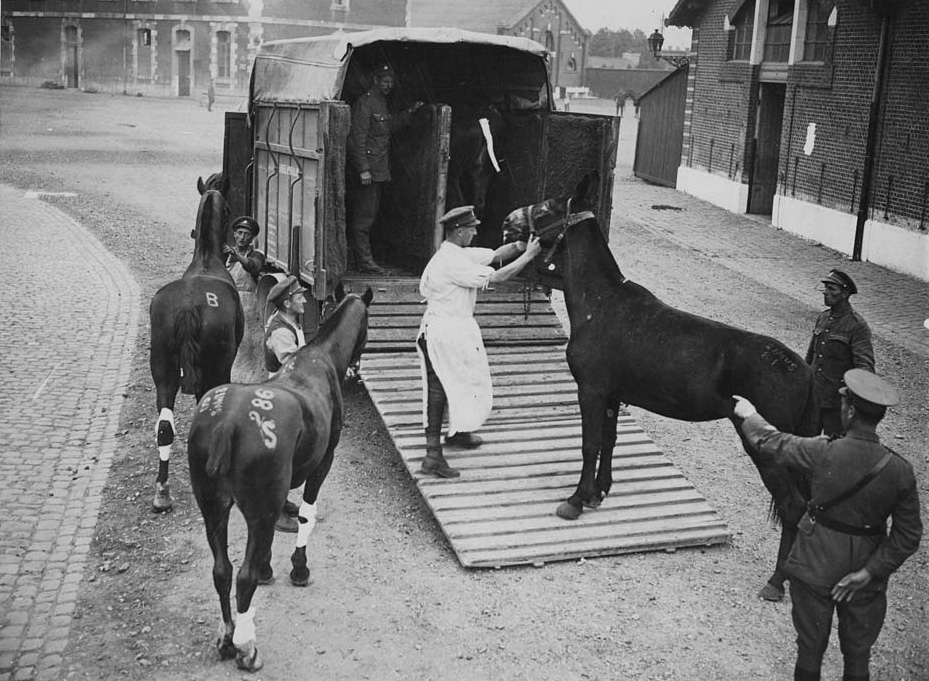
Horses load into one of the earliest vehicle-drawn horse trailers in Scotland during World War I, circa 1916-1918. Photo from National Library of Scotland
Early Days of Horsepower
The first records of horses traveling any way other than on their own four feet dates to the late 18th and early 19th centuries in England, beginning with two racehorses. Pulled in an adapted wagon by one or two other horses, the Thoroughbreds were respectively transported for breeding purposes and to arrive well-rested at racetracks.
Most horses were not this lucky. However, as trains and the railway system developed, some horses experienced train travel for exceptionally long distances.
Horses continued to transport each other for decades. Some city fire departments had horse-drawn ambulances, used to haul injured horses to firehouses for veterinary care.
During World War I, more equine ambulances were created to transfer infantry horses from the battlegrounds to base hospitals with veterinarians. There were some vans with stalls in the back to haul war horses as well, helping to pave the way for motorized equine transport after the war. These early versions of trailers were made from wood and steel.
Many years passed with no major need for a horse trailer that closely resembles what we have today. Throughout the American Southwest, horses were still mainly considered livestock, and were necessary for ranch work.
If ranchers or cowboys needed to travel longer distances than their horses could comfortably ride, they loaded up their mounts in the back of pickup trucks. Horses were often tied to cattle racks, which were wooden or steel removable pickup truck inserts that kept livestock contained while driving.
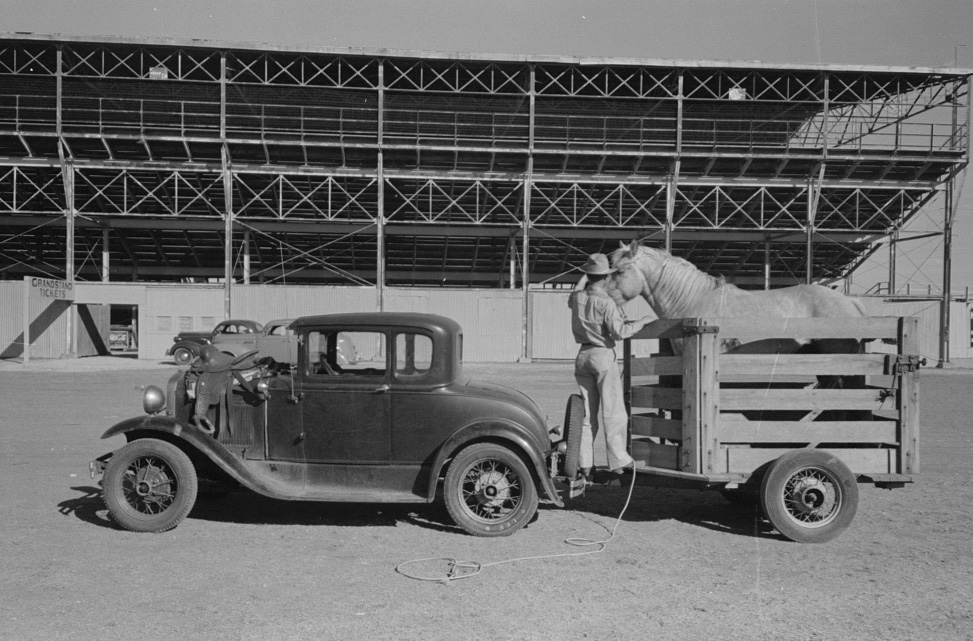
A 1940 rodeo performer arrives with an early style of vehicle-drawn stock trailer. Photo from Library of Congress
Changing Times
As the 20th century progressed, stock trailers entered the scene, replacing many cattle racks. Vehicles slowly became more capable of towing trailers as people experienced a greater need to transport goods and other livestock, like cattle and swine, over long distances.
The first stock trailers were primarily made from wood, but quickly switched to steel, since it held up better.
The Interstate Highways
When the Federal-Aid Highway Act of 1956 was passed under Eisenhower, 41,000 miles of an efficient Interstate Highway System was constructed over a period of 10 years. Automotive transportation vastly improved, allowing safer and longer transport for people and animals.
At the same time, livestock travel via rail decreased, so increasingly powerful trucks were needed. Now horses could travel with greater ease, even if it was in a basic steel stock trailer.

As the interstate highway system grew, dedicated horse trailers came onto the scene. They were small bumper-pulls that held one or two horses on a steel frame. Photo by OceanProd/Adobe Stock
From there, horses were ridden more for leisure than work, so equestrians everywhere started attending competitions or traveling to recreational trails. This change among the equine industry quickly led to a need for dedicated horse trailers that could haul to horse shows.
Some of the first trailer companies manufacturing specifically for horses were Stidham and Miley, which both started in the 1950s. Back then, trailers were manufactured out of steel and only had room for one to two horses in little bumper pulls. However, it was still very common to haul with stock trailers not necessarily designed for horses.
New Materials
While steel dominated the trailer industry for generations, customers soon discovered how quickly this material rusts and deteriorates, ultimately putting horse safety at risk.

A rodeo rig used in the 1990s looks vastly different from what is seen today. This estimated 1995 trailer was towed with a 1989 Dodge pickup. Photo courtesy Matt Deskovic
To solve this issue, 4-Star Trailers, Featherlite, and Exiss were some of the first companies to build aluminum horse trailers. Later other companies followed suit, such as Bloomer Trailers in 1998 and Cimarron Trailers in 2000.
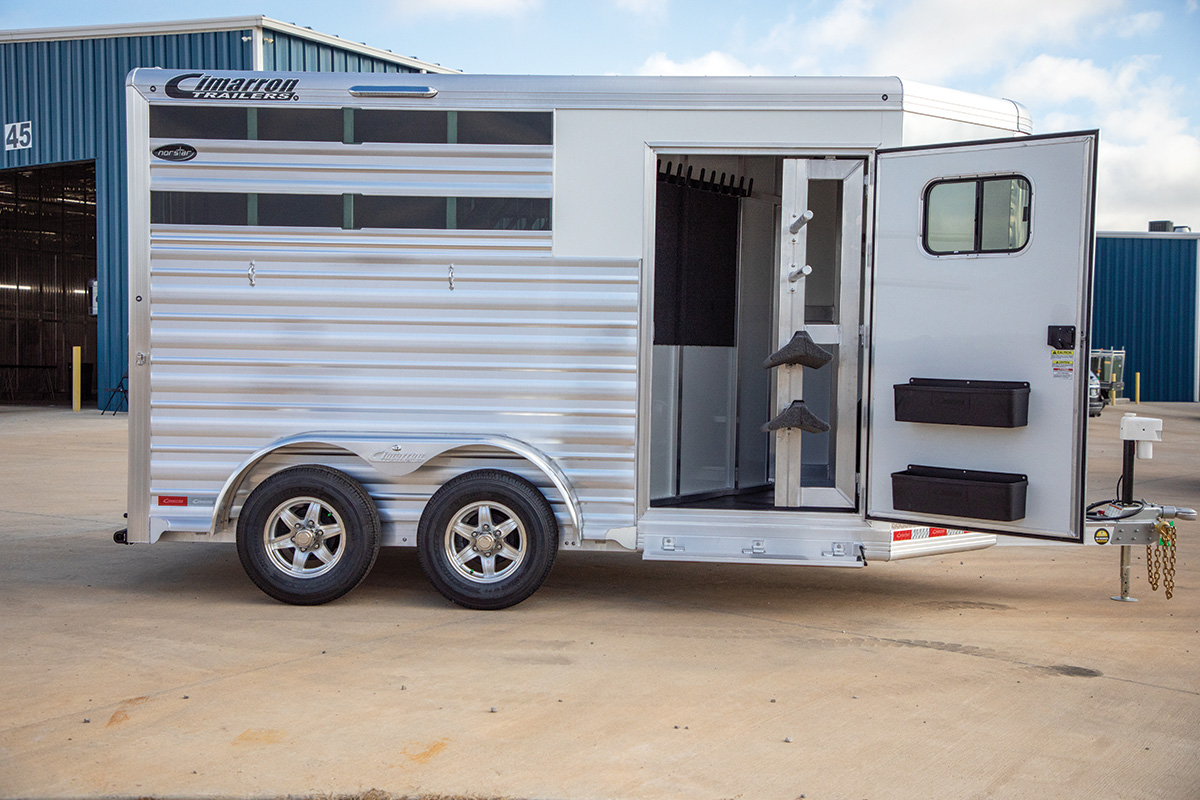
Aluminum trailers are the norm now, but it took a while for them to gain acceptance over the heavy steel trailers from the early days. Photo courtesy Cimarron Trailers
According to Forrest Shifflet, President of 4-Star Trailers, starting from the company’s foundation in 1984, they found that aluminum weighs significantly less than steel, is virtually corrosion-free, and thus holds its value better.
Since this material is much lighter and does not experience rapid deterioration, trailers could grow in length and height as trucks also improved in towing capacity, which was particularly important with the rise of gooseneck trailers and slant-loads that granted more interior space.
Aluminum may seem like it would be an easy choice for customers when trailer shopping, but it took some time for the material to be fully accepted after steel was used for so many years. Some customers feared aluminum would rip or tear under stress.
“People were scared of aluminum at first,” says Anthony Gelvin, director of sales at Cimarron Trailers. “They weren’t sure it would hold up.”
Fortunately, improved structural engineering, manufacturing processes, aluminum alloys, and fiberglass combinations were soon used, further enhancing the quality of trailer shells.
Bigger and Better
According to Gelvin, steel gooseneck stock trailers were still around in the late 1980s, but the market’s comfort level with aluminum had improved. Companies could then place more focus on trailers specifically designed for horses, rather than fashioning horse trailers from stock trailers, like Shifflet says 4-Star did at first.
Perhaps the biggest change in horse trailers has been the addition of living quarters (LQ). Even though recreational vehicles (RVs) had existed for decades, it took until the mid to late 1990s for LQ trailers to become more widely available.
Previously, equestrians had little need to stay overnight at shows because competitions were usually one day long. If riders needed to sleep overnight, the back of their pickup with a cover over the bed was often sufficient. Also, since pickup trucks were very limited for a long time in how much they could tow, small trailers were the only options.
By the 1990s, more and more riders attended shows, including families. Gelvin believes that customers sought a better family experience, considering the costs of hotel rooms and the convenience of staying on the showgrounds.
Due to this need, the horse trailer industry had to catch up to RVs. Consumers were willing to pay higher trailer prices to account for complex electrical, plumbing, insulation, and structural work if it meant they would be comfortable and could save money in the long run.
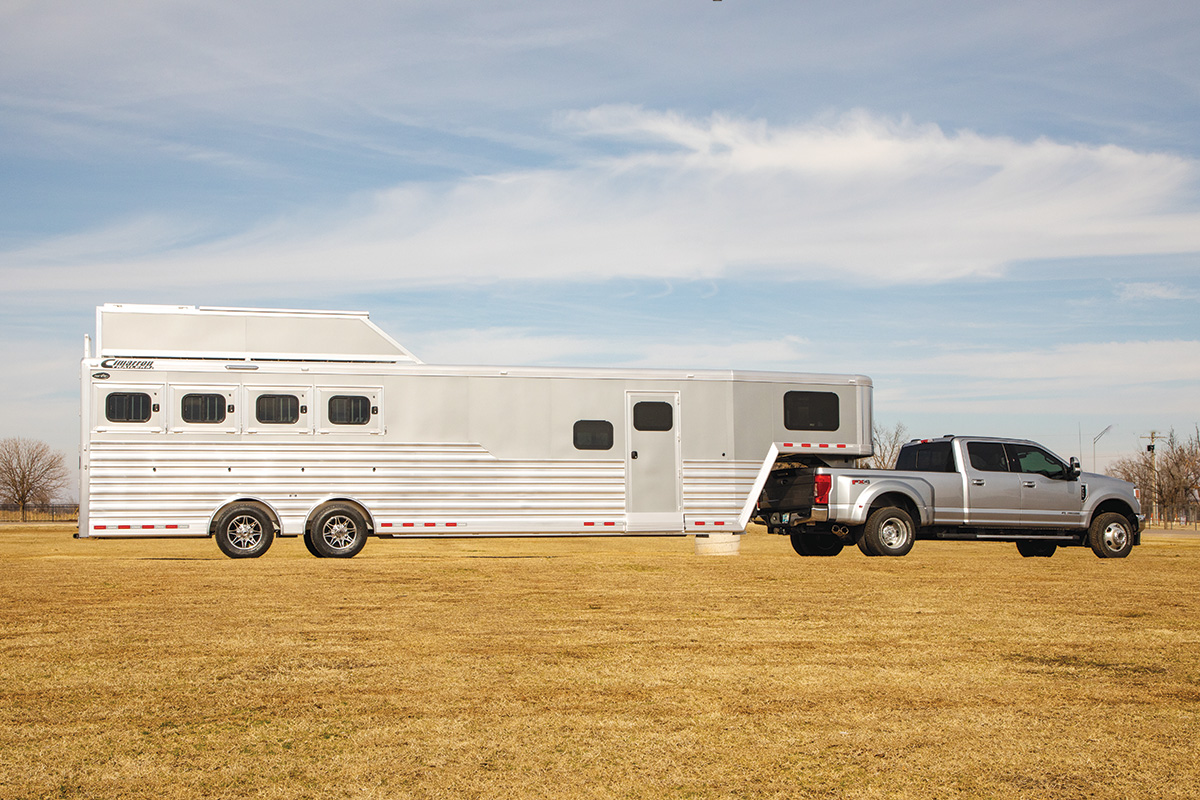
As the need for living quarters in the front of horse trailers grew, so did the size of trailers, with a LQ ranging from 40-53 feet long. Photo courtesy Cimarron Trailers
Now that a higher number of people could travel farther and stay longer, weekend and week-long shows grew, calling for bigger and better trailers. Shifflet says that trailers used to measure 7 feet tall, and goosenecks were about 30 feet long.
Today, with LQs being the norm in many disciplines, the average gooseneck measures about 8 feet tall and 40 feet long. Some trailers max out at 53 feet long and offer lofts to further accommodate comfortable living space—all the more reason for trucks to continue boosting their towing capacity.
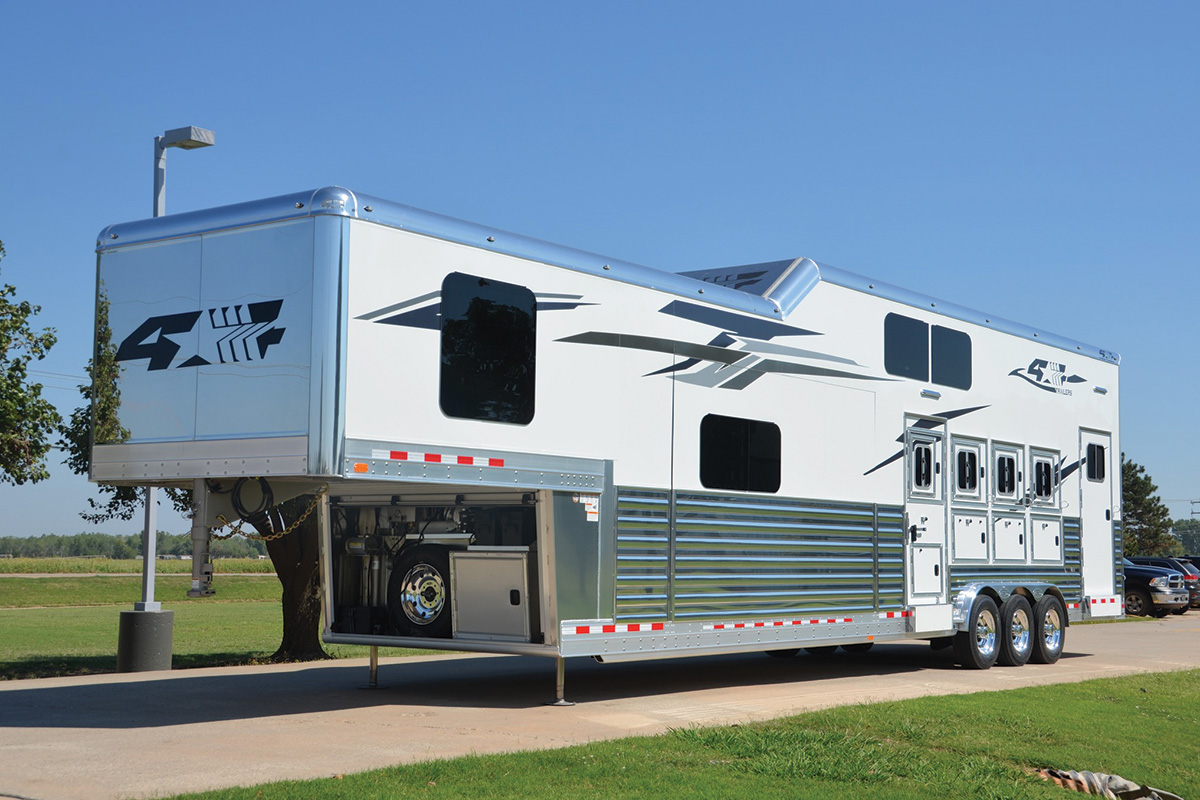
Lofts have been added to the newer LQ styles to accommodate even more living space above the horse compartment. Photo courtesy 4-Star Trailers
Safer Travels
Aluminum is not the only major safety change for horses among bumper pulls, goosenecks, and even commercial haulers. Just about all the mechanical systems have also been upgraded, such as axles, brakes, running gear, couplers, hitches, and more. Horses have better ventilation, too, with screened windows on both sides of the trailer.
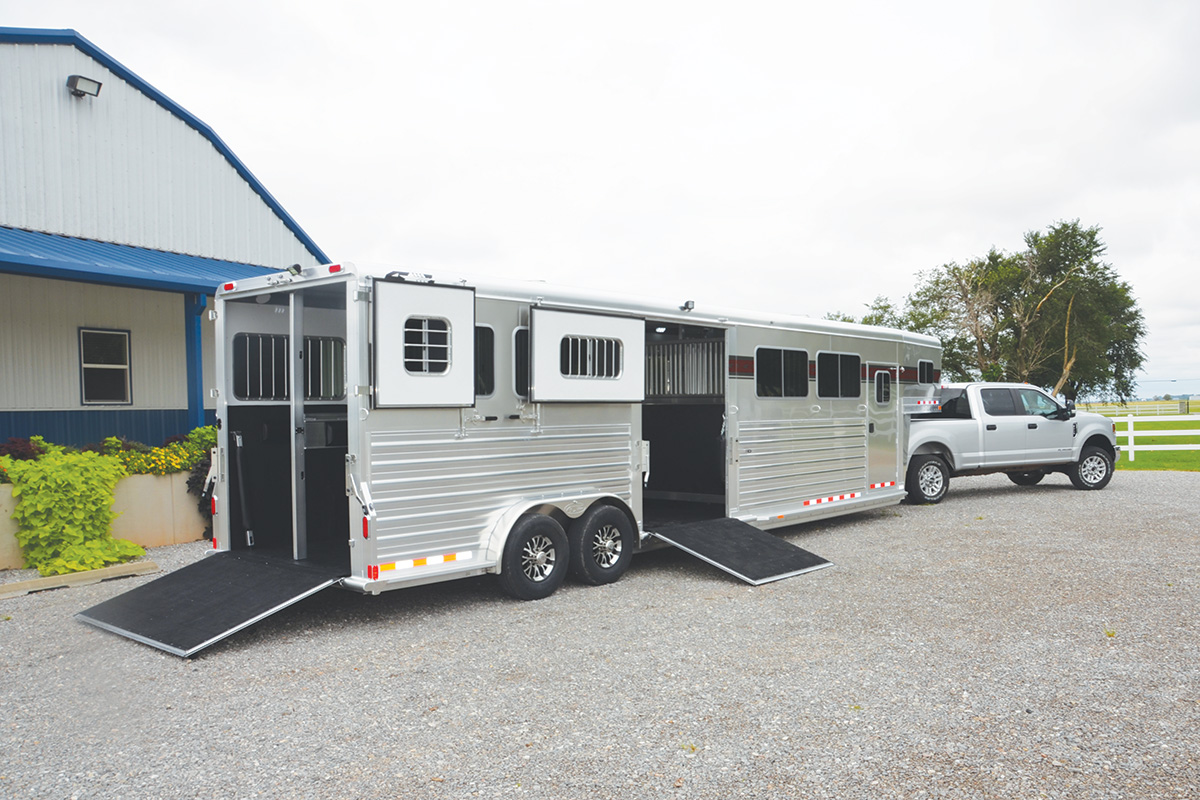
Today’s modern trailers have many safety upgrades to axels, brakes and more, as shown in this four-horse head to head. Photo courtesy 4-Star Trailers
Moreover, features such as rubber mats and ramps are common nowadays, offering cushion and safer traction. 4-Star even incorporates patented “Quiet Ride” technology, since research, conveyed by Shifflet, demonstrates that “horses are less stressed when the trailer rattles less.” Old steel trailers were almost deafening for horses, which could not have made for the happiest of travelers.
Many modern-day horse trailers are also equipped with an air-ride suspension system. Unlike the first models with spring suspension, horse trailers with air ride better compensate for uneven surfaces in the road, such as potholes or speed bumps, increasing equine comfort.
Key Takeaway
Updates and improvements throughout the horse trailer industry aren’t done by a long shot. Gelvin says that the way customers’ needs change is key. Today, many consumers want their horse trailers to be multi-purpose, ultimately saving money, so they can have the option to haul horses one weekend and small off-road vehicles the next.
One thing is certain: horse transportation has experienced drastic, yet positive changes in terms of safety and comfort. Now, if only we could explain to our horses how far we’ve come!
This article about the evolution of horse trailers appeared in the June 2024 issue of Horse Illustrated magazine. Click here to subscribe!