There’s more than a little magic in the world of Breyer. Nowhere is that more evident than at BreyerFest, held every July at the Kentucky Horse Park in Lexington. From its first model horse in 1950, Breyer has become the premier brand for collectors of all ages.
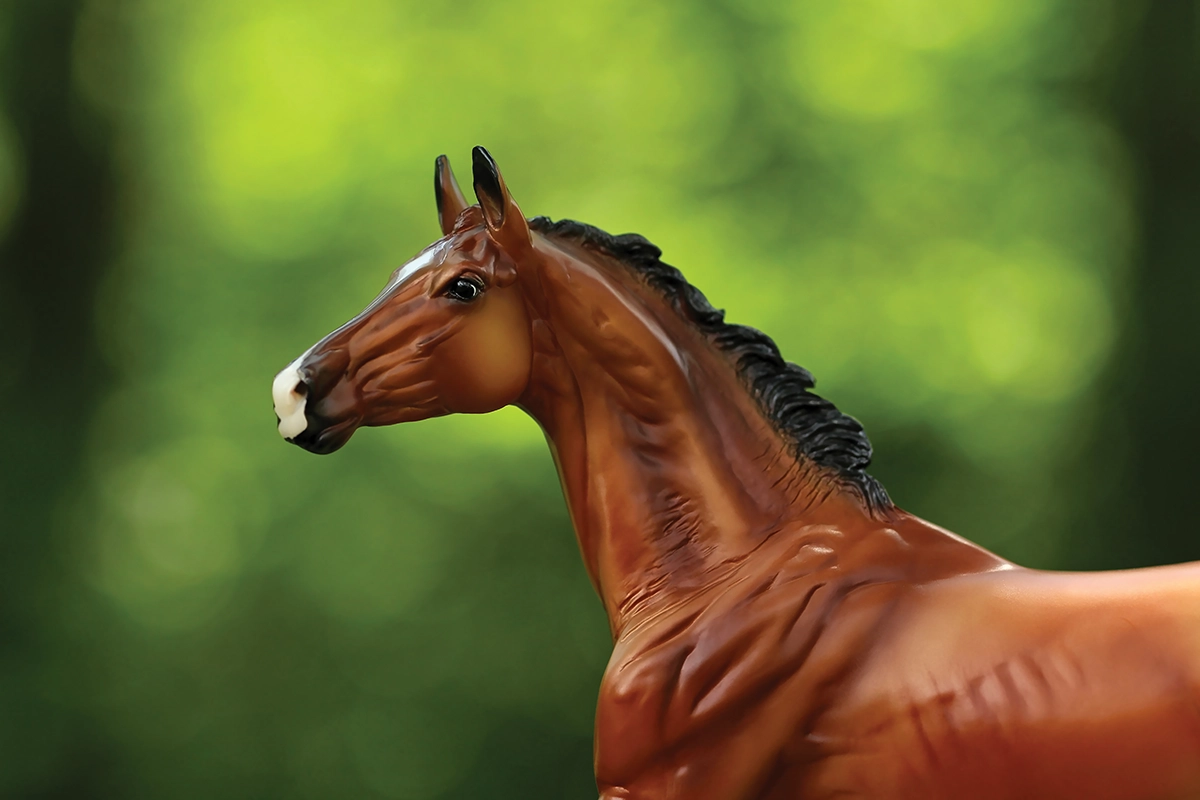
Photo courtesy of Breyer
Unexpected Start
Breyer Molding Company, then based in Chicago, released its first model horse in 1950 as a special order for the F.W. Woolworth Company. Known as the No. 57 Western Horse, this model was created specifically to embellish a mantel clock.
However, it was the horse—not the clock—that captivated buyers.
Consumer demand inspired the company to change course and launch the Breyer Animal Creations® brand of model horses and accessories.
Reeves International, a prominent name in the toy industry that was founded by Swiss entrepreneur Werner J. Fleischmann in 1946, acquired the Breyer Animal Creations brand in 1984 and continued to expand it. Breyer remains the company’s signature brand, manufacturing and selling millions of models and accessories each year.
Sizes of Breyer Model Horses
Breyer models come in several sizes:
◆ Traditional Horses at 1:9 scale
◆ Freedom Series/Classics at 1:12 scale
◆ Stablemates at 1:32 scale
◆ Mini Whinnies at 1:64 scale
The Traditional model is the largest, most popular size. Known as “portrait models” when representing a real horse, these are packaged and sold in Breyer’s colorful window boxes.
From the 1950s to 1970s, Breyer Animal Creations not only produced models of beautiful horse breeds and well-known horses, but also of famous dogs, including Lassie, Rin Tin Tin, Benji and Tiffany.
Storybook Inspiration
Through the years, Breyer has honored both fictional and real horses.
One of the earliest models inspired by literary equine heroes was Fury, released in 1962. Black Beauty became a model in 1979.
Marguerite Henry’s popular book, Misty of Chincoteague, was published in 1947, leading to the release of the longest-running model in the Breyer lineup. Misty of Chincoteague has been in continuous production since 1972, and it has appeared in numerous variations of coat pattern and color. Her foal Stormy followed in 1977. Misty and Stormy currently sell together as a gift set.
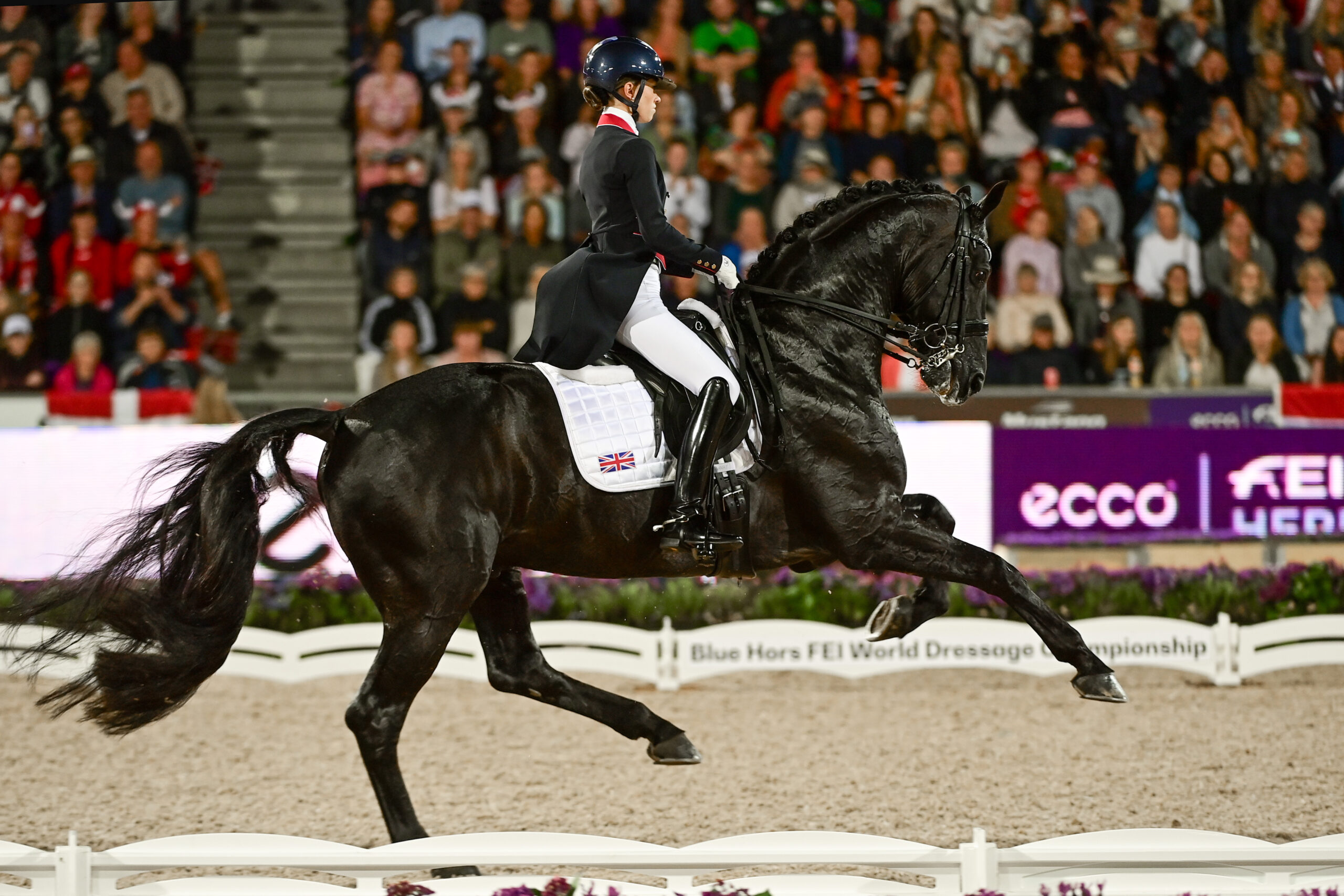
Numerous equine athletes have been memorialized as models: Favorites include Triple Crown champion racehorse Secretariat, show jumping legend Snowman, dressage great Valegro, outstanding Quarter Horse Wimpys Little Step, and many more.
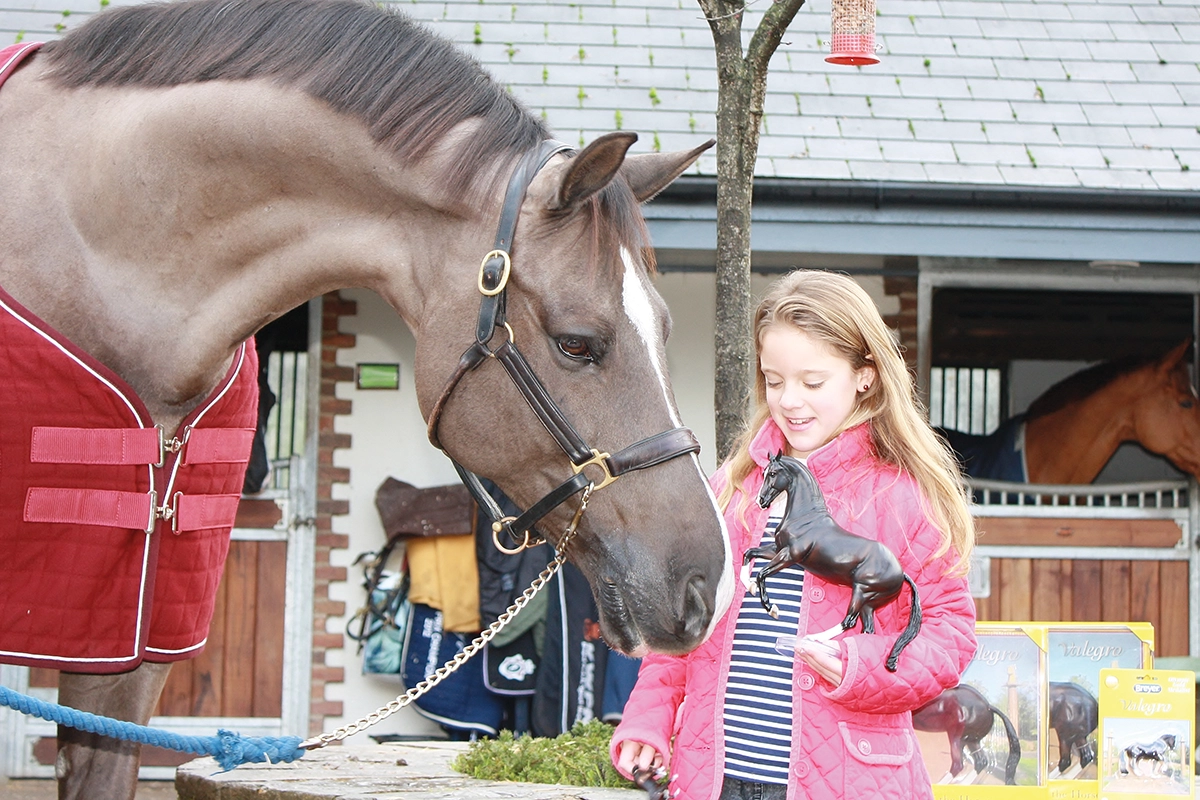
Famous horses like dressage superstar Valegro are often made into Breyer models. Photo courtesy of Breyer
Selection Process
Breyer models currently represent over 190 different breeds.
Multiple factors play into how horses are selected to become portrait models. Proposals come from associations, fans, and owners. The company also does its own research and follows trends and stories in the equine industry.
Once a horse is selected, it takes about one year for that model to hit the market. Although new models are released throughout the year, special models are released every summer at BreyerFest.
The number of models made of each particular horse varies. Once a model is retired, no more are produced. In-demand models can sell for significant amounts after they’re out of production. Collectors often shop for these models online or at unofficial swaps held near the Horse Park during BreyerFest.
Model Creation
The manufacturing process starts with the creation of a clay (or sometimes digital) sculpture of the horse based on photos and videos.
“Breyer artists are specialists for their particular breed or discipline,” says Stephanie Macejko, vice president of marketing and product development for Breyer. “Some artists are passionate about Thoroughbreds, while others know all there is to know about American Saddlebreds.”
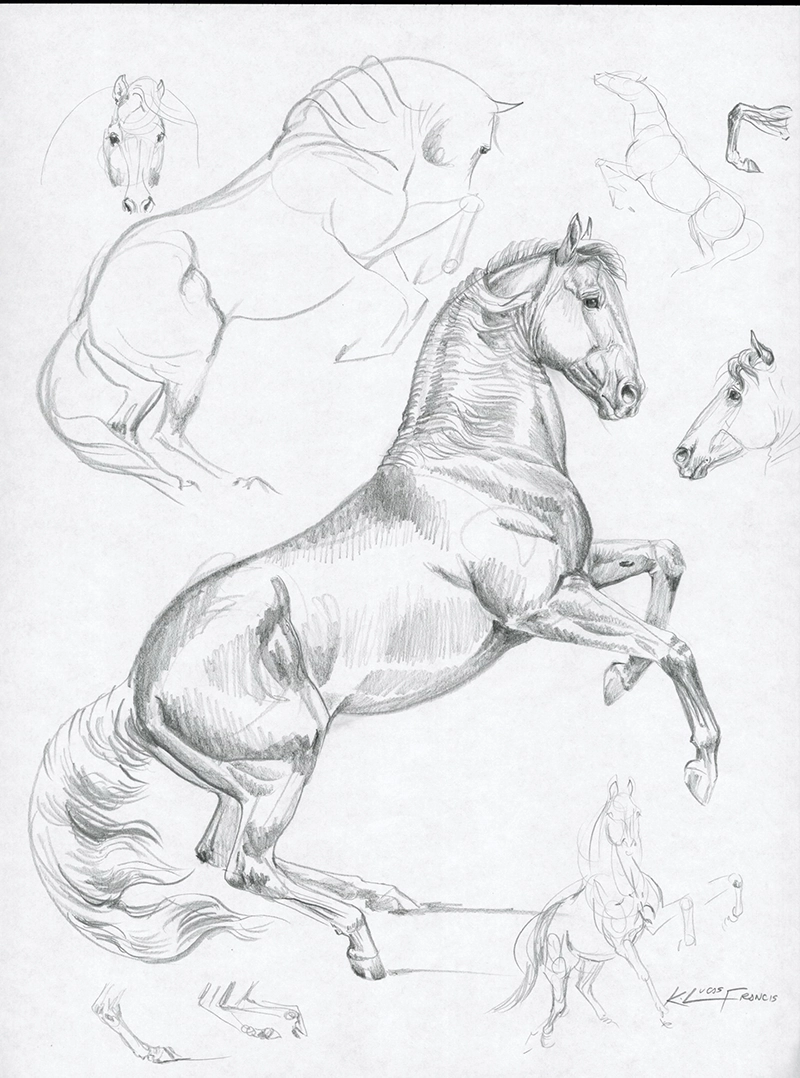
It takes about one year for a horse to go from sketch to store shelf. Photo courtesy of Breyer
All prototypes for each horse model, playset and accessory are designed at the company’s New Jersey location.
Using the original clay sculpture, a tooling pattern is cast and completed. A 1,000-pound steel injection molding tool is then created.
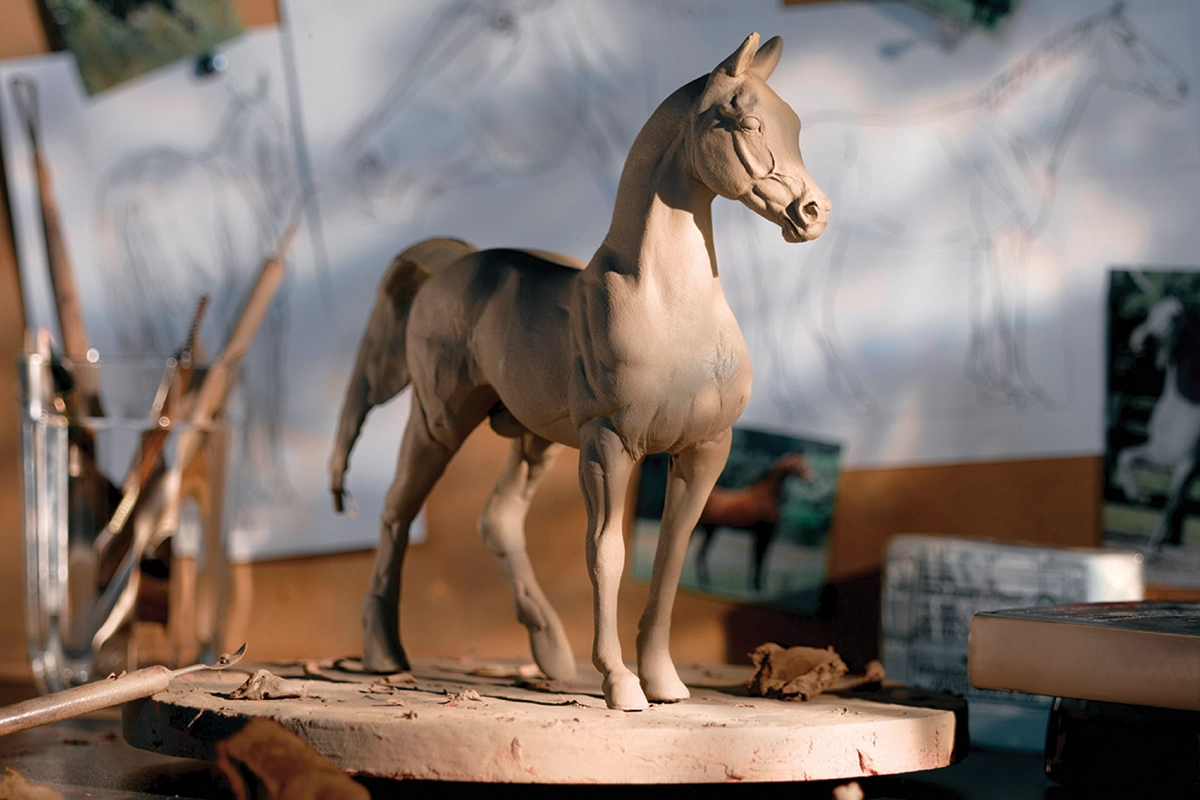
Breyer artists are experts in the breed or discipline of model horse that they work on. Photo courtesy of Breyer
For decades, artist Chris Hess sculpted many horses and other animals for Breyer. He also engineered the company’s original injection molding tools. Hess’ final sculpture for Breyer before his death was Secretariat’s model, which was released in 1987.
“Chris was a rare talent,” says Macejko. “He was able to see both the ‘positive’ three-dimensional horse, but also the ‘negative’ cavities that form the hollow shapes for each horse. There is a lot of art in the creation of the tooling to keep the integrity of the original sculpture.
“Breyer has had the privilege to work with some amazingly talented sculptors over the years,” she adds. “At this point, we’ve worked with at least a few dozen artists.”
To form each model, cellulose acetate is heated to liquid and injected into the molding tool where it forms the two halves of the model.
The halves are briefly cooled, then bonded together.
At least 24 hours later, each model is cleaned with Dremel tools, sanded, and cleaned again to remove any dust before heading to the paint department.
Every model is hand-painted. Different airbrush artists paint base colors, manes, tails, dappling and other details.
“About eight to 10 painters work on each horse,” says Macejko. “From molding to pack out, about 20 different people have a part in the creation of each Breyer model.”
All About Alan
In 2023, Whitney Barnard of Paris, Ky., and her handsome mule, Alan A Day’s Work, became the first mule/rider pair to compete at a recognized jumper competition. Barnard just so happens to be the assistant managing director of education for the U.S. Hunter Jumper Association (USHJA).
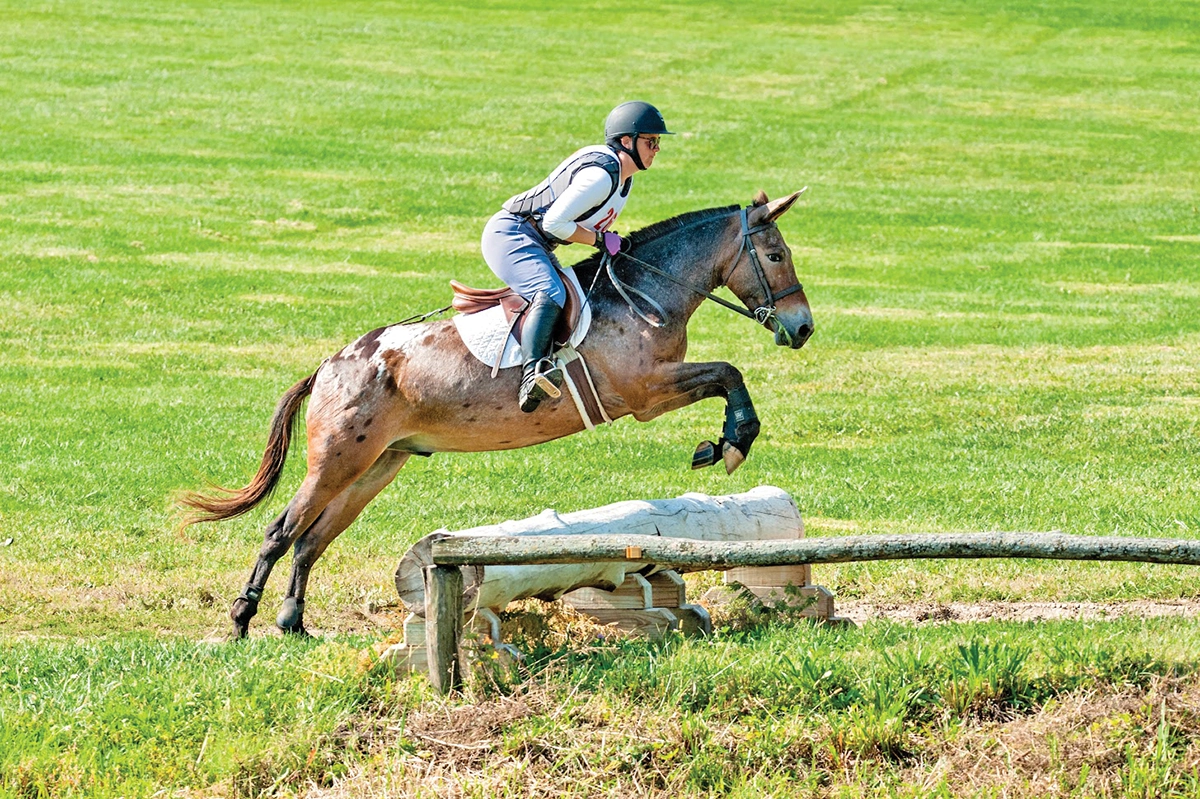
Barnard and Alan A Day’s Work became part of a successful effort to allow mules to compete with horses in nationally recognized jumping events. Photo courtesy of Breyer
When Barnard bought Alan in November 2012, the timid 4-year-old was barely broke to lead. After much groundwork and time in the round pen, she was riding the 13.3-hand john (gelded mule).
Alan’s love of jumping was revealed the first time she pointed him at a low cross-rail. He hopped right over with good form. In time, Barnard began taking him to horse shows and hunter paces.
Alan’s unique name has a fun origin. Barnard’s husband, Joey, who was her boyfriend at the time, said her new mule “looked like an ‘Alan.’”
Barnard felt the name fit him, but she still needed a show name. She credits a witty friend she’s known since grade school for coming up with Alan A Day’s Work.
Eventually, Barnard and Alan became part of a successful effort to allow mules to compete with horses in nationally recognized jumping events.
“Alan really loves going to different places and seeing new things,” she says.
Barnard had no idea Breyer was considering Alan for a model until she received an email in June 2023. After a Zoom call during which she shared Alan’s story, Barnard was informed that he’d been selected to be a Breyer model if she agreed.
“Of course, I said ‘yes,’ but I couldn’t tell anyone until January 2024,” says Barnard. “I had to keep that secret for six months.”
Barnard submitted detailed photos showing Alan’s unique coloring and pattern.
“I literally took photos of every inch of his body—even under his belly, his chin, and on top of his back,” she says. “They sent me photos of the rendering to review, and I looked to see if all the spots coordinated. He’s a roany Appaloosa, so I had to see if the artist rendering matched Alan.”
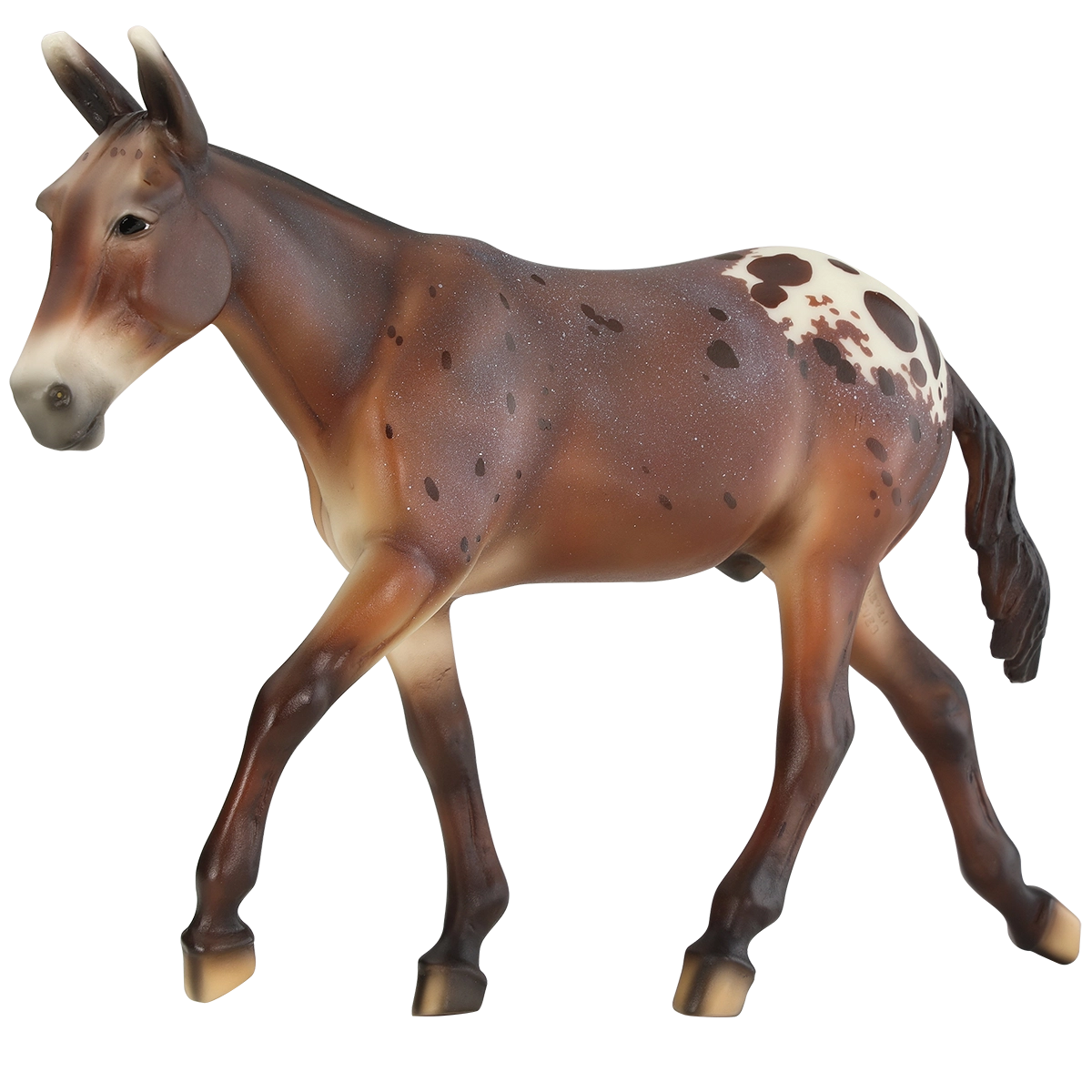
Whitney Barnard photographed every inch of Alan’s coat pattern to send to the model makers. Photo courtesy of Breyer
Barnard was thrilled to receive a finished model in late April. In May, members of the Breyer team came to Kentucky, met Alan in person, and took photos for the Breyer website and social media pages.
“When I was 10 and living in Columbus, Ohio, I had a bunch of Breyer models,” says Barnard. “I remember thinking it would be so cool to go to BreyerFest, but Lexington was so ‘far away.’ It seemed impossible then, and here I am! I really appreciate that Breyer included Alan.
“I don’t think Alan really thinks he’s different from other horses,” she adds. “If he does know, he doesn’t seem to care. I want him to be an advocate for equestrians who happen to ride mules and want to showcase their talents.”
Expect more equine heroes to be memorialized as models in the future.
Learn more at breyerhorses.com.
This article about Breyer model horses appeared in the September 2024 issue of Horse Illustrated magazine. Click here to subscribe!