Urban trail riding can be unnerving if you’re not used to it—for both horse and rider. Urban trail horses deal with an assortment of unnatural obstacles they wouldn’t encounter on a wilderness trail.
The good news is that even though urban trail riding might be more challenging than a trek through the woods, you and your horse can learn to enjoy it—and even reap the benefits.
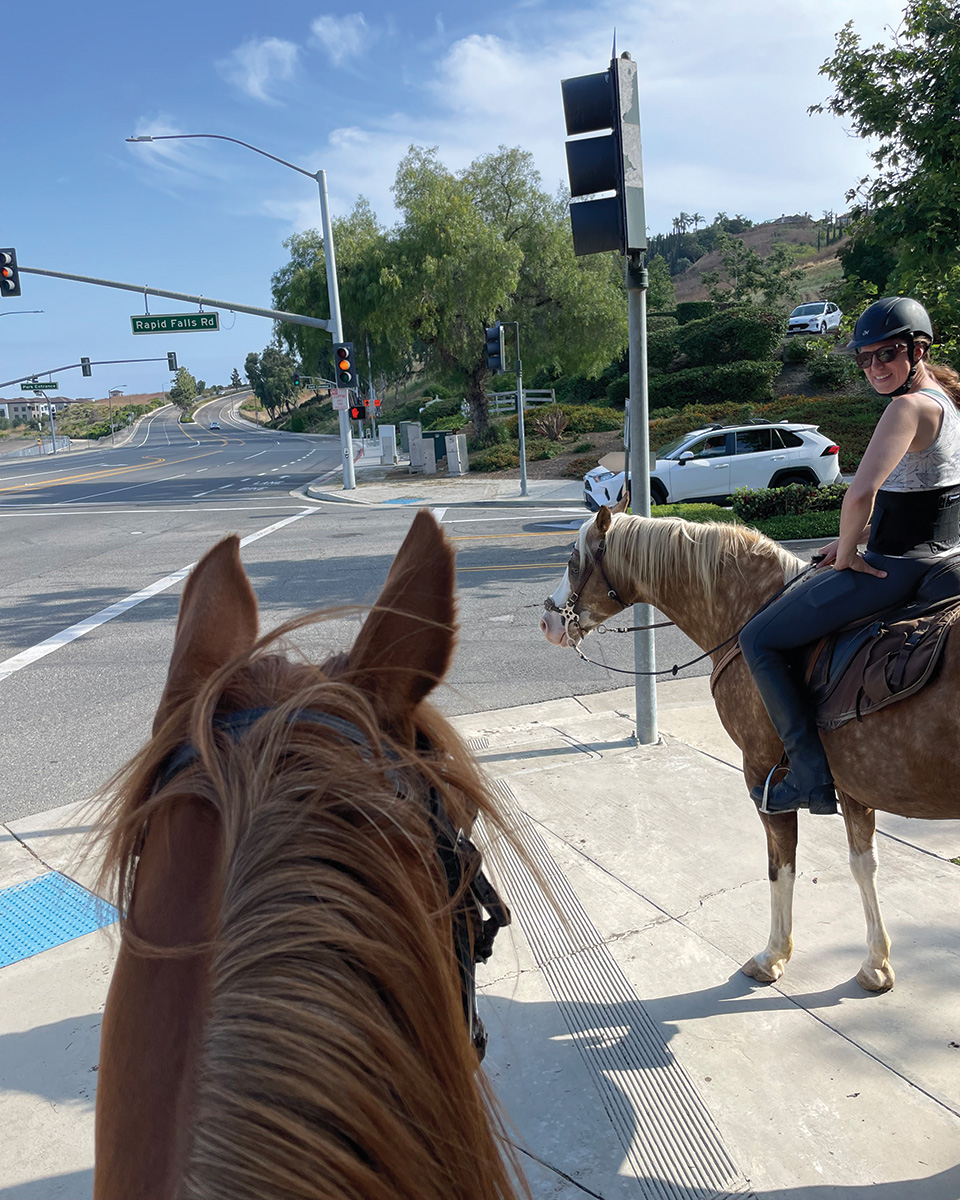
Horse Illustrated’s editor, Holly Caccamise, rides the trails in Nellie Gail Ranch, an urban horse community in Orange County, Calif. Although most trails are along the backs of homes, occasionally crossing a busy intersection is required. Photo by Holly Caccamise
The Challenge of Urban Trail Riding
When riding on rural trails, your biggest worry is likely to be a wildlife encounter. A deer or even a bear popping out and scaring your horse is always a possibility. Other than this, your rural trail ride is probably relaxing, and you can sit back and enjoy the scenery as your horse pokes along.
Urban trail riding is a different beast entirely. Unlike rural trails, urban trails are full of stimuli. Sights and sounds will present themselves to your horse on almost every urban trail ride. Because most urban trails are located in neighborhoods where people live, you can expect the kind of activity you’d see yourself on a given day if you want for a walk near your home.
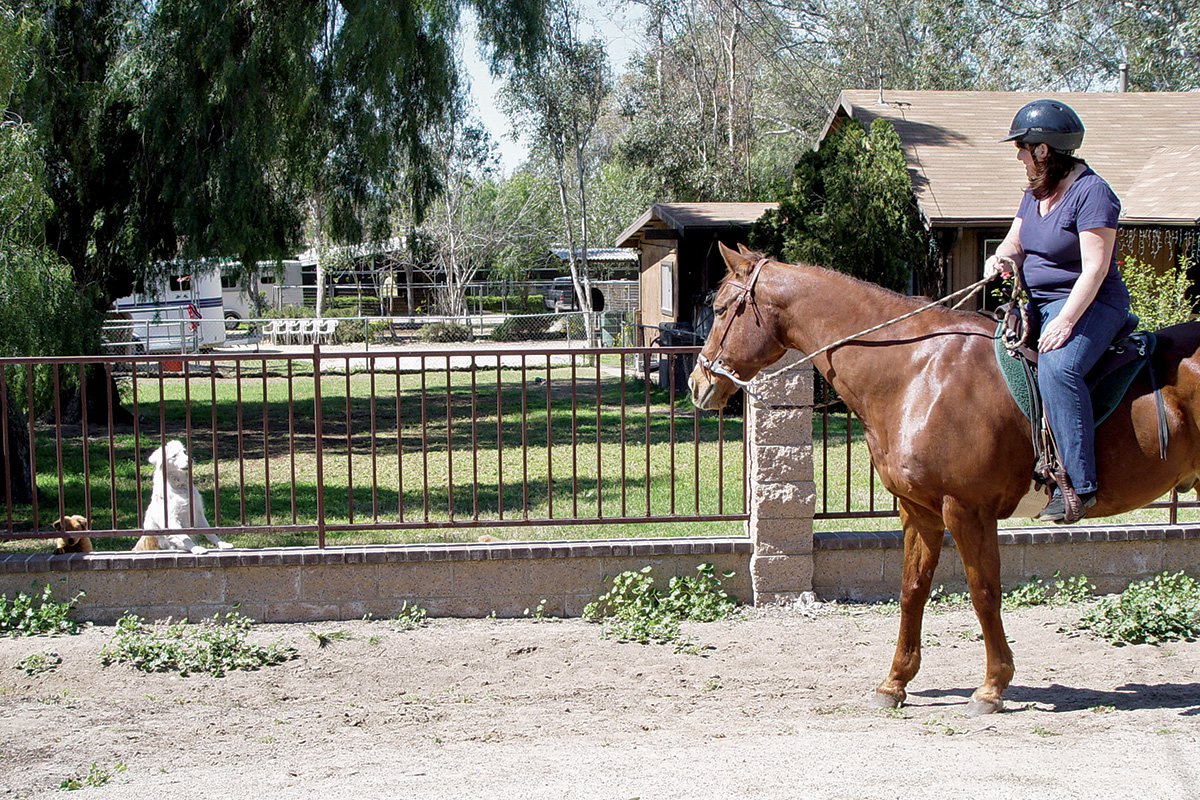
Running, barking dogs are a fact of life your horse will have to get used to if riding near suburban neighborhoods. Photo by Audrey Pavia
Here are some examples of what you might come across on an urban trail ride:
◆ Barking dogs running behind fences
◆ Motorcycles, trucks, and golf carts
◆ Skateboards, scooters, bicycles and e-bikes
◆ Roadside trash, such as plastic bags, old couches, mattresses and discarded kitchen appliances
◆ Buzzing electrical or telephone equipment
◆ Kids playing basketball in a driveway
◆ People holding umbrellas
◆ Tennis courts, golf courses and soccer fields
◆ Road crews with ladders, jackhammers, and other heavy equipment
◆ Tree trimmers high up in cherry pickers with chainsaws
◆ Lawnmowers, weed whackers, and welders
◆ Seasonal lawn decorations

Actual footage of a 30-foot-tall yard inflatable that editor Holly encountered along her regular trail riding route. Photo by Holly Caccamise
If you’ve only ridden in the quiet countryside, all this might seem incredibly daunting. But over time, you and your horse will get used to it, and you’ll start to enjoy the benefits of urban trail riding:
◆ You’re close to help, should an emergency arise.
◆ If you live in an urban or suburban area with horse trails, you don’t have to drive far—or at all—to go on a ride.
◆ You’ll meet other riders on the trail and can make friends.
If you are riding in a horse-friendly community, you might even come across hitching posts or mini corrals in front of stores and restaurants where you can “park” your horse and go inside.
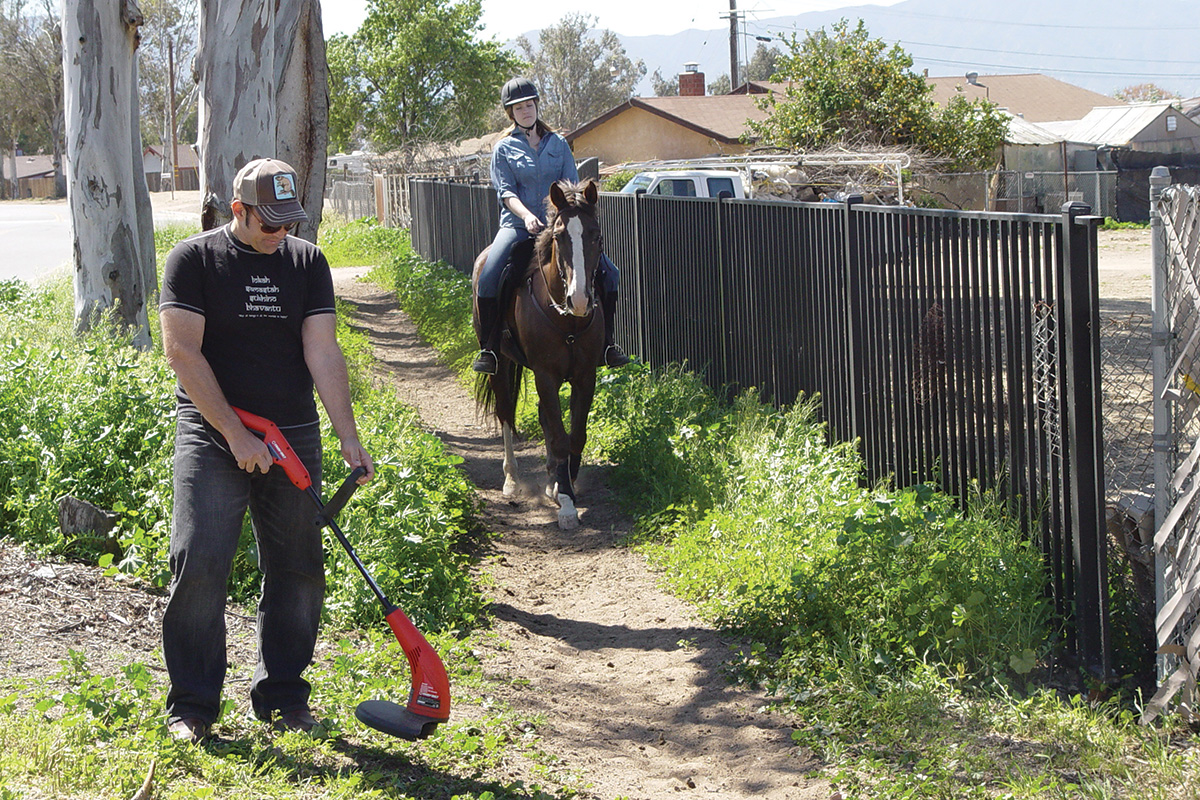
New stimuli abound in urban areas, such as noisy mowers and weed whackers. Photo by Audrey Pavia
A Suitable Horse
If you want to have a fun experience on urban trails, you need the right horse. Not every equine can handle the level of stimulation that comes with riding in a city environment. A quiet temperament goes a long way in helping a horse learn to be an urban equine.
Assuming you have a horse that isn’t overly spooky on quiet country trails, you can teach him to cope with the noise and activity of urban trails. It’s crucial that your horse can relax once he gets comfortable in a place or situation. If he’s the type who adapts easily to new situations, he’s likely a good candidate.
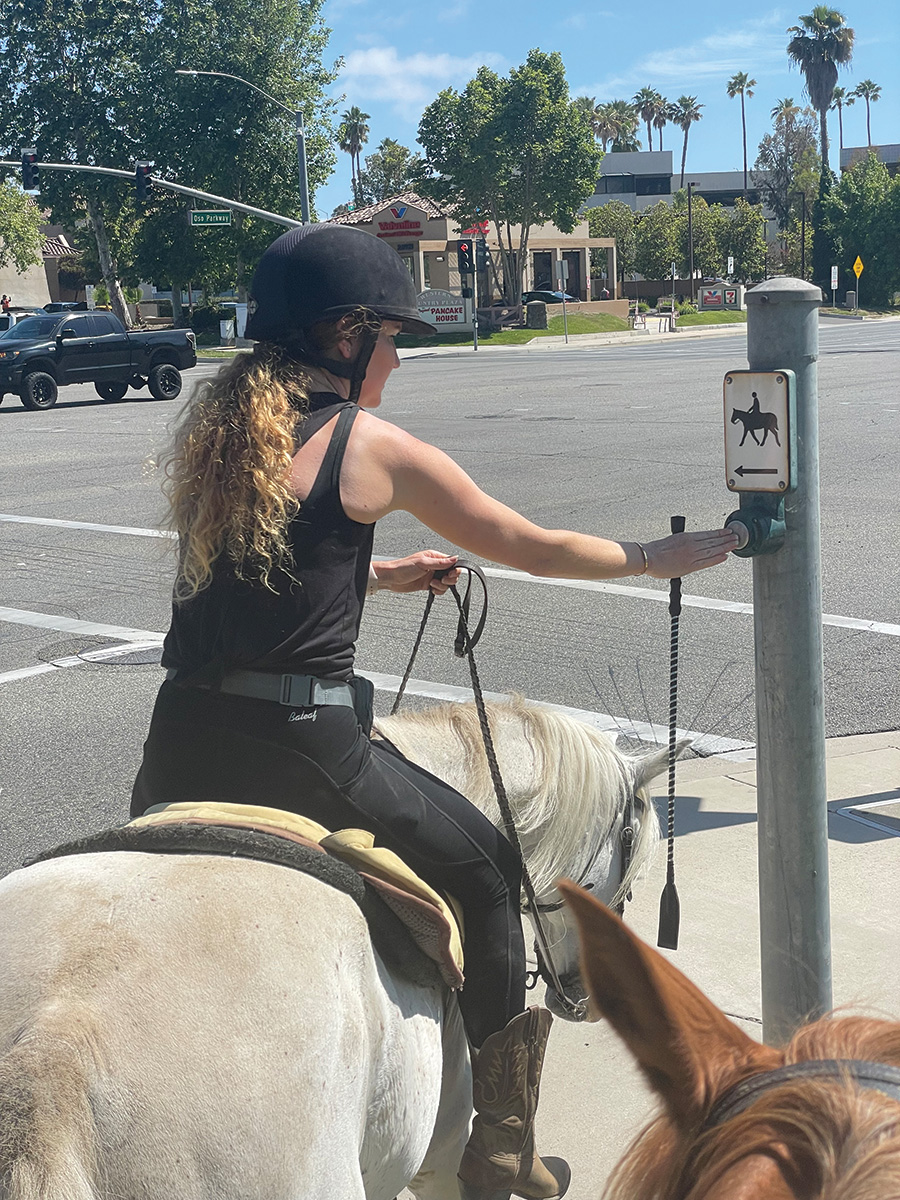
Horse-height crosswalk buttons are conveniently placed around Nellie Gail Ranch. Photo by Holly Caccamise
If your horse has trouble being calm, even at home, urban trail riding may be too much for him. Horses who are ultra sensitive and easily over-stimulated may not be able to cope with the sights and sounds of the urban trail, even with repeated exposure.
Desensitizing
If you think your horse is a good candidate, before you take him on a busy trail, help get him used to some of what he might see along the way. Desensitizing him to unfamiliar objects will teach him that even though he hasn’t seen something before, it’s not necessarily a threat.
Using an arena and your horse’s favorite treats, gradually expose him to some common urban objects by just turning him out and leaving them where he can see them. Reward him when he approaches the object and starts to relax. Here are some items you can use:
◆ Balloons
◆ Empty baby stroller
◆ Bicycle, both ridden and parked
◆ Large beach ball
◆ Big cardboard box
◆ White plastic trash bag
◆ An open umbrella
Expose your horse to each of these items individually, and don’t overwhelm him. If he’s terrified of something and can’t seem to get used to it within the confines of the arena, put it farther away where he can still see it, but isn’t stressed by it.
Gradually bring it closer, gauging when he’s getting stressed and backing off if it’s too much. He will eventually get used to seeing it, and over time you can move it a little bit closer. Eventually he should ignore it, even at close range.
Sounds can be another challenge for urban trail horses. While the sound of a passing car doesn’t frighten most horses, a truck pulling a rattling trailer or a bus letting the air out of its brakes can unnerve even the most confident horse.
It’s hard to find an opportunity to expose your horse to these sounds without actually taking him on an urban trail ride, but some people will board their horses in areas with these kinds of sounds with the goal of getting the horse used to it. Most riders will just help their horses get used these sounds as they start riding urban trails, reassuring them when a loud sound startles them.
How to Start Urban Trail Riding
When you first start riding your horse on an unfamiliar urban trail, it’s a good idea to ride with a trail buddy who has an experienced urban trail horse. Horses take their cues from one another, and if the experienced horse is relaxed, it will help the newbie feel safe. Look for a riding buddy who understands that your horse is just learning how to negotiate a busy city trail.
Be prepared to take your time letting your horse get used to the new environment. Go at a walk, and make your initial rides short so your horse doesn’t feel overwhelmed. Reward him with lots of praise when he encounters something unfamiliar and responds with courage or curiosity.
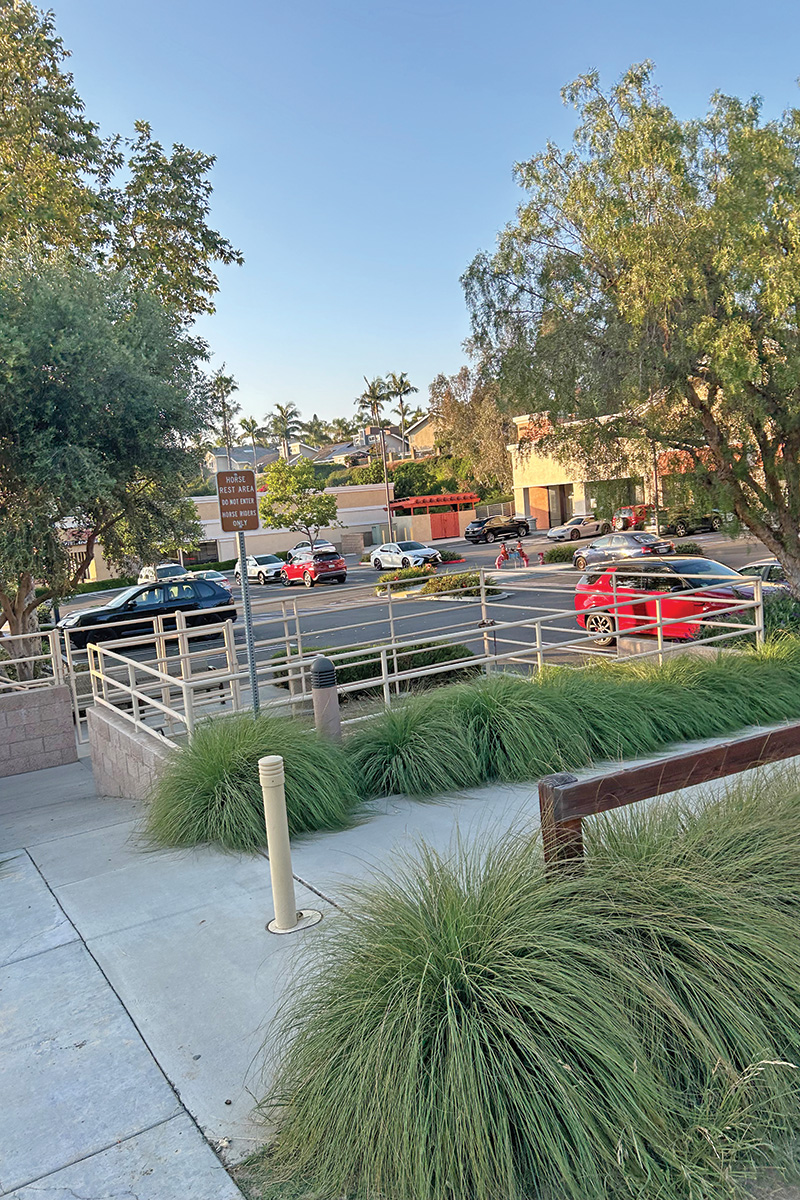
The shopping center near Nellie Gail Ranch features a horse stall with automatic waterer, although Holly has not tried it out. Photo by Holly Caccamise
Your horse isn’t the only one who needs to learn to relax in this new environment. As his rider, it’s important that you convey a sense of confidence to him. If you are anxious and uptight, your horse will sense it and assume you are both in a dangerous situation.
If you are a nervous rider and are concerned you won’t be able to relax while getting your horse used to urban trail riding, consider asking a confident rider you trust if he or she would mind riding your horse. You may suggest that you ride your friend’s experienced urban trail horse while he or she rides your horse. This way, both you and your horse can become familiar with urban trail riding with the help of another team who are comfortable in this environment.
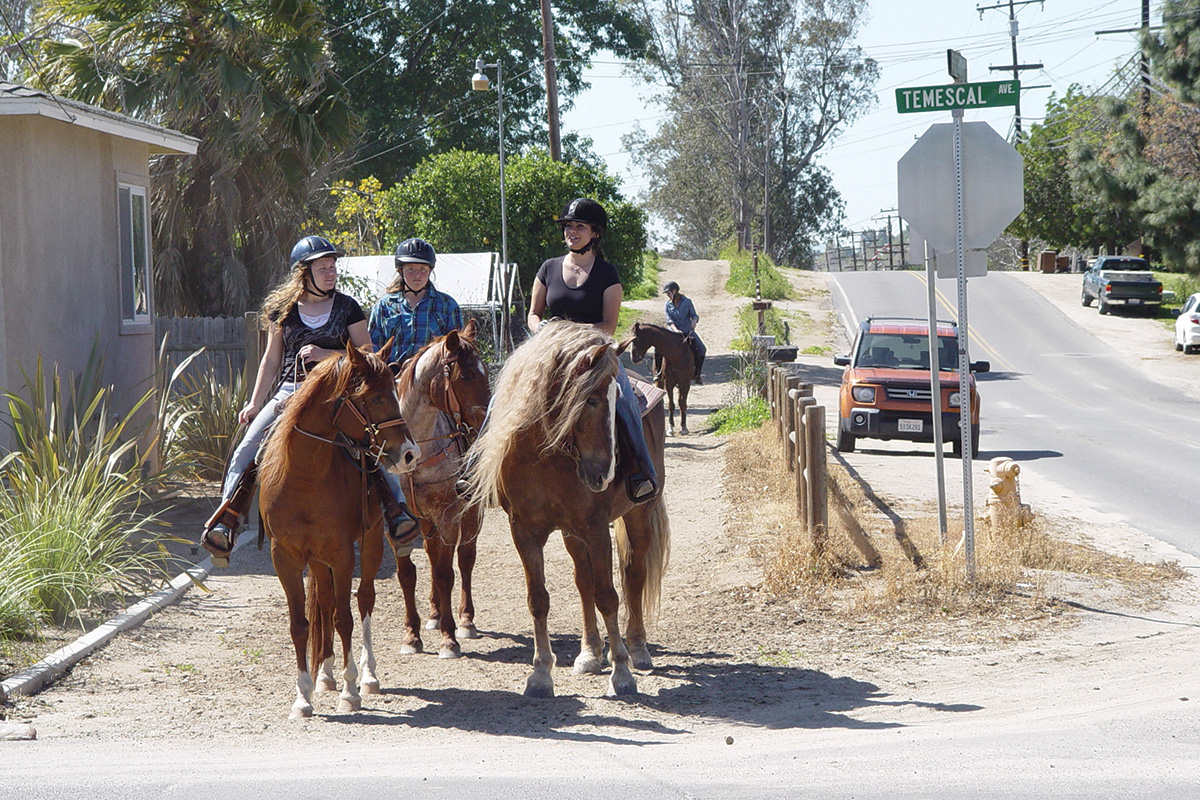
If your horse is new to the sights and sounds and of an urban landscape, going with a more experienced horse or two will help get him accustomed to it. Photo by Audrey Pavia
As with any type of trail riding, make sure you have spent time riding your horse in an arena before you head out into the open. You want to be sure your horse listens to your aids and is safe and compliant before you test him in a more stimulating environment.
Before long, you and your horse will be enjoying the neighborhood trails. You’ll discover that horses who are comfortable in urban environments turn out to be even more solid when you get back into the countryside.
Further Reading
◆ Horse Safety: Riding on the Road
◆ Urban Riding Programs
◆ Horseback Riding in Los Angeles: Explore Iconic Griffith Park
◆ Riding Your Horse on the Beach
This article about urban trail riding appeared in the August 2024 issue of Horse Illustrated magazine. Click here to subscribe!