While the warmer weather of summer is welcome, it also means the battle of the slime is coming. You know it well: when water buckets and stock tanks go from sparkling clear to red or green and fuzzy, sometimes seemingly overnight. What can we do to keep our horse’s water supply cleaner longer, using methods that are safe for them? Pesky water trough algae is bothersome to almost all horsekeepers, but there are strategies you can use to keep it at bay.
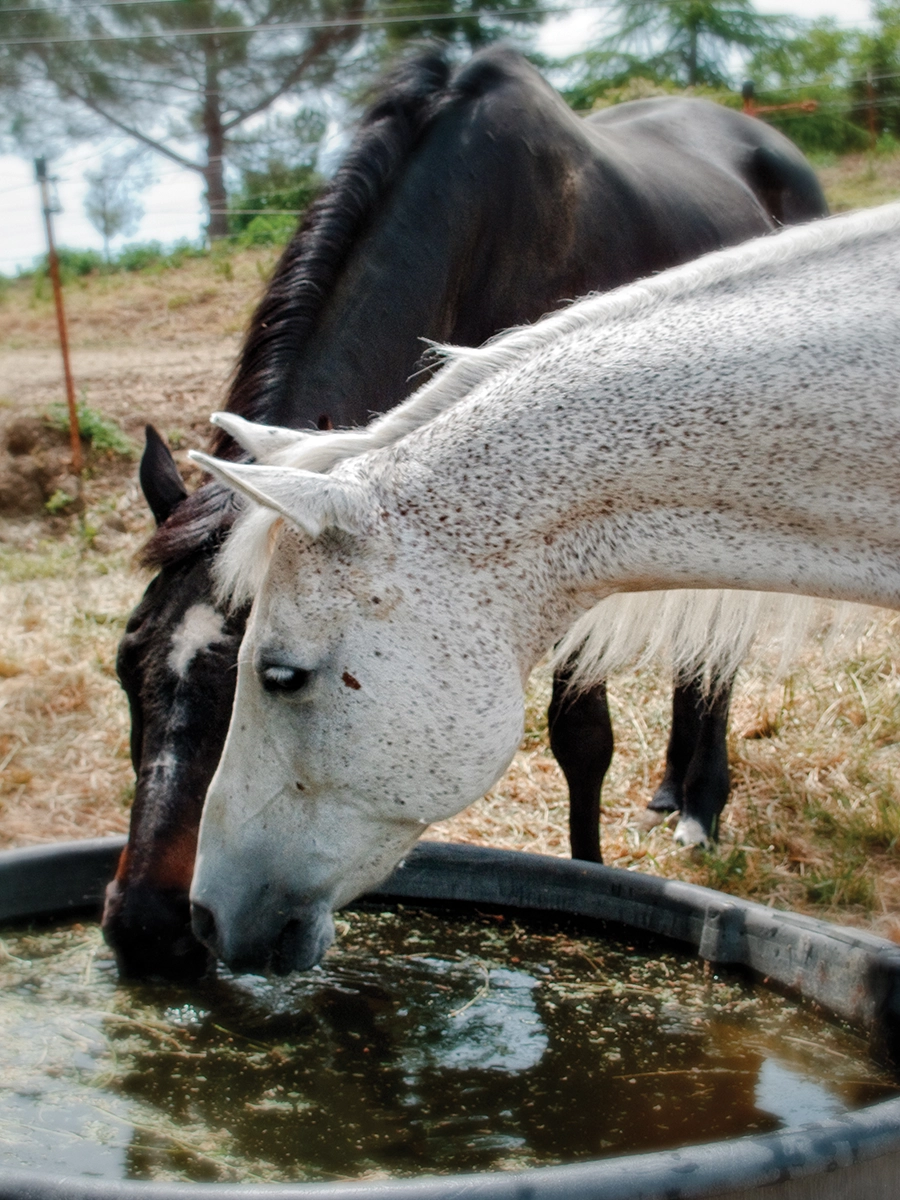
Algae blooms are the bane of summer, turning your horse’s drinking water into an unappealing green slime. Photo by Richard/Adobe Stock
How to Reduce Water Trough Algae
While unsightly, many types of algae don’t pose a direct health concern. However, certain types of blue-green algae release toxins that can lead to colic and diarrhea in horses. In humans, it can mean skin irritation, stomach upset, and nervous system problems.
Water sources that have a lot of algae can be less desirable to horses and lead to reduced water intake. For all these reasons, it’s good horse-keeping practice to keep algal blooms to a minimum in your troughs with a regular plan of attack.
Algae are plant-like organisms that are photosynthetic. This means they need nutrients and sunlight to grow. When we can reduce or eliminate these, we have a better chance of slowing algae growth and keeping the slime at bay.
Here are a few ways:
◆ Seek shade. Ideally, place the water trough or tank in a shady or covered area. Moving it out of the sun reduces the water temperature and makes the environment less attractive to algae.
◆ Reduce contaminants. If you can, keep the water container away from feeding areas and manure piles. This will help (but not eliminate) pieces of hay, dirt, manure and insects from getting into the water.
◆ Skim daily. Using an aquarium net or pool skimmer, make a daily habit of skimming off anything floating on the surface and scooping up what you can near the bottom of the tank before these particles start to decompose and feed the green monster.
Additives to Try
To help keep water troughs clean, here are a few ideas that might be worth a try, including a couple important caveats.
◆ Barley straw. Prepackaged in small bundles or bales, barley straw is thought to produce a chemical that impacts the pH of the water and reduces the potential for new algae growth (but doesn’t reduce existing algae). Submerge the bundle on the bottom of a clean tank using a brick or other horse-safe weight and replace as indicated on the package.
◆ Copper. The chemical properties of copper inhibit photosynthesis in algae and can help to control it.
Important note! Copper is safe for horses, cattle and dogs, but it is toxic to sheep. Avoid using copper if your horses share water sources with sheep.
Small pieces of copper pipe are one option. Another form of copper is copper sulfate crystals, which, along with zinc sulfate crystals, have been used for years by livestock producers to help reduce algae. Ask your veterinarian for application rates and follow label directions carefully, including dissolving in warm water before thoroughly mixing into the water trough.
◆ Aeration. Algae thrives in still water, so an aerator keeps the water moving. This can discourage both algae formation and mosquito larvae, but be warned that curious horses may see the aerator as a toy. Attach it to the tank or put it in the center of a large stock tank where they can’t reach it.
◆ Commercial additives. A variety of equine water trough products are available, some containing enzymes and other ingredients. Always check with your veterinarian and follow the manufacturers’ recommendations for use.
Important note! Horses are highly sensitive to the slightest change in the taste or smell of their water, and they may refuse to drink if it changes. This can lead to significant health effects, including dehydration and colic. If you do choose to use additives, work with your veterinarian to implement the change slowly and safely.
Maximize Elbow Grease
While additives and biological treatments can help with algae, the tried-and-true method of keeping buckets and tanks clean is elbow grease: regular dumping and scrubbing. However, this can waste a lot of water and create a breeding ground for flies and mosquitoes in the process.
Here are tips to address both:
◆ Use right-sized troughs. If you have just one or two horses in separate pens, opting for smaller troughs or buckets means they can be refilled daily and dumped and scrubbed daily or every few days. Timed well, this can reduce the amount of wasted water. If you have multiple horses or don’t want the daily water bucket chore, opt for a larger trough or stock tank. You still will need to dump and scrub—likely at least once a week, depending on the temperature and other factors—so be sure the tank is small enough to work with.
◆ Pro-Tip: Create an exit ramp. There’s nothing like the horror of heading to the barn in the morning and seeing a drowned animal floating in your stock tank. Build an exit ramp out of clean wood that attaches to the top of your tank, or drill a hole in each end of a clean 2×4. Tie a brick to one end and submerge it in the tank, and tie the other end to the fence or wall behind the tank.
◆ Dump with care. Experiment with keeping troughs and tanks filled only partway and letting your horse drink down the water before you need to dump and scrub. When it’s time to drain, clean and refill, see if you can route the water away—maybe even watering a lawn area or landscape plants. This also prevents creating a mud hole that’s a breeding ground for flies and mosquitoes.
If your tank has a drain plug, attach a hose and let the water drain elsewhere. If your tank doesn’t have a drain plug, use a syphon hose attached to a longer garden hose. Simple syphons use a marble in a copper fitting that you shake up and down to start the flow of water. When nearly all the water has been syphoned out, then move the tank away from the area and dump the rest.
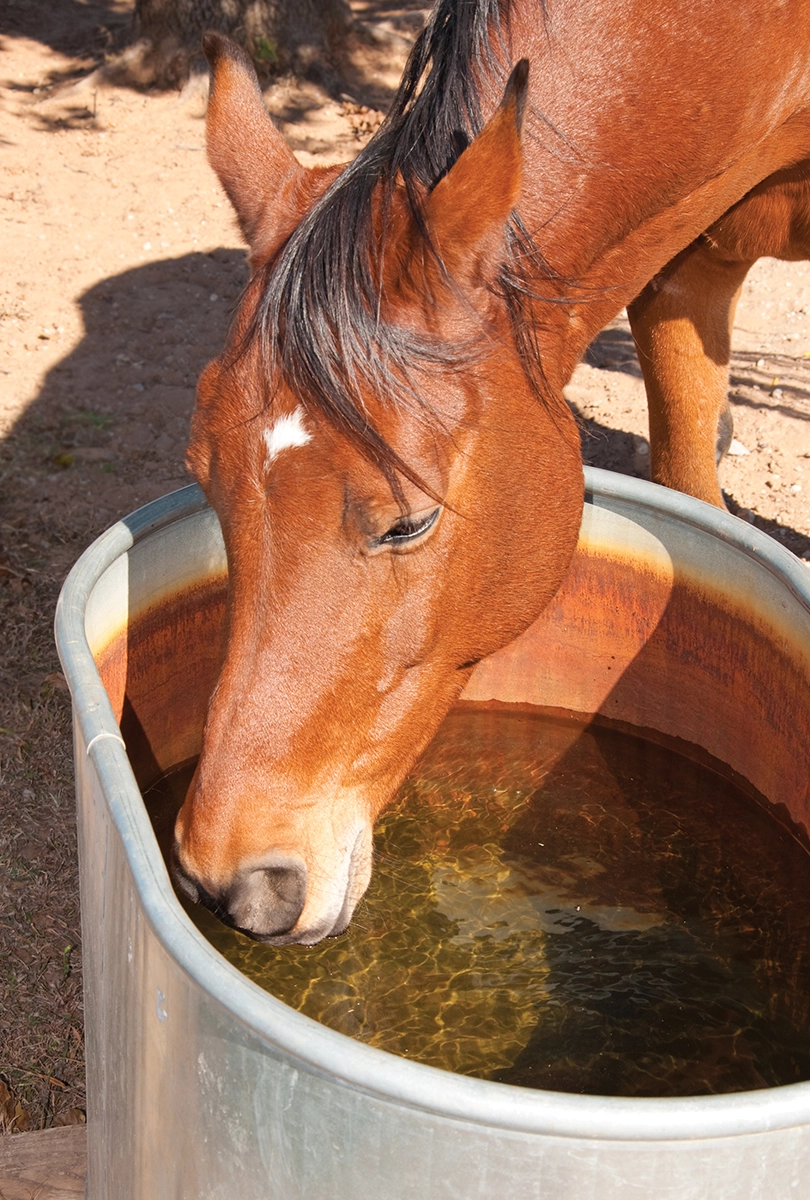
The right size trough, not overfilling, and scrubbing with bleach between refills will help keep the algae at bay. Photo by pimmimemom/Adobe Stock
Clean a Water Trough the Right Way
Starting with a sparkly clean water trough, rather than topping it off, will help the water stay clean longer. Here’s a recommended approach:
1. Empty the tank completely and remove all debris.
2. Scrub it clean with a stiff brush.
3. Rinse the tank with a 1:10 diluted bleach solution (1 part bleach to 9 parts water), or about 1.5 cups bleach in 1 gallon of water. Be sure to use unscented and regular bleach, not the “splashless” versions. Swirl the scrub brush around the bottom and up the sides.
4. Let the bleach solution sit for 15 minutes.
5. Rinse the tank twice with clean water.
6. Refill the tank. The horses can safely drink from it right away.
While summer brings the potential for water trough algae, with a little planning and the right approach, your horse can enjoy clean, fresh water and you can win the battle of the slime.
This article about water trough algae appeared in the May/June 2025 issue of Horse Illustrated magazine. Click here to subscribe!