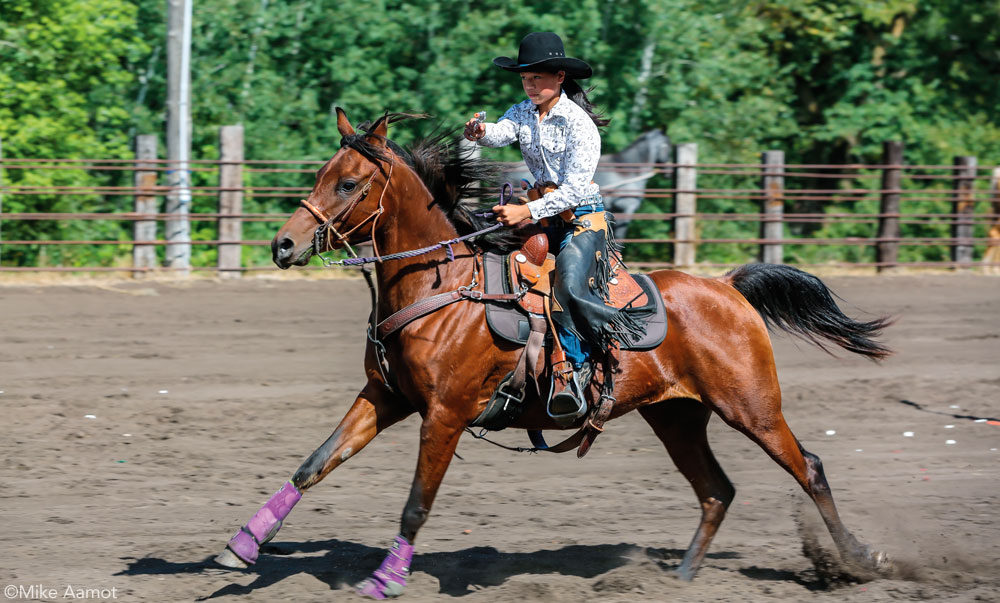
When improving your horse’s stop, it is important to have more than one way to ask for it. I have three individual cues: saying the word “whoa,” pulling on the reins, or “releasing” my legs. Each of these cues should work on its own. Many people ask the horse to stop by doing all three cues together. Although this is not exactly wrong and there are times when I will use them together, the strength of the training is in having all the cues work individually.
When you are testing your ability to stop your horse with the reins, pay particular attention to the speed of your rein hand, making sure that it is slow. Pretend that a little birdie is on your hand and you don’t want it to fly away. Also avoid saying “whoa” or using a leg cue. Your horse needs to learn to respond to the rein pressure alone.
Back to Horsemanship Tips from Stacy Westfall >>
This article originally appeared in the April 2012 issue of Horse Illustrated. Click here to subscribe.