Working a horse at liberty is one of the most fun and rewarding ways to train them. When a horse is free to do whatever he wants, but he chooses to stick with you, it gives a certain thrill that’s sometimes hard to find in other areas of horsemanship.
There are several ways to get started with liberty. Everyone has their own style, but I am going to explain how I start training a horse for liberty. What makes liberty work is to make the horse’s favorite place in the world with you.
I basically want to turn you into a giant magnet for your horse so that he is either with you, or if he is away from you, he will be thinking about getting back to you. This is the invisible connection that keeps a liberty horse attached to the trainer—his desire to be with that person.
However, even though the goal is to work at liberty, I like to begin the early liberty training with a halter and lead rope attached instead of turning the horse loose. With the rope attached, I can teach the liberty cues much easier, because I can help the horse more and keep things slower than I could if the horse was free in the very beginning.
One last point before you start: make sure your horse has good ground manners before you begin this training. If your horse is pushy and doesn’t have good ground manners, that’s going to cause problems.
In the early stages of liberty training, you are going to be bringing your horse to you a lot, which teaches him to want to be with you. However, if your horse is rude, then he will likely end up pushing into you, which isn’t safe.
To get started, you will need a halter, lead rope, and a longe whip.
Watch our webinar with Jason & Bronwyn Irwin.
Step 1
Pick a voice cue to call your horse. It can be any word or a whistle or just about any other sound.
If you ever watched old Westerns, you have probably seen at least a few where the hero whistles or calls out and the horse comes running to save the day—usually just in the nick of time. This is the same idea. I usually say the word “here!”
Step 2
Stand your horse beside the arena wall or a good fence. Start out with the fence on your horse’s right side.
Stand in front of the horse holding the lead rope in your left hand and the longe whip in your right hand.
Step 3
Back away from your horse, and at the same time lower your whip. Give the voice cue to come to you, and then tap very lightly on the horse’s left shoulder.
If your horse starts walking toward you when you tap him, that’s great. However, if he doesn’t, it’s OK. As you back up, the lead rope will tighten, which will give the halter a tug and bring the horse to you anyway.
What is important is to give the voice cue before the tap on the shoulder; the horse needs a chance to respond to the verbal cue before feeling the tap.

Step back and tap the horse on the shoulder to call him to you. Photo by Bronwyn Irwin
Step 4
As the horse is walking toward you, keep backing up. When you’re ready to stop, say “whoa” and lift your whip straight into the air.

Keep backing up once the horse moves and have him follow you. Photo by Bronwyn Irwin
The whip going up like this encourages the horse to stop, and later on, the whip being held up can be the cue for the horse to stand still, no matter how far away you are.
Repeat these steps several times. Once your horse is coming to you willingly, just motion toward him, but don’t tap as often.
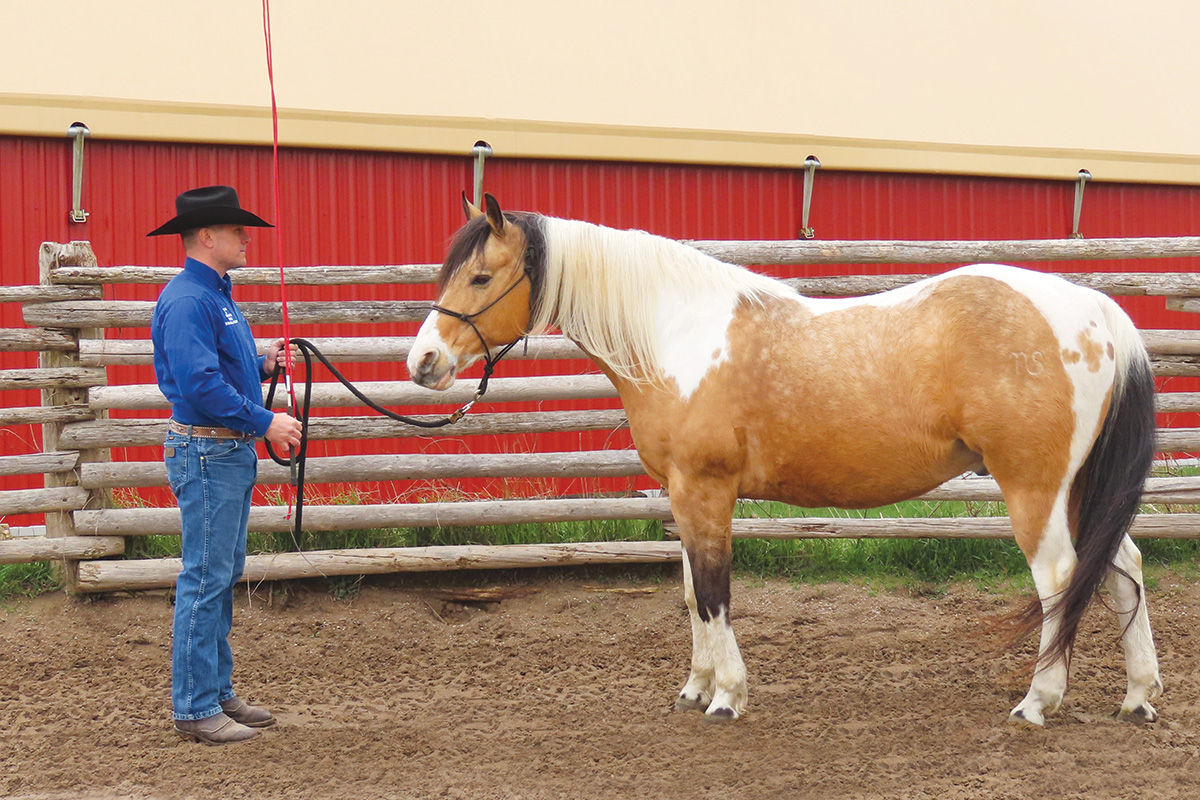
Stop and hold the whip straight up to signal the horse to stop. Photo by Bronwyn Irwin
Step 5
Turn your horse around so that the fence is now on his left side. Stand in front of him holding the lead rope in your right hand and the longe whip in your left hand, then repeat all the same steps tapping on his left shoulder.
Repeat until your horse is walking toward you as soon as you motion with the whip and begin backing away. Be sure to be very inviting to the horse with your posture and expression.
When the horse comes to me, I pet him (usually using the whip) to teach him that all pressure goes away as soon as he comes to me.
Step 6
The idea behind using the fence and tools as described is to make coming to you the easiest thing for the horse to do.
The horse is held in on one side because the fence is there; he likely won’t go the other way because the longe whip is there, and he can’t go backward because of the lead rope attached to him. Coming to you, therefore, becomes the most logical thing for him to do.
However, we don’t want to be stuck at the fence forever, so now it’s time to get away from it and move around in the middle of the arena. Sometimes I will hold a second whip (such as a dressage whip) in my other hand. This way I can gently guide the horse back toward me if he veers off to either side. If you’re holding two whips, you would lower both to bring the horse to you and raise both to ask for the stop.
Step 7
If your horse is coming to you the moment you call him and is following you around willingly, it’s time to get rid of the physical connection. Take off the lead rope or put it around the horse’s neck. Practice calling the horse to you and stopping him, and if it’s going really well, you can get rid of the halter and lead rope completely.
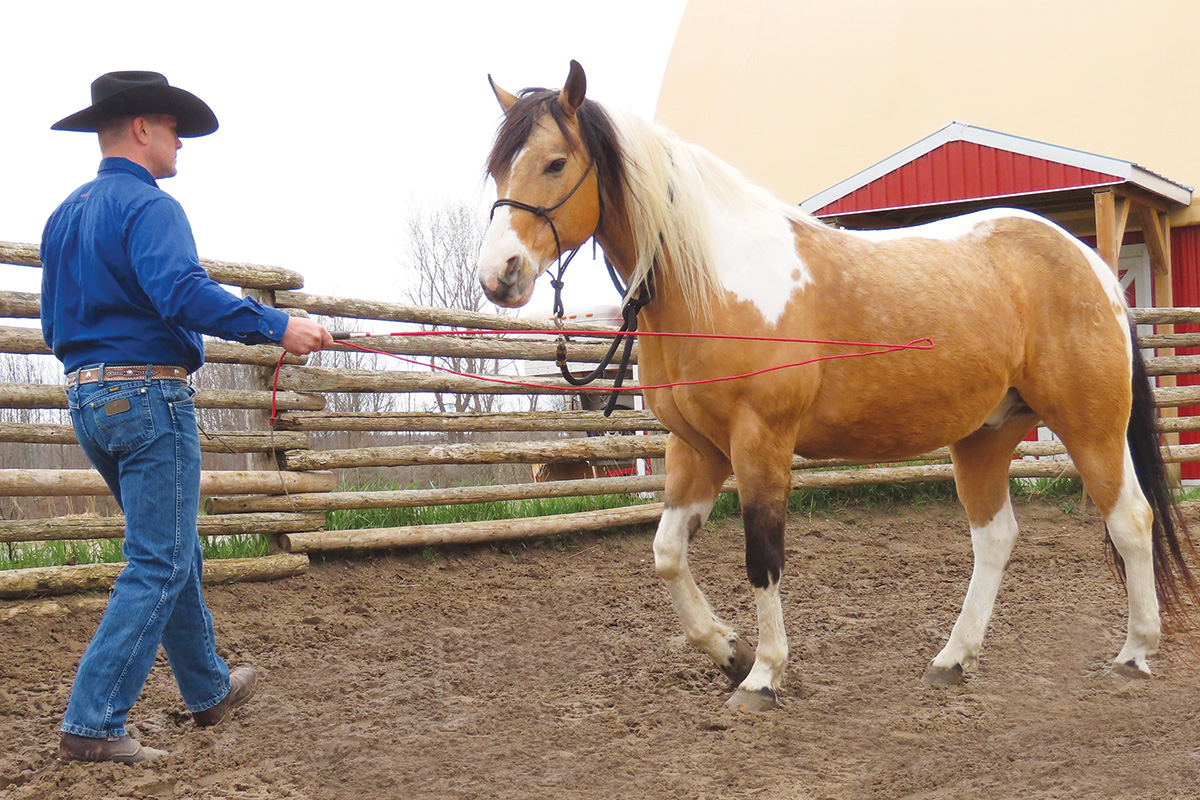
Put the lead rope around the horse’s neck. Now practice calling him to you without the physical connection. Photo by Bronwyn Irwin
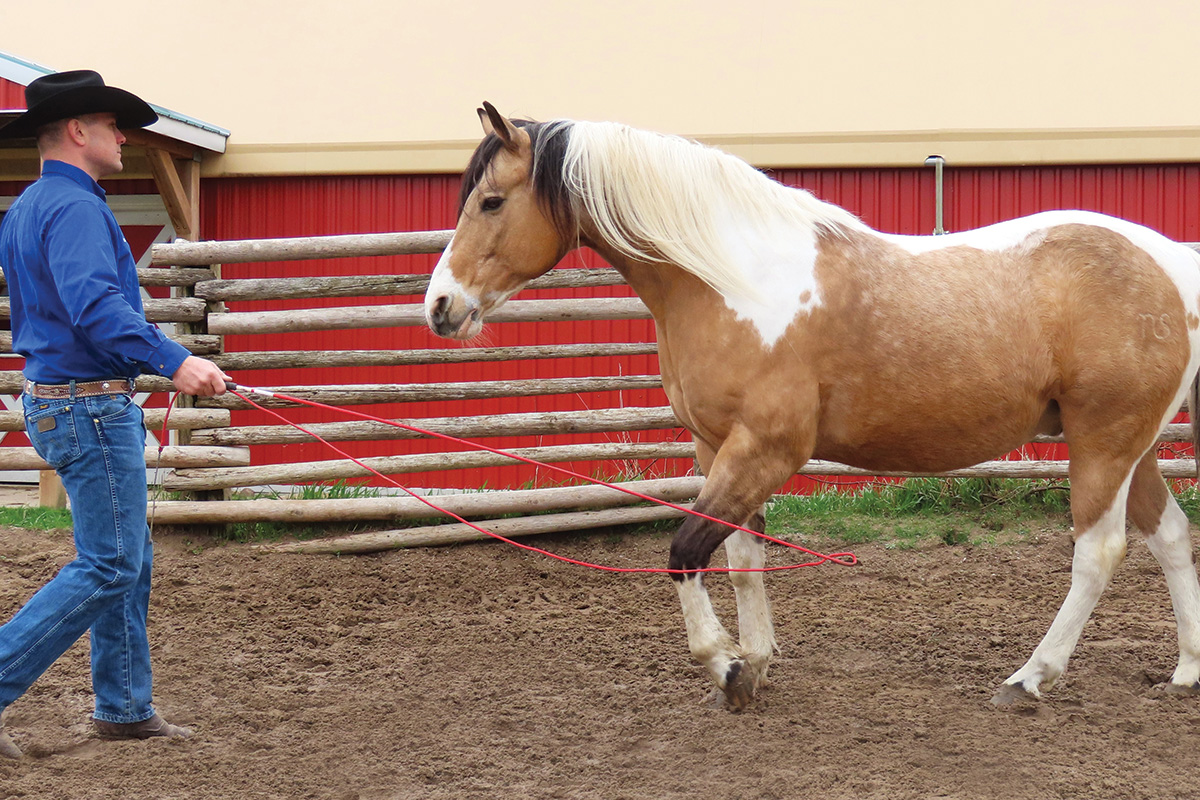
Get rid of the halter and lead rope entirely and call the horse to you with nothing on his head. Photo by Bronwyn Irwin
You’re now working your horse at liberty! To learn the next steps, stay tuned for Part 2 of this liberty training series.
Learn more about Jason and Bronwyn Irwin at thehorsetrainers.com.
This article about how to start training a horse for liberty appeared in the July 2024 issue of Horse Illustrated magazine. Click here to subscribe!